

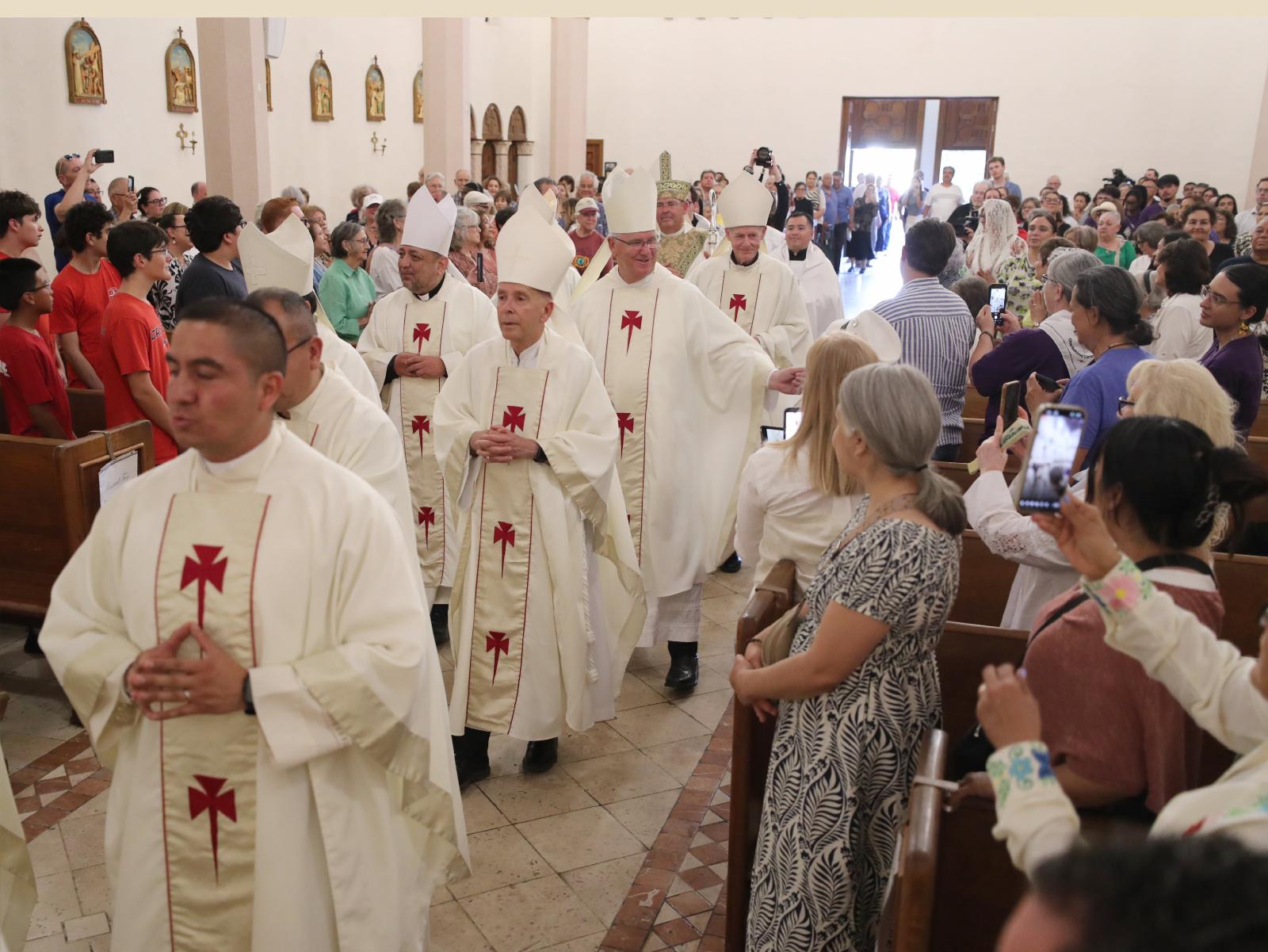
NOGALES, Ariz. (OSV News) — Five Catholic bishops from the United States-Mexico border region led a day of pastoral accompaniment in Nogales, Arizona, and Nogales, Mexico, June 26 as the United States approaches its 250th birthday as a nation.
“We are here as shepherds of the Church,” said Bishop James A. Misko of the Diocese of Tucson, Arizona, prior to celebrating Mass inside Nogales, Arizona’s historic Sacred Heart of Jesus Parish, less than a half mile from the international border.
He was joined by Bishop John P. Dolan of Phoenix; Archbishop John C. Wester of Santa Fe, New Mexico; Bishop Mark J. Seitz of El Paso, Texas; and retired Bishop Gerald F. Kicanas of Tucson.
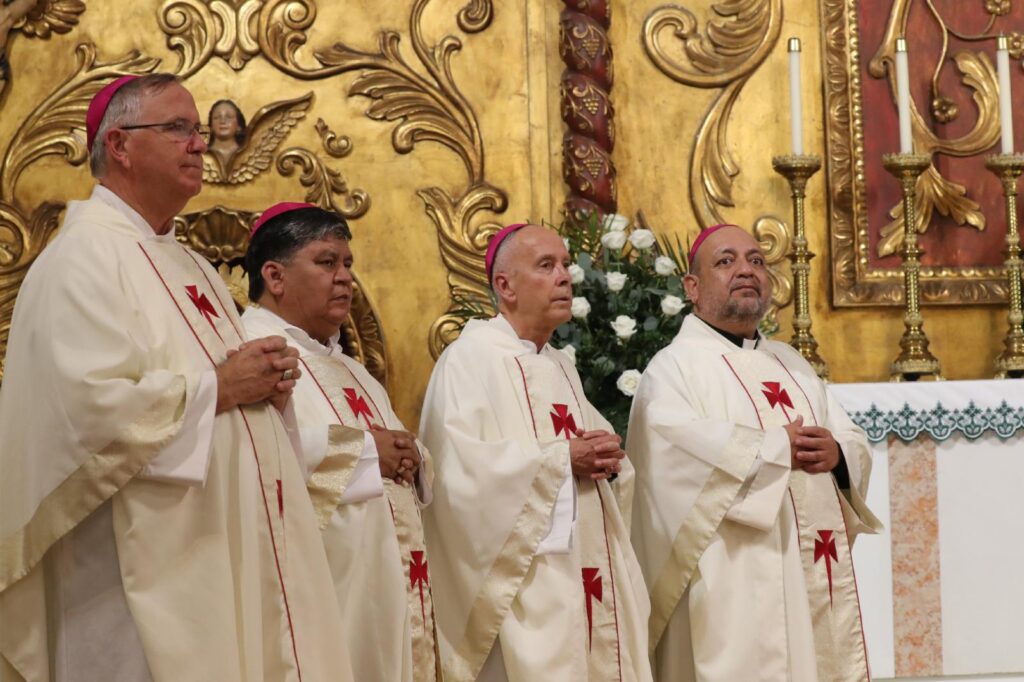
“This is an important place for us to be,” Bishop Misko said, “because this is where these two nations come together as the people of God. We are here to accompany these (migrants) who find themselves in a complex situation, and to pray for our elected leaders who govern the border, and those (in enforcement) given the very important task of managing our border.”
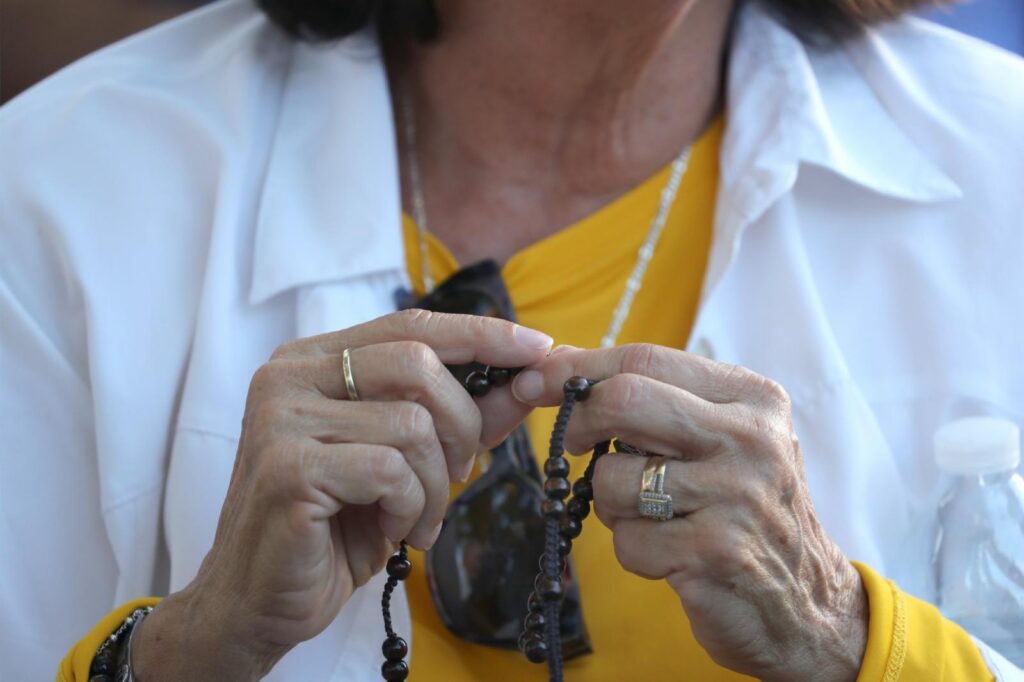
Following Mass, the bishops led about 200 worshippers in a rosary and procession across the border into Nogales, Mexico, where they spent a brief time in adoration of the Eucharist at Parroquia de la Purísima Concepción. Along with migrant advocates, the bishops then met and dined at a local migrant advocacy complex before returning to the United States.
“This was a day to say, ‘We see you, we hear you and we walk with you,'” said Bishop Seitz.
The events were co-organized by Kino Border Initiative, a migrant advocacy agency based in both Nogales, Arizona, and Nogales, Mexico, and Hope Border Institute, a similar group headquartered in El Paso, Texas, as well as the New York City-based Center for Migration Studies, a think tank and educational institute studying international migration.
Homily invokes Sacred Heart as model for treating migrants
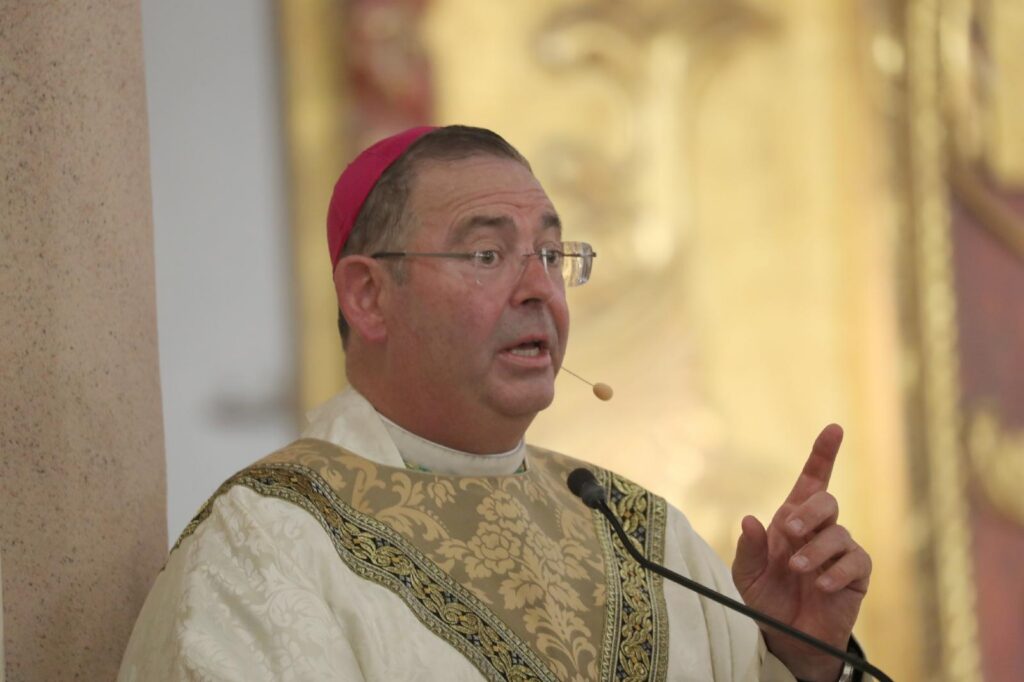
During his homily, Bishop Misko urged the faithful to conform their hearts to the Sacred Heart of Jesus, adding that the right to migrate humanely reflects the dignity of those created in God’s image and likeness.
Like Jesus Christ, he said, the faithful must be sensitive, compassionate and strong in all their dealings with people, including migrants.
“Our hearts must reflect these qualities,” he said.
Bishop Misko also urged prayer for governments and their leaders who craft immigration policy as well as the duly sworn personnel who manage the border and enforce the law.
“We pray that God will fill all hearts with His grace, so that we may see Christ in one another and protect human dignity as the greatest gift given in God’s providential love,” he said.
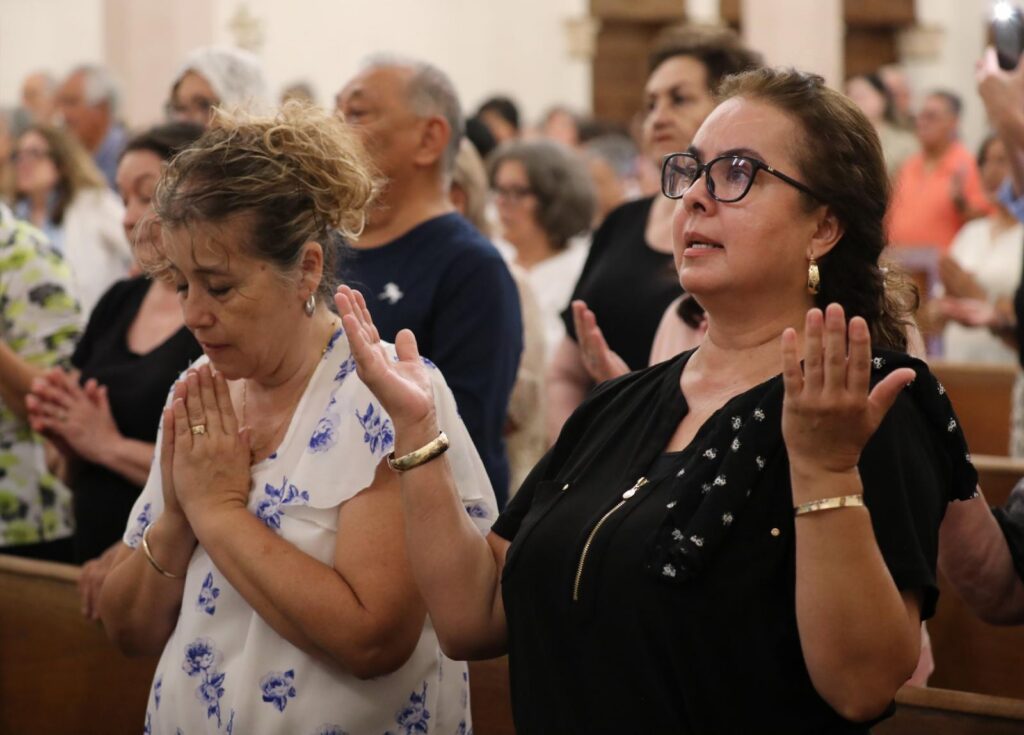
Prior to Mass, the bishops and advocates put the issue into context.
Bishop Dolan said contributions of immigrants to his state and others cannot be underestimated.
“We belong to a particular community that has continued to show an increase in immigration and refugees,” he said, noting many of these individuals offer potential support to the region’s agriculture.
Dylan Corbett, Hope Border Institute’s founder and executive director and a member of the Vatican’s Dicastery for Promoting Integral Human Development, emphasized the role of migrants in the wider economy.
“Our small business across the country is fueled by the contributions of migrants,” he said. “We (also) have many serving in health care.”
Advocating for the humanity of migrants
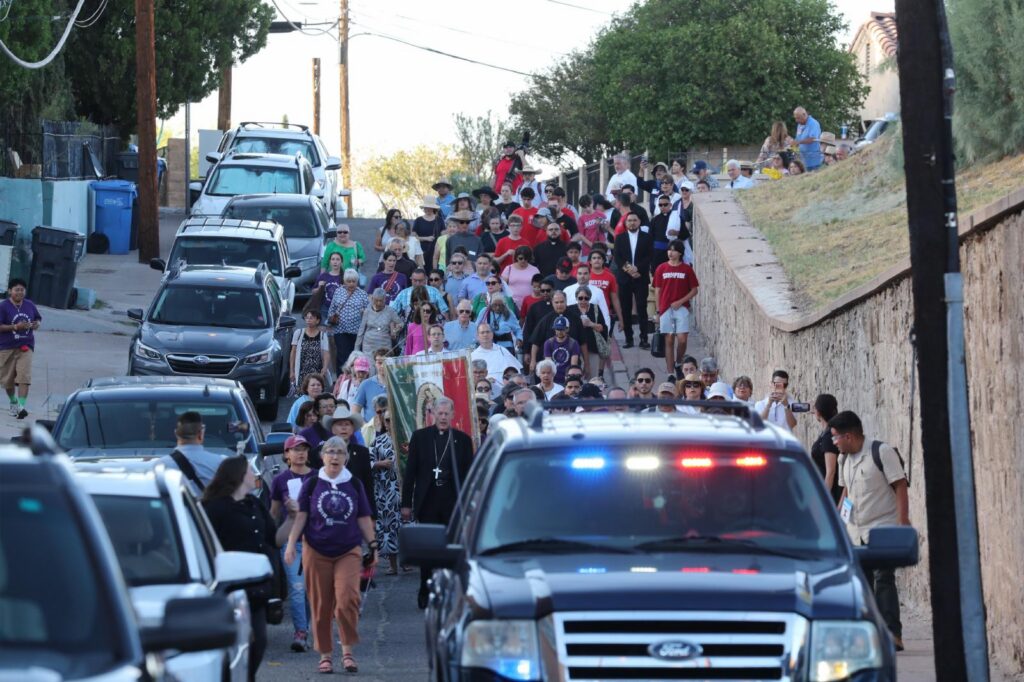
Juan Cuellar, Kino Border Initiative’s director of education and advocacy, said Church teaching that humans are created in God’s image and likeness supports the freedom to migrate humanely.
“Migration has been a core reality of the human experience for thousands of years. People possess natural rights to migrate to support themselves and their families,” he said. “Each country has the right to maintain and manage its borders with Christian justice and in a way that equates to a relationship with God and how we treat our neighbors.”
Catholic social teaching on immigration balances three interrelated principles — the right of persons to migrate in order to sustain their lives and those of their families; the right of a country to regulate its borders and control immigration; and a nation’s duty to regulate its borders with justice and mercy.
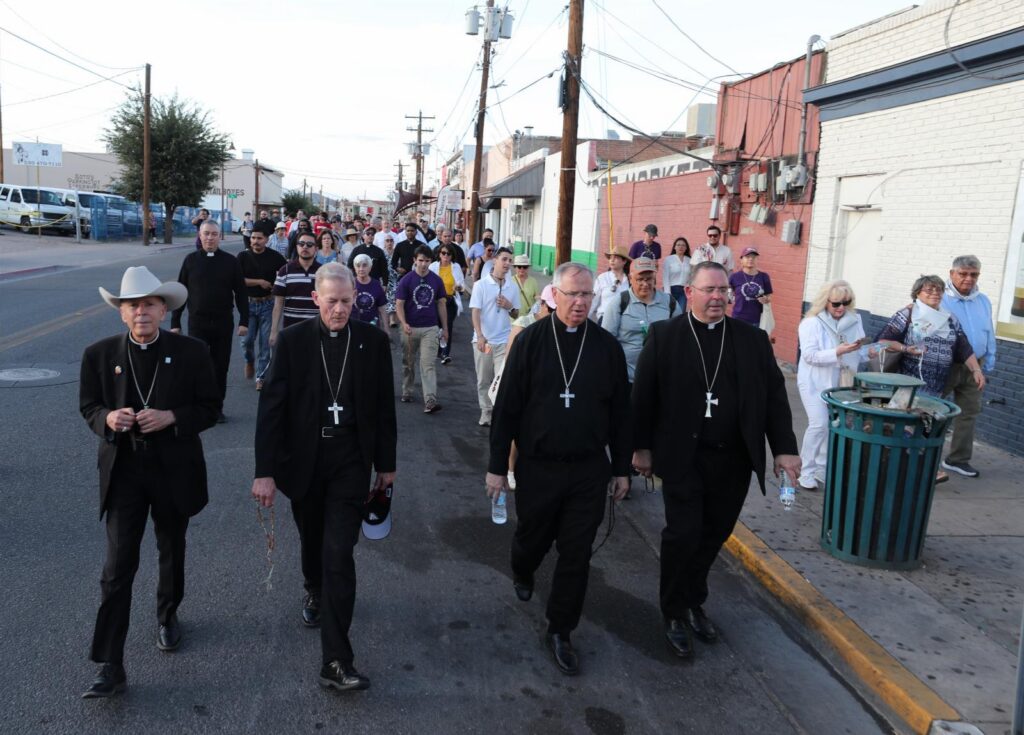
The bishops urged all parties to work for humane, dignified migration solutions.
“We need consistent application of policy from administration to administration and for Congress to work on a true and valuable and sustainable immigration reform,” Bishop Dolan said.
Bishop Kicanas urged the U.S. to ensure those held in detention centers and or waiting to be granted access to the U.S. have ample opportunity to practice their faith. At present, he said those opportunities are limited.
“These are people in great need. They’re desperate, they’re fearful, they’re anxious. They need the consolation and hope that faith can bring,” he said.
Catholics impacted by deportation efforts
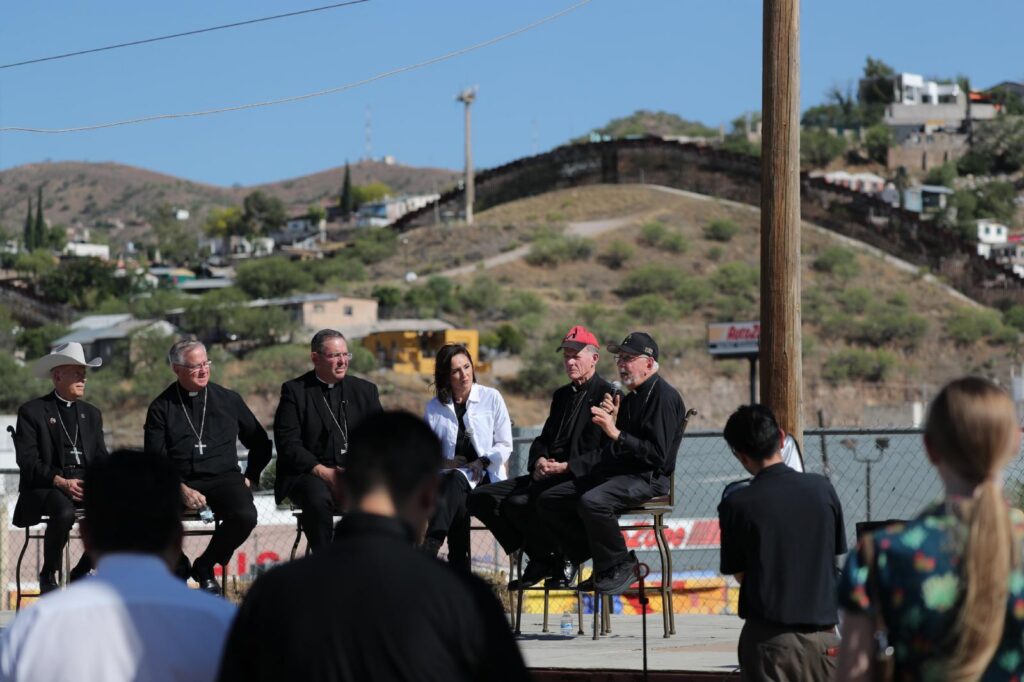
The majority of migrants targeted by the government for mass deportation from the U.S. are Catholics. According to a 2025 joint Catholic-Evangelical report published by the U.S. Conference of Catholic Bishops and other evangelical Christian groups, of the 10 million people estimated to be at risk of mass deportation, eight in 10 are Christian and six in 10 are Catholic.
The report also found nearly one in five Catholics (18%) in the U.S. are either vulnerable to deportation or live with someone who is.
A day before the border Mass, the U.S. Supreme Court gave the Trump administration a green light to end the participation of an estimated 350,000 Haitians and 6,000 Syrians in a legal program temporarily shielding eligible migrants from countries experiencing dangerous conditions such as war, disaster, or other unrest. The State Department currently warns Americans against traveling to either country, designating both as “Level 4 — Do not travel,” citing risks of violence.
The high court also ruled June 25 the administration can reimplement a policy of turning away asylum-seekers at the border before they set foot in the U.S., known as “metering.”
Bishops meet with migrants
Inside a complex in Nogales, Mexico, operated by Kino Border Initiative, migrants were uplifted seeing the bishops, who made their way throughout the dining room, meeting and talking with individuals.
Some shared their experiences.
Francisco Menjivar, 38, said he fled his native Honduras three months ago, often finding rides on trains to escape family discord and the use of drugs by siblings. Speaking through an interpreter, he explained his job as a ranch and stable hand paid the equivalent of $10 a day.
Menjivar arrived in Nogales, Mexico, only a few hours before the bishops.
“This is a great joy. I thank God we are together,” he said, pointing to a friend sitting across the table, adding that “if God allows it,” he will come to the U.S., find work and support himself and his mother.
Azul Guzman, a 19-year-old single mother with a 9-month-old daughter, is seeking to live in the U.S. with her aunt, who resides in Pennsylvania. Guzman now lives with her parents and her daughter, Natalie, in a three room efficiency apartment. She has requested asylum and has waited three months for an answer from the U.S. government. Though not a churchgoer, she said she believes in God and was grateful for the visit from the bishops.
“It’s very beautiful to have them here,” she said.
Jeff Grant writes for The Catholic Sun, the news outlet of the Diocese of Phoenix. OSV News staff contributed to this version. This story was first published in The Catholic Sun and is distributed through a partnership with OSV News.
