


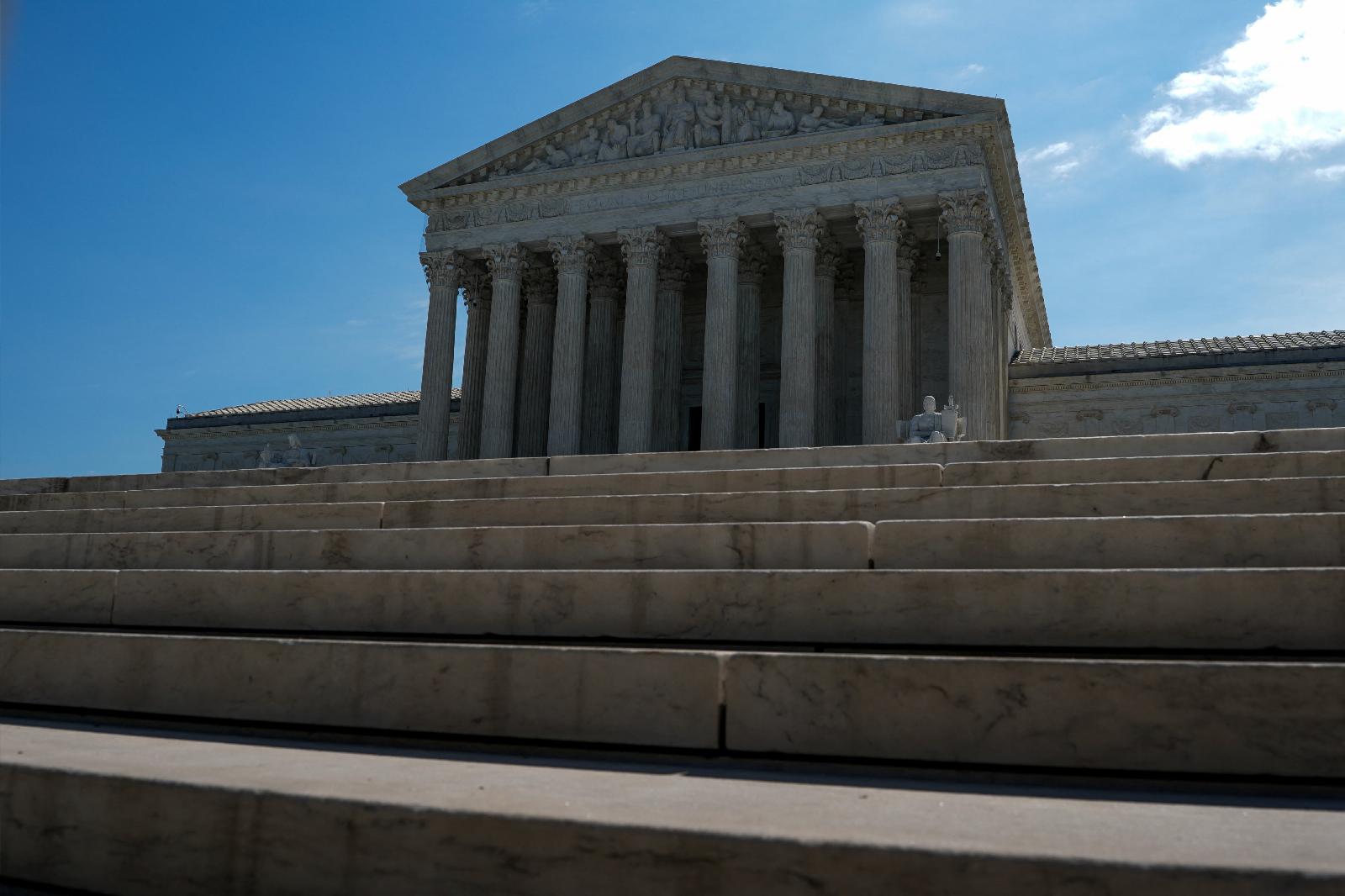
WASHINGTON (OSV News) — The U.S. Supreme Court issued several major rulings on immigration policy cases as it prepared to end its term.
The same week in Washington, the fate of major bipartisan housing legislation remained unclear after President Donald Trump canceled a signing ceremony, and lawmakers reacted to the fourth anniversary of the Dobbs v. Jackson Women’s Health Organization decision.
Court issues key rulings on immigration policy, Rastafarian man’s religious rights claim
In a pair of rulings concerning immigration policy, the U.S. Supreme Court on June 25 ruled that the Trump administration can reimplement a policy of turning away asylum-seekers along the U.S.-Mexico border before they enter the country, known as “metering,” and that it can end a temporary designation shielding eligible Haitian and Syrian immigrants living in the U.S. from deportation.
Kevin Appleby, senior fellow for policy and communications at the Center for Migration Studies of New York and the former director of migration policy for the U.S. Conference of Catholic Bishops, told OSV News, “The asylum decision will push desperate asylum-seekers into the hands of smugglers and life-threatening remote areas in order to reach U.S. soil. The TPS ruling puts a bulls-eye on over one million TPS holders who now face deportation to countries which are, by definition, life-threatening.”
“Not a good day for the protection of human life,” he said.
In a June 26 statement, Bishop Brendan J. Cahill of Victoria, Texas, chairman of the U.S. Conference of Catholic Bishops’ Committee on Migration, urged the Trump administration to leave the TPS designations in place.
“Revoking the legal status of hundreds of thousands of people residing in our country creates a moral crisis when returning to their country of origin is not a safe or reasonable option,” he said. “If we are truly to affirm the God-given dignity of every human person, we as a nation cannot turn a blind eye to such an injustice and the impossible choices it will create for families and communities.
In another ruling issued the same week, the court ruled on June 23 against Damon Landor, a Rastafarian and a former Louisiana prison inmate, who sought to sue Louisiana prison officials who shaved his hair against his religious beliefs.
Landor had a federal appeals court ruling directing prison officials not to shave his dreadlocks, according to religious beliefs against cutting his hair. However, with just three weeks left in his sentence in December 2020, prison officials disregarded that court ruling outlining his religious accommodations, handcuffed him and shaved off his hair, he said.
However, in a 6-3 ruling, the high court found Landor could not sue the individual guards in their private capacity under the Religious Land Use and Institutionalized Persons Act, a federal law that requires states to uphold the religious rights of individuals in state institutions.
Fate of bipartisan housing bill remains unclear
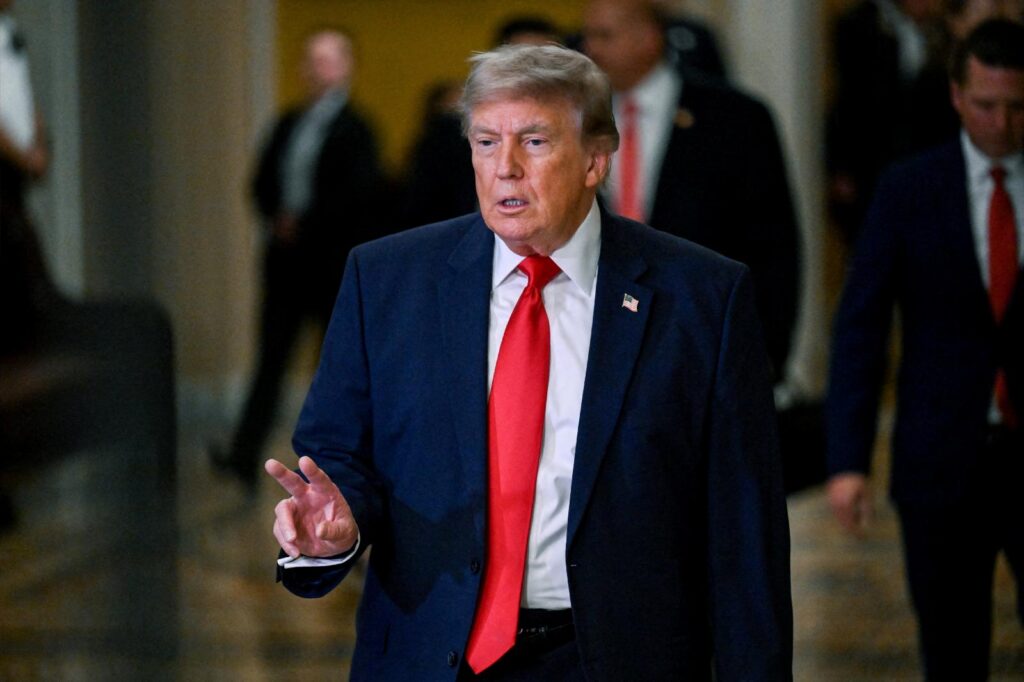
Trump on June 24 canceled his plans to sign bipartisan legislation aimed at addressing the rising cost of housing, demanding that Congress pass a voter ID bill that lacks a clear path to passage in the Senate.
Several Catholic groups, including the U.S. bishops, supported the housing legislation.
The housing bill, the 21st Century ROAD to Housing Act, sponsored by Sens. Tim Scott, R-S.C., and Elizabeth Warren, D-Mass., and Reps. French Hill, R-Ark., and Maxine Waters, D-Calif., would ease some regulations on the construction of new housing and would limit corporations from buying large amounts of houses. Its supporters said it would take aim at high housing costs.
Trump demanded that lawmakers pass the SAVE America Act, a voter ID bill that would require proof of citizenship — specifically a birth certificate, a U.S. passport or related documents such as a naturalization certificate — to register to vote in federal elections, as well as the presentation of an ID to cast a ballot. A Real ID would not meet this requirement under the terms of the bill. Supporters of the bill argue it would prevent voter fraud.
However, critics of the SAVE America Act say citizenship is already a requirement to vote in federal elections, and examples of noncitizens voting are rare. They also argue it would bar eligible citizens from voting if they did not have access to their birth certificate or hold a passport. Roughly 52% of registered voters do not have an unexpired passport with their current legal name, according to the Bipartisan Policy Center.
Although the SAVE America Act was passed by the House, it lacks sufficient support in the Senate to meet the upper chamber’s 60-vote filibuster threshold.
It was not clear whether Trump planned to sign the housing bill at a later date, veto it, or decline any action.
The legislation was passed by large margins in both the House and Senate, so Congress may have the votes to override a veto. Trump could alternatively pocket veto the bill, meaning he would take no action within 10 days. In that event, if Congress is in session, the bill would become law without his signature. If they are out of session, the effective veto would stand.
Lawmakers mark Dobbs anniversary
The Supreme Court issued the Dobbs ruling June 24, 2022, in a case involving a Mississippi law banning abortion after 15 weeks, where the state directly challenged the high court’s previous abortion-related precedents in Roe v. Wade and Planned Parenthood v. Casey. The high court ultimately overturned its own prior rulings, undoing nearly a half-century of its own precedent that held abortion to be a constitutional right.
In the years since that ruling, efforts to restrict or protect access to abortion have stalled in Congress. As a candidate in 2024, President Donald Trump stated his view that abortion should be a matter for the states rather than Congress, and he said he would veto abortion restrictions if they reached his desk.
Individual states have moved to either restrict abortion or expand access to it in the wake of the Dobbs ruling. However, multiple reports have found that the rate of abortions in the U.S. has increased since the Supreme Court’s reversal of Roe.
But lawmakers in Congress on both sides of the issue called for policy changes at the federal level.
In a statement, the co-chairs of the Congressional Pro-Life Caucus — Reps. Chris Smith, R-N.J., Andy Harris, R-Md., Michelle Fischbach, R-Minn., Kat Cammack, R-Fla., and Bob Onder, R-Mo. — argued the Dobbs decision “has empowered lawmakers at both the federal and state levels to pass and push for laws that protect mothers and their unborn babies.”
“At the same time, we will work together to elevate those agencies and non-profit organizations that seek to nurture and protect human life, as well as assist pregnant women and their children,” they said.
Sen. Patty Murray, D-Wash., said in remarks at a June 24 press conference with Senate Democrats, “Republicans may be trying to suggest the end of Roe and all the attacks on abortion that followed were no big deal.”
“But what they are really saying is that they are not listening to women. Because women all across this country are now having to face the nightmare Republicans ushered in, and it is turning lives upside down,” she argued.
The Catholic Church teaches that all human life is sacred from conception to natural death, and as such, opposes direct abortion, which takes the life of the unborn child.
Kate Scanlon is a national reporter for OSV News covering Washington. Follow her on X @kgscanlon.
