


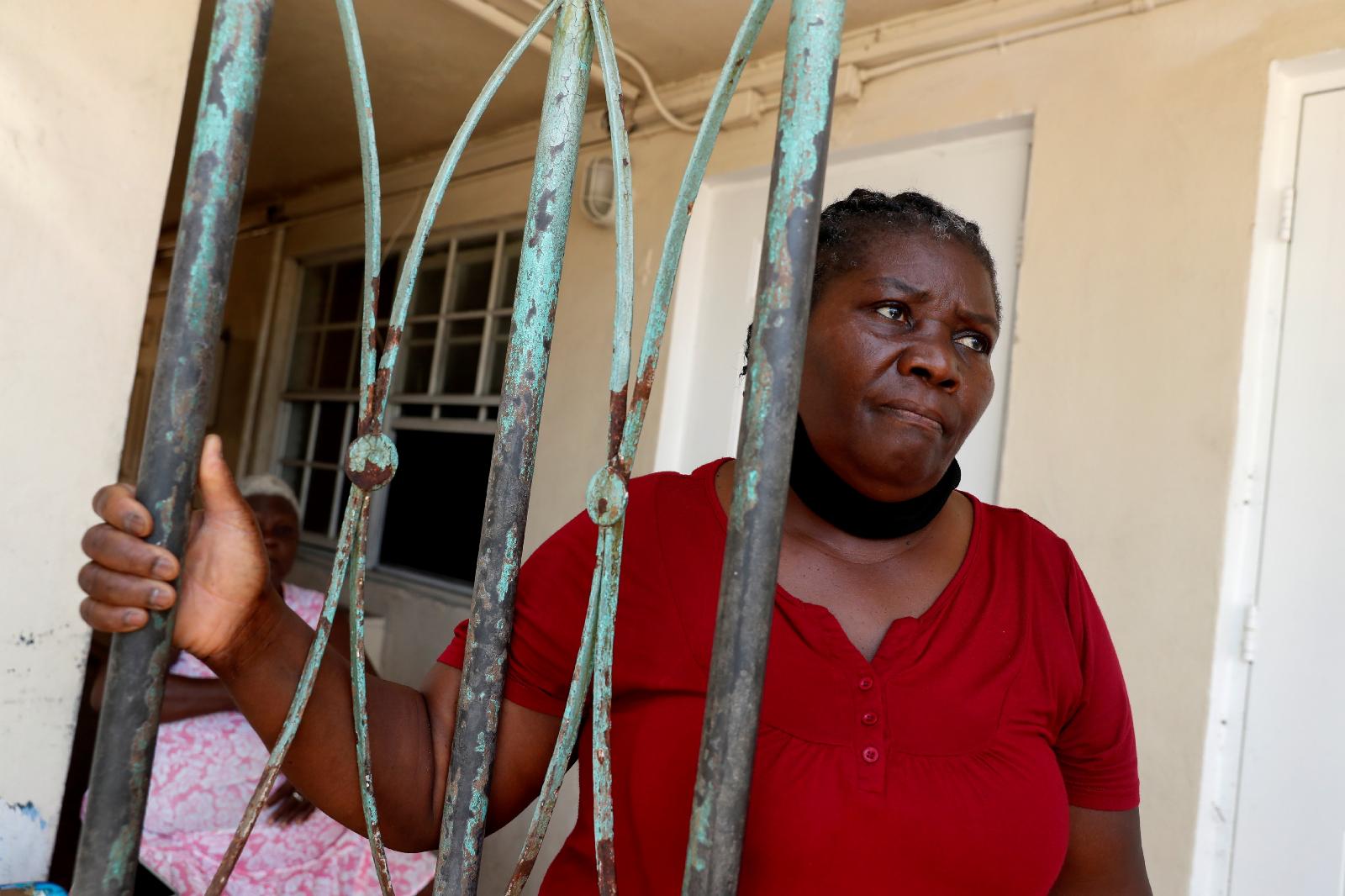
PHILADELPHIA (OSV News) — Catholic leaders are warning the Supreme Court’s decision allowing the Trump administration to deport hundreds of thousands of Haitians and thousands of Syrians currently under protected status in the U.S. will have dire consequences — including for the U.S. itself.
At least two bishops have called on Congress to extend the protections given the ongoing grave crises in both nations.
“Revoking the legal status of hundreds of thousands of people residing in our country creates a moral crisis when returning to their country of origin is not a safe or reasonable option,” said Bishop Brendan J. Cahill of Victoria, Texas, chairman of the U.S. Conference of Catholic Bishops’ Committee on Migration, in a June 26 statement.
TPS history
On June 25, the nation’s top court halted federal court rulings that had kept the administration from ending the Temporary Protected Status program for nationals from Haiti and Syria, saying federal law largely prevents the court from reviewing the earlier moves to scrap the TPS designations for those countries.
“If we are truly to affirm the God-given dignity of every human person, we as a nation cannot turn a blind eye to such an injustice and the impossible choices it will create for families and communities,” said Bishop Cahill.
Created by Congress as part of the Immigration Act of 1990, TPS provides deportation protections for those from Homeland Security-designated countries experiencing ongoing crises, such as war and environmental disasters. As of March 31, 2025, the last date for which publicly available data exists, there were approximately 1.3 million people with TPS living in the United States.
More than 330,000 Haitians and some 6,100 Syrians in the U.S. had TPS protection as of 2025. Both nations have experienced long-running conflict, instability, disaster and disease.
“Even if the Administration determines TPS is no longer warranted, deferred enforced departure remains a tool available to the President, and we urge him to exercise right judgement in this way,” said Bishop Cahill. “Forcibly sending families to dire conditions is a legacy all leaders should seek to avoid. To that end, my brother bishops and I also continue to call upon Congress to act — to meet this moment with the moral fortitude that is so desperately needed.”
Dangers faced by Haitians
Haitians face the possibility of being returned to a country “on the brink,” one that for decades has “endured one calamity after another,” said Archbishop Thomas G. Wenski of Miami, whose archdiocese is home to an extensive Haitian and Haitian-American community.
Hours after the Supreme Court decision was announced, Archbishop Wenski held a June 25 press conference, livestreamed via the Archdiocese of Miami’s Radio Paz, stating that “it would be an act of abject cruelty for the United States to send families back” to the “dangerous and unsafe conditions” that prevail in Haiti.
He called on Congress to give Haitians “at least a reprieve of three more years” by extending TPS — which he admitted was “an imperfect tool” — rather than “pulling the floor out from under families without any workable alternative.”
“The mass deportation of 350,000 men and women and their children to a country in dire straits is not a workable alternative,” stressed Archbishop Wenski.
He cited “widespread gang violence and kidnapping, a cholera epidemic, spreading food insecurity” and “the lack of functioning state institutions.”
“The situation in Haiti is very, very critical,” said Haitian native Father Eugène Almonor, an Oblate of Mary Immaculate and chaplain of the Archdiocese of Philadelphia’s Haitian Catholic Community.
Father Almonor, now a U.S. citizen who serves at St. William Parish in Philadelphia, told OSV News June 25 that asking someone “to return to Haiti is exposing your life” to danger.
He himself has been unable to travel to visit family in Haiti for some time.
Father Almonor, whose community is grappling with the impact of the Supreme Court decision, said Haitians who have lived in the U.S. “10, 15, 20 years” would be “lost” returning to a land that has plunged even more deeply into crisis since they last knew it.
“We don’t know where we would go,” he said.
Part of the community
Both he and Archbishop Wenski observed that Haitians under TPS in the U.S. — many of whom are Catholic — have become part of the nation’s fabric, making significant contributions to their communities and to the nation’s economy.
“The Haitians in this country are not on the dole,” said Archbishop Wenski. “They are hard workers filling jobs that, if it were not for them, would go unfilled.”
He stressed that the “sudden expulsion of Haitian TPS holders would have potentially a devastating effect on our nation’s economy,” pointing to health care facilities in his region.
The archbishop also noted that politicians in Indiana and Ohio — places where “Haitians were falsely accused of eating people’s pets,” a reference to an unsubstantiated rumor advanced by Vice President JD Vance and several others — have also noted “losing the Haitians now would hurt the local economy.”
Above all, said Father Almonor, “it is a question of humanity.”
“In the United States, we say, ‘In God we trust,'” he said. “But our faith in God is a faith made to love others, to support others — especially the vulnerable people.”
Gina Christian is a multimedia reporter for OSV News. Follow her on X @GinaJesseReina.
