


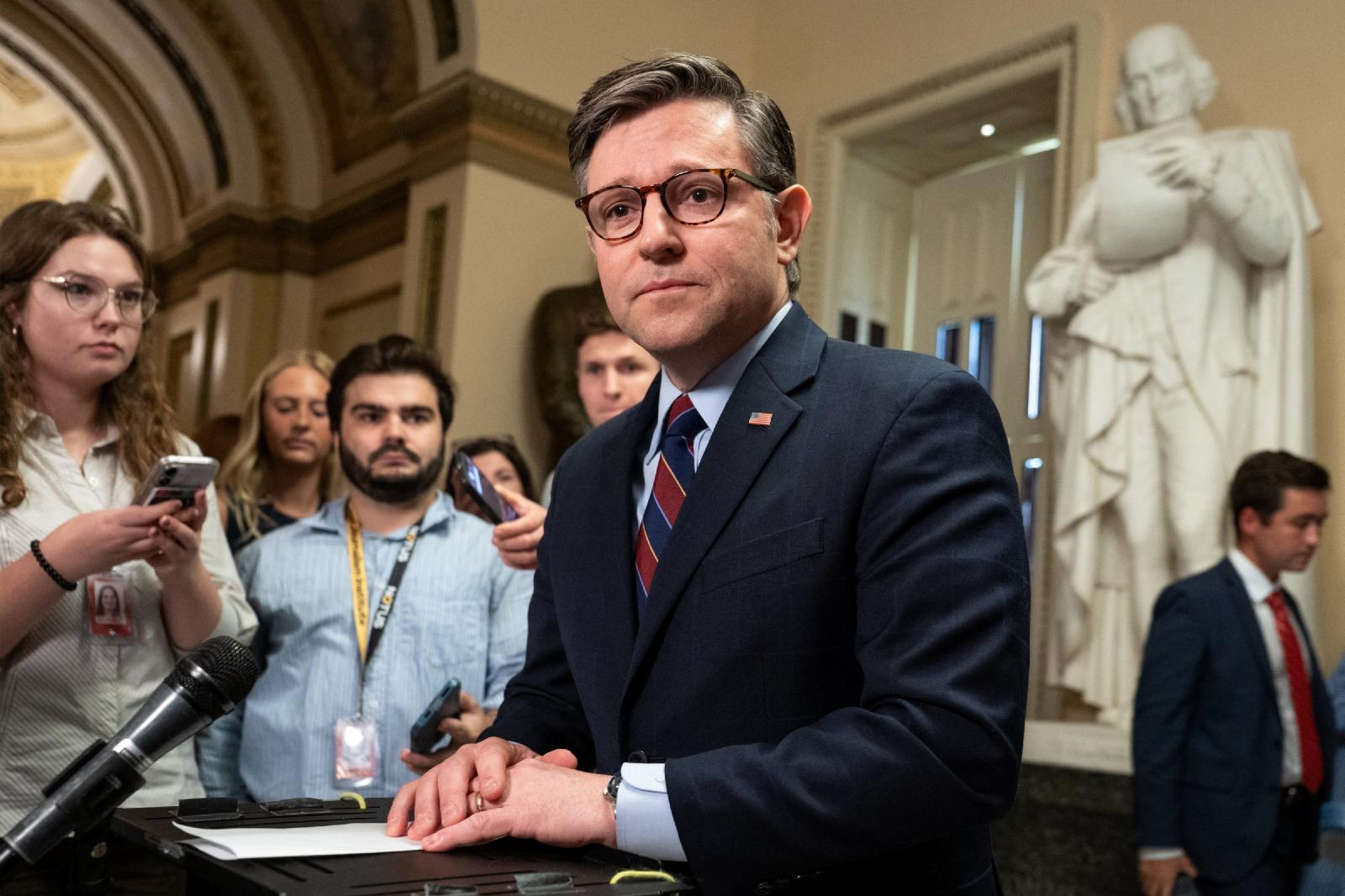
WASHINGTON (OSV News) — The U.S. House of Representatives began its August recess as both chambers faced a looming Sept. 30 deadline to fund the government and avoid another shutdown.
The same week, a bill was introduced in the House that would prohibit the federal government from exercising eminent domain at Mount Cristo Rey, a New Mexico pilgrimage site; the House passed legislation to reauthorize and expand funding for umbilical cord blood stem cell research.
House starts August recess as shutdown deadline approaches
Before beginning its annual August recess on July 23, the House voted to extend funding for the government at existing levels through Dec. 4, in an attempt to avert a shutdown when current funding expires Sept. 30, just weeks before the midterm elections.
However, just six Democrats joined with Republicans to advance the otherwise party-line bill, which Democratic leadership opposed.
In a statement, House Speaker Mike Johnson, R-La., argued the legislation was “nothing other than a simple extension of current funding levels.”
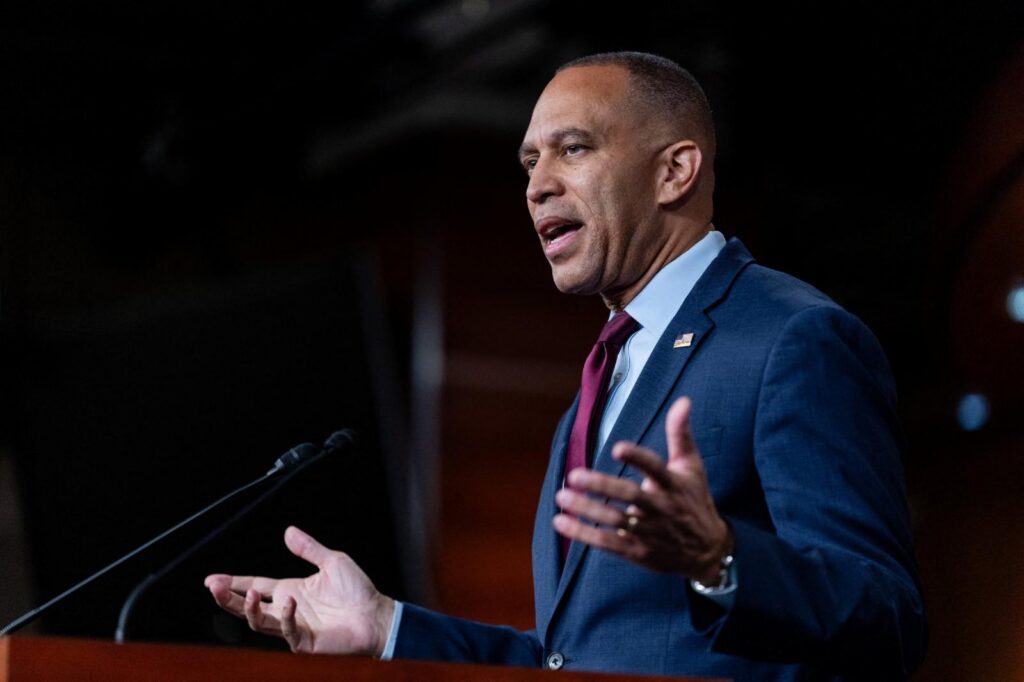
House Minority Leader Hakeem Jeffries, D-N.Y., Whip Katherine Clark, D-Mass., and Caucus Chair Pete Aguilar, D-Calif., argued in a joint statement that Republicans’ “my-way-or-the-highway approach has consistently failed to address the high cost of living or meet the needs of the American people.”
But in the Senate, the legislation would require Democratic support to meet the upper chamber’s 60-vote filibuster threshold.
Majority Leader John Thune, R-S.D., told reporters he plans to hold a vote on funding before the upper chamber’s scheduled August recess.
The Senate is scheduled to begin its August recess on Aug. 10, and to return to the upper chamber on Sept. 11. That means there are very few legislative days left before the Sept. 30 deadline.
But, in addition to a short-term funding measure, the Senate will also seek to pass a Russia sanctions bill and consider the nomination of Acting U.S. Attorney General Todd Blanche, among other priorities.
During this Congress, previous record-setting shutdowns took place for most of the federal government, as well as a record-setting partial shutdown after a funding lapse at the Department of Homeland Security.
A government shutdown occurs when Congress fails to pass a budget or if that budget is not signed into law by the president. Some types of essential government services are exempt, including Social Security payments to older adults. But many other functions of government are suspended during shutdowns, such as paychecks for many government workers, including members of the armed services. Hundreds of thousands of federal workers are subject to furloughs during such shutdowns, meaning they must stop working and will not be paid until the federal government reopens.
The U.S. bishops and Catholic entities that advocate for, or work with, people who are poor and vulnerable in the U.S. have generally cautioned against government shutdowns.
Legislation would prohibit seizure of Mount Cristo Rey by eminent domain
Rep. Veronica Escobar, D-Texas, introduced the Mount Cristo Rey Protection Act July 20. The legislation would block the Trump administration’s move to seize land from a pilgrimage site to build a portion of a border wall.
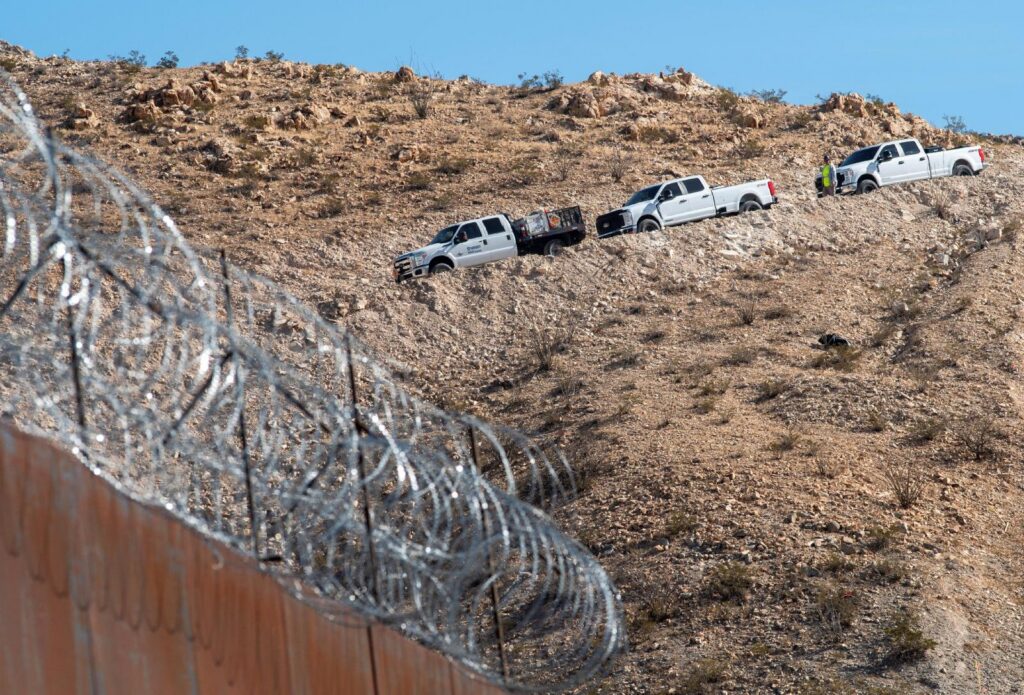
The Trump administration has sought to seize a 14-acre parcel that includes Mount Cristo Rey, owned by the Diocese of Las Cruces, New Mexico, through eminent domain — or government power to seize private property for public use, with “just compensation” as required by the Fifth Amendment — to construct a portion of a border wall. The move is part of the Trump administration’s sweeping crackdown on unauthorized immigration.
“Mount Cristo Rey is a religious and cultural landmark that has been central to our community for generations,” Escobar said in a statement. “Rather than working with border communities to advance effective border security, the Trump Administration continues to disregard the people, history, and culture that make our region special. I will continue to fight for its preservation.”
The Diocese of Las Cruces, New Mexico, has sought a jury trial as it fends off the attempt.
“For generations, the faithful from the cities, farms and villages of the borderland have climbed Mount Cristo Rey and united as a single community for prayer and celebration at the feet of Christ the King,” Bishop Peter Baldacchino of Las Cruces said in a statement.
“In a world fractured by political, racial and economic divisions,” the bishop continued, “Mount Cristo Rey stands out as both a powerful symbol of hope and peace and a literal pathway to unity. We are grateful for the actions of Rep. Escobar and other legislators in helping to preserve this important site for generations to come.”
The bill would recognize Mount Cristo Rey as a holy site, block the use of federal funds to litigate against the diocese in the case, and prohibit the use of federal funds to construct, install, operate or maintain border barrier infrastructure on or near Mount Cristo Rey, Escobar’s office said.
Escobar, who is Catholic, represents a district that includes El Paso.
Bishop Mark J. Seitz, who heads the Diocese of El Paso, said in a statement, “For almost 100 years Mount Cristo Rey has been an iconic sacred site in our borderland region.”
“The mountain, with its 29-foot statue of Christ, is visible for many miles and stands at the border of two countries and three states,” Bishop Seitz said. “It has become for people in our region a holy site marking the unity of humanity and of faith that transcends borders. For the federal government to forcefully take this holy ground to build a tall barrier topped with razor wire would represent an overreach on the part of the government and create a sign that speaks, not of mutual respect and love, but of separation and rejection.”
El Paso’s bishop said he supports Escobar’s bill, which calls on the federal government “to set aside a heavy-handed abuse of power against this sacred place.”
“I am confident that through negotiation with the rightful owners of the property, the Church of Las Cruces, solutions can be found to provide for the deterrence of unauthorized entry into this country while at the same time preserving the integrity of Mount Cristo Rey,” Bishop Seitz said.
House approves funding for ethically sourced stem cell research
The House on July 20 approved legislation by Rep. Chris Smith, R-N.J., to authorize more than $280 million over five years for two programs that provide lifesaving treatments derived from ethically sourced stem cell lines.
Smith’s office said the bipartisan legislation, the Stem Cell Therapeutic and Research Reauthorization Act of 2025 (HR 5160), was introduced in September and was notably supported by Reps. Kweisi Mfume, D-Md., Doris Matsui, D-Calif., Gus Bilirakis, R-Fla., Chellie Pingree, D-Maine, and Claudia Tenney, R-N.Y.
In comments on the House floor, Smith said, “The bill before us today authorizes $280 million for these programs over 5 years — $115 million for cord blood and $165 million for the bone marrow program — to ensure that thousands of present and future patients benefit from this exciting field of regenerative medicine.”
While the Catholic Church opposes embryonic stem cell research that leads to the destruction of human embryos, it supports stem cell research derived by other means that do not result in a loss of life — such as cells derived from adult tissue or umbilical cord blood, the U.S. bishops’ website states.
“Not only has God, in His infinite wisdom and goodness, created a placenta and an umbilical cord to nurture and protect the precious life of an unborn child — but now, we know that another gift awaits immediately after birth,” Smith said. “Something very special is left behind: cord blood that is teeming with lifesaving stem cells.”
Kate Scanlon is a national reporter for OSV News covering Washington. Follow her on X @kgscanlon.
