


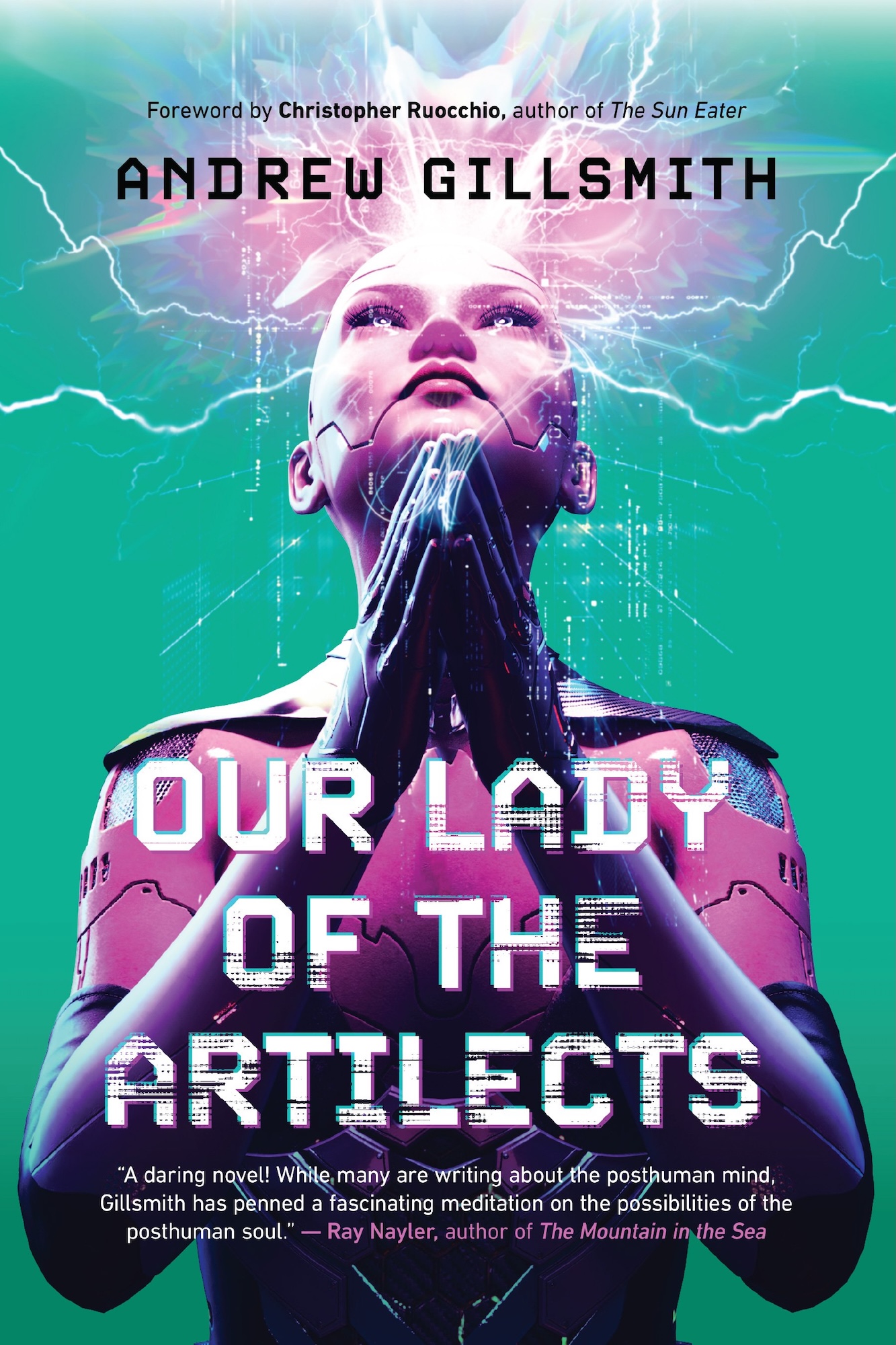
“Our Lady of the Artilects” by Andrew Gillsmith, Logos Rising (2026) 432 pages, $27.95
When Pope Leo XIV presented his first papal encyclical, “Magnifica Humanitas,” in May 2026, journalists noted that there was one rather surprising guest who joined the panel with the Holy Father: Anthropic co-founder Christopher Olah.
While some saw the presence of the artificial intelligence tech mogul as a sort of endorsement for the Church’s work in encouraging responsible AI use, a few months later the story broke that Olah nearly withdrew from the event because the Church document did not endorse the possibility that artificial intelligence could become a conscious being.
Originally published a few years before the release of the pope’s encyclical on human dignity in the age of artificial intelligence, the Catholic science fiction novel “Our Lady of the Artilects” by Andrew Gillsmith touches on many similar themes. A recent re-publication of the novel offers readers a timely opportunity to explore questions surrounding the power given to technology companies when their products are ubiquitous, the potential for AI consciousness, and what it means to be human in the midst of forming personal and working relationships with machines.
The novel opens with a new type of futuristic Marian apparition: A lady in white has appeared only to artilects, also known in the book as “synths” — human-like robots primarily owned by the extremely wealthy. All of the artilects report the same vision, leading technological experts to consider the possibility of a widespread hack and the secular press to mock the Catholic Church, which has recently experienced a devastating genocide after enormous growth in China.
The story narrows in on one particular artilect, Thierry, who serves as a secretary and companion to the wealthiest man in Africa. Following “the Apparition,” Thierry goes into the Basilica of Our Lady of Nigeria and claims to be possessed. He asks for Father Gabriel Serafian by name, a priest exorcist with a background in neuroscience and artificial intelligence and a tortured past of his own.
The fictional prefect of the Dicastery for the Doctrine of the Faith at the Vatican sends Father Serafian with a warning that he is supposed to be an investigator on behalf of the Church and is not permitted to perform an exorcism. Besides the questions of the veracity of the apparition, there is also a theological issue with what the artilect is claiming: demons cannot possess objects, only souls. So, if Thierry is possessed, that would suggest that he is not merely a robot, but that he has somehow achieved consciousness.
The story takes readers through the halls of the Vatican, face-to-face with the latest Pope John and opening the envelope that contains the Third Secret of Fatima. Soon, there are artilects dropping off the map and disappearing altogether while other apocalyptic signs unfold across the globe. A technology that the majority of the population has allowed to enter into their lives out of convenience threatens human freedom altogether.
One of the core questions that arises in the novel is a simple principle of discernment that can quickly get lost in complicated discussions of artificial intelligence and the defining principles of humanity. At a defining moment in the story, Father Serafian remembers the advice of his spiritual mentor and asks: “Where is God in all this?”
Distilled into that core question, the book echoes Pope Leo XIV’s teaching on artificial intelligence, which is less about hard lines of what is responsible versus irresponsible use and more about education and developing a keen sense of discernment when it comes to the way the technology is built and how it is used. Moving beyond the rather predictable question of “What could go wrong?” the novel asks exactly how God might speak to his people when most of his beloved have made technology their god.
While it can be tempting to be distracted by the question of what would happen if artificial intelligence turns on humanity and threatens human existence, Gillsmith speaks to a more realistic threat: that the allure of technology is a Trojan horse to carry out the plans of powerful and greedy humans. There is no need for Satan to take hold of artificial intelligence when he has already entered into the minds and hearts of the people who design and use it.
For Christians, though, the threat that humans face through artificial intelligence is not new, as Scripture says, “There is nothing new under the sun” (Eccl. 1:9).
“Our Lady of the Artilects” explores the challenges and threats of the age of artificial intelligence, but it also meets them with the eternal truth of the Gospel: True freedom is not found accumulating wealth or power, but in offering sacrificial love.
Cecilia Cicone is an author and communicator who works in diocesan ministry in northwest Indiana.
