


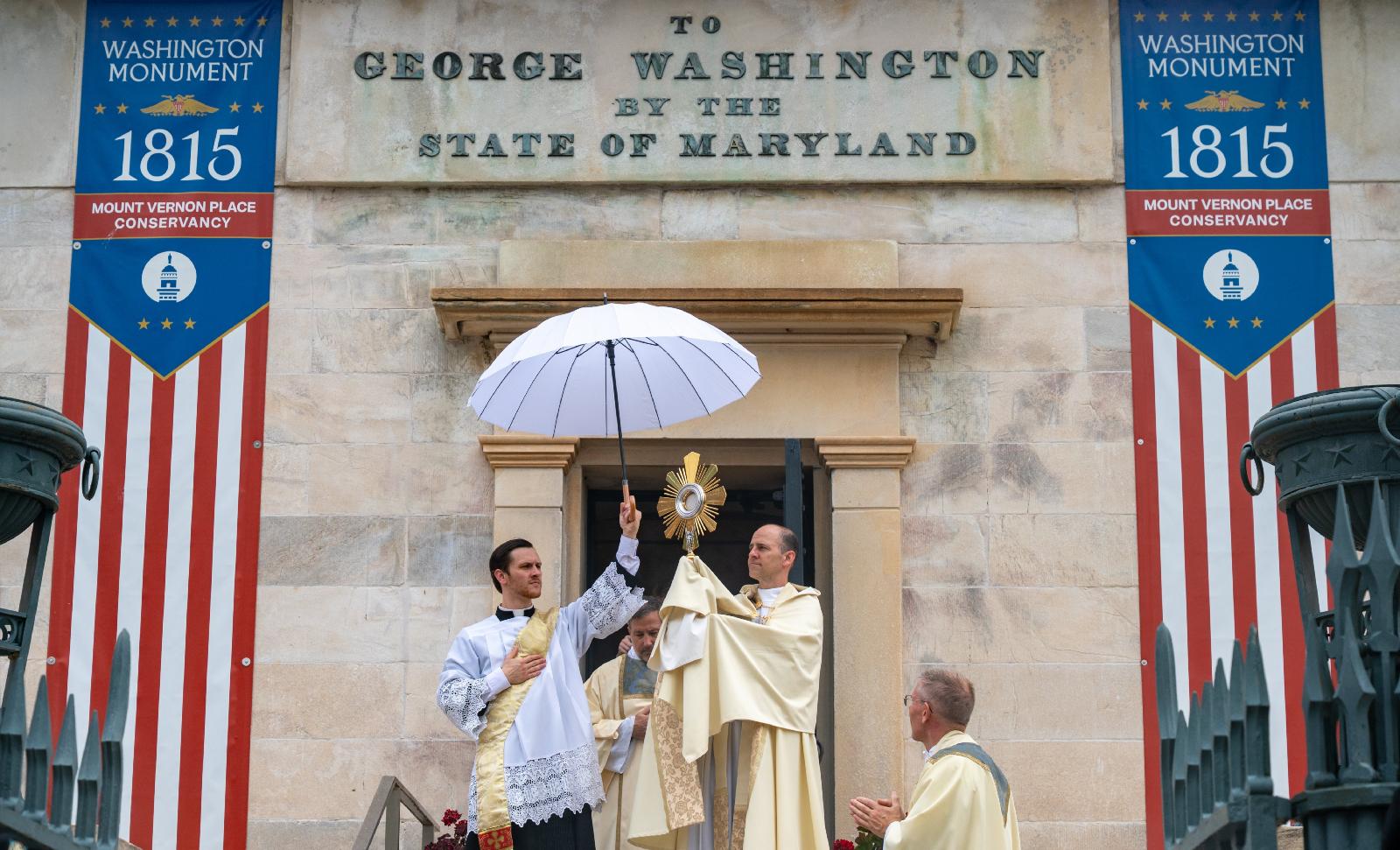
(OSV News) — Several “perpetual pilgrims” who followed Jesus Christ in the Eucharist across the country’s eastern seaboard this summer said the walk was life-changing.
They described powerful moments of communal worship as a nation with many who joined in prayer for one another and the country.
Dubbed “One Nation Under God,” the 2026 National Eucharistic Pilgrimage, which started on Pentecost Sunday — during Memorial Day weekend — and ended on the Fourth of July weekend, honored the 250th anniversary of the signing of the Declaration of Independence.
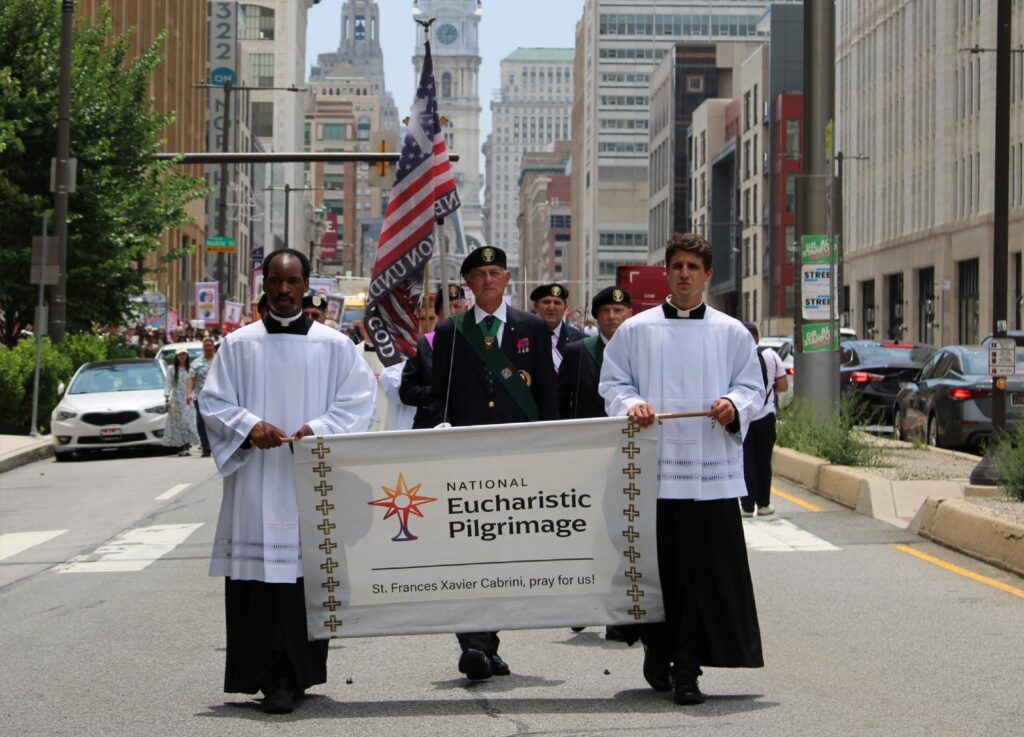
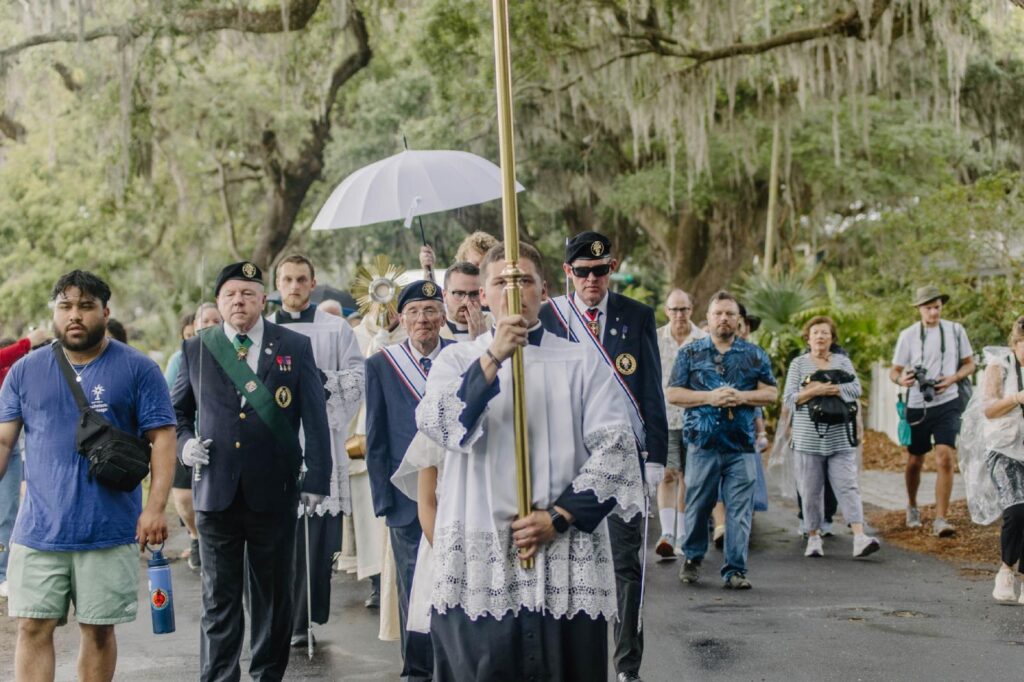
Marcel Ferrer was one of nine young adult pilgrims who traveled the entire St. Frances Xavier Cabrini Route along the East Coast with the Eucharist in a monstrance. They started in St. Augustine, Florida, the site of one of the first Masses on American soil in 1565, and headed northward to Portland, Maine, ending in Philadelphia.
Ferrer, 20, said one of the most striking moments was an intimate Eucharistic procession that started with just the nine at dusk on Capitol Hill.
“Doing that at nighttime and just seeing our nation’s capital and Jesus in the Eucharist was just so inspiring. It really stood (for) the message of one nation under God,” he said.
Pilgrims from far and wide
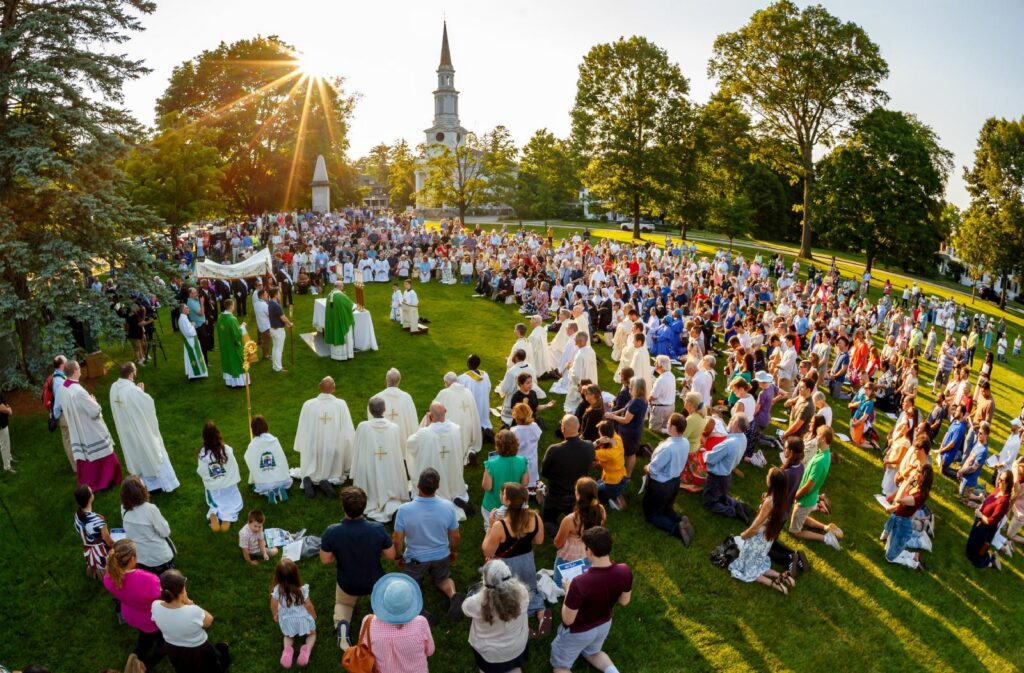
Ferrer, this year’s youngest perpetual pilgrim from Akron, Ohio, also said the public walks across the 13 states plus the District of Columbia, in 18 dioceses, and numerous parishes with crowds ranging from 500 to 5,000, brought a strong sense of community.
“Coming together is a lot different than just simply going to adoration at your local parish,” the sophomore at Franciscan University of Steubenville in Ohio told OSV News.
“Physically making that journey to be with a community of believers and being on the pilgrimage with that theme of ‘One Nation Under God’ on this 250th anniversary, and really walking through the streets and praying for peace, praying for our nation,” he said. “I think that’s why a lot of people felt called to make the trip out. I mean, we just saw people travel from states away.”
Zach Dotson, the perpetual pilgrims’ assistant team leader, shared a similar sentiment: “There’s nothing like being intentionally with other Catholics,” he said.
The 25-year old from Hammond, Indiana, spoke to OSV News July 19 just as he had finished wrap-up duties with the pilgrimage and enjoyed a quick visit with family.
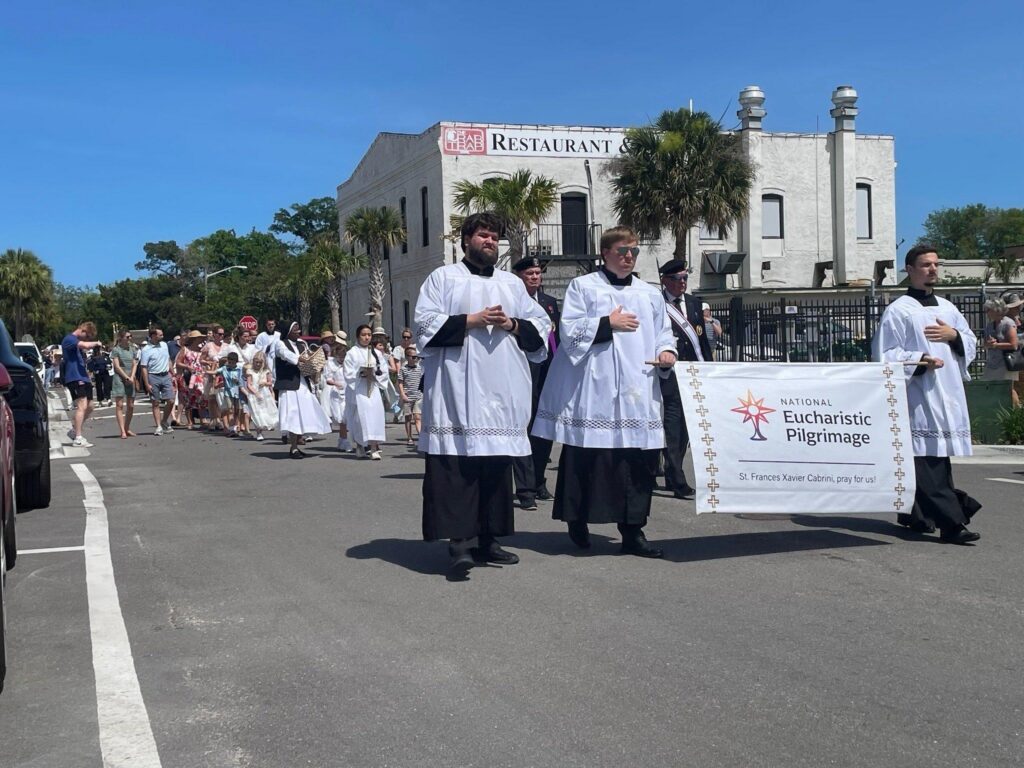
He reflected on how many Catholics “this monstrance encountered” this summer — at least 76,000, according to organizers.
“You think about all of those prayers, all of the graces attached to that,” Dotson said. “It’s a unique way to unite our prayers with our brothers and sisters — for our nation, for each other, for the holy souls, whatever intention was entrusted to us. To be able to unite so intimately and so physically our prayers with others, I think, is a big draw for those who were able to participate in person with us.”
Growing in trust
A self-described atheist from the ages of 11 to 23, Dotson was in banking and now runs a parish soup kitchen. He said he experienced an answer to his grappling with trust in God, even after returning to the faith two years ago.
“Sometimes I struggle with that childlike trust in him or that childlike approach to him,” Dotson said of God. “So getting to witness that in so many of my brothers and sisters on this pilgrimage … it had an outsized impact on me, on my own faith. Especially seeing that trust in him. ‘Jesus, I trust in you’ is a very short phrase, but it’s a radical phrase when you practice it consistently and you trust him in all things.”
Ferrer said the experience left a strong awareness of Jesus’ presence within himself, especially after taking Communion. He developed a habit of immediately going to prayer to discern situations or to seek help, and also became more respectful around the Real Presence. When away from it, he cut “vulgar language” from his “college student’s vocabulary,” he said.
‘Once-in-a-lifetime opportunity’
For Mary Carmen Zakrajsek, 27, the pilgrimage was a “once-in-a-lifetime opportunity.” She said being with the Eucharist day after day, during the processions, Holy Hours, Masses, all while praying with others, helped her to know more intimately God’s love for her.
“One of the priests said in the homily on pilgrimage was (that) God doesn’t wait to come to us until we’re worthy, he comes to us anyways because he loves us,” she explained to OSV News. “I think I, at different times throughout my spiritual life, have struggled with allowing myself to be loved by God. Because I consider my faults or my sins to be so much that it can be hard to really believe, and accept that God loves me despite those things. And that God continues to offer me his grace and his mercy.”
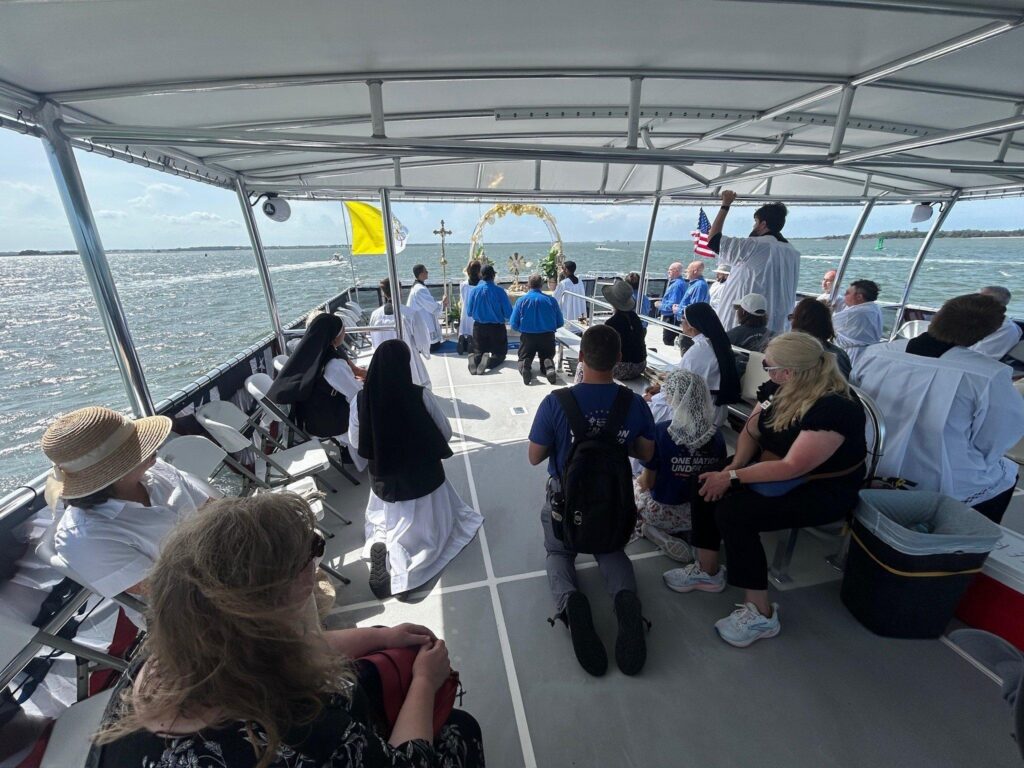
The director of formation at St. Vincent de Paul Parish in Elkhart, Indiana, was particularly struck by how much the pilgrimage experience brought the Gospels to this age. Zakrajsek described the boat crossing of the Chesapeake Bay in Maryland.
“I remember walking in that procession to the dock and smelling the water and just seeing the priest walk onto the boat, holding the Blessed Sacrament. It really, really, really felt like Jesus was walking onto the boat and the crowds were following him, trying to get into the boat,” she said, drawing parallels to Jesus’ preaching in Galilee.
‘Jesus is for everybody’
Zakrajsek said this and other experiences along the way were teaching moments that reinforced that “Jesus is for everybody. He came for everybody. He desires to love and be loved by everyone, and he draws all men to himself.”
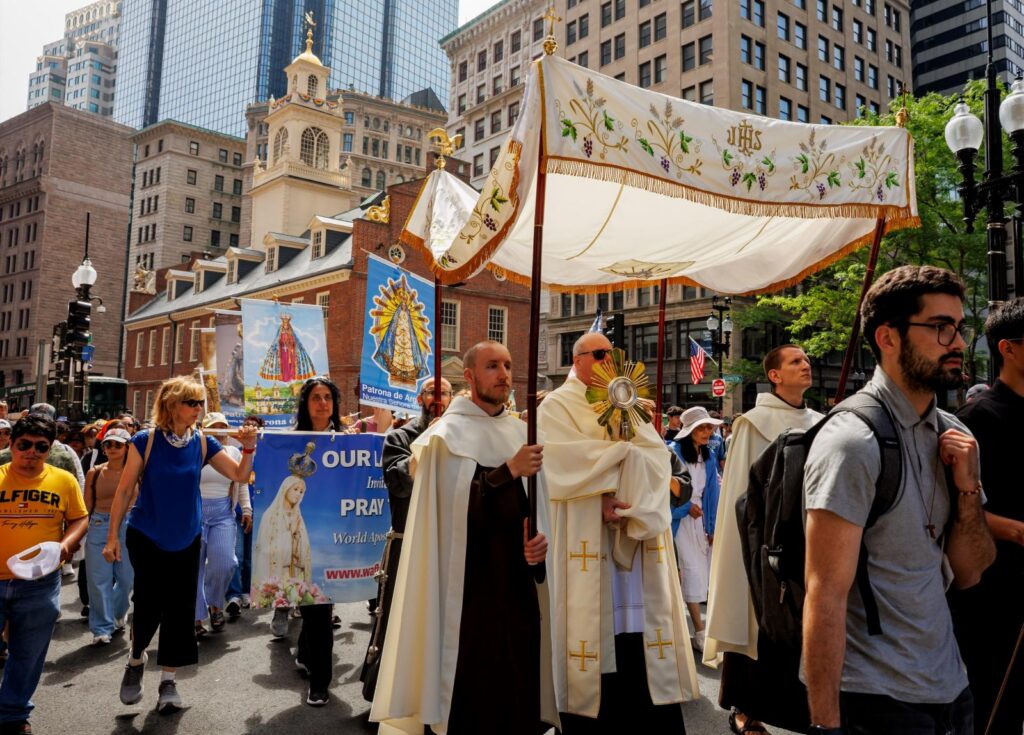
The pilgrims, who said they were still processing their experiences, described encounters with homeless people, bystanders who joined processions and tearfully prayed for the country, and others who had felt compelled to travel significant distances to walk with the pilgrims.
The perpetual pilgrims also experienced sufferings that they offered up to the Lord. Ferrer described moments of desolation and fatigue after long days that started before dawn and sometimes ended past midnight, which drew each of them closer to one another. He experienced a strong sense of consolation, he said, as he “joined his suffering with Jesus” while he struggled with a chronic intestinal illness that flared up in the first week of the pilgrimage.
‘This mission is far from over’
Jason Shanks, president of the National Eucharistic Congress, which organized the pilgrimage, said the organization does not have plans to announce “just yet” for 2027.
But in a statement emailed to OSV News, he said, “We can say that this mission is far from over. Our intention is to continue the pilgrimage annually through at least 2029 as we journey toward the next National Eucharistic Congress.”
Shanks added: “We believe the Eucharist remains God’s answer to bring healing, conversion, and unity, and we look forward to continuing that mission in the years ahead.”
Simone Orendain is an OSV News correspondent. She writes from Chicago.
