


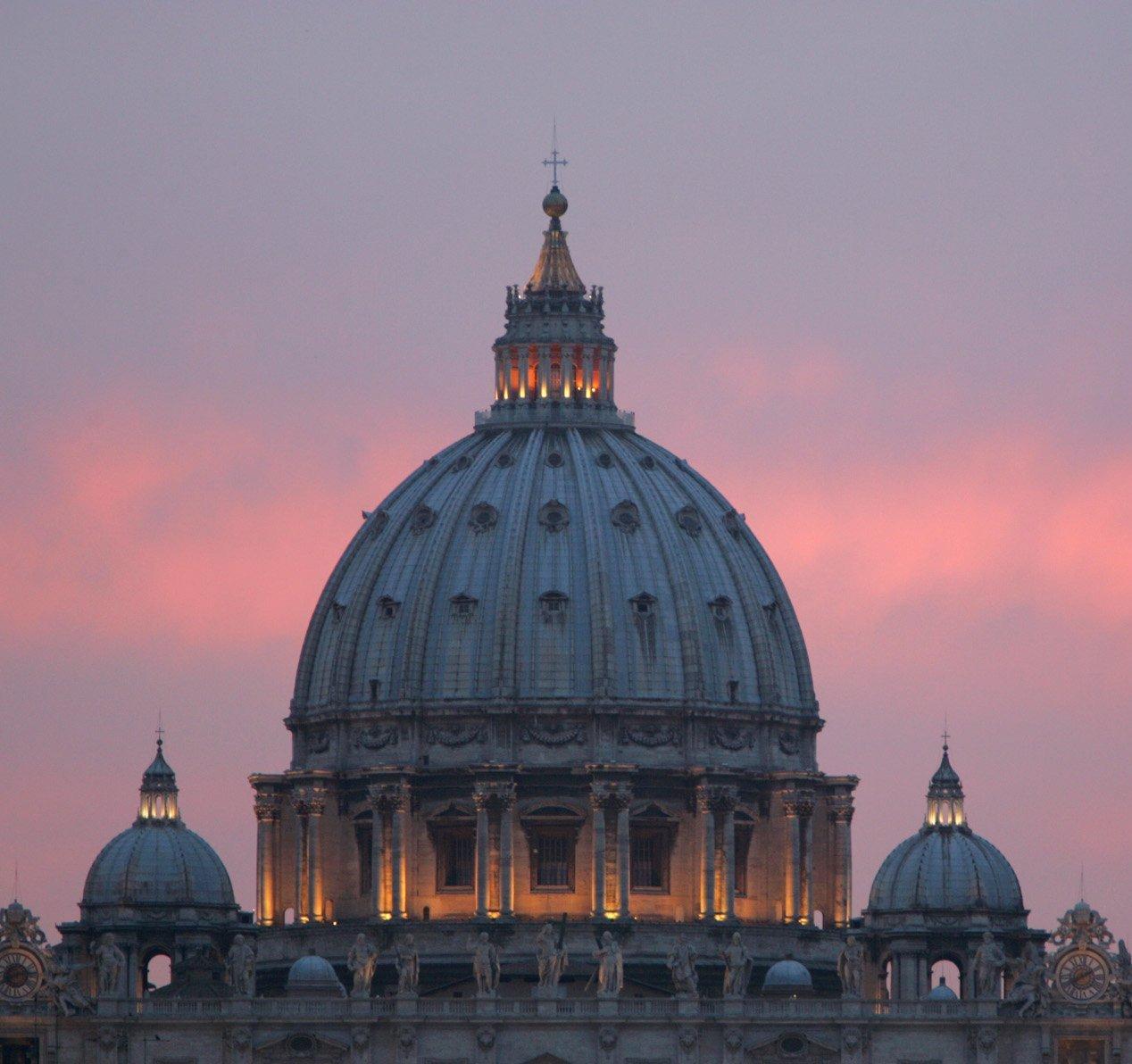
(OSV News) — St. Peter’s Basilica marks the 400th anniversary of its consecration this year, with the Vatican previously announcing several upgrades, including technological improvements and structural monitoring, to Catholicism’s most iconic church.
Pope Leo XIV will mark the anniversary year with a Nov. 18 Mass. Ahead of the liturgy, OSV News spoke with art historian and author Elizabeth Lev about St. Peter’s Basilica as it marks another milestone.
The founder and director of LizLev Tours, Lev has worked as a guide in Rome for more than 25 years and teaches at the Pontifical University of St. Thomas Aquinas, also known as the Angelicum. She has also served as a commissioner of Rome’s tourism board and as a consultant for the Vatican Museums.
This interview has been edited for length and clarity.
OSV News: As the basilica is being readied for the future, take us back through time, and describe what the site of St. Peter’s tomb once looked like.
Lev: If you had been in, say, the year 190 A.D., you would have seen it as Abercius of Hierapolis did. It was a brick wall painted red, with marble altars shoved into it, on a hillside. So I don’t know that it would have been one of the top-10 Instagram-worthy things for people to see.
Then it was enclosed into a basilica by Constantine (in the fourth century, with that structure also known as Old St. Peter’s Basilica). You can go down into the crypt and see the remains of that basilica.
Now, after about 1,000 years, the basilica began to cede (to gravity). So you can imagine pilgrims walking up and seeing the church listing to its side, with two-by-fours holding it up in the back. It was probably not a great image for the Church.
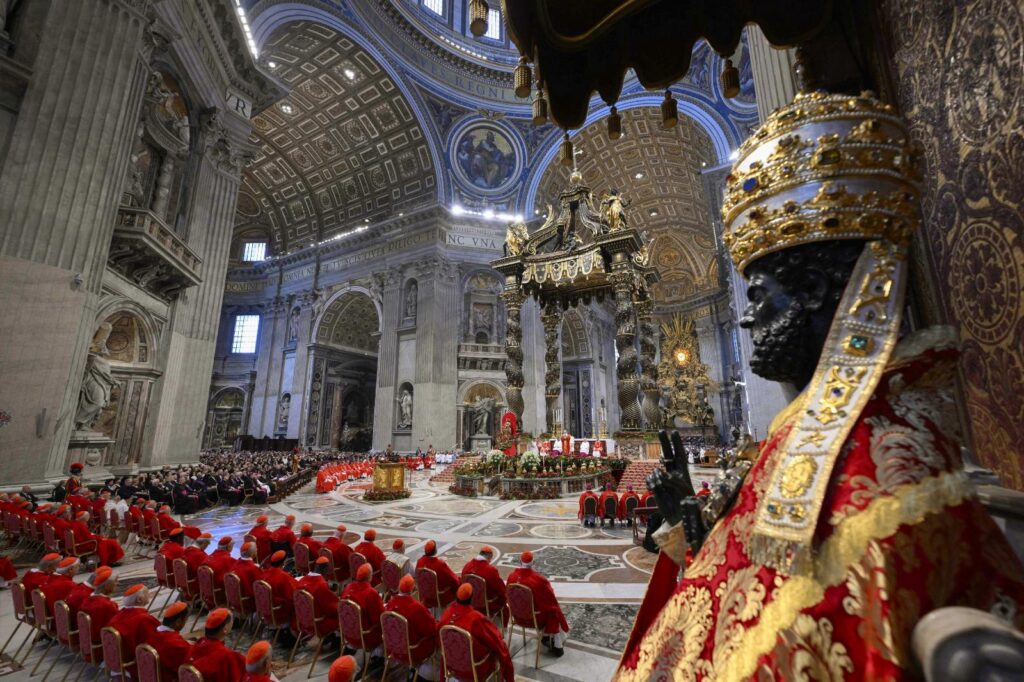
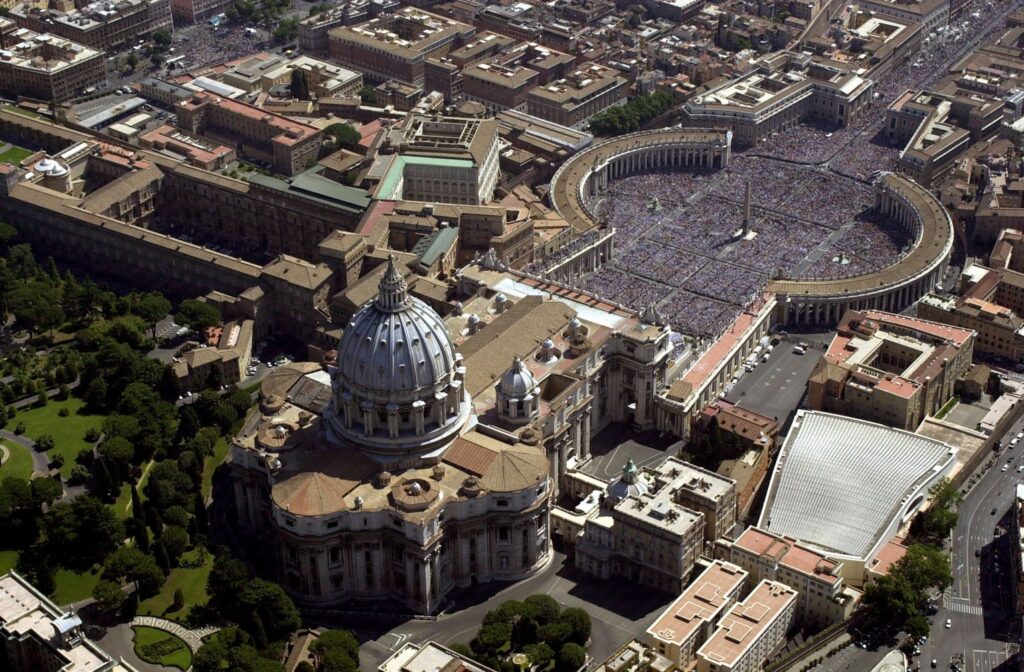
(OSV News photo/Simone Risoluti, Vatican Media)
The striking thing, the really shocking thing, was the decision (by Pope Julius II) to tear down that church. That’s the kind of question you and I would have been discussing, if we’d done this interview in 1506: “Do you really think it was a good idea?” My hair would probably be on fire.
It was a remarkable vision that Pope Julius II had to allow (architect Donato) Bramante to build a new church, preserving exactly the site of St. Peter’s tomb. You can see the remnants of the story in the present basilica. And you can see that always, at the core, no matter what happens, there’s always the tomb of St. Peter.
The new church by Bramante was intended to show that Christianity — at the time 1,500 years old — could produce things as beautiful as those made by the ancient Romans, who had a run of 1,250 years. In tearing down the old church, Bramante earned himself the nickname “Maestro Ruinante,” or the “Master of Ruin,” and then he died without leaving instructions on how to finish the new church. So then we have a Reformation, a church with just a couple of pews, and Peter’s tomb.
And then out of the ashes of that comes Michelangelo, who produces that extraordinary dome, which to this day is the landmark of Rome. He gave the last 19 years of his love for, in his own words, “the glory of God, the honor of St. Peter and the salvation of my own soul.”
OSV News: Which of the recent upgrades to St. Peter’s Basilica do you feel has been most important?
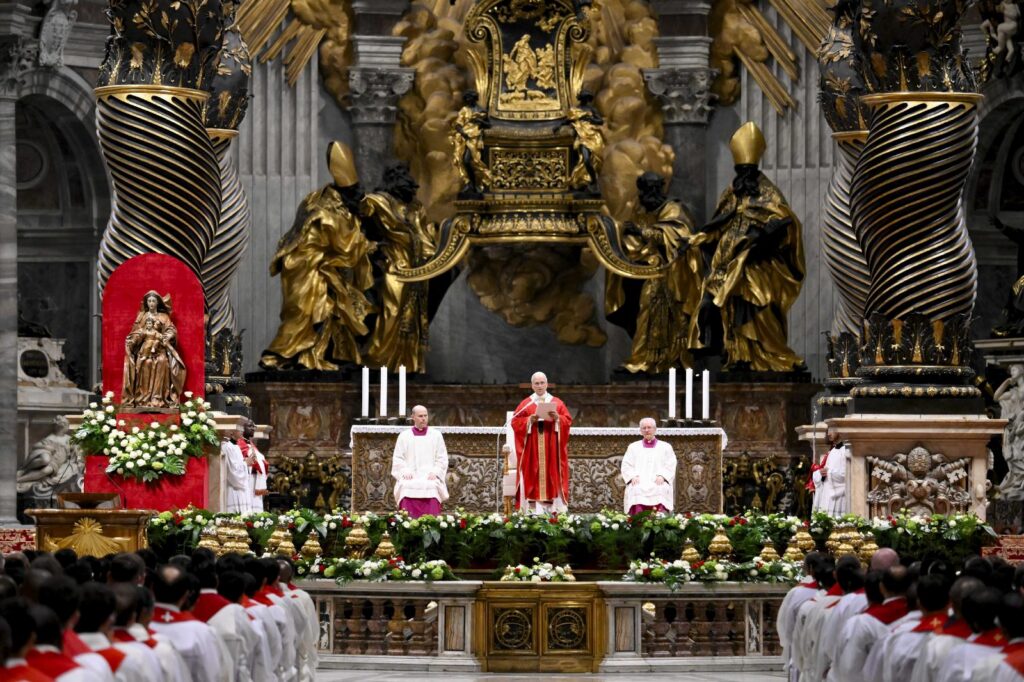
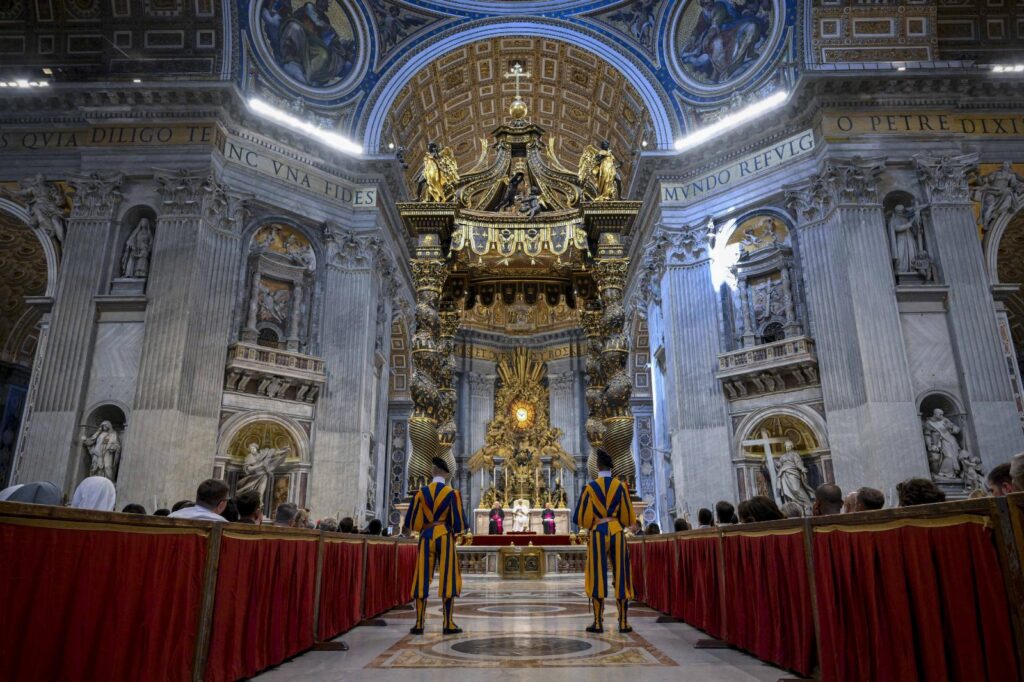
Lev: I would say the greatest upgrade, if we could put it that way, was already undertaken the year before by the Knights of Columbus. They were the ones who decided to step in and really begin enhancing Gian Lorenzo Bernini’s baldacchino (the ornate marble and gilded wood canopy over the basilica’s high altar, which in turn sits over the tomb of St. Peter). They were the ones who funded the restoration of the altar of the Chair (of St. Peter, the second altar in the basilica).
Those beautiful objects are meant to draw our attention to the true purpose of St. Peter’s Basilica, which reverences and venerates the tomb of our first pope, the “prince of the apostles,” as he’s called. So frankly, the 3D multimedia experience, the bistro or coffee shop or whatever it’s going to be — those things, I think are very, very secondary to the true function and the true importance of what the basilica needs.
OSV News: St. Peter’s Basilica is so many things to so many people: a sacred space, part of humanity’s cultural patrimony, a tourist destination. How do you navigate all those realities, particularly from a conservation perspective?
Lev: At the end of the day, you never lose sight of the fact that although perhaps many visitors are there simply for the art or because they have to check something of their list, the reason why (Renaissance sculptor, painter and architect) Michelangelo donated the last 19 years of his life to building the basilica’s dome (completed by Giacomo della Porta and Domenico Fontana) — the reason why we have this extraordinary collection of amazing works — is because of St. Peter.
If you really want to understand the core, the seed, of the basilica, it’s St. Peter. He was murdered for a crime he didn’t commit, and they dug a hole and put his body in it. This was not a very auspicious beginning for Christianity in Rome. But what the Romans didn’t realize when they discarded his body like so much garbage is that they really planted a seed.
And the beauty of St. Peter’s is the way we see that it has been growing — and not just growing, but flourishing — for 2,000 years. From a moment that looked like utter despair and the end of the Christian community, whose leader had been taken and murdered, we now see this incredible structure.
And it (the basilica) does not speak to vengeance or a sense of getting even with these people. When we walk up to St. Peter’s, and we see those arms (Bernini’s semicircular colonnades that frame St. Peter’s Square), that embrace of St. Peter drawing us all there — it’s a compelling story. It doesn’t matter where you’re from, or what your religion or your background is. You are welcomed into a story where defeat is not the end, and out of ugliness can come beauty, and that story speaks to every human being.
OSV News: What are some of the common reactions you’ve seen as you observe people in St. Peter’s Basilica?
Lev: I’ll give you two things: One is wonder, one is joy. When you manage to get people through the front door — access to the basilica leaves much to be desired — but when people step through the front door, they are awestruck. The sense of wonder that people experience when they cross that threshold is an amazing, beautiful thing.
On the one hand, you have this sense of the awesomeness of the space, the drama, the gilding, the gigantic statues — and then, when you immediately walk in, you look to the right and see Michelangelo’s Pietà (the lifesized marble representation of Mary cradling Jesus following his descent from the cross). There is something so intimate, so personal (about the work); it’s not grandiose, not triumphant, but this acceptance of suffering, this sense of hope in the darkness.
Seeing people gathered around that image, I look at their faces; and they all seem to share in that sense of longing, that sense of being able to understand and to enter into the experience of loss, suffering, hope.
The important thing about that work, and about the basilica and everything in it, is a reminder that no matter how dark things get, hope saves.
I love this anniversary of St. Peter’s Basilica, because it was such a nightmare building project. It took 120 years, 12 architects, 20 popes. The Protestant Reformation happened while we were building St. Peter’s. The cheeky answer to how much the basilica cost is “Germany and England.” Half the architects didn’t talk to each other. Half the popes couldn’t stand each other.
And yet, you walk in that church, and none of that is visible to you. I tend to call St. Peter’s Basilica the “game face of the Catholic Church,” because it really makes 2,000 years look easy — this amazing sort of providence that works all these moving parts from different ages together.
Gina Christian is a multimedia reporter for OSV News. Follow her on X @GinaJesseReina.
