


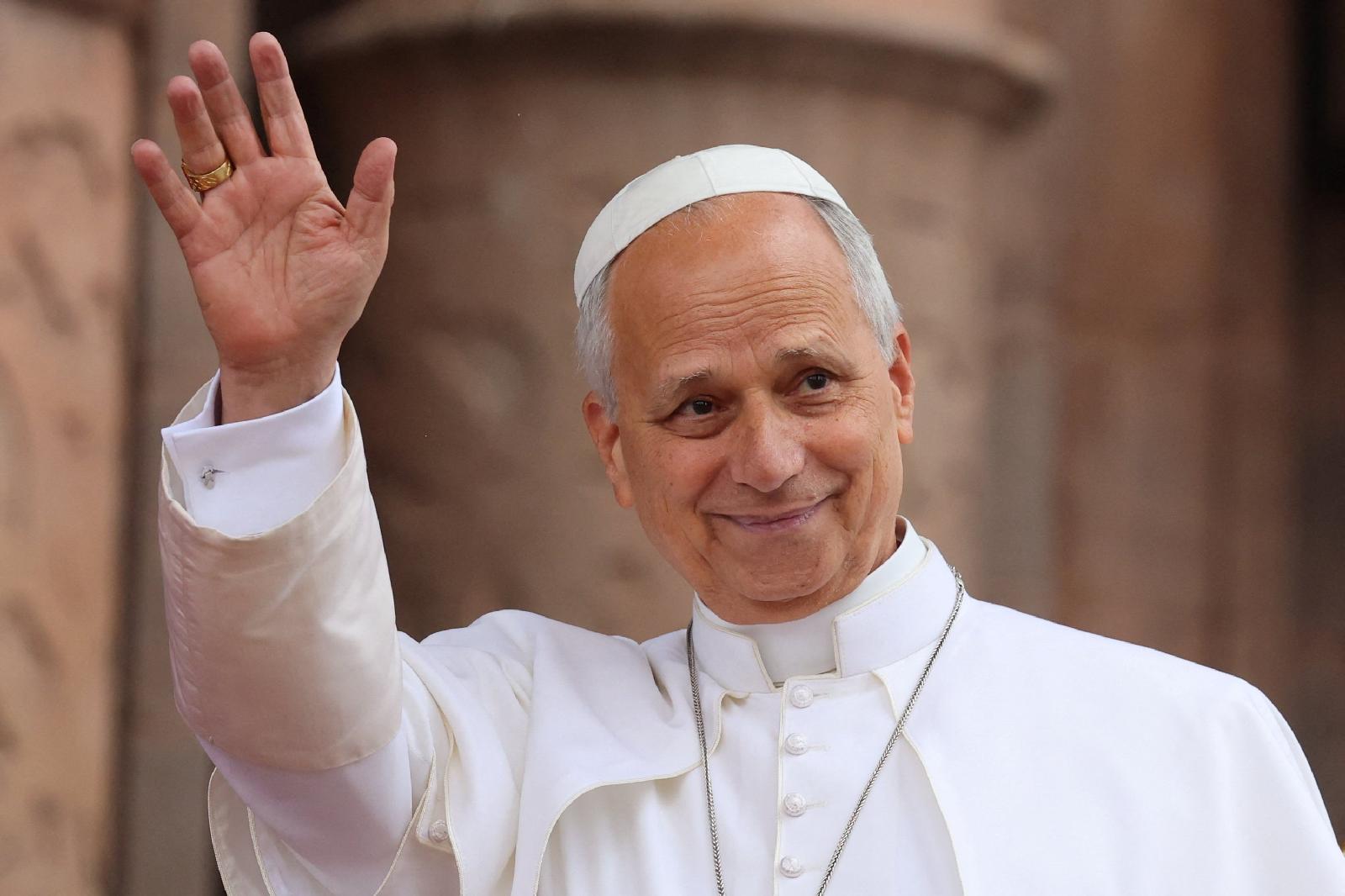
ROME (OSV News) — The road from Chiclayo to the rural town of Zaña runs for nearly an hour through a barren landscape. It is hardly the sort of setting that would ordinarily command the attention of a visiting pope.
But for Pope Leo XIV the road was filled with memories. When he arrived in Zaña Nov. 14 toward the end of his 12-day journey through South America, the welcome he received was exceedingly warm. Children rushed forward to embrace him and locals recounted fond memories of their former missionary bishop who now returned as the leader of the world’s 1.4 billion Catholics.
When then-Robert Prevost served as bishop of Chiclayo from 2015 to 2023, he made a point to visit the people in the furthest corners of his diocese from remote mountain communities to modest towns like Zaña. His decision to return to some of these places off the beaten path as the Successor of Peter offered a revealing portrait of the man who now leads the Catholic Church.
They show a pope who remains a missionary at heart, who approaches his responsibilities with determination and grit, and whose spiritual imagination has been deeply influenced by a largely overlooked saint in the wider Catholic world: St. Turibius of Mogrovejo, a 16th-century missionary archbishop of Lima. Together, they offer a glimpse of the kind of shepherd Pope Leo desires to be.
Peru: a missionary’s reunion with his flock
As the sun began to set over distant mountains in Zaña, the pope delivered one of the most personal speeches of his journey.
“How I have longed for this moment!” he told the crowd in Spanish.
“As I made my way here, so many memories returned to me from the years when the Lord entrusted me with the care of this beloved diocese.”
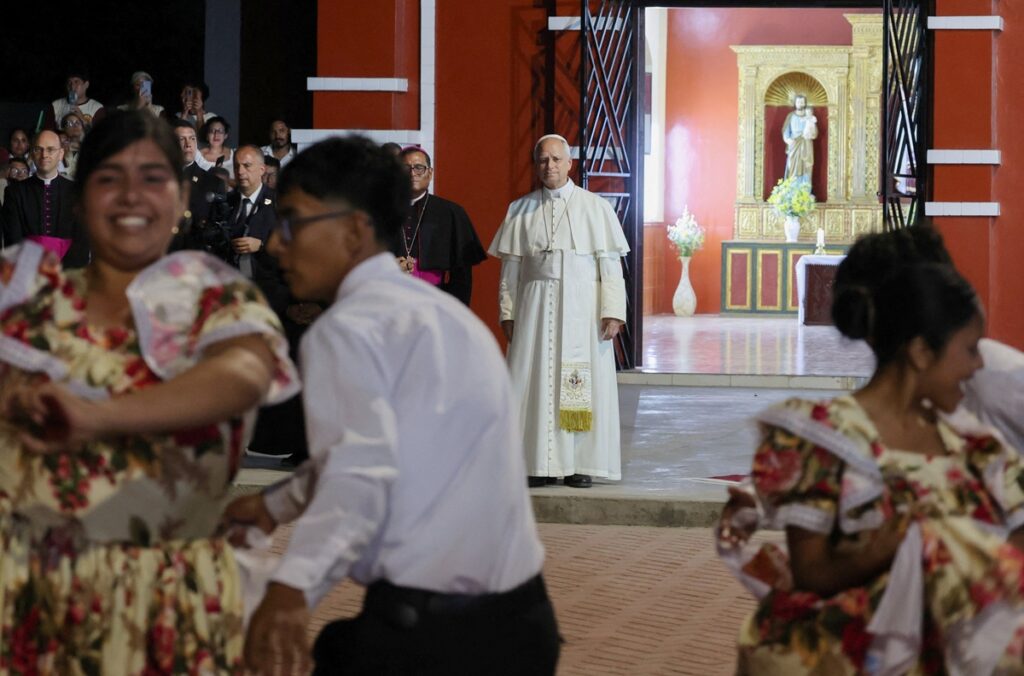
Pope Leo recalled spending the night before his installation as bishop in prayer before a relic of St. Turibius at the saint’s shrine in Zaña, asking for the grace to become “a shepherd after his own heart.”
“At the time, I did not know all that lay ahead of me or how much I would receive from you,” he said.
Then he struck a familiar chord, thanking residents for “the delicious food you have prepared so lovingly.” The flavors, he said, had brought back memories of the happy years he had spent among them. His words were met by thunderous cheers by the local Peruvians. Pope Leo knew his audience well.
And conversations with people in the crowd revealed that many also knew him well. Magalie Torres, whose hometown is about 15 minutes away from Zaña, remembered vividly how he came to visit her parish community.
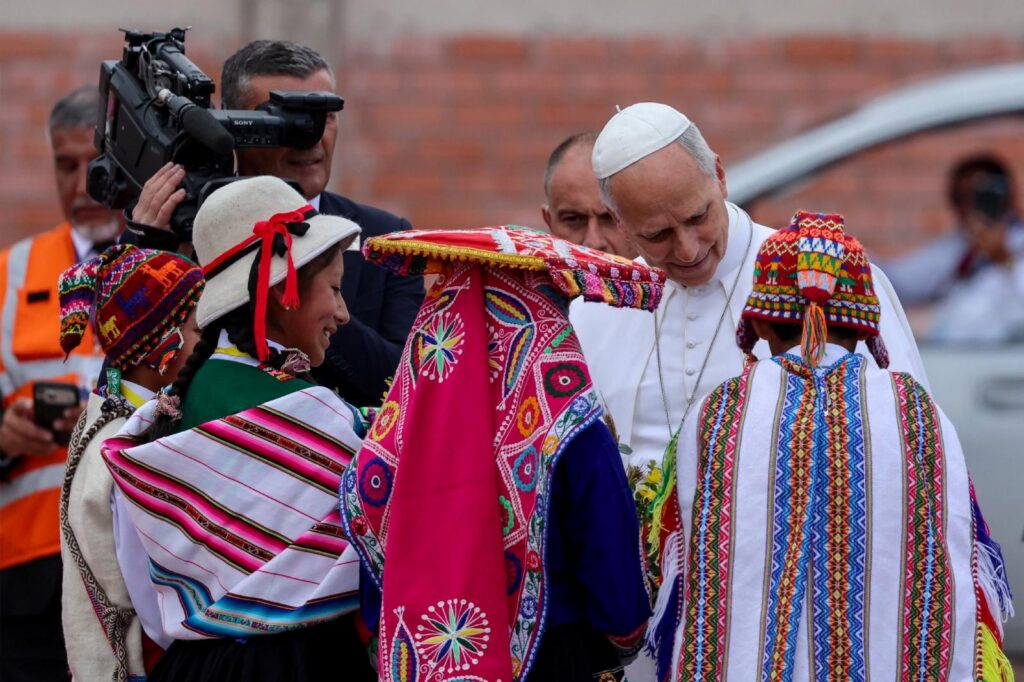
“When he went to my hometown, he stayed the whole day eating with us, having fun with us,” she told OSV News. “It’s like he’s one of us.”
“For us, he is El Padre Roberto,” Torres said. Recalling his efforts to help the poorest residents during the COVID-19 pandemic and the devastating El Niño floods, she added, “Any bad situation that people were facing, Pope Leo was there as one Peruvian taking care of them.”
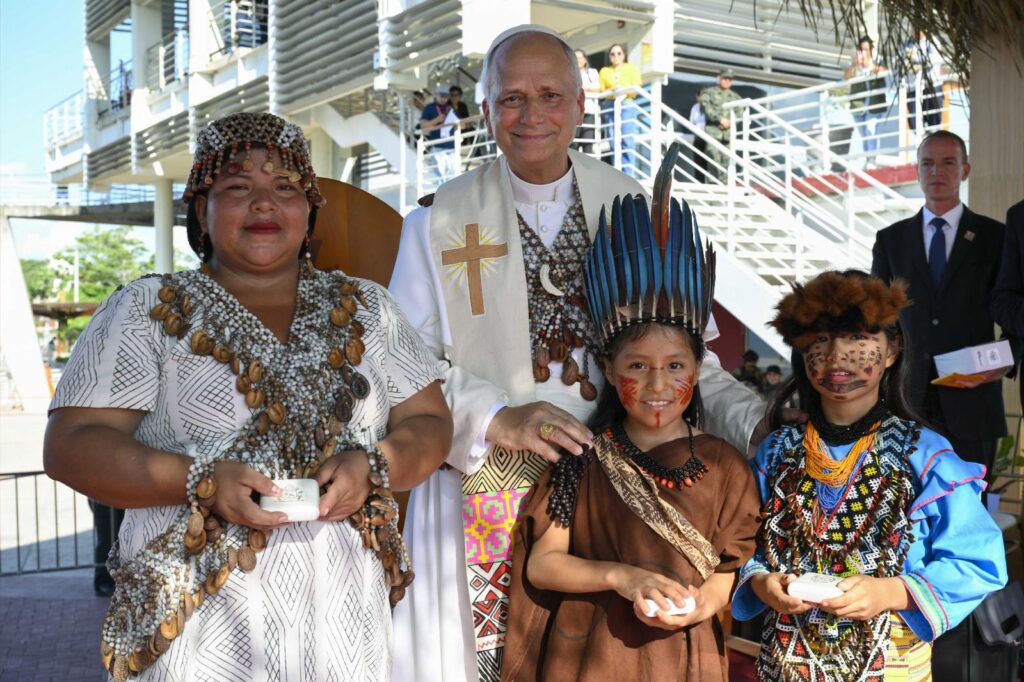
Zaña was once a destination for enslaved Africans brought to work the country’s sugar cane fields, and it is now home to an Afro-Peruvian museum. The pope acknowledged the “suffering and humiliation” of generations “torn from their homes and subjected to slavery,” and urged their descendants to remember how deeply God — and the pope — loves them.
“Many years have passed, and I carry so many of your faces in my memory,” Pope Leo told them. “I want to thank you from the bottom of my heart,” he added. “Thank you for your faith, your affection and all that you taught me during those years.”
A pope of ‘a certain determination’
The pope’s Nov. 6-17 journey to Uruguay, Argentina, and Peru, was also a test of physical endurance.
About a month before departing for South America, Pope Leo had undergone a lobectomy to treat lung cancer, removing the lower half of his right lung. The prospect of undertaking the longest and most demanding trip of his pontificate so soon after surgery raised questions about whether the rigorous schedule was prudent.
The itinerary included a total of 14 flights in 12 days with visits to Cusco, at high altitude, and Santa Cruz de Succhabamba, a mountain community he planned to reach by helicopter.
But the pope gave no indication that he wanted any modifications from the planned trip due to his surgery.
Aboard the outbound flight from Rome to Uruguay, he told reporters Nov. 6 that he was “convinced that this trip had to go forward.” The doubts surrounding the journey, he said, had never been his own.
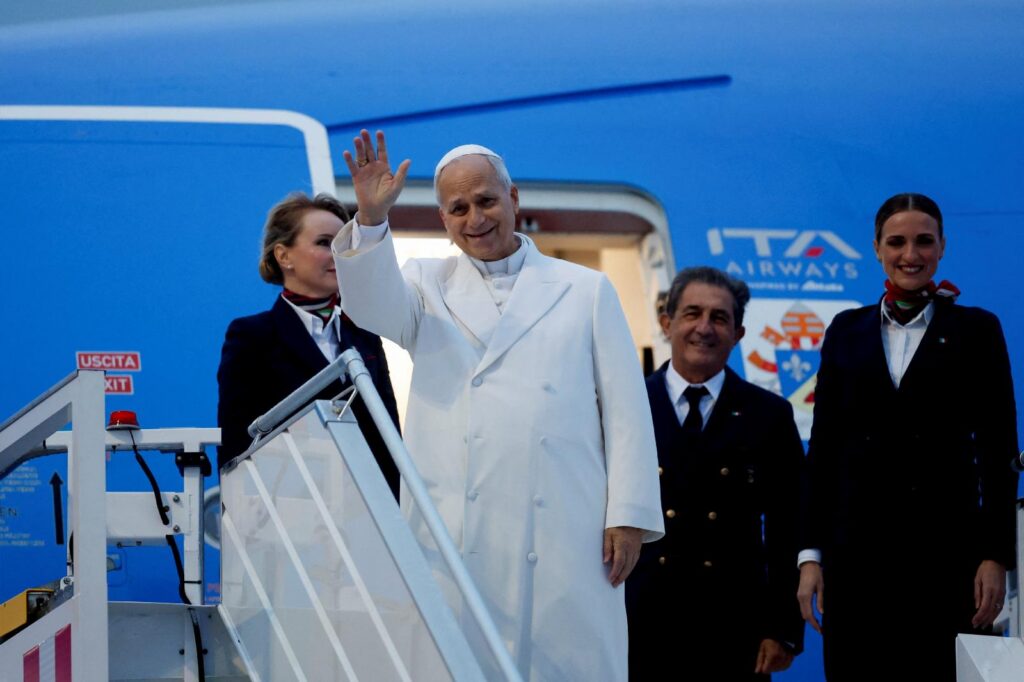
Pope Leo’s arrival in Peru revealed a personal dimension to that resolve. Santa Cruz de Succhabamba, like Zaña, was not an unfamiliar destination. As bishop, he had driven himself along its notorious winding mountain roads to visit the community, particularly for its patronal feast, El Señor del Costado.
In Santa Cruz de Succhabamba, Manuel Torres said he was grateful that the pope would come to “a forgotten” part of the country and remembered all the times then-Bishop Prevost would drive four and a half hours to visit his community.
“It is a difficult road,” he said. But the bishop kept coming, despite the rain, every Sept. 28 and again in November to celebrate confirmations.
Nelly Tenorio Quispe, whose daughter was confirmed by Bishop Prevost, remembered a pastor who related naturally to the town’s poorest residents.
“He was very humble, down to earth,” she said. “He would relate to the people of the most humble means in our town.”
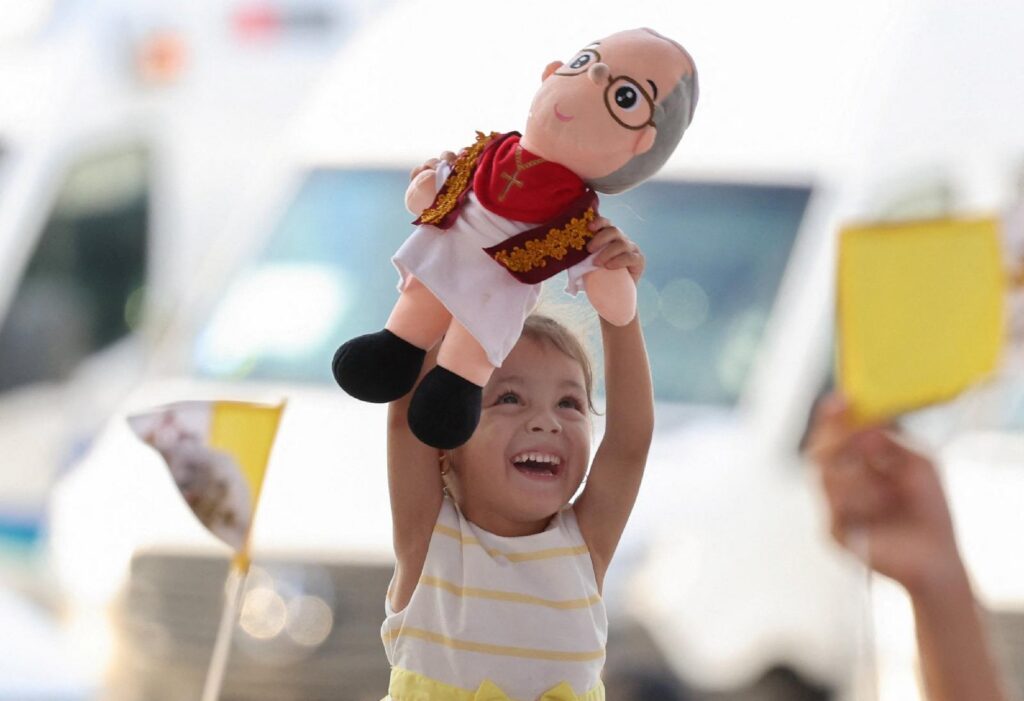
That willingness to make difficult journeys seems to capture something essential about Pope Leo’s approach to his ministry. As a bishop, he was not afraid of the effort and time required to travel beyond the main roads to fulfill what he saw as his responsibilities as a leader.
Now as the 71-year-old Bishop of Rome, he appeared animated and energized by the experience on the flight back to Rome after the long journey. When a reporter suggested that he must be tired, Pope Leo playfully raised his arms questioning the journalist’s assumption.
“With a certain determination of my own, and with the help of the doctors — who showed that it was indeed possible — I’ve managed,” he said during the 45-minute in-flight press conference. “As for the stamina — well, that is one of the gifts the Lord has granted me.”
St. Turibius of Mogrovejo: the saint who inspires the pope
Peru is home to many well-known saints from St. Rose of Lima to St. Martin de Porres, but throughout the trip, there was only one name recurred again and again in the pope’s speeches: St. Turibius of Mogrovejo, known in Spanish as Santo Toribio.
Pope Leo described St. Turibius as “a tireless, enterprising and creative apostle, a courageous defender of the poor and a generous shepherd, ready to pour himself out for his flock,” telling Catholics in Lima’s Cathedral that if one wants to reach the source of such energy and enthusiasm, “we must look to his intimate relationship with the Lord.” The Eucharist, he said in a later homily, was “the center of Saint Turibius’ life.”
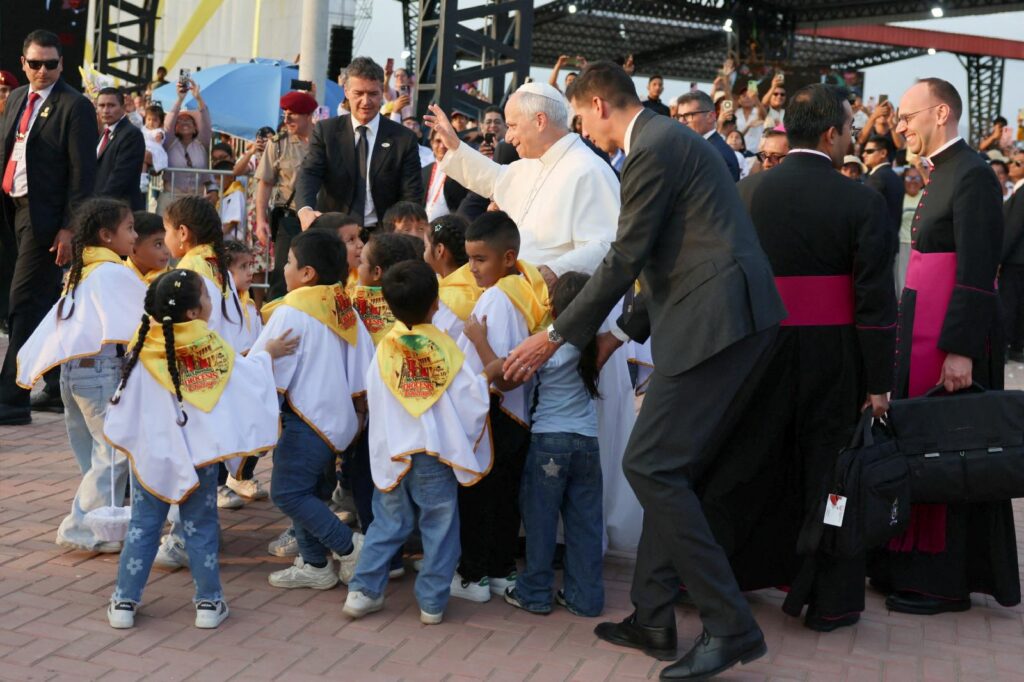
Born in Spain in 1538, St. Turibius was a layman trained in law when King Philip II appointed him archbishop of Lima. He arrived in Peru in 1581 and spent much of his 25 years as archbishop traveling through the vast territory of his diocese.
He made pastoral visits for roughly 17 of those years, covering more than 25,000 miles, often on foot or by mule, to reach remote Indigenous communities.
He founded a seminary, challenged abuses by colonial authorities and presided over the Third Council of Lima, which produced a catechism in Spanish and the local languages of Quechua and Aymara. He also insisted that priests learn Indigenous languages so they could communicate directly with the people they served.
St. Turibius died in Zaña on Holy Thursday in 1606, during one of his pastoral journeys. He was canonized in 1726 and is regarded as the patron of the bishops of Latin America.
The parallels with Pope Leo are difficult to overlook.
Both men were bishops from abroad who served a population whose culture they had to learn. Both journeyed beyond the centers of power to reach communities across a diverse territory. And both came to regard Peru not simply as a place of missionary assignment, but as a home.
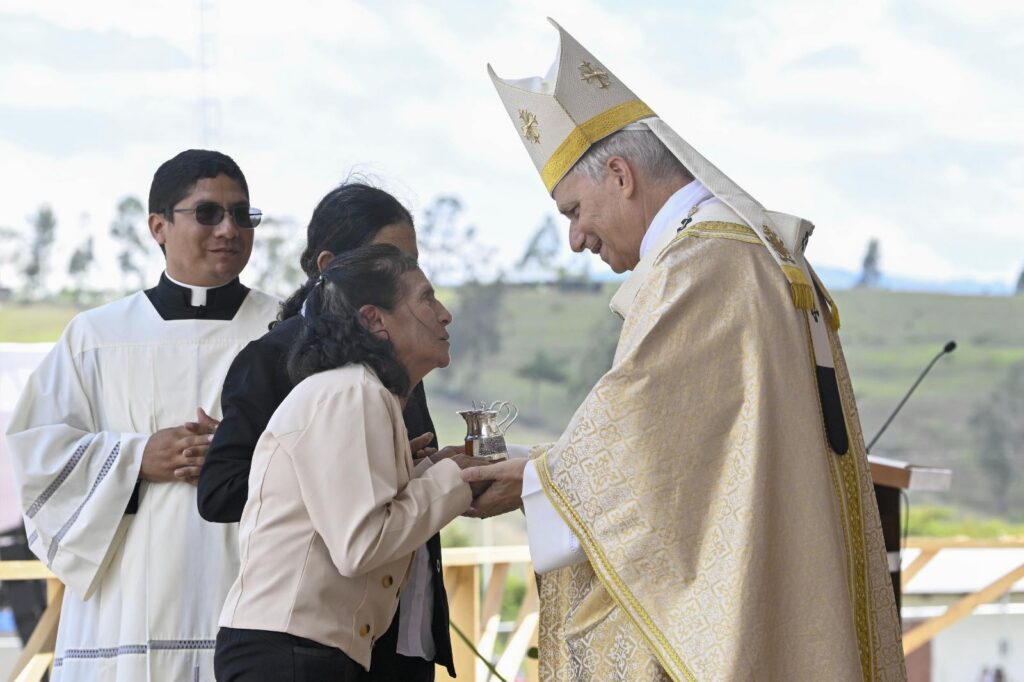
In Peru, Pope Leo repeatedly pointed to St. Turibius as a model leader, telling the country’s bishops that the saint who ascended the Inca Trail shows bishops today that “pastoral charity does not consist in avoiding problems but in remaining faithful to Christ and seeking the greatest possible good for people.”
“The episcopal mission does not always follow clear paths. We encounter pastoral difficulties, social divisions, misunderstandings and decisions that can prove to be painful,” he said.
“Just as the hardships of the journey wind through the mountains, so too does the Cross of Jesus weigh upon our ministry. Yet that very Cross reminds us that no toil offered out of love is in vain when it is united with the self-offering of Jesus Christ.”
The pope’s words may well reveal how he himself is seeking to apply the grit and determination he built up as a missionary in Peru to the new very different challenges now confronting him in the Roman Curia.
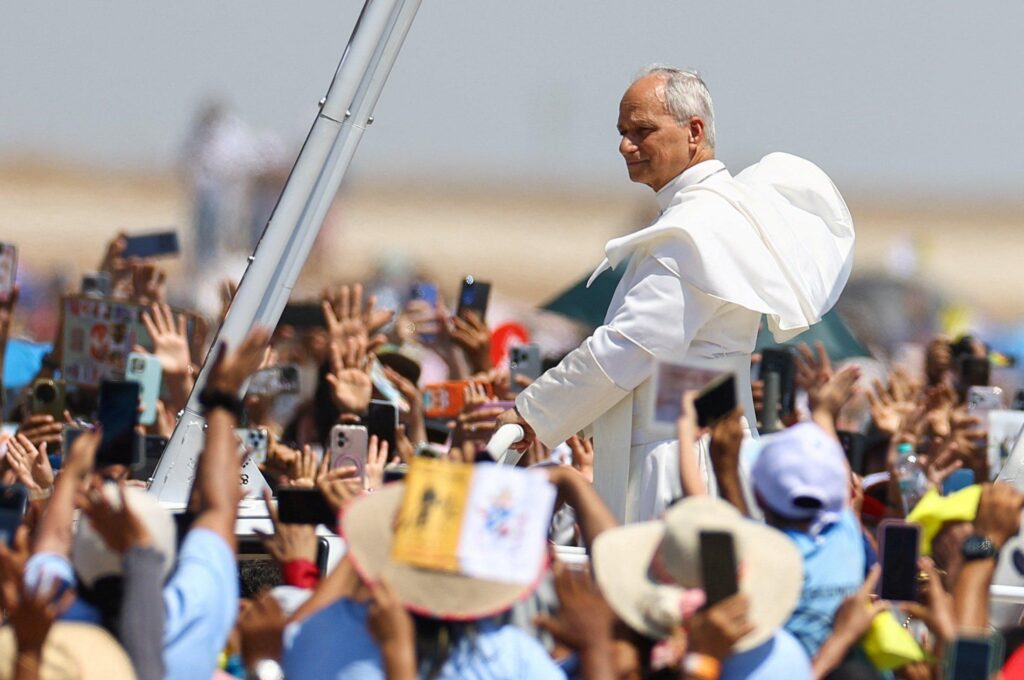
In his final Mass in Peru on Nov. 16, Pope Leo devoted much of the homily to the life of the saint, praising his love and care for the poor and his fight for the ordination of Indigenous people. He highlighted St. Turibius’ leadership style in which, through councils and synods, “he knew how to listen, engage in dialogue, welcome the inspirations of the Spirit and put communal discernment into practice, even including the poor in the search for truth.”
Pope Leo also described St. Turibius as “an architect of the civilization of love, standing against the builders of Babel in his own time,” using language from his encyclical “Magnifica Humanitas.”
In Peru, in the humble places where he once served and in the life of the saint he has long prayed to, Pope Leo revealed the kind of shepherd he has been and hopes to be.
And in his own life story, Pope Leo’s prayer before St. Turibius’ relic in Zaña the night before his episcopal ordination serves as a reminder of how much he came to love his flock.
“That night I asked the Lord to teach me how to be a shepherd. Looking back on the years that have passed, I now understand that you have been part of God’s answer to that prayer,” he told the people of Zaña with affection.
– – –
Courtney Mares is Vatican editor for OSV News. Follow her on X @catholicourtney.
