


WASHINGTON (OSV News) — President Donald Trump on May 8 pitched his policies regarding the U.S.-Mexico border at a Mother’s Day event at the White House.
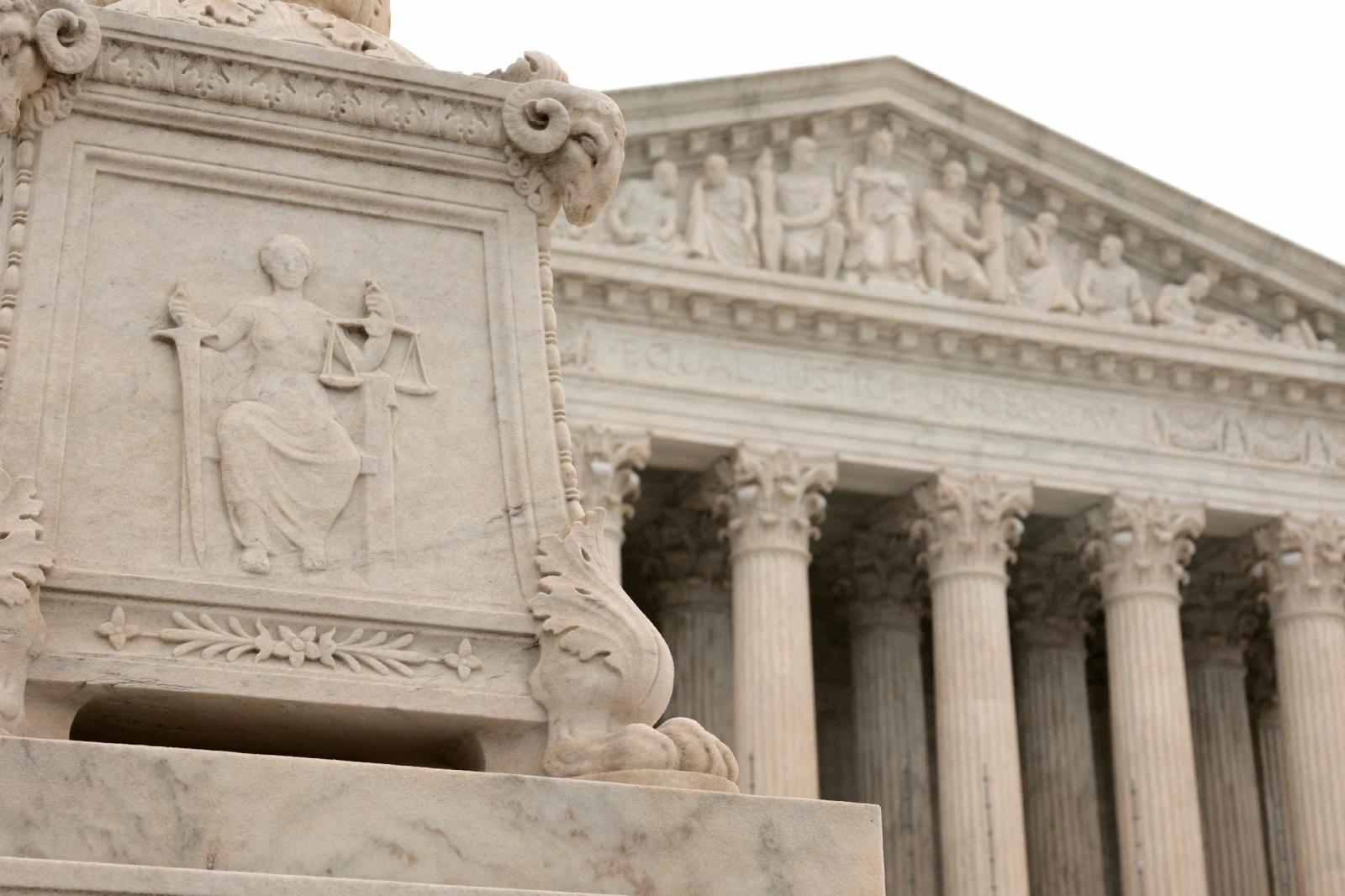
The same week, Louisiana asked the U.S. Supreme Court to uphold an appeals court ruling that sought to pause the distribution of mifepristone, sometimes called the abortion pill, through the mail as Chief Justice John Roberts lamented public perception of the high court as “political actors.”
Trump touts border policies at Mother’s Day event
At a May 8 White House event marking Mother’s Day, which included mothers of individuals killed by assailants lacking legal immigration status, as well as mothers who lost their U.S. military children in combat, Trump said, “Among those with us this afternoon are a number of the angel moms who saw their precious children stolen from them by the open border policies of the radical left.”
Trump’s remarks came amid reports that the White House is seeking to respond to some of the president’s supporters who argue he has wavered on his hardline immigration agenda.
A survey published May 6 by The Associated Press-NORC Center for Public Affairs Research found 61% of respondents said the U.S. used to be a great place for immigrants but is not anymore. The same poll found broad support for birthright citizenship, a policy the Trump administration is challenging in a still-pending Supreme Court case.

Catholic social teaching on immigration balances three interrelated principles — the right of persons to migrate in order to sustain their lives and those of their families; the right of a country to regulate its borders and control immigration; and a nation’s duty to regulate its borders with justice and mercy.
Trump also repeated a debunked claim that “the Congo” emptied its prisons “and then told them to just walk in, because stupid Americans are going to accept you beautifully.” Such claims have been disputed by both the governments of the Democratic Republic of Congo and the Republic of Congo, two distinct nations.
Earlier in the week, on May 5, Trump continued his series of social media and verbal attacks on the pontiff, accusing him in a radio interview of “endangering” Catholics through his opposition to the Iran war.
Trump has repeatedly claimed that Pope Leo XIV — the first U.S.-born pontiff, who marked the first anniversary of his election May 8 — supports Iran having nuclear weapons; however, the pontiff never made any such statement and has consistently called for the rejection of nuclear weapons.
Asked by reporters in Rome May 8, following a meeting the previous day with Pope Leo, if he would recommend to the president that he stop criticizing the pope on social media, Secretary of State Marco Rubio, replied, “Why would I tell you what I’m going to recommend to the President?”
“But beyond that, the president will always speak clearly about how he feels about the U.S. and U.S. policy,” Rubio said. “The president of the United States is always going to act in what’s in the best interests of the United States. I think we can do that and continue to also have a very productive and fruitful and important relationship with the Church, because it plays an important role in the world as well.”
Louisiana asks Supreme Court to uphold appeals court ruling that blocked abortion pill distribution by mail
The state of Louisiana on May 7 asked the Supreme Court to uphold a temporary injunction issued by the 5th U.S. Circuit Court of Appeals that would pause a federal policy permitting the distribution of mifepristone by mail.
In its filing, Louisiana argued the distribution of the drug — which is commonly, but not exclusively, used for abortion up to 10 weeks’ gestation — by mail violates its own state laws restricting abortion, resulting in what it called “approximately 1,000 illegal abortions in Louisiana each month.”
Previously, on May 4, the high court temporarily blocked the appeals court ruling, directing Louisiana to respond to an appeal from Danco Laboratories, one of the pharmaceutical companies that manufactures the drug.
The 5th Circuit previously granted Louisiana’s request to temporarily pause the Food and Drug Administration policy issued by the Biden administration, which permitted mifepristone to be distributed by mail. However, the Trump administration has thus far left that regulation in place despite opposition from pro-life groups, and has sought to block state challenges to mifepristone, such as Louisiana’s.

Prior to the appellate ruling, a federal judge on April 7 had granted the Trump administration’s request to pause Louisiana’s lawsuit challenging the FDA’s approval of mifepristone pending the FDA’s promised safety review, indicating the state could continue its challenge after that review. However, the status and timeline of the FDA’s review are still unclear. On May 4, the head of the U.S. bishops’ pro-life committee wrote a letter to administration officials expressing concern about the status of the promised safety review.
Proponents of mifepristone — the first of two drugs used in a chemical or medication-based abortion — argue it is statistically safe for a woman to take, and attempts to restrict it are an attempt to ban abortion outright. Opponents of the drug’s use for abortion argue there are significant risks to those who take it, particularly outside of medical settings, in addition to ending the life of an unborn child early in its development.
The Catholic Church teaches that all human life is sacred from conception to natural death, and as such, opposes direct abortion.
However, the same drug combination has sometimes been used in recent years for miscarriage care, where an unborn child has already passed, a situation that Catholic teaching would hold as morally licit use.
Chief Justice Roberts disputes perception of US Supreme Court as ‘political actors’
Roberts said May 6 in remarks at a law conference in Hershey, Pennsylvania, that he believed Americans hold a misconception about the justices as “political actors.”
“I think at a very basic level, people think we’re making policy decisions, we’re saying we think this is what things should be as opposed to this is what the law provides,” Roberts said. “I think they view us as truly political actors, which I don’t think is an accurate understanding of what we do. I would say that’s the main difficulty.”
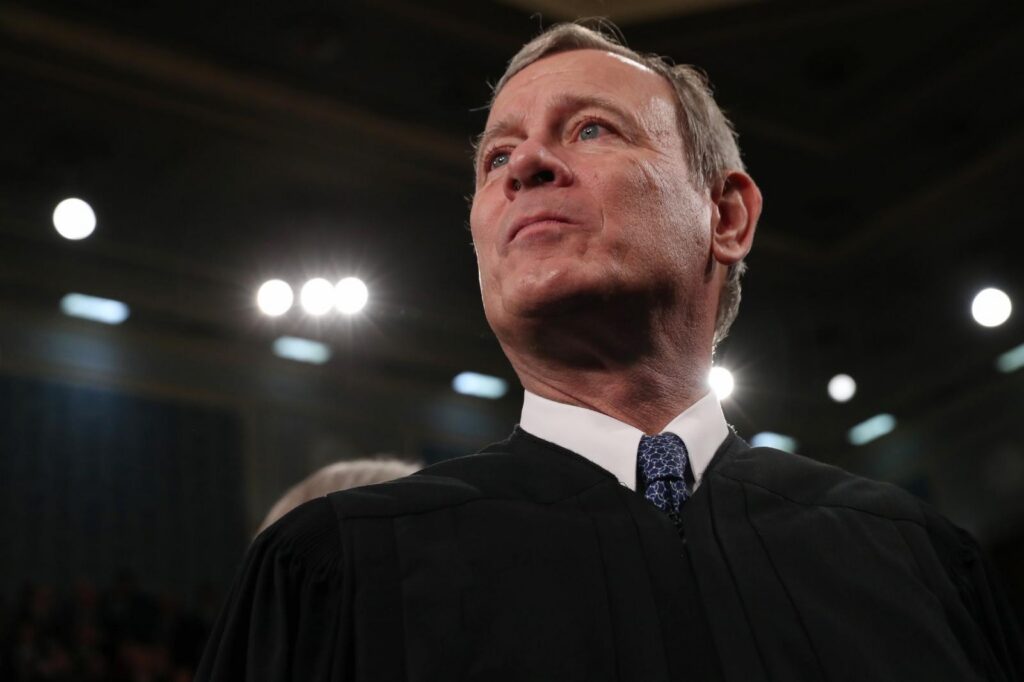
Roberts’ comments come shortly after an April Marquette Law School Poll national survey found the high court has a net-15 approval rating, with just 42% of Americans saying they hold a favorable view of how the court is doing its job, while 57% said they disapprove.
“One of the things we have to do is issue decisions that are unpopular,” he acknowledged.
However, the poll also found that some individual rulings by the court are rated more highly, such as its Feb. 20 ruling striking down Trump’s sweeping tariff policy, finding it exceeded his authority. Two-thirds of respondents reported a favorable view of that ruling.
“We’re not simply part of the political process, and there’s a reason for that, and I’m not sure people grasp that as much as is appropriate,” Roberts, one of six Catholics currently among the nine justices, said.
Kate Scanlon is a national reporter for OSV News covering Washington. Follow her on X @kgscanlon.
