


(OSV News) — The recent sentencing of a convicted online child predator to a 40-year prison term and renewed safety warnings from federal officials mark a call for parents to double down on protecting their kids in the digital sphere, a Catholic legal scholar told OSV News.
“This is yet another recognition of the growing threat” posed by “sadistic online exploitation,” said Mary Graw Leary, professor of law at The Catholic University of America Columbus School of Law in Washington and director of that school’s program in modern prosecution.
Leary — a former federal prosecutor and expert on human trafficking and victimization — shared her thoughts with OSV News following the July 8 federal sentencing of 19-year-old Alexis Aldair Chavez in San Antonio, who in 2025 pleaded guilty to racketeering and both possession and distribution of child pornography.
Espousing violence for its own sake
Chavez was an online leader of 8884, one of several nihilistic violent extremist, or NVE, groups, whose adherents espouse violence for its own sake as they seek standing among their likeminded online peers.
NVE groups operate globally across almost all social media platforms and communities most prominently Telegram, Discord, Roblox, X, Instagram, TikTok and Reddit, with activity detected as well on Minecraft, Fortnite, Twitch, Steam and Snapchat.
Group leaders — typically males under the age of 25, and sometimes barely older than their child and teen victims — rely on sextortion, coercing victims to engage in self-harm, including suicide and other destructive behaviors such as animal abuse, for perpetrators’ entertainment.
Members of the 8884 group and related networks such as 764 “share accelerationist goals that include social unrest and the downfall of the current world order, including the U.S. Government,” said the Department of Justice in its July 8 press release announcing Chavez’s sentencing.
Transnational crime, harm to children online
“It’s kind of a Venn diagram, where you’ve got two of the things most concerning to us online,” said Leary. “One is transnational crime, and the other is harm to children online — and this is hitting both right in the middle, so lots of sectors of law enforcement are concerned.”
Counterterrorism experts have pointed to the impact of NVE groups on Robin Westman, the perpetrator of the deadly mass shooting at Annunciation Catholic Church in Minneapolis.
Leary warned that the U.S. legal system is “heavily influenced” by lobbying from the technology sector.
An October 2025 analysis by the cross-partisan Issue One, a political reform group based in Washington, found that “seven of the largest tech, artificial intelligence (AI), and social media companies spent a combined $50 million on federal lobbying during the first nine months of 2025 — an average of nearly $400,000 for every day that Congress has been in session.”
Meta alone hired 87 lobbyists as of October 2025, “roughly one for every six members of Congress,” said Issue One.
That full-court press prevents lawmakers “from passing meaningful child protection legislation,” said Leary.
Different House, Senate bills focused on kids online
She pointed to the House of Representatives’ recent passage of the Kids Internet and Digital Safety Act, or KIDS Act, which “completely guts the Senate version, which is called the Kids Online Safety Act.”
The latter contains a crucial “duty of care” that compels social media companies to prevent known harms — including suicide, eating and substance abuse disorders and sexual exploitation — their platforms pose to young users.
Along with addressing the “big-picture problem” of holding technology companies to account, Leary advised “three things” parents and caretakers can do to keep kids safe online.
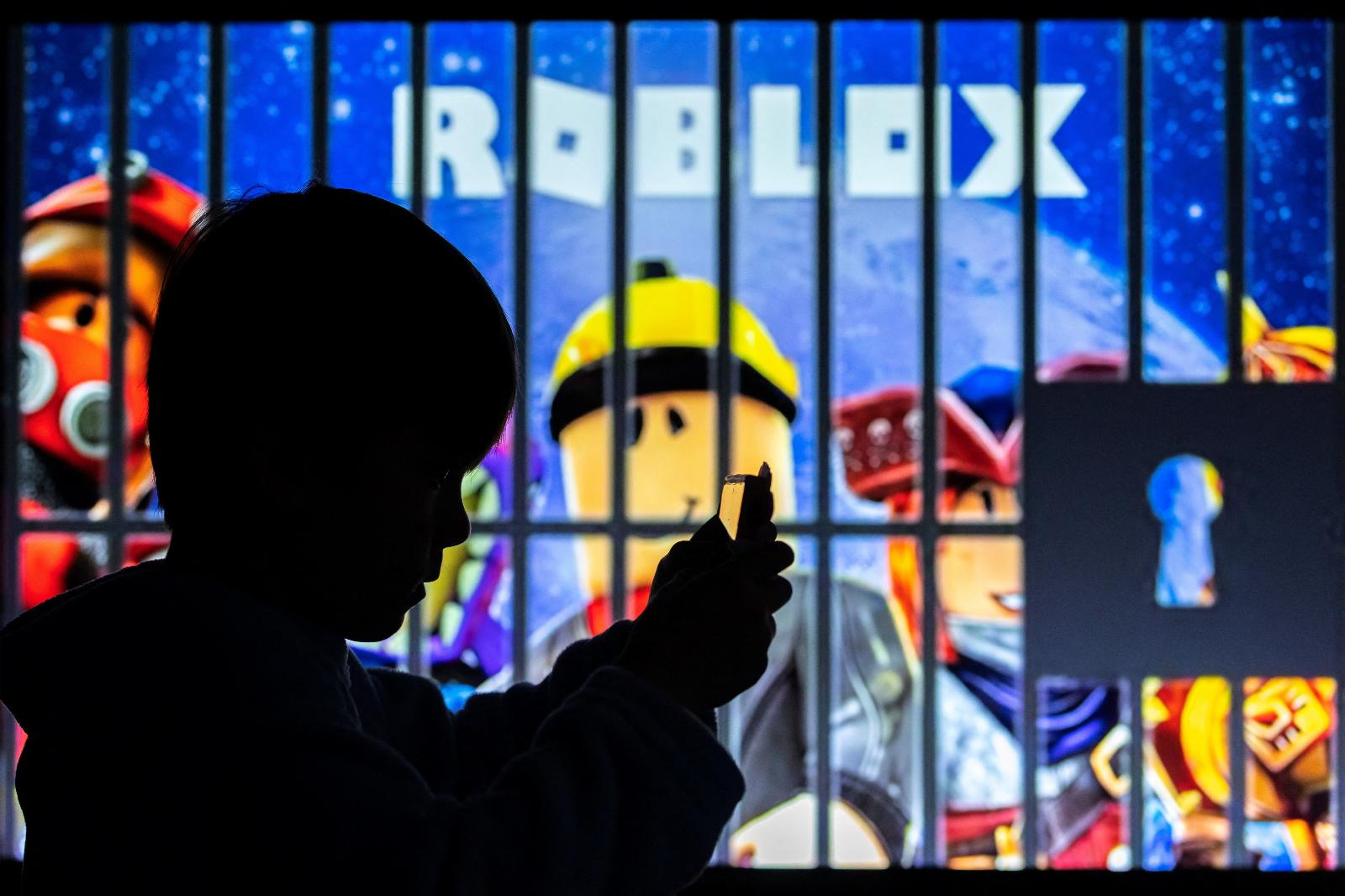
“One is monitor, and monitor in detail,” she said. “Just knowing your kid is playing on Roblox is not monitoring.”
‘2026 Dirty Dozen Watch List’
While parents may “know that Roblox is a gaming thing that seems harmless,” said Leary, the platform is actually on the National Center on Sexual Exploitation’s “2026 Dirty Dozen Watch List,” with the organization noting sexual predators have “routinely” used Roblox to target children.
Secondly, parents also must “understand where and how” social media platforms foster child exploitation, she said.
“We know these things thrive … specifically on Telegram, Discord and Roblox,” which “pride themselves on privacy and secrecy,” Leary said. “Why would your child need to be on some of these platforms? I don’t think your average teenager needs to be on a platform where a Chinese dissident might need to be, because the core value is privacy.”
A third strategy Leary highlighted is to “really understand the warning signs” that a child is being exploited online.
FBI’s warnings on child exploitation online
“This is laid out pretty extensively in the FBI’s warnings,” she said, citing indicators such as “sudden changes in behavior, getting anonymous gifts, harm to family pets.”
In addition, said Leary, “Of course, we’re always going to be concerned about signs of self-harm,” which in NVE circles include “particular kinds of carvings” victims make in their skin to demonstrate compliance with predators.
Educating children to “understand the grooming signs” while nurturing “open communication” is crucial, she said.
“You absolutely just can’t know too much about what your child is doing online,” she said. “Because it is open season on your children without any effective regulation.”
Gina Christian is a multimedia reporter for OSV News. Follow her on X @GinaJesseReina.
