


When I visited Kalopira in the Diocese of Lodwar in northwestern Kenya a few years back, there was no church in the ridge — only a vast open field, a large acacia tree and a small table set up as a makeshift altar.
A colleague and I were with Father Albert Kemboi, who was coming to celebrate Mass for the Turkana people at one of the 26 outstations attached to his parish — places outside of town where Mass is said for those who live too far to come in. We had driven 40 miles in almost two hours for the service. Many in the congregation had walked longer than that across valleys, rifts and ridges, in heat well over 100 degrees, to be there.
Because the Turkana are rarely stationary, following their herds in search of grazing land, a priest almost never gets the same congregation twice. He comes, celebrates Mass and leaves. What happens to the faith of those people until the next visit depends on whoever stays behind.
I have been thinking about that ridge since Pope Leo XIV returned to Rome Nov. 17. His 12-day journey to Uruguay, Argentina and Peru drew an estimated 13 million people to roughly 50 events. In Uruguay, often described as Latin America’s most secular country, the prayer vigil at Montevideo’s Centenario Stadium drew some 70,000 people inside and another 30,000 outside. In Argentina, more than 6 million took part in four massive gatherings. In Peru, an estimated 3 million lined the streets of Lima simply to watch the popemobile pass, and approximately 1.5 million attended the final Mass.
Those figures reveal an openness to faith that statistics about secularization and disaffiliation often obscure. But a papal journey is, in a sense, an outstation Mass on an enormous scale. The pope comes, celebrates and leaves.
After the papal visit
Now comes the more difficult question: Are the local churches prepared for what happens after he leaves?
As an Argentine, I watched millions of people in my country respond to Pope Leo’s presence. We came to hear about reconciliation, communion, human dignity and Christ. Some traveled for hours. Others camped overnight. Some had not attended Mass regularly in years but knew that they needed to be there. Amongst my friends, many had no interest in the visit, until they saw what it stirred in them.
Obviously, crowd estimates cannot measure conversion, and excitement about a pope is not the same as a sustained sacramental life. But neither should the Church minimize what happened. At the very least, millions demonstrated that they are willing to listen. They crossed a threshold. They placed themselves within reach of the Gospel.
Will they find us waiting for them?
A papal visit creates a rare missionary opening. Media coverage across the three countries was remarkably positive. Pope Leo engaged governments across the political spectrum, and his stamina — less than a month after surgery for a cancerous tumor in his lung — impressed even observers with little interest in the Church. For nearly two weeks, the church was seen not in relation to scandal or decline, but gathering people, listening to painful testimonies and inviting divided societies toward reconciliation.
Yet an opening is not the same as evangelization. It becomes evangelization only if someone walks through it.
In Pucallpa, in the Peruvian Amazon, Pope Leo noted that the vicariate, an ecclesial territory as large as some countries, has only 25 priests. He thanked the men and women religious and lay pastoral leaders who preserve the faith with what he called “heroic fidelity” in the most remote places.
Missionary territories
In places like Pucallpa and Lodwar, that is simply how the Church survives. Between a priest’s visits, catechists, women religious, lay leaders and families lead prayer, teach the faith, accompany the suffering and prepare the community for his return. They do it because there is no alternative.
Buenos Aires, Montevideo and Lima have parishes and priests. Yet many of the millions who turned out for Pope Leo relate to the Church much as a nomadic congregation does: They gather when it comes to them, then disappear over the ridge. In that sense, the periphery has something to teach the center. The cities now need to work like mission territory.
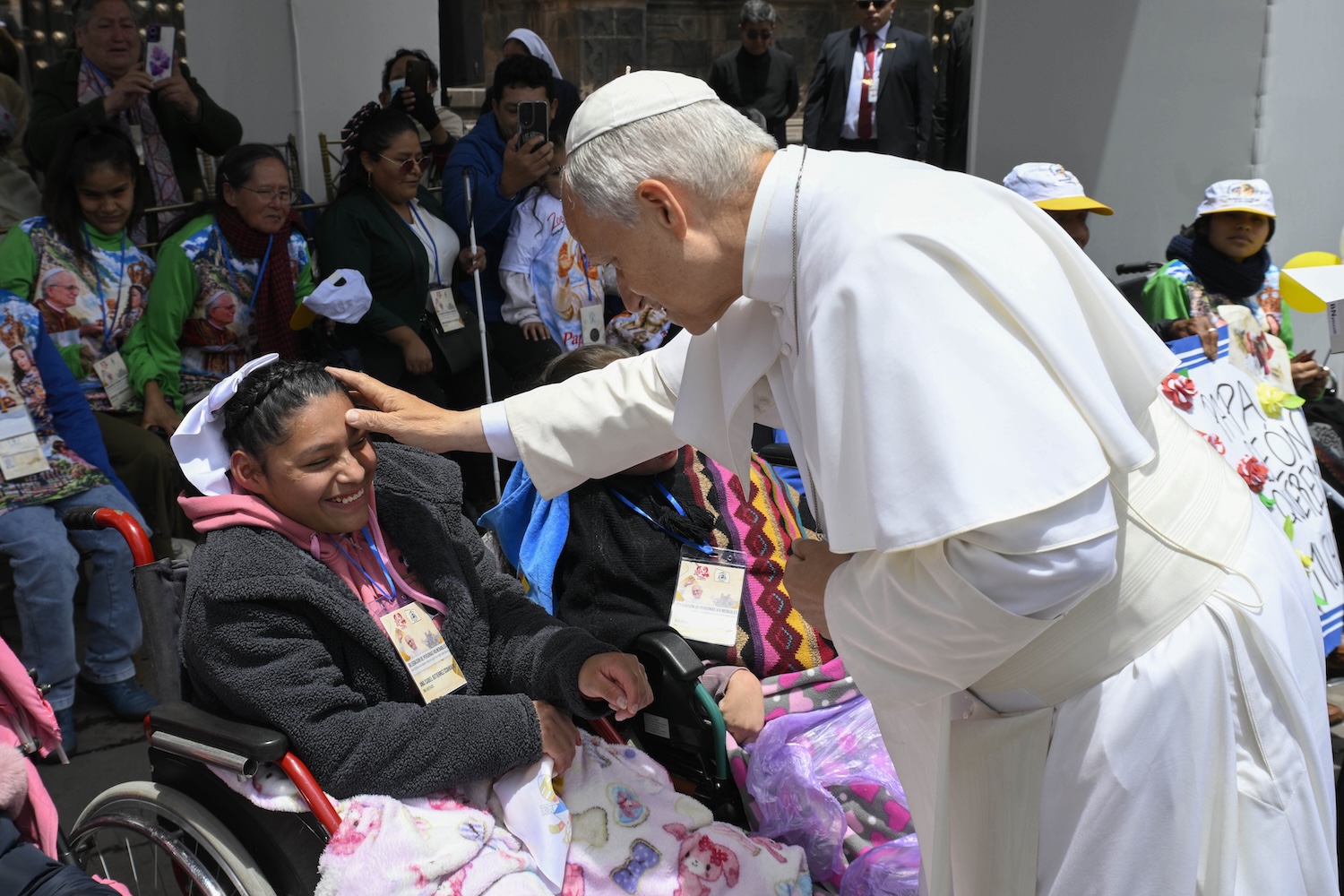
That means parishes ready to receive those returning after years away, with accessible confession times, strong catechesis and missionary disciples willing to listen. It means following up with the young people who heard the pope tell them they have a place in the Church, accompanying people recovering from addiction, supporting families in crisis and making room for people with disabilities — not only during a papal event, but every Sunday. Furthermore, every day of the week. And it means going out to look for people, rather than waiting for them at the door.
And this is not a task for the priest alone. Though the lay faithful cannot hear confession or celebrate the Eucharist, we are called to be formed and informed to answer questions, to listen, and to, as the motto chosen for the Argentine leg of the trip urged, “Welcome, everyone. Go and proclaim!”
At the closing Mass in Lima, Pope Leo summarized the journey in one sentence: “My journey is coming to an end, but the mission continues.” His departure was not the conclusion of the visit. It was the handing over of responsibility.
At his general audience Nov. 18, a day after returning to Rome, he described the Church as both welcoming and “wholly missionary, finding her coherence and joy in evangelizing.”
That task extends beyond Latin America. American Catholics who watched the first U.S.-born pope return to the region where he served as a missionary have a role, too. Through the Pontifical Mission Societies, Catholics in the United States help sustain the catechists, women religious and seminarians who keep the faith alive in mission areas — like Pucallpa or Lodwar — long after the popemobile or the priest’s car have driven away.
Pope Leo drew millions. He showed that people are still searching, still willing to listen and still capable of being moved by the Gospel.
Now the banners have come down. The streets have emptied. The television crews have moved on.
The question is no longer how many people came to see the pope. It is how many will encounter Christ because the Church was ready for them afterward.
Inés San Martín writes for OSV News from Argentina. She is the editor of MISSION Magazine of the Pontifical Mission Societies USA.
