


For generations, the United States has offered refuge to people forced from their homes by persecution. That tradition is rooted in our national history all the way back to the Founding, but for Catholics it also reflects something deeper: the conviction that every human person is created in the image and likeness of God and therefore possesses an inviolable dignity.
Today, that tradition is being tested by the sharp decline in refugee admissions under the current administration.
The modern U.S. Refugee Admissions Program was established by Congress in 1980; that law unanimously passed the Senate and received broad support in the House of Representatives.
Each year, the president sets the number of refugees who may be admitted into the United States, a figure referred to as the “Presidential Determination.” Annual refugee admissions have averaged approximately 92,000 across both Republican and Democratic administrations.
The current administration suspended the program in January 2025 with very limited exceptions. The result has been a dramatic contraction of the resettlement program at a time when more than 41 million people worldwide are living as refugees — the highest number since World War II.
For Fiscal Year 2027, the Presidential Determination has been set at 17,500, ostensibly reserved for Afrikaners from South Africa alone, each of whom is being resettled as an exception to the general suspension of the program.
Reflection on our responsibilities
An 80% decline from the historical annual average should prompt serious reflection about whether our nation is maintaining a meaningful commitment to people fleeing persecution, the same obligation imposed on all of the world’s countries that seek to advance justice and freedom.
It is very important to recognize that refugee resettlement is a lawful humanitarian pathway established specifically for people who have fled, or have a well-founded fear of, persecution based on race, religion, nationality, political opinion, or membership in a particular social group. Refugees undergo extensive screening and security vetting before admission to the United States, and for decades the U.S. program has offered a path to some of the world’s most vulnerable.
It is also necessary to acknowledge that, under the current approach, not a single person persecuted on the basis of his or her faith, Christian or otherwise, was resettled as a refugee within the past year. This was reaffirmed in a recent report from two Christian organizations.
For a country founded on religious freedom and whose civil leaders continue to remark often about the importance of promoting and defending this inherent good, the failure to offer refuge to even a single one of our persecuted brothers and sisters in Christ is a moral shame.
Catholic social teaching
Catholic social teaching gives us a clear framework that recognizes the legitimate responsibility of governments to protect the common good and make prudent judgments about their capacity to receive newcomers. That same teaching recognizes the paramount importance of protecting human life and the responsibility of all toward those who are most vulnerable.
These principles are not abstract. Scripture repeatedly calls us to consider people forced from their homes. Abraham leaves his homeland by God’s command, Israel endures exile and the holy family flees persecution for safety in Egypt. And it is Christ Himself who tells us, “I was a stranger and you welcomed me” (Mt 25:35).
Consequently, for her part, the Catholic Church has always accompanied those experiencing displacement. The predecessor organization of the U.S. Conference of Catholic Bishops, the National Catholic Welfare Council, was founded in 1919, well before any sort of formal government program existed, with one of its principal roles being to help coordinate the U.S. Church’s efforts to integrate newcomers after the ravages of World War I.
Pope Leo’s message
Pope Leo XIV brought particular attention this year to children caught in displacement. In his message for the 112th World Day of Migrants and Refugees, our Holy Father called us to see beyond statistics and recognize the individual child before us. He urges each of us to open our eyes and heart to children who have been displaced and reminds us that many have endured separation, violence, exploitation and profound insecurity. Behind the refugee numbers are children growing up far from home and families who have spent years searching for safety, stability and the chance to rebuild their lives.
The Holy Father’s message is directed not only to individuals and communities, but also to public authorities. He calls governments to place the best interests of the child at the center of their decisions, including through effective legal instruments of protection, and efforts that support family unity and reunification.
Bishops’ message
My brother bishops and I similarly affirmed in our special pastoral message on immigration last year that human dignity and national security are not in conflict. Refugee resettlement demonstrates that these commitments can coexist. It is a legal, structured pathway that offers protection while allowing our government to conduct careful screening before admission.
To be clear, Catholic teaching does not prescribe a particular annual refugee ceiling. My brother bishops and I certainly also recognize the myriad challenges faced by families already residing in our country. However, we can both love and care for these brothers and sisters while still welcoming persecuted persons who, if given the chance, have shown immense potential to enrich our communities. Governments must make prudential judgments about capacity and resources. But prudence should not become de facto retreat from our tradition and values.
As Pope Leo reminds us, our responsibility becomes concrete in the life of a single person, even just one child. Our nation should be a place where children and families fleeing persecution can find refuge and where our laws and institutions reflect the dignity God has imbued within every human life. Through the grace of God, it will live up to this expectation.
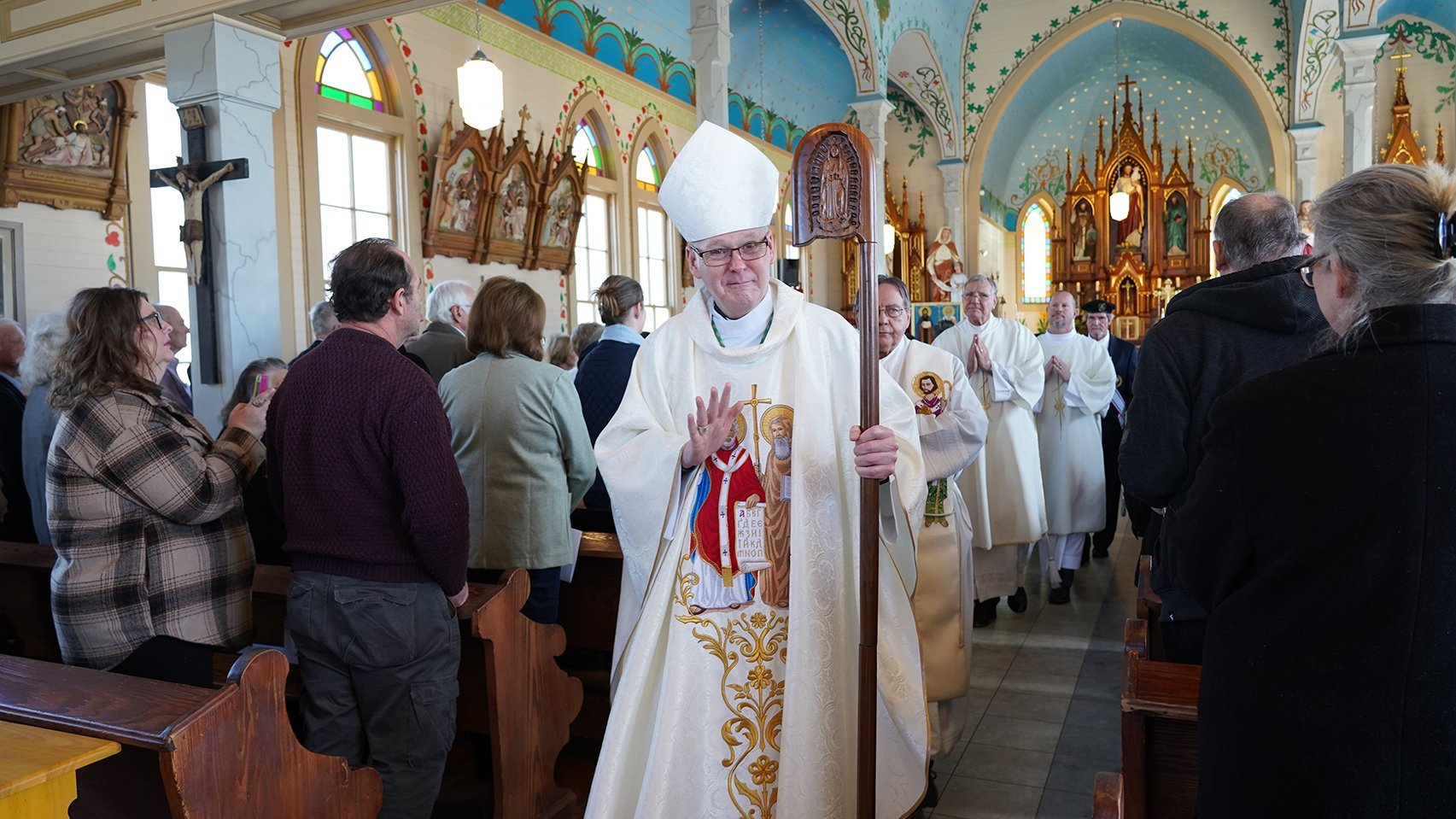
Bishop Brendan J. Cahill of Victoria, Texas, is chairman of the U.S. Conference of Catholic Bishops’ Committee on Migration.
