


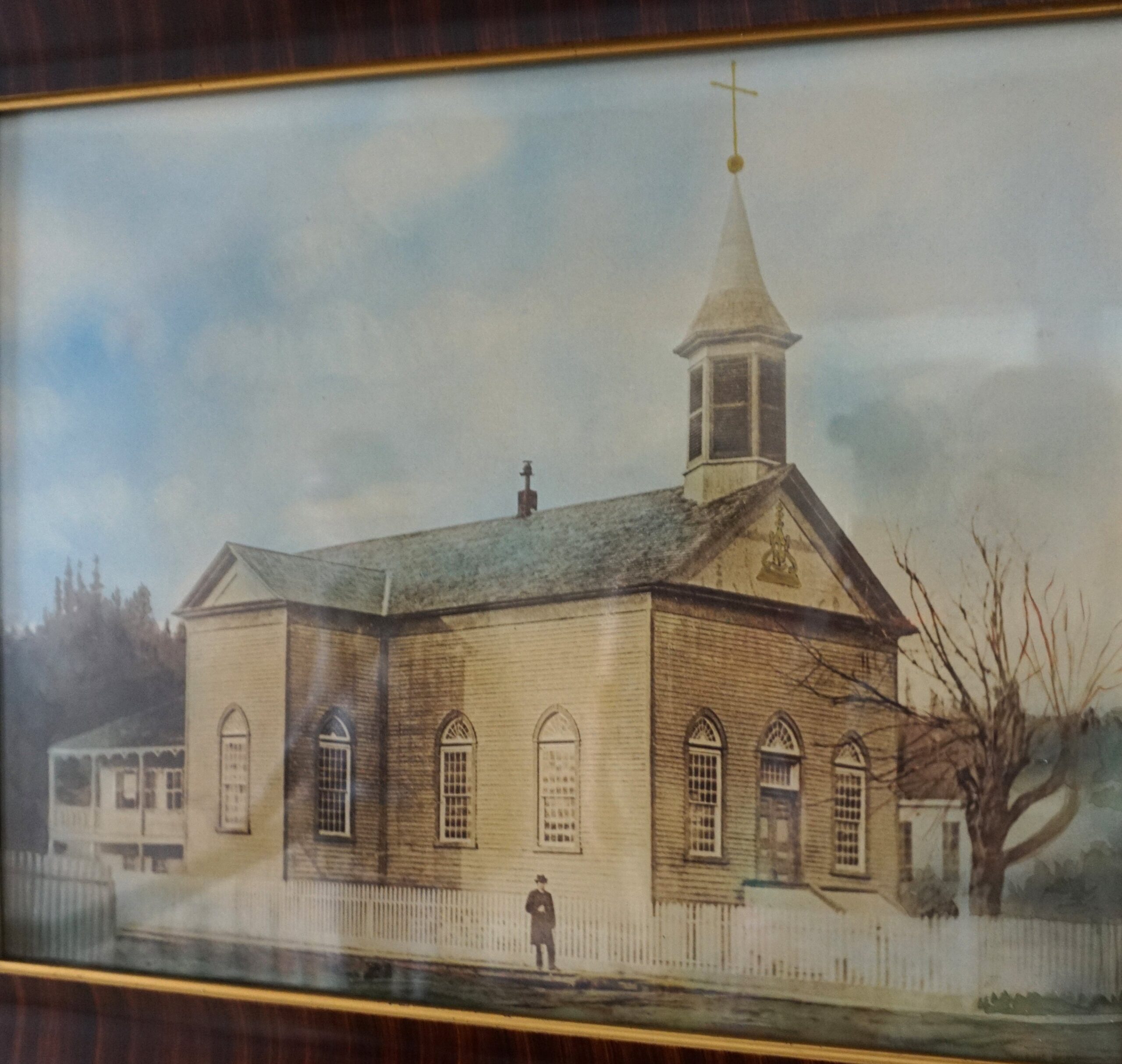
Our journey through the origins of Catholicism in the 50 states now takes us to Wyoming, Montana, Idaho, Oregon and Washington.
Across this vast region, the faith first took root through the work of missionaries among Native peoples before growing with the arrival of settlers and immigrants during the 19th century.
Wyoming
The first recorded Mass in what would become Wyoming was offered in 1840 by the Belgian Jesuit missionary Pierre Jean De Smet east of present-day Daniel. De Smet was traveling north to begin missionary work among the Flathead people when he passed through the region.
A permanent Catholic presence developed only later in the 19th century, as construction of the transcontinental railroad brought growing numbers of settlers into the region. During this period, the growing Catholic community passed through several ecclesiastical jurisdictions before the Holy See established the Diocese of Cheyenne in 1887, encompassing the entire Wyoming Territory. Three years later Wyoming was admitted to the Union as the 44th state. Shortly thereafter, the Irish-born Chicago priest Maurice Francis Burke was appointed the new diocese’s first bishop.
The challenges awaiting Bishop Burke were considerable. His diocese was more than three times the size of his native Ireland but was served by only six priests, 21 women religious and one lay brother.
Father Burke soon began traveling throughout this vast territory, using Wyoming’s extensive railroad network to reach towns and cities in the south. To visit communities farther north, he relied on stagecoaches and buckboards, rugged horse-drawn vehicles well suited to the rough and often mountainous roads of the frontier. Burke also spent considerable time ministering on the Wind River Reservation among the Shoshone and Arapaho peoples, where in 1888 he founded St. Stephen’s Indian Mission.
From these humble beginnings, the Catholic faith continued to take root and grow across Wyoming. Today, Wyoming remains the least populous of the 50 states, with about 588,000 residents, of whom approximately 70,000 are Catholic. The Diocese of Cheyenne is served by some 50 priests in more than 60 parishes and missions, as well as six Catholic schools.
Montana
In the early 19th century, Iroquois who traveled into what is now Montana introduced the Flathead people to the Catholic faith. Their influence eventually led these local peoples to seek missionaries who could instruct them more fully.
In 1840, Jesuits from St. Louis, including the indefatigable De Smet, began making their way into the region. The following year, he established St. Mary’s Mission in the Bitterroot Valley, and other Jesuit missions soon followed across the region.
Among these missionaries was the Italian Jesuit Anthony Ravalli, who arrived in the 1840s. A man of remarkable and varied talents, Ravalli contributed to the architecture and religious art of the Jesuit missions while also serving as a physician. Most notably, he inoculated Native people against smallpox, helping protect the Bitterroot Salish from epidemics that devastated other tribes.
Women religious also played a central role in the growth of the Church in Montana. Among the communities that made permanent foundations in the region were the Sisters of Providence from Montreal, the Sisters of Charity of Leavenworth and Ursuline nuns. Through their work in education and care of the sick, these women helped establish a lasting and caring Catholic presence in communities across the territory.
In recognition of this slow but steady growth of the Church, in 1884, Pope Leo XIII established the Diocese of Helena and appointed the Belgian-born John B. Brondel as its first bishop. (Five years later, in 1889, Montana was admitted to the Union as the 41st state.)
Following Brondel’s death in 1903, the diocese was divided, with the eastern two-thirds of the state becoming the new Diocese of Great Falls. With important assistance from the Catholic Church Extension Society, the Church continued to grow slowly but steadily in both dioceses during the first decades of the 20th century.
Today, Montana is home to about 1.1 million people, with over 80,000 Catholics served by more than 180 parishes and missions, 23 Catholic schools and two Catholic institutions of higher education.
Idaho
The Catholic faith first made its appearance in what is now Idaho during the 18th century with the arrival of French-Canadian voyageurs and fur traders. These early encounters, however, were temporary, and the Church did not yet achieve a permanent presence in the region.
As in neighboring Montana, a more lasting influence came with the arrival of Catholic Iroquois from the East, who helped introduce the faith to the Native peoples of the region. Father De Smet also appears again in the story, celebrating the first recorded Mass in what is now Idaho on July 22, 1840, at Henry’s Lake near present-day Yellowstone National Park.
The first Catholic church in Idaho was built in 1843 near present day St. Maries. Spring rains and flooding, however, made the location impractical, and the mission was eventually moved to the banks of the Coeur d’Alene River. There, in 1853, a new church dedicated to the Sacred Heart was completed. Known today as the Cataldo Mission (after the beloved Jesuit missionary Joseph Cataldo from Sicily), the church remains the oldest standing building in Idaho.
For the next several decades, nearly all Catholics in the region were Native Americans. With the gold rush of 1862, Idaho’s population grew rapidly as miners and settlers poured into the region, including significant numbers of Irish Catholics. Idaho became a territory the following year and was admitted to the Union in 1890 as the 43rd state.
In 1868, Rome established the Apostolic Vicariate of Idaho and Montana, a vast territory that included present-day Idaho and portions of Montana and Wyoming. Twenty-five years later in 1883, Pope Leo XIII established the Diocese of Boise, encompassing the entire state. Idaho then had about 7,000 Catholics. The following year, the Sisters of the Holy Cross opened Boise’s first hospital.
Today, the Diocese of Boise serves more than 215,000 Catholics in 50 parishes with about 100 priests and 16 Catholic schools across the entire state.
Oregon
The Church came comparatively late to what is now Oregon. When the first resident Catholic missionaries arrived in 1838, they found only a small Catholic community, composed largely of French-Canadian fur traders and their families who had settled in the Willamette Valley.
One of these first missionaries was Francis Norbert Blanchet, originally from Quebec. After being ordained a bishop in 1845 to serve as vicar apostolic of the region, he traveled to Europe seeking additional help for the struggling Oregon mission. In Belgium, he recruited seven Sisters of Notre Dame de Namur before continuing to Rome, where he boldly petitioned the Holy See to establish an ecclesiastical province in the Pacific Northwest.
His request was granted in 1846, when Pope Pius IX established the Archdiocese of Oregon City and named Blanchet its first archbishop. Remarkably, Oregon City became only the second archdiocese in the United States, even before Oregon had become an American territory. In 1926, the see was transferred to Portland.
Bishop Blanchet faced enormous challenges as he began his ministry: the vastness of the territory, the small number of Catholics scattered across it, widespread and often virulent anti-Catholic sentiment and conflicts among the Native peoples of the region. These difficulties were compounded by the California Gold Rush, which drew many settlers south during the early 1850s and temporarily drained much of the region’s population.
In 1903, the Holy See established the Diocese of Baker City, encompassing eastern Oregon. Two decades later, Oregon became the center of an important national struggle when voters approved a law requiring nearly all children to attend public schools, effectively threatening the existence of Catholic schools. The law was quickly challenged, and in the landmark and unanimous 1925 decision Pierce v. Society of Sisters, the U.S. Supreme Court struck it down, affirming the right of parents to choose private and religious education for their children.
Today, Oregon is home to nearly 475,000 Catholics, served by more than 200 parishes and missions, 57 Catholic schools, 13 Catholic hospitals and numerous other charitable institutions.
Washington
The first recorded Catholic presence in what is now Washington came in 1775, when a Spanish expedition landed near present-day Point Grenville, and a Franciscan friar accompanying the party erected a cross. This brief encounter, however, produced no lasting Catholic presence.
More than 60 years later, the French-Canadian priests Francis Norbert Blanchet and Modeste Demers arrived to minister to Native peoples and Catholic settlers around the outposts of the Hudson’s Bay Company.
Traveling widely throughout the region, they learned some of the Native languages and translated prayers and catechetical materials into Chinook Jargon, a trade language widely used in the Northwest among many tribes. Blanchet also developed the “Catholic Ladder,” a simple visual representation of salvation history used to teach the faith among these peoples.
As mentioned, in 1846, Francis Norbert Blanchet became Archbishop of Oregon City, while his brother, Augustin Magloire Alexander Blanchet, was appointed Bishop of Walla Walla. Arriving the following year, the new bishop found himself amid growing tensions between missionaries, settlers and Native peoples, culminating in the Whitman massacre. In 1850, the Diocese of Walla Walla was suppressed and replaced by the Diocese of Nesqually.
The young Church received an important boost in 1856 with the arrival from Montreal of five Sisters of Providence led by Mother Joseph of the Sacred Heart. The brave and industrious women established schools, orphanages and hospitals throughout the region. Mother Joseph became one of the most remarkable pioneers in the region, and her statue is one of two representing Washington state at the United States Capitol.
As Washington’s Catholic population continued to grow, its diocesan structure developed as well. In 1907, the see was transferred to Seattle. In 1913, the Diocese of Spokane was established, followed by the Diocese of Yakima in 1951. That same year, Seattle was elevated to an archdiocese, giving Washington the three dioceses that continue to serve the state today with a total Catholic population over 1.2 million.
Father Anthony D. Andreassi, a priest of the Brooklyn Oratory of St. Philip Neri, holds a doctorate in history from Georgetown University. His research and writing have focused on the American Catholic community. After spending many years in Catholic secondary education, he is on the staff of the Oratory parishes of Assumption and St. Boniface in Brooklyn, New York.
