

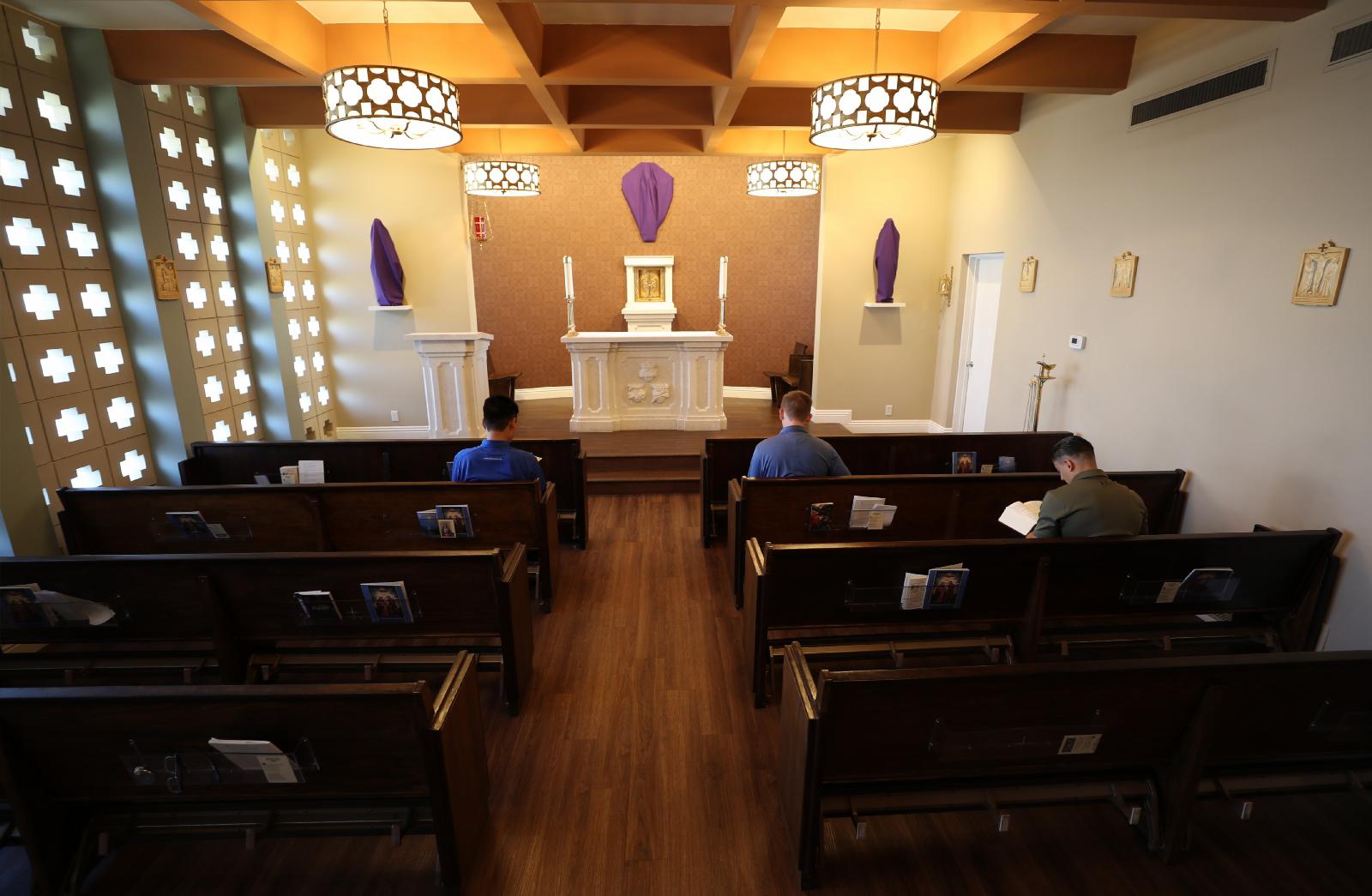
(OSV News) — A new report by the University of Notre Dame offers 12 key recommendations to improve seminarian formation, focusing on the more effective use of psychological services, while better addressing “special needs” and supporting chastity and celibacy.
The university’s McGrath Institute for Church Life announced the July 17 release of “Do You Know Them to be Worthy? Twelve Proposals for Bishops, Rectors, Seminary Formation Teams, and Mental Health Professionals in Assessing the Suitability of Men for Holy Orders.”
The report was written by Father Thomas Berg, visiting professor of practice at the institute, and Timothy G. Lock, director of psychological services at St. Joseph’s Seminary as well as founder and director of the Goretti Center for Healing and Forgiveness.
Psychology, formation, Christian anthropology
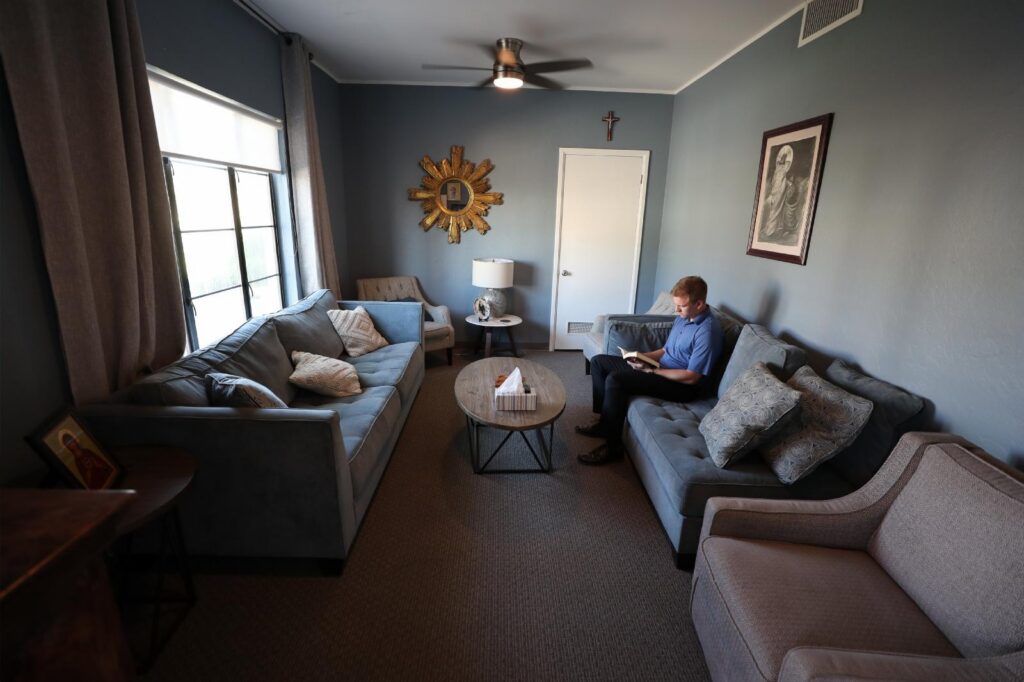
Both authors have long experience in the intersection of psychology, formation and Christian anthropology.
The publication is part of McGrath’s Seminary Renewal Project, which draws on both sociological research and theological formation to ensure “healthy seminary culture and the holistic formation of future priests,” according to the project’s website.
Previously, the project has issued reports on sexual harassment of seminarians and on training for ministry to abuse survivors.
For the institute’s latest report, Father Berg and Lock synthesized data from a study the institute had commissioned from the Center for Applied Research in the Apostolate at Georgetown University, along with extensive input from seminary rectors, bishops, psychologists and formators the institute had assembled for discussion.
Psychological services in seminary formation
Half of the report’s 12 proposals stressed the need to more fully embed psychological services throughout the formation process.
“We’ve been doing that, I think, quite well,” Father Berg told OSV News. “But the data suggests that we could do better. The proposals break down a number of ways that we could make even better use of this (psychological services).”
Father Berg also noted the opportunity to “make better use” of “so many solid persons in the psychological sciences” and in clinical practice, who are “fully committed Catholics” embracing “Catholic anthropology.”
“We’re just in such a good position to have real team players who can assist men in some of these areas of growth,” said Father Berg.
While U.S. seminaries have used psychological criteria to assess candidates since at least the 1970s, the new report stressed as its first proposal that the initial evaluation should be followed by a second one “before or during the early part of the Configuration Stage,” since “most psychologists will agree that the shelf life of a psychological evaluation is, at maximum, three years.”
2nd evaluation is even more needed
According to the report, the second psychological evaluation is even more needed since the length of seminary formation has been extended through the introduction of the propaedeutic year. It is a time of prayer, discernment and communal living that precedes formal theological studies.
The report’s second proposal called for making the initial psychological evaluation available to the seminarian’s formation advisor, noting it is increasingly viewed “not merely as a screening instrument, but as a tool for growth and ongoing formation.”
As a third step, said the report, seminaries “should appoint a full-time in-house director of psychological services.”
Such a professional should provide counseling services to seminarians, while reviewing the initial evaluation with each one, the report said.
‘Meaning an appropriate use of therapy’
A fourth proposal in the report urged clarification of “the meaning and appropriate use of therapy in the context of seminary admissions and formation.” In this respect, said the report, seminaries should “distinguish ordinary, periodic psychotherapy” from “more intensive treatment needs” that could preclude or pause seminary formation in order to pursue care.
The report’s fifth proposal stated that one goal of seminary counseling and spiritual direction should be to help seminarians “bring into the external forum” — that is, into discussions with seminary formators — personal issues from the “internal forum” (known to the seminarian and his spiritual director) that impact his formation and suitability for holy orders.
In its sixth proposal, the report urged bishops and vocations directors to work with seminaries nationally in developing a “uniform quality of psychological evaluations” — echoing a call made by other professionals over the past few decades. The proposal specifically highlighted the need for seminarians’ psychosexual history assessment, while recommending that the U.S. Catholic bishops “collaborate with psychology experts in revising” the bishops’ 2015 “Guidelines for the Use of Psychology in Seminary Admissions.“
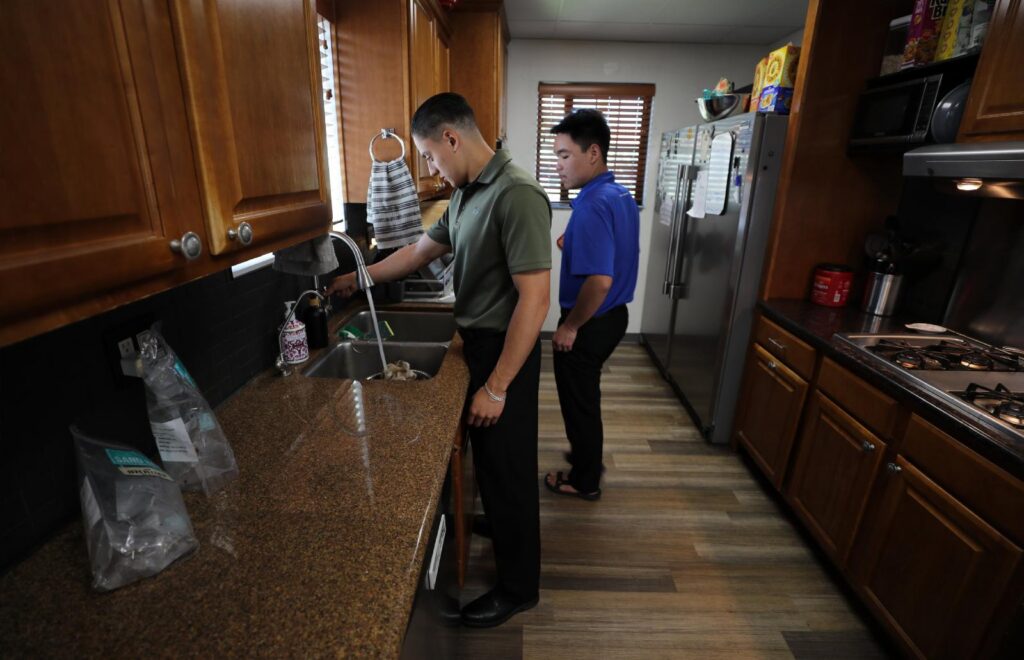
Seminary ‘candidates with special needs’
The report’s second section offered three proposals regarding what it described as “candidates with special needs.”
Noting that “the prevalence of autism spectrum disorder” has increased from 1 in 2,000 children during the 1960s-1970s to 1 in 31 children as of 2022, the report encouraged in its seventh proposal “the ongoing exploration and development of resources to support seminarians” with ASD and related disorders, “including those diagnosed with a clinically significant deficit in cognitive empathy.”
The report authors emphasized that traits such as “reduced empathy, difficulty with social cues, cognitive and emotional rigidity and impairments in executive functioning among others” can also manifest themselves “in any given candidate, not just those on the ASD spectrums.”
Pointing to an “urgent need” for research — as well as for resources to support candidacy assessment and accompaniment of seminarians and priests with ASD — the report noted the McGrath Institute has convened a task force to investigate and address the issue.
Medications for ADHD and OCD
In its eighth proposal, the report clarified that medications proven to help ADHD (attention-deficit hyperactivity disorder) and OCD (obsessive-compulsive disorder) “can coexist with priestly ministry,” even if seminarians must take such medication on a lifelong basis.
The report’s ninth proposal said seminaries “must prioritize securing the resources necessary to address significant formative deficits in admitted candidates.”
Citing CARA data, the report warned of the risks of advancing quantity over quality in seminary candidates.
“Institutional pressure to maintain high numbers of seminarians may at times overshadow the necessary attention to the quality and readiness of candidates for priestly formation,” said the report. “Experience has shown that the majority of applicants have significant deficits in human formation and require a specialized response.”
Among the examples of such deficits included were “significant deficits in cognitive empathy” and “persistent struggles involving pornography use or masturbation.”
Chastity and celibacy among seminarians
The report’s final three recommendations addressed the need to ensure chastity and celibacy among seminarians.
In its 10th proposal, the report held that men first entering the seminary’s configuration stage — the third phase of formation — should have been “sexually continent,” or without “sexual indulgence or activity,” for a “at least several months” without a lapse, “whether deliberate, semi-deliberate, or by compulsion.”
Prior to their ordination to diaconate, that period should be 12 months or more without a lapse, the report said.
“Seminarians are preparing themselves to observe life-long continence,” said the report. “That life commitment means abstaining permanently from genital sexual activity and pleasure for the sake of the Kingdom of God.”
‘Human formation in healthy emotions and coping skills’
Yet the task, particularly in developing freedom from tendencies to seek out gratification, “particularly by pornography and masturbation,” requires “formation in virtue, not merely in willpower, as well as human formation in healthy emotions and coping skills,” the report stressed.
In addition, the report noted a “startling” and “alarming” disconnect between Church officials and psychological professionals regarding seminaries’ ability to sufficiently form seminarians for sexual maturity.
While CARA found that bishops (85%), rectors (84%), formators/spiritual directors (81%) and vocation directors (72%) all expressed high levels of confidence on this point, just 35% of mental health professionals affirmed seminaries’ capacity to the same extent, with only 14% of mental health professionals stating they were “very confident” in this regard.
Bishops and those forming seminarians must “embrace the reality that pornography addiction and other semi-compulsive addictive behaviors are an everyday challenge” for those in formation, said the report.
Helping seminarians “achieve interior freedom” from pornography and masturbation “needs to be given paramount importance,” since “habitual struggles here can undermine” every other aspect of formation, the report warned.
‘Psychological, theological understanding of chastity’
Along with instilling “a proper psychological and theological understanding of chastity,” the report advised specific resources such as internet safeguards, peer support and 12-step programs.
More broadly, said the report, “the goal is not merely to stop the behavior, but to help the seminarian achieve deeper sexual integration,” thereby preparing him as well for future challenges in priestly ministry.
The report said its 11th proposal, which focused on the issue of admitting candidates with same-sex attraction, was borne of “frank and admittedly difficult conversation on this issue.”
The report said it did not “call into question the legitimacy of the priestly ministry of clergy who experience SSA,” but noted “the clarity presented in the Vatican’s 2005 document” on the issue “that explicitly excludes individuals with SSA” from holy orders.
The report authors urged bishops “to foster and actively engage in the necessary conversations,” both “theologically and pastorally,” on the subject.
“Challenging questions to be openly addressed’
“These are challenging questions that demand to be openly addressed by bishops, theologians and seasoned seminary formators and spiritual directors,” it noted. “Further, the opinions of the lay faithful must also be heard.”
The goal of such conversations, led by the bishops, said the report, is to “move the Church toward a more unified discernment of how the Holy Spirit is guiding us on this question.”
The final proposal offered in the report called for “a more meaningful way” of defining same-sex attraction as either “transitory” or “deep-seated” in seminary formation programs. It noted the terms were developed in ecclesial documents and “do not emerge from the mental health profession.”
Father Berg told OSV News that “serenity” and “integration” mark priests who have successfully been formed in chastity and celibacy.
“He understands the goodness and beauty of the human body, but also has discovered the beauty of being able to love others with the non-possessive love of a celibate who’s living a genuine expression of fatherhood,” said Father Berg.
The report authors added two final recommendations — specifically, “due respect for the informed judgment” of those who form seminarians, and the ongoing need to form seminary formators themselves.
Gina Christian is a multimedia reporter for OSV News. Follow her on X @GinaJesseReina.
