


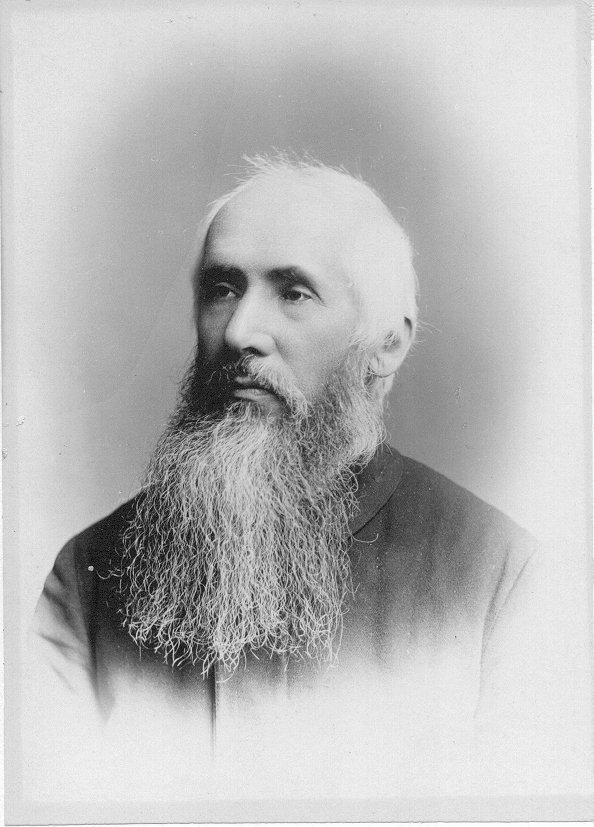
(OSV News) — A native of the Diocese of Duluth, Minnesota, Father Richard Kunst grew up learning about Msgr. Joseph Francis Buh.
“He was a true missionary priest in every sense of the term, of totally sacrificing himself for the good of the church — and the local church up here, which is primarily Native American and then Slovenians,” Father Kunst, who led the first steps of Msgr. Buh’s cause for sainthood, said of the 19th-century Slovenian priest. “But he was for everybody.”
Father Kunst, pastor of St. James Parish in Duluth, Amanda Zurface, diocesan postulator of Msgr. Buh’s cause, and Bishop Daniel J. Felton, the current bishop of Duluth, spoke with OSV News about the missionary priest who served Northeastern Minnesota. They made their comments as Msgr. Buh’s path toward sainthood progresses.
In mid-June, the agenda for the U.S. bishops’ 2026 spring plenary assembly in Orlando, Florida, includes an episcopal consultation on the cause of Msgr. Buh — pronounced “Boo.” The bishops will then hold a voice vote to signify their support for the cause to go forward.
The bishops’ action comes after Bishop Felton began exploring Msgr. Buh’s cause for sainthood in 2023. It serves as guidance and feedback to Bishop Felton, Zurface said.
“The cause is currently in the consultation phase,” said Zurface, a certified spiritual director and licensed canon lawyer who is also the diocesan postulator for the cause of another Minnesotan, Benedictine Sister Annella Zervas, a servant of God whose cause was formally opened in October 2025.
“Before formally opening a cause for canonization, the bishop is encouraged to undertake consultations, not to ask permission, but to seek feedback,” Zurface added.
In written comments to OSV News, Bishop Felton said of Msgr. Buh, “I believe the Holy Spirit is lifting him up in this moment to remind us that the mission of bringing others to Christ must continue.”
The ‘Patriarch of Duluth’
Born in present-day Slovenia in 1833, Msgr. Buh was the fourth of seven children raised by farmer Matthias Buh and his wife, Maria Koshir, according to a short biography by Father Kunst. From a young age, Msgr. Buh desired to serve God as a priest. He later entered the seminary where he thrived: He was the best in his class and became fluent in several languages.
As he prepared to become a priest, he also read about Slovenian priests serving as missionaries in America. He decided to do the same. After his ordination in 1858, he traveled to the United States in 1864 before the Diocese of Duluth was established. In this new land, he ministered especially to Native Americans, particularly the Ojibwe people, sometimes also known as the Chippewa, and Slovenian immigrant communities.
Msgr. Buh, known as the “Patriarch of the Diocese Duluth,” had a tremendous impact in Minnesota. He served in many roles, including as the first vicar general of Duluth and as the domestic prelate of the pope. He incorporated 57 parishes. He traveled by canoe, horseback, snowshoe, and even train to administer the sacraments. He could speak six languages and used his gifts as a writer, painter and musician. He managed the first U.S. Slovenian newspaper and helped found the American Slovene Catholic Union, a fraternal organization that protected miners and other workers. He mentored priests, housed the unemployed and worked with children.
Most of all, he shared God’s love with everyone he encountered.
Msgr. Buh’s selfless heart
“Monsignor Buh cared for the whole person, and that reflects the heart of God,” Zurface told OSV News. “God desires an intimate relationship with each one of us, and Msgr. Buh lived that reality in the way he ministered to others.”
“He took the time to know the people he served, even learning their languages,” she added. “He cared for both their spiritual and material needs, often making personal sacrifices for the good of others, which is love in its truest form.”
Bishop Felton called Msgr. Buh “a man ahead of his time in the work of the New Evangelization.” Msgr. Buh’s life “shows us that evangelization begins with presence, love, listening, and a willingness to go where God sends us.” Msgr. Buh, he added at another point, “brought countless people into relationship with Christ and the Church who otherwise may never have encountered the love of God.”
Msgr. Buh’s own relationship with Jesus Christ shaped his life and mission, Zurface said, adding that he “left behind his homeland and family, endured dangerous Minnesota winters, and risked his life to care for the immigrants and Indigenous communities he served.” She and Father Kunst also recognized Msgr. Buh’s dedication to sharing the Gospel.
As someone who has studied Msgr. Buh, Father Kunst said he came to know the priest as “a man of great humor.” While early photography shows Msgr. Buh without a smile, Father Kunst said he was a man of joy.
“I always tell people you can’t have a grumpy priest — that’s not going to attract people. You have to have a joyful priest,” he said. “That was Msgr. Buh.”
An anticipated saint
When Msgr. Buh died in 1922, the bishop of Duluth at the time, Bishop John T. McNicholas, and others expressed confidence that he would be declared a saint. Bishop McNicholas had Msgr. Buh’s body placed in a steel fortified casket in anticipation that it would be dug up during the canonization process.
The Benedictine Sisters of St. Scholastica Monastery in Duluth handed out relic cards with pieces of Msgr. Buh’s shirt in the 1940s. Two of the sisters, Sisters Bernard Coleman and Verona LaBud, also wrote a biography of Msgr. Buh published in 1972 called “Masinaigans: The Little Book.”
The title came from one of the nicknames Msgr. Buh received from the Ojibwe. They called him “Masinaigans,” or “Little Book,” likely referring to his ordo, or liturgical calendar book, that he carried with him.
People today can draw inspiration from Msgr. Buh’s example, Zurface said.
“We all have individual callings from God, and we can be inspired by the courageous life that Msgr. Buh lived,” she said. “We are called to holiness too, and we can do great things for God in our own time and circumstances.”
In particular, Bishop Felton recognized Msgr. Buh’s conviction.
“Msgr. Buh lived with conviction, listening to what God placed on his heart and courageously acting on it,” he said. “His life challenges each of us to ask: What is God inviting me to? What does He need me to be available for?”
Katie Yoder is an OSV News correspondent. She writes from Maryland.
