


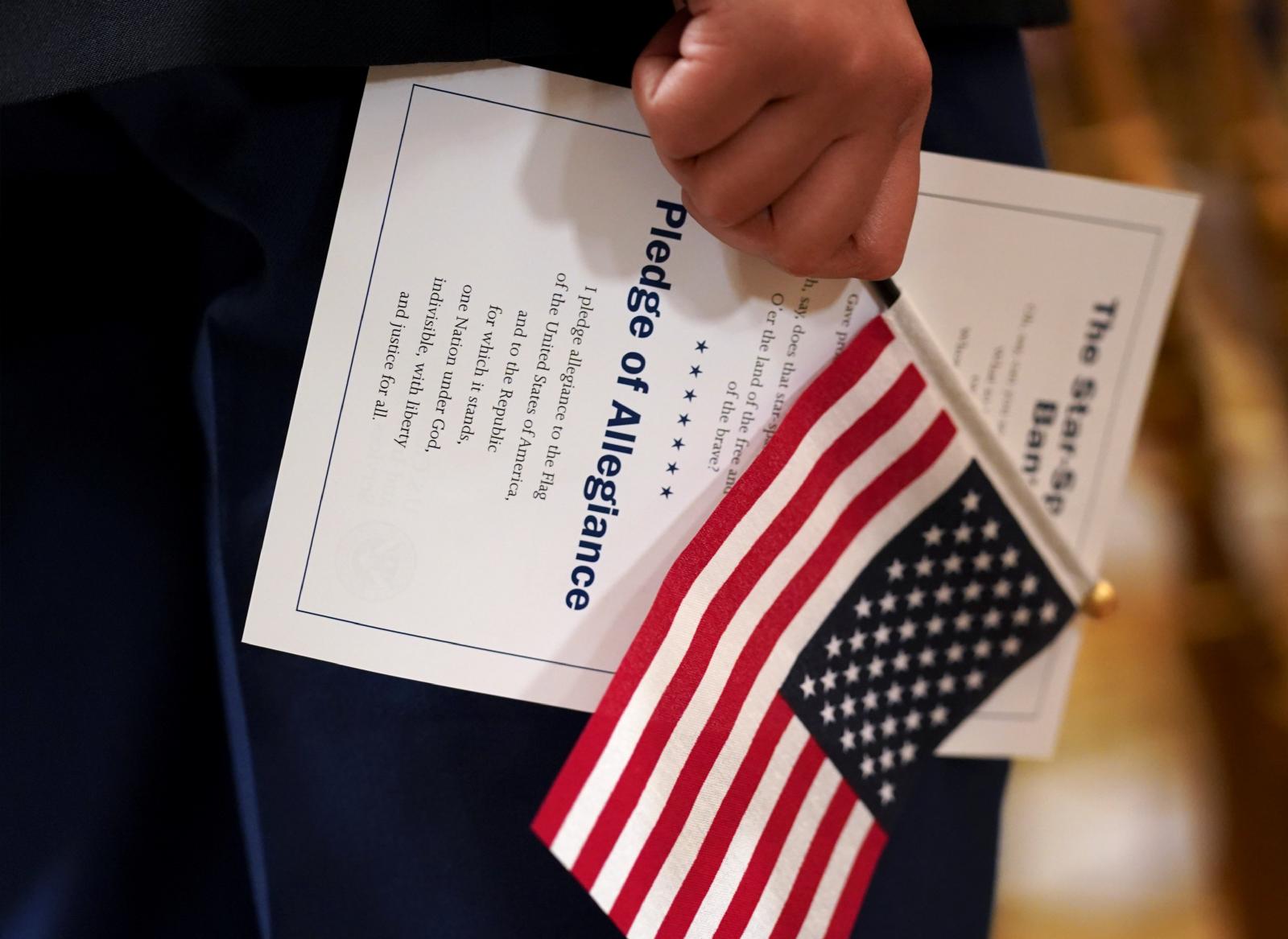
(OSV News) — It was 2023, and The Wall Street Journal had just released a major poll indicating “America Pulls Back From Values That Once Defined It.”
Those values included patriotism, religion, having children, community involvement and money — and all except money had, according to the poll, just taken a plunge in importance.
Robert P. George — an American legal scholar, political philosopher, Princeton University professor and a Catholic — felt something had to be done.
“And so — on the basis of the authority vested in me by absolutely nobody — I declared June to be Fidelity Month,” he said.
Fidelity to country
In the May 15 webinar “Living Faithfully at America’s 250th,” co-presented with the U.S. Conference of Catholic Bishops, George — joined by Archbishop Salvatore J. Cordileone of San Francisco and Archbishop Alexander K. Sample of Portland, Oregon — discussed not just the multifaith and bipartisan Fidelity Month movement, but one of its key concepts: the meaning of fidelity to country, or patriotism.
“We are people of faith, and we all recognize that our ultimate allegiance is to God,” said George as he opened the webinar. “But that doesn’t mean that we don’t owe something to our country. That doesn’t mean that patriotism is a sin. Our various faiths teach us that patriotism — far from being a sin — is a virtue.”
Archbishop Cordileone agreed.
“We have to understand that our faith in God really is the basis for all the virtues we need to live patriotism well … which involves a respect for people of different religious faiths,” he said.
Created for ‘communion,’ not ‘isolation’
“God created us for communion, not for isolation,” the archbishop noted. “That communion begins in the home — and then the extended family, our wider community and our country.”
Archbishop Sample expanded upon the idea of responsibility to others.
“Yes, we have our families. Yes, we have our local communities. But we’re also part of the national community of these United States. … I can’t be responsible for all of the citizens of the United States, but God puts people in my life that I am particularly responsible for to love — to try to guide and to lead — hopefully, ultimately, to God.”
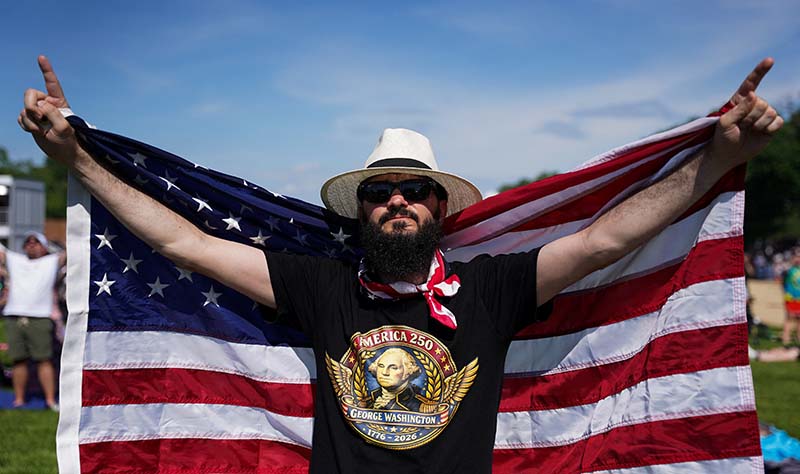
America has not been without its flaws, said Archbishop Cordileone, but “a Christian conscience” has enabled the country to attempt to recognize and mend them.
Every age, every culture, every generation
“As people of faith, we have to see beyond whatever the mania is of the moment, to the founding principles that are enduring, that are true,” the archbishop commented. “They apply in every age and every culture and every generation. And keep those clearly in mind — so we can articulate them in the context of whatever is happening at that particular moment of history.”
Archbishop Sample noted the significance of recalling the source of Americans’ natural rights.
“Our human dignity — the dignity of every human person — and then, therefore, the rights that are attached to that human dignity, are not bestowed by government; they’re not bestowed by any civil authority,” he said. “We are endowed with these rights, and we are endowed — each one of us — with a human dignity that comes to us from the hand of our creator, God. We have to get back to really profoundly understanding what that means. … Our rights and our dignity — as enshrined in the Declaration — come to us from God.”
Archbishop Cordileone reflected on the role of religion in forming a democracy.
Functioning democracy needs ‘virtuous citizenry’
“A virtuous citizenry will make for a functioning democracy. … If the citizenry is morally corrupt, the democracy is going to disintegrate,” he said. “That’s why our Founding Fathers had this vision that embraced robust religious liberty — because they understood the virtue of religion instills the other virtues that a democracy needs of its citizens.”
The current division in America, Archbishop Sample said, is the worst he’s seen.
“I think it’s because so many of us have forgotten about God — and that equal dignity that is inherent; intrinsic to each and every human person, and that we’re equal,” he commented. “We should love our fellow citizens, even those with whom we vehemently disagree. We should love them — because they are our compatriots.”
Responding to a question from OSV News asking about the greatest threat to religious liberty on the nation’s 250th anniversary, Archbishop Cordileone cautioned against the diminishment of faith communities.
Current threats to religious freedom
“Society has to have some kind of shared value system — and that’s why we’re in conflict right now,” he suggested. “The Constitution’s unyielding protection of religious believers is what separates the United States from places ruled by tyranny and despotism. This religious liberty benefits everyone, not just religious believers.”
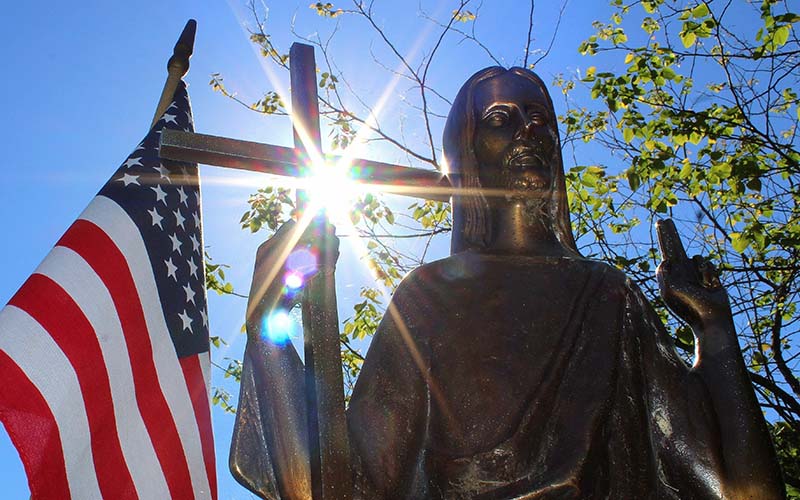
Archbishop Sample, who chairs the USCCB Committee for Religious Liberty, cited “the exclusion of religious organizations — religious groups — from certain privileges, certain rights, certain benefits, that are afforded others.”
He also mentioned “the overreach of government … to impose upon us policies or actions that we would be required to take, that violate our moral and religious principles” as well as “the whole general area of religious bigotry, against any group.”
Viewers were invited to celebrate Fidelity Month in a number of ways, including displaying its icon or posting and following on social media; exhibiting various merchandise; praying the Fidelity Month Prayer; engaging the media, politicians, and their parish; or taking part in a high school essay contest.
The next Fidelity Month webinar is scheduled for Friday, June 5, at 1:00 p.m. EDT, when the topic will be, “We Hold These Truths: Fidelity and the Declaration.”
Kimberley Heatherington is a correspondent for OSV News. She writes from Virginia.
