


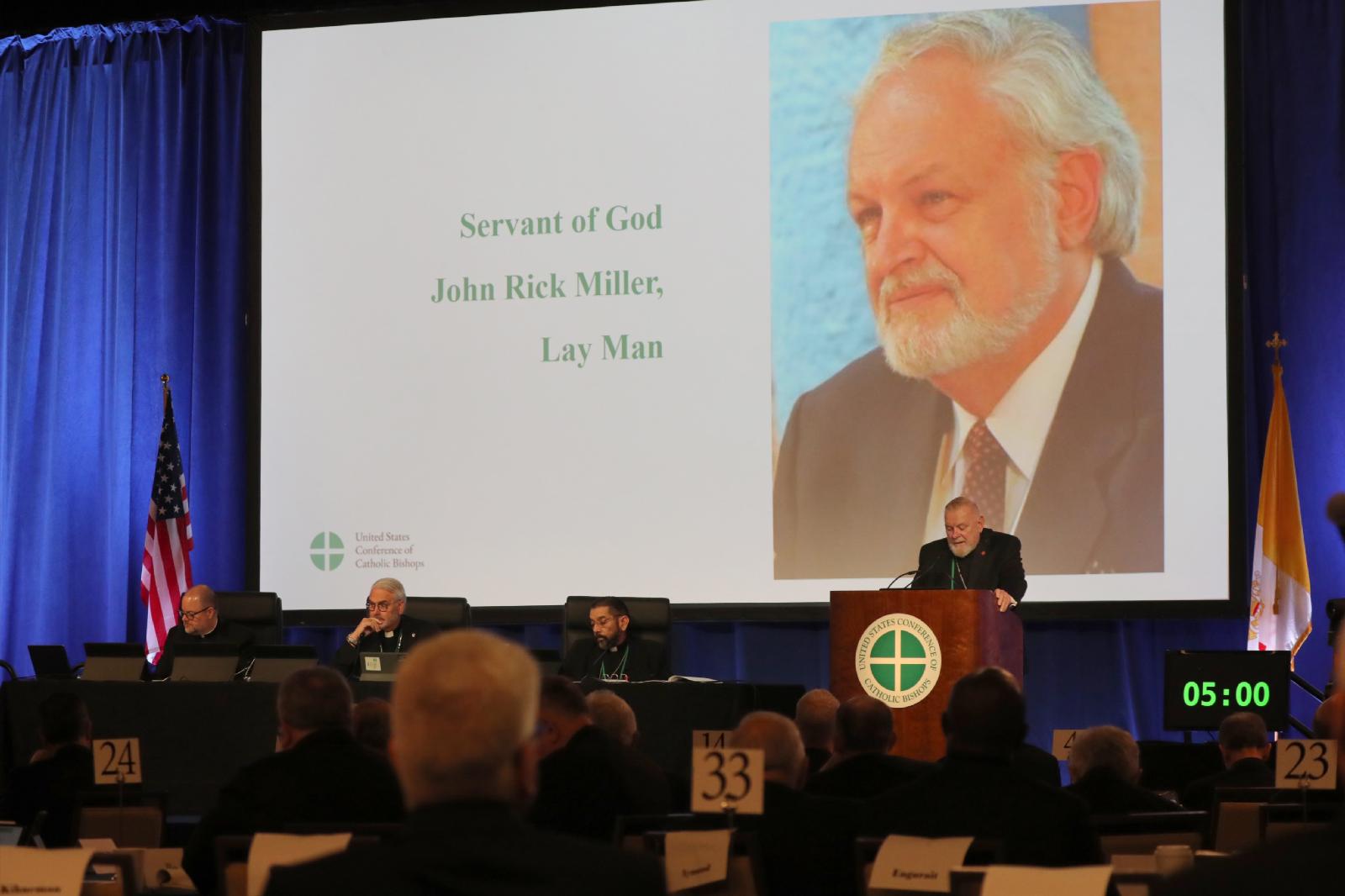
ORLANDO, Fla. (OSV News) — Meeting in Orlando for their annual spring plenary assembly, the members of the U.S. Conference of Catholic Bishops June 10 gave a unanimous show of support for the advancement of two American canonization causes.
Bishop Daniel J. Felton of Duluth, Minnesota, gave a presentation on the cause opened in his diocese for pioneer missionary priest Msgr. Joseph Buh, and Archbishop Thomas G. Wenski of Miami presented the cause of entrepreneur-turned-evangelist John Rick Miller. The consultation of a body of bishops — at either the regional or national level — is required by Church legislation governing the canonization process as a cause gets underway.
Msgr. Joseph Buh: A Minnesota missionary
Msgr. Buh, a Slovenian immigrant to the U.S., was inspired as a child by reading about the missionary adventures of his fellow countryman Venerable Frederic Baraga, the first bishop of Michigan’s upper peninsula. Msgr. Buh had even written to Bishop Baraga requesting permission to join him on the American frontier, but the priest’s Slovenian bishop refused permission due to the need for priests in Slovenia.
So Msgr. Buh for the next six years rechanneled his priestly zeal for souls to faithful service in what was then the Diocese of Ljubljana, where he published prayer books that produced royalties that would finance a future missionary journey to the U.S.
When invited by a fellow Slovenian missionary priest to minister in Minnesota, Msgr. Buh arrived in the U.S. in 1864 in the midst of the Civil War. Settling first in St. Paul, Msgr. Buh briefly served in a seminary while learning English. After six months, he began service on the frontier, ministering to the Native American Ojibway people. Belle Prairie in Central Minnesota was his home base from 1865 to 1877.
There, Msgr. Buh’s missionary life in many ways mirrored that of the influential Bishop Baraga. Immersing himself in the Ojibway culture, Msgr. Buh mastered the language and adapted to their way of living, learning to hunt and fish for sustenance.
From horseback to snowshoe hiking
Enduring physically taxing means of travel — from horseback to snowshoe hiking in scorching and freezing temperatures, respectively — Msgr. Buh endured all manner of hardship to bring the presence of Christ to Minnesota’s wilderness.
The missionary priest was responsible for building up several dozen parishes, and he served as a mentor for young priests who prepared to follow in his footsteps. Msgr. Buh was remembered fondly by one of his parochial successors, Father Frank Mihelcic, who said: “Not often in a lifetime is it one’s privilege to know a holy, zealous, and God-fearing man like Monsignor Joseph Buh … who labored endlessly to bring the work of Christ to these northern parts of America.”
In 1869, at the time of the First Vatican Council, Msgr. Buh traveled to Rome to raise funds for his apostolic efforts. After returning to Minnesota, he became confessor and spiritual director to Benedictine Bishop Rupert Seidenbusch, who oversaw the northern portion of the state. In 1888, Bishop Seidenbusch put Msgr. Buh in charge of the missions across northern Minnesota.
Care for European immigrants
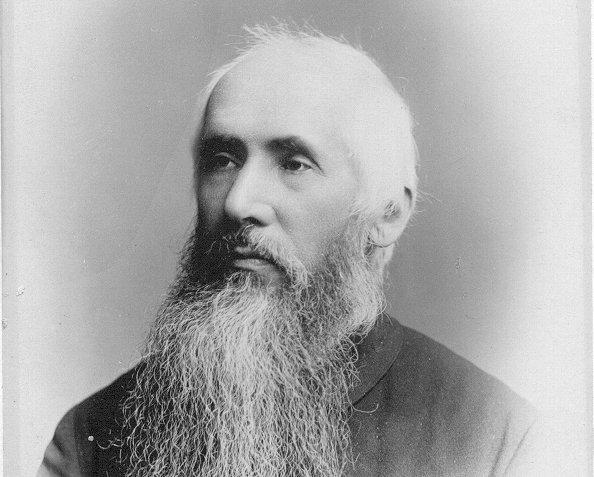
As Msgr. Buh’s ministry also included care for the European immigrants who were settling across Minnesota, his pastoral service required mastering six languages. He was appointed first vicar general and chancellor by the founding bishop of Duluth in 1890. More than 64 years of priestly ministry came to an end on Feb. 2, 1922, when Msgr. Buh died at age 88.
The manner in which he offered himself completely for the sake of the mission is a model for the Church as it faces the growing need for greater missionary zeal and action. In 2024, Msgr. Buh’s remains were transferred to the Cathedral of Our Lady of the Rosary in Duluth.
Bishop Felton noted his belief that, at this time, Msgr. Buh “is being raised up by God to help people encounter Jesus Christ.”
“He reminds us that missionary discipleship demands courage, sacrifice, perseverance and complete availability to God’s will,” Bishop Felton said. “He’s going to become a model for us.”
John Rick Miller: A missionary for peace
A native of upstate New York, John Rick Miller grew up in a Catholic family. But in college, as he turned his attention to a career in business, he stopped practicing his faith. In the next few decades, Miller’s attention was given to his growing family and advancing to executive positions with Astra Zeneca, Cargill McMillan and the International Monetary Fund. Around age 40, Miller experienced a conversion he credited to his wife’s persistence and the Blessed Mother’s intercession.
Miller’s conversion experience brought about a total change and led him to evangelical and charitable undertakings that flowed from an intense and profound understanding of God’s fatherly love and a desire to return that love. In doing so, Miller took on an itinerant mission of fostering prayer and preaching the truths of Catholic faith.
After retiring from the business world at age 50, Miller helped establish a Catholic association of the faithful called the Apostolate of St. Joseph, establishing it throughout the world with the mission of changing the culture by strengthening the family and its role in society.
Regenerating a Catholic ethos
After a journey to Colombia in 2007, Miller was inspired to dedicate his pastoral efforts to regenerate a Catholic ethos in the country’s mainstream culture. He saw great promise in Colombia and believed the country to be a future light for the world.
Lamenting the decision to withdraw the country’s dedication to the Sacred Heart of Jesus after the reformation of the Colombian Constitution, Miller was convinced that the president and Catholic bishops of Colombia needed to work toward reconsecration urgently as a means to overcome the host of economic and social problems the country faced. This was accomplished on Oct. 12, 2008.
Miller came to see this as a model for work with other nations, including Venezuela, Panama, Peru, Ecuador and Mexico. To this end, in 2009, Miller founded the Mission For the Love of God Worldwide, which was established as a private association of the faithful by the Ecuadorian bishops’ conference in 2011.
The association fosters dialogue with government authorities, business leaders and civil officials to promote the truth that only God can transform hearts and lead nations toward renewal and peace. A key aspect of this is fostering national consecrations to the Sacred Heart of Jesus and Immaculate Heart of Mary.
Mission spirituality built on 4 principles
The mission’s spirituality is built on four principles: personal consecration, personal transformation, authentic prayer and good works.
After suffering from the effects of esophageal cancer and treatment for nearly three years, Miller died on May 30, 2015, at age 66. With the approval of Archbishop Wenski, Miller’s body was buried on the grounds of the Church of Our Lady of Guadalupe in Doral, Florida.
In presenting the cause to the body of bishops, Archbishop Wenski remarked that Miller “lived the baptismal call to holiness in an exemplary way.” Archbishop Wenski proposed Miller’s cause underscores the vocation of the laity to holiness, stating his “witness unites what culture tends to separate: career and faith.”
Michael R. Heinlein is an OSV News correspondent and analyst. He writes from Orlando.
