


Despite heated rhetoric on both sides, there is actually a lot of consensus on abortion in the United States. There’s a reason why the “safe, legal and rare” formulation used by Democrats in the 1990s polled as well as it did.
Americans in general do not support abortions after viability — currently as early as 22 weeks’ gestation with proper neonatal care — or abortions for birth control purposes, and certainly don’t want abortion providers to bypass health and safety regulations and inspections.
A setback in Virginia
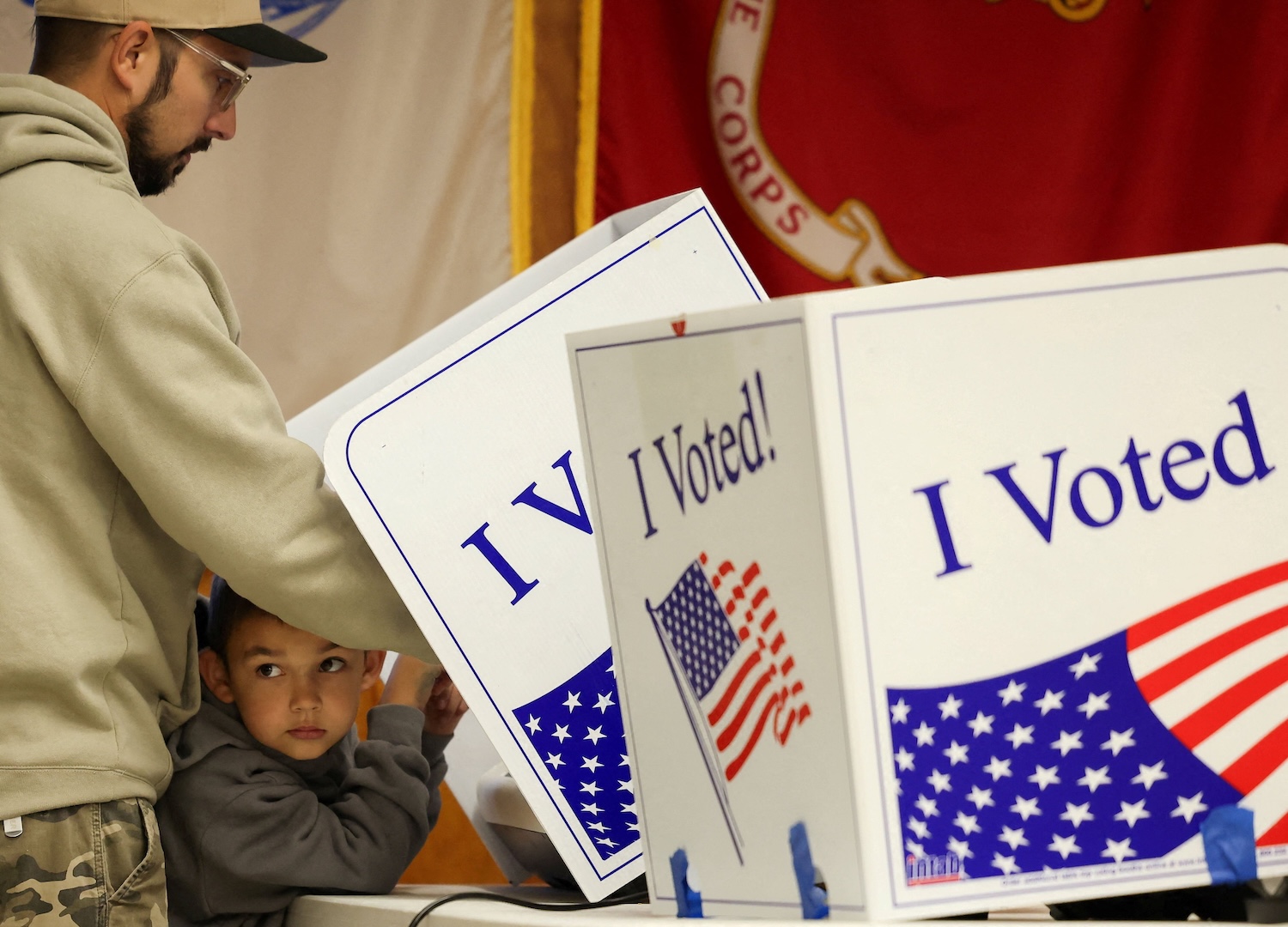
That’s why, in the midst of the Nov. 3 blue wave, the passage of Question 1 in Virginia was so jarring.
It’s possible that because the ballot wording of Question 1 was broad and, to many, confusing, that some voted for it not fully understanding its impact. Question 1 collapsed “prenatal care, childbirth, postpartum care, birth control, abortion, miscarriage management, and fertility care” into one paragraph that was really only about one thing: unlimited access to abortion.
Following the U.S. Supreme Court’s 2022 decision in Dobbs v. Jackson Women’s Health Organization, multiple state ballot initiatives on abortion have been proposed and passed, but few as radical as Virginia’s.
It expands abortion access through the duration of pregnancy, as long as a single doctor is willing to certify that the procedure was necessary to protect a woman’s “health” or that “the pregnancy cannot survive.” It jeopardizes parental involvement for minor girls requesting the procedure. And it shields any abortion practitioner from criminal and, quite possibly, civil consequences if they commit medical malpractice while performing an abortion.
A case with parallels
It’s not the first time Virginia has gone to extremes in the wake of a controversial high court decision. Decades ago, following the Supreme Court’s ruling in Brown v. Board of Education of Topeka, the political and public responses unfolded in some surprisingly parallel ways to Dobbs.
The legal rationale of the two cases can be distinguished. Brown flat-out declared segregation based on race — “separate but equal” classrooms — to be unconstitutional, while Dobbs held that the U.S. Constitution was silent on the matter of abortion, leaving its regulation to democratic processes at the state level.
Less than two years after the Court’s decision in Brown, a 1956 statewide referendum asked the Commonwealth’s voters to convene a constitutional convention to amend Section 141 of the Virginia Constitution, which barred spending public money on private schools.
The end result allowed the Commonwealth to pay tuition “grants” that could be used to attend private institutions, thus allowing white students to avoid the integrated public schools.
When put to the people, that proposal passed by a 2 to 1 margin — roughly the same percentage that carried Question 1 two weeks ago.
Resistance and principles
In addition to the referendum, former Virginia Gov. and then U.S. Democratic Sen. Harry F. Byrd called for a “Massive Resistance” to Brown. He said, “If we can organize the Southern States for massive resistance to this order, I think that, in time, the rest of the country will realize that racial integration is not going to be accepted in the South.”
In time, Massive Resistance resorted primarily to the power of local legislatures to try to sidestep the Brown decision. Like the state-by-state ballot initiatives on abortion we see today, Virginia Democrats at both the state and federal level relentlessly tried to prevent school integration. They went so far as to pass laws that punished any desegregated public school by eliminating its funding, thereby financially incentivizing the racial status quo.
Judges who tried to enforce Brown were threatened and harassed. Judge Walter Hoffman, an Eisenhower appointee, ordered Norfolk schools desegregated, and had a cross burned on his lawn a short time after. He was shunned by much of white Norfolk society. His courageous rulings resulted in having federal marshal protection for 15 years.
A tribute to him in the Washington and Lee Law Review noted, “Judge Hoffman shouldered the task of dismantling massive resistance in Virginia and enforcing the rights of all citizens. Unfairly and inaccurately criticized by state officials and abandoned by all except a few close friends, he entered order upon order guaranteeing the equal rights of all citizens and frustrating the Commonwealth’s attempts to preserve segregation. Ostracism and unfair criticism did not once cause the judge to flinch from his duty. It was in this context that he made the statement that best defines his life: ‘I will do my duty if it costs me my last friend on earth.'”
Brown was handed down on May 17, 1954.Loudoun County, Virginia, one of the last school districts in the nation to end racial segregation, did not fully integrate its schools until 1968 — 14 years later.
Virginians discouraged by the outcome of ballot Question 1 should take heart. Radical protection in the law of all members of the human family has never come easily, and is often accompanied by resistance.
Abortion in Virginia may be having its moment, but if history bears out the pattern, legal protection for unborn children may eventually have its day.
Mary FioRito is an attorney and the Cardinal Francis George Fellow at the Ethics and Public Policy Center.
