

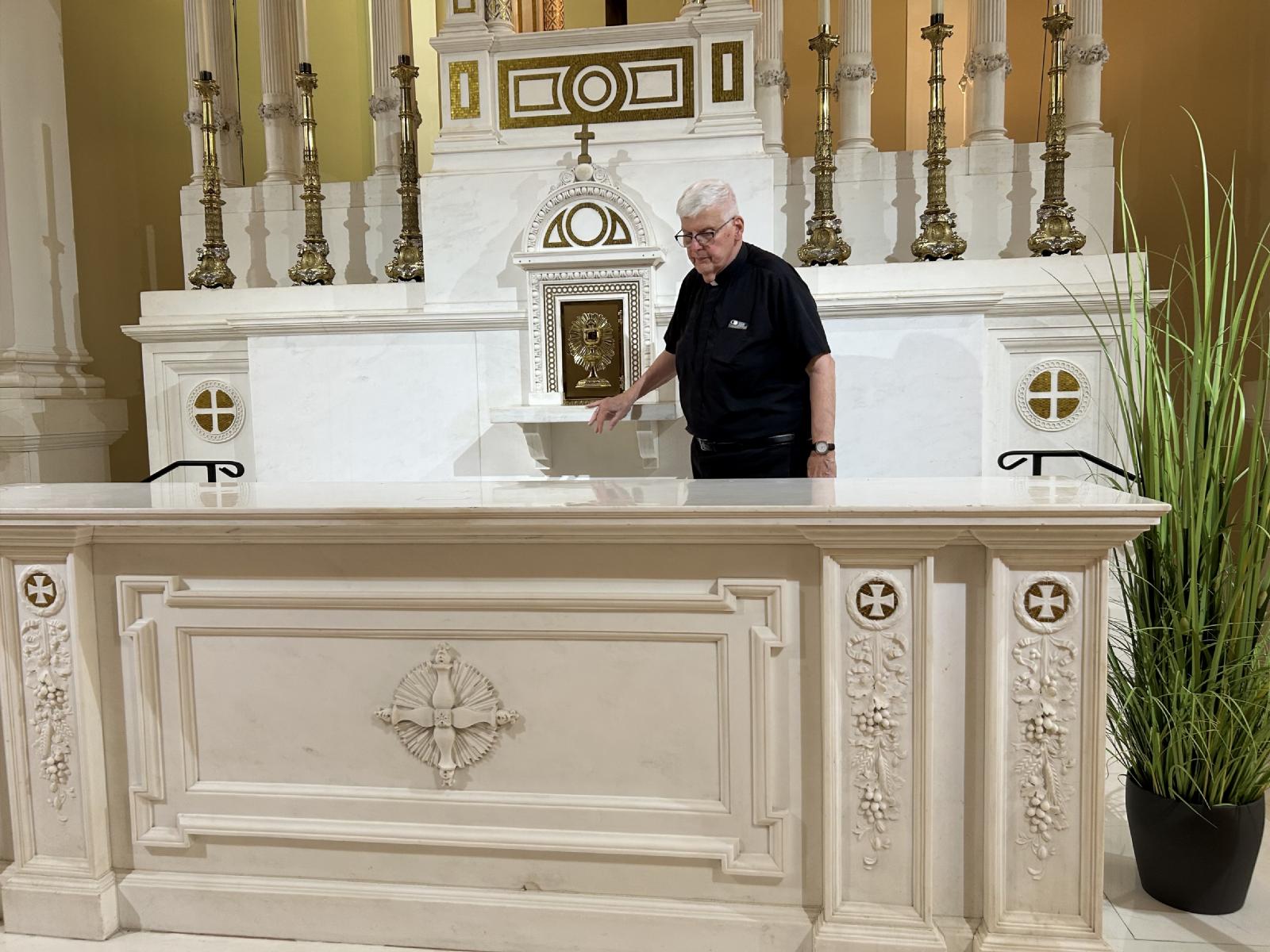
PHILADELPHIA (OSV News) — As the nation marks its 250th anniversary, and with the 2026 National Eucharistic Pilgrimage set to conclude in Philadelphia, a priest in that city — whose parish was home to a major milestone in Eucharistic devotion in the U.S. — said that adoration offers a chance to “slow down and listen” to Jesus.
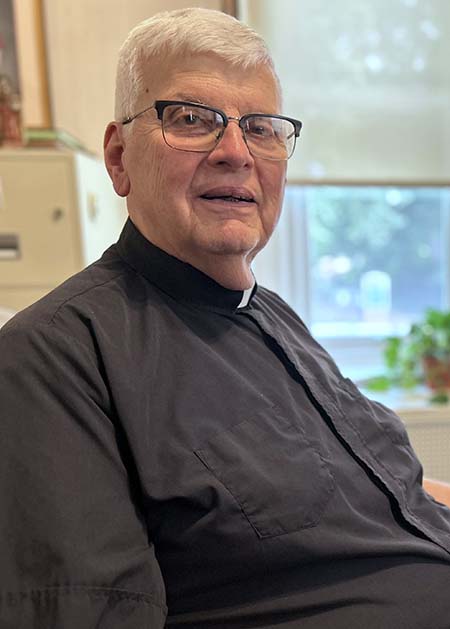
Many times, “prayer is a matter of ‘I’ve got to say my rosary’ or ‘I have to say my novena,'” said Father Edward Kuczynski, pastor of St. Philip Neri Parish in Philadelphia, the first U.S parish to host a diocesan-wide Forty Hours devotion.
But, said Father Kuczynski, “listening is a part of prayer.”
And, amid the city bustle, a sense of stillness paradoxically prevails on the quiet street that’s home to St. Philip Neri Church, where St. John Neumann introduced the first diocesan observance of Forty Hours devotion on May 26, 1853 — the feast of Corpus Christi.
Sustained prayer before monstrance
As a Redemptorist, St. John Neumann, then the fourth bishop of Philadelphia (which became an archdiocese in 1875), was well familiar with the practice of sustained prayer before the monstrance.
His order’s founder, St. Alphonsus Liguori, had described Eucharistic adoration — which emerged in 16th-century Italy, and which St. Philip Neri himself promoted — as “the greatest after the sacraments, the one dearest to God and the one most helpful to us.”
While individual churches in Philadelphia had held the devotion, a full diocesan observance of Forty Hours devotion was a daunting prospect, given the anti-Catholic sentiment in the U.S. at the time.
In 1844, Nativist Riots erupted in Philadelphia, capping decades of growing suspicion and xenophobia against Irish-Catholic immigrants, whom the largely Protestant Nativists regarded as threats to the nation.
That year, a controversy between Protestants and Catholics over the use of the Bible in Philadelphia schools flared into outright violence that lasted for months, fanned by Nativist newspapers and the movement’s political arm, the American Party (also known as the American Republican Party and the Know-Nothing Party).
Angry mob in July 1844
St. Philip Neri Church — which had assembled a small volunteer defense force, and which also received protection from a Pennsylvania Militia guard detail — was ransacked by an angry mob in July 1844. The mob attempted to set fire to the church, but was successfully evicted by the militia under Major Gen. George B. Cadwalader.
Those memories were still vivid when St. John Neumann proposed the diocesan Forty Hours devotion, with St. Philip Neri as the flagship parish. According to the parish history, many priests feared the Blessed Sacrament might be desecrated by opponents, but St. John Neumann saw divine confirmation of the effort in a narrow escape he experienced from a potential fire.
Having fallen asleep at his desk while working late, the bishop awoke to see the candle had burned itself out on some papers, leaving them charred but still readable. As the St. Philip Neri Parish history details, the bishop — while thanking God for his preservation — reportedly heard the Lord say, “As the flames are burning here without consuming or injuring the writing, so shall I pour out my grace in the Blessed Sacrament without prejudice to My honor. Fear no profanation, therefore; hesitate no longer to carry out your design for My glory.”
‘We should be present’ for Jesus
The saint “preached the idea that Jesus is present on the altar, and we should be present” for him,” said Father Kuczynski, whose older parishioners in particular are “very aware” of their church’s historical legacy.
The priest reflected that the need for Eucharistic devotion remains as strong as ever, particularly amid the noise of the digital age.
“The Lord speaks to us, I believe, when we’re not talking to him. He’s not going to talk over us,” explained Father Kuczynski. “I think we have to find that quiet place and listen.”
Young people are often “basically afraid of silence,” he observed, pointing to cellphones as indicative of nonstop activity.
Yet the issue of avoiding contemplation in favor of constant busyness isn’t new, he admitted, recalling that he and his seminary cohort some five decades ago were horrified at the thought of a priest “taking a nap in the afternoon” when “he should be out evangelizing people.”
He noted that during that 1853 Forty Hours devotion, St. John Neumann “stayed at the parish” and “scarcely left the church during the three days.”
The original altar, where the saint displayed the Blessed Sacrament in his own monstrance, was lost to an 1897 fire — sparked at the neighboring stable — that completely destroyed the church’s interior and much of its exterior.
But the spirit of St. John Neumann’s love for the Eucharist lives on, said Father Kuczynski.
“The bread is truly the body of Christ, and the wine truly becomes the blood of Christ,” he said. “We have to reach out and make Jesus available to our people. … And we’re only going to win people back one at a time.”
Gina Christian is a multimedia reporter for OSV News. Follow her on X @GinaJesseReina.
