

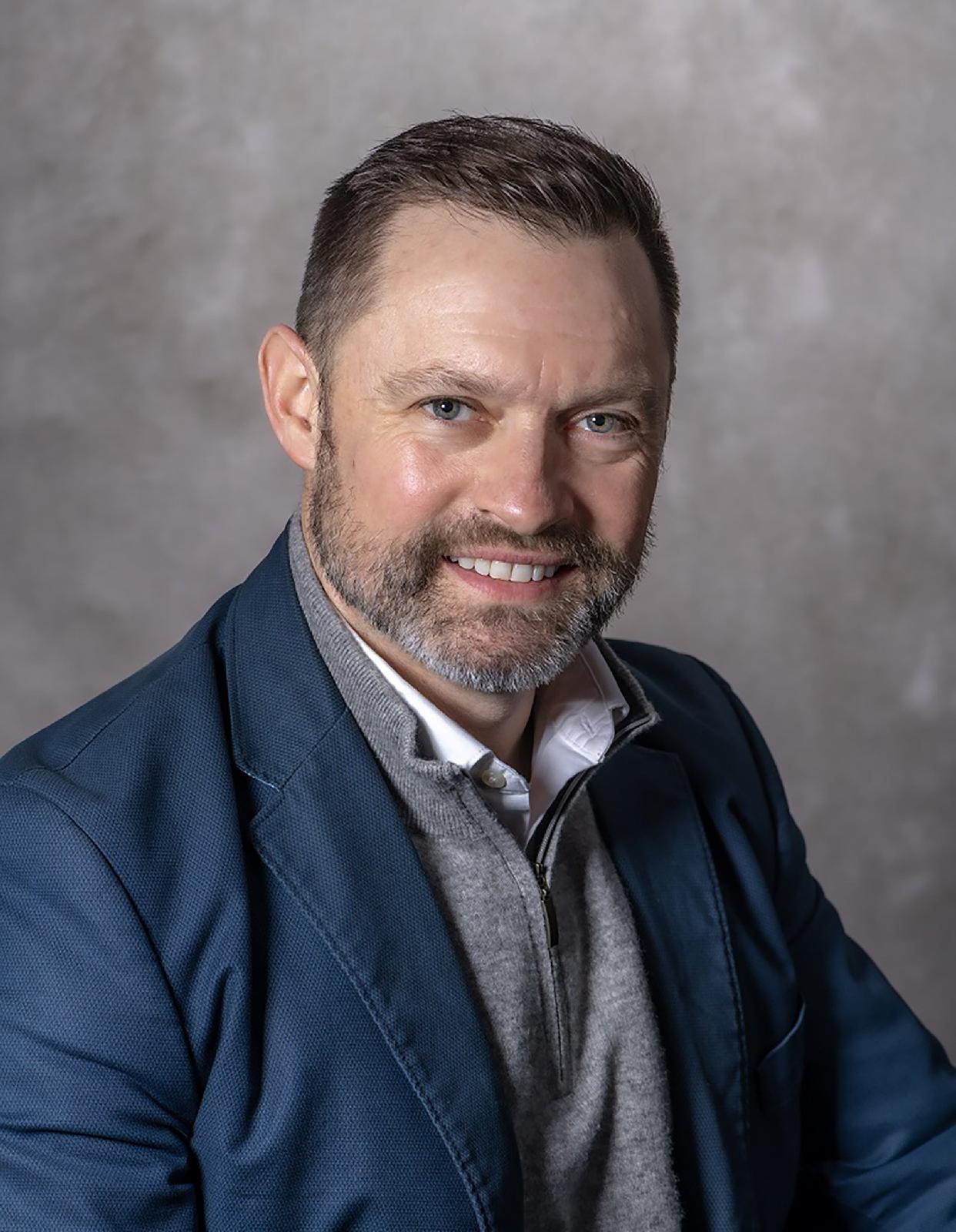
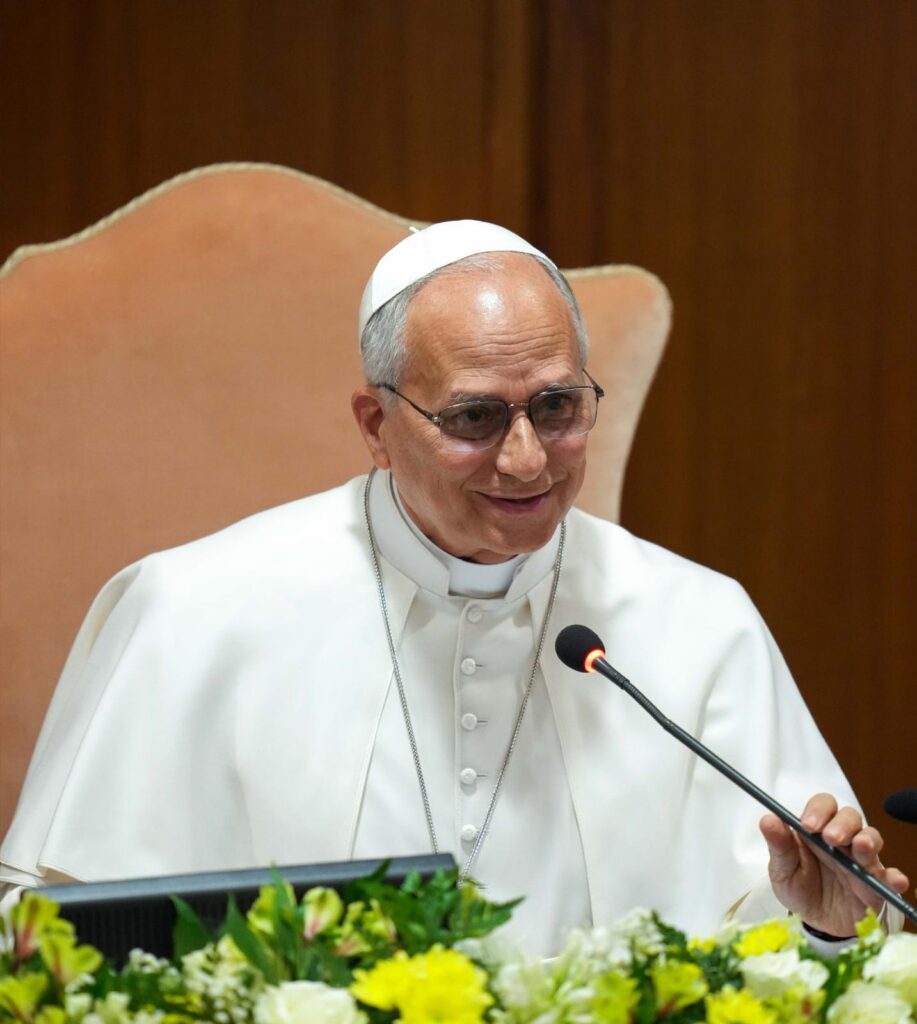
(OSV News) — Shortly after the May 25 release of Pope Leo XIV‘s encyclical “Magnifica Humanitas,”which calls for artificial intelligence ethics to be grounded in Catholic social teaching on God-given human dignity, OSV News spoke with clinical medical ethicist Daniel J. Daly, the founding executive director of the Center for Theology and Ethics in Catholic Health.
Daly, author of “The Structures of Virtue and Vice” (Georgetown University Press, 2021), and an associate professor of moral theology at Boston College — shared with OSV News his thoughts on the current state of AI in healthcare, and how the Catholic vision of the human person can shape AI ethics in that sphere.
This interview has been edited for length and clarity.
OSV News: How would you summarize Pope Leo’s main message in “Magnifica Humanitas”?
Daly: I’d say the main theme or core argument that he’s making is that he wants the peoples and the leaders of the world to engage in a participatory discernment about how AI should be used to promote human flourishing, or “integral human development,” which is an older term in the tradition. It’s really a focus on the whole person, and on all persons: that we might be well in every way.
And what’s interesting is he offers no ready-made solutions. Outside of the section on war, which is very pointed, he’s really interested in raising up values that stimulate that participatory discernment.
And I think that’s where he sees the Church’s role. It’s the language that St. Paul VI used back in the day, that the Church is an expert in humanity and God, but really in nothing else. The Church is not an expert in AI, but what it can do is raise up values that are essential to thinking about how AI should be used to impact human beings, human life, human community.
The encyclical is also a really strong rejection of the “technocratic paradigm,” the term Pope Francis used to describe the view that all problems are essentially technological, and that all we need are technological solutions. It’s a rejection of that perspective, a rejection of this kind of hyperfocus on efficiency as the only justifiable value — the idea that you can only justify things because they generate profit and they’re efficient.
Instead, the human person should be at the center, along with the common good — that shared good that exists among all persons — and our relationships.
OSV News: What is the status of AI’s usage in healthcare at the moment?
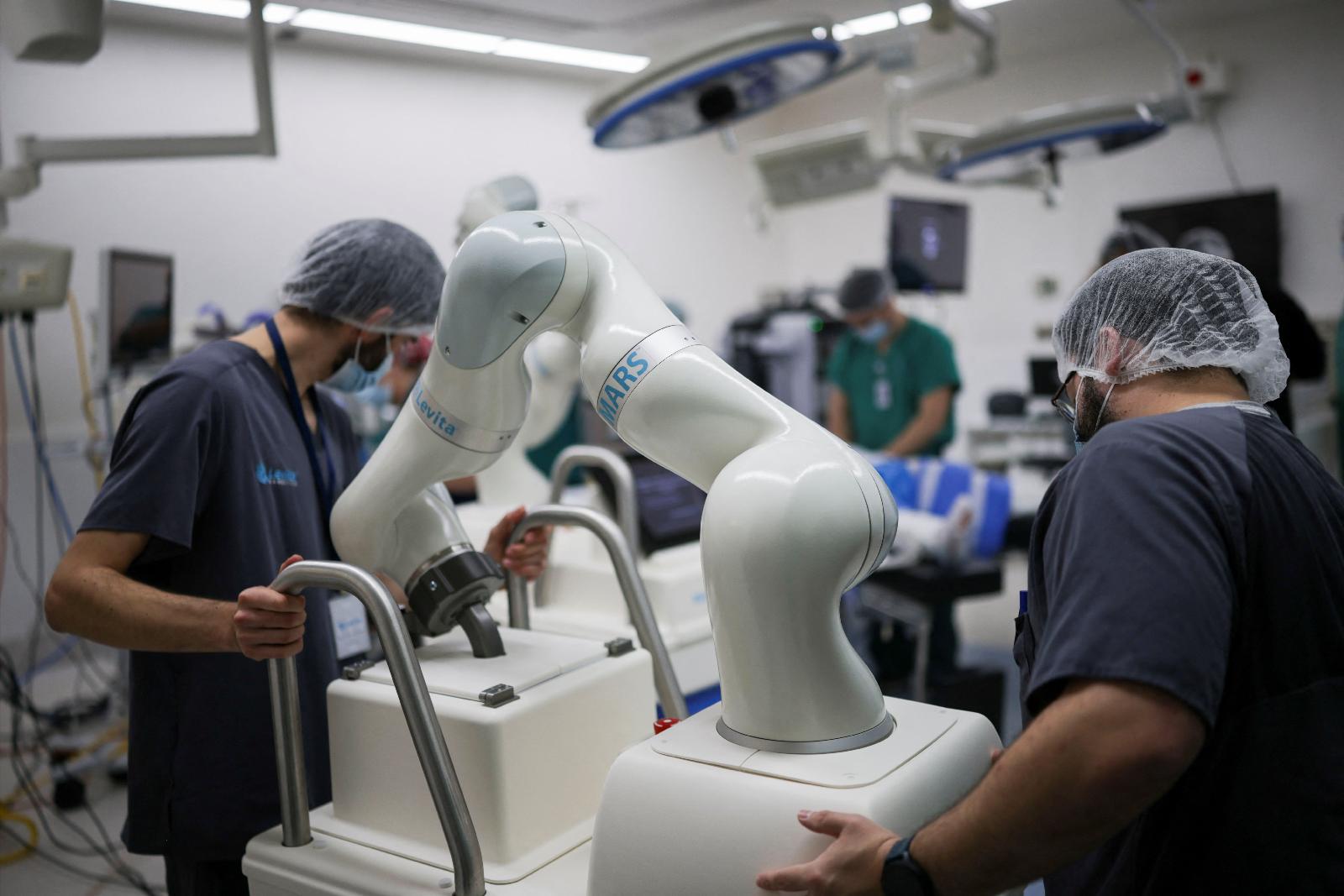
Daly: Healthcare systems are largely, and aggressively, adopting it. They’re very interested and excited about the possibilities of AI.
The focus tends to be more on the administrative side as opposed to the clinical, patient-facing side. There are important applications that are patient-facing or diagnostic, such as ambient listening technology, which transcribes the medical notes and populates the medical record.
Yet so much of healthcare spending and healthcare has nothing to do with direct patient care, but with the administrative apparatuses that support that care. And they’re very important.
Scheduling is one usage case — the scheduling of nurses, the scheduling of physicians, surgical suite scheduling for efficiency. AI kind of understands, for example, that a given surgery usually takes 45 minutes, and there are 30 minutes of preparation, and it can ensure the surgical suite is most efficiently used.
Insurance is a major application of AI — getting data, coding it correctly, and then getting insurance to reimburse for the procedures.
AI can be leveraged in the administrative area — significantly, and with, ostensibly, less threat to patient care and wellbeing. And adoption (of AI) is ongoing and, for many systems, fairly robust.
OSV News: Pope Leo has raised concerns in his encyclical that AI-powered health data collection could be used to decide who will receive care and who will be denied.
Daly: Basically, what we’ve heard is that AI is being used to deny claims at a staggering rate, incredibly quickly — hundreds of claims at once, whereas that would take a human claims person much longer, and they’d have to really sit with the cases. They would see the nuance in the cases.
Healthcare is not as binary as AI would make it out to be. It’s much more nuanced. We’re talking about human health and providers making decisions about what is in the best interest (of the patient), what is actually medically indicated.
All these medical indications have to be applied prudentially, and that’s something that AI lacks. AI doesn’t have virtues. It doesn’t have prudence. It doesn’t have a conscience. It doesn’t think.
It’s a tool that probabilistically has outputs based on what the inputs are. Now, if the inputs are imperfect, and they are, the outputs will also be imperfect.
AI is seen as unbiased, but that is not the case, because its biases are based on what we feed it. If we’re collecting data mainly on white, wealthier persons when it comes to healthcare — and that is the case — then the data will be skewed toward those folks.
Black women are seriously underrepresented in the data sets that are being fed to AI technologies, as are persons who are immigrants, and a whole host of other folks. And so the results will be flawed because of the bias that’s already baked into the data.
OSV News: What are some ways in which Pope Leo’s encyclical can be applied to Catholic healthcare?
Daly: I think there are a number of ways, although the document doesn’t go in depth on healthcare.
The rejection of the technocratic paradigm is absolutely essential to healthcare.
And if you look at the sections in the encyclical on posthumanism and transhumanism, he wants to bring us back to an understanding and acceptance of our human condition.
The post- and transhumanists are basically saying, “We can overcome all of these limitations.” What Pope Leo calls us back to is the realization that our limitations make us human. And if we overcome those limitations, we cease to be human.
Now, he recognizes there’s this drive toward transcendence, to overcoming. And what he does with that — which I think is fascinating and very theological — is to say that we have this drive to be greater than our limits, but we do that through God’s grace. The solution isn’t that we create a technological fix for this, because ultimately there is no final technological fix.
He’s an Augustinian, and he points to St. Augustine‘s insight that the only thing that will fulfill our restless heart is God’s grace. Nothing will satisfy the human person’s drive toward transcendence — that drive to be more, to be greater — and we will always be restless, even if we create a trans- and posthumanist future, until we rest in God.
This is a core takeaway. The encyclical is more about what it means to be human than it is about AI.
Gina Christian is a multimedia reporter for OSV News. Follow her on X @GinaJesseReina.
