


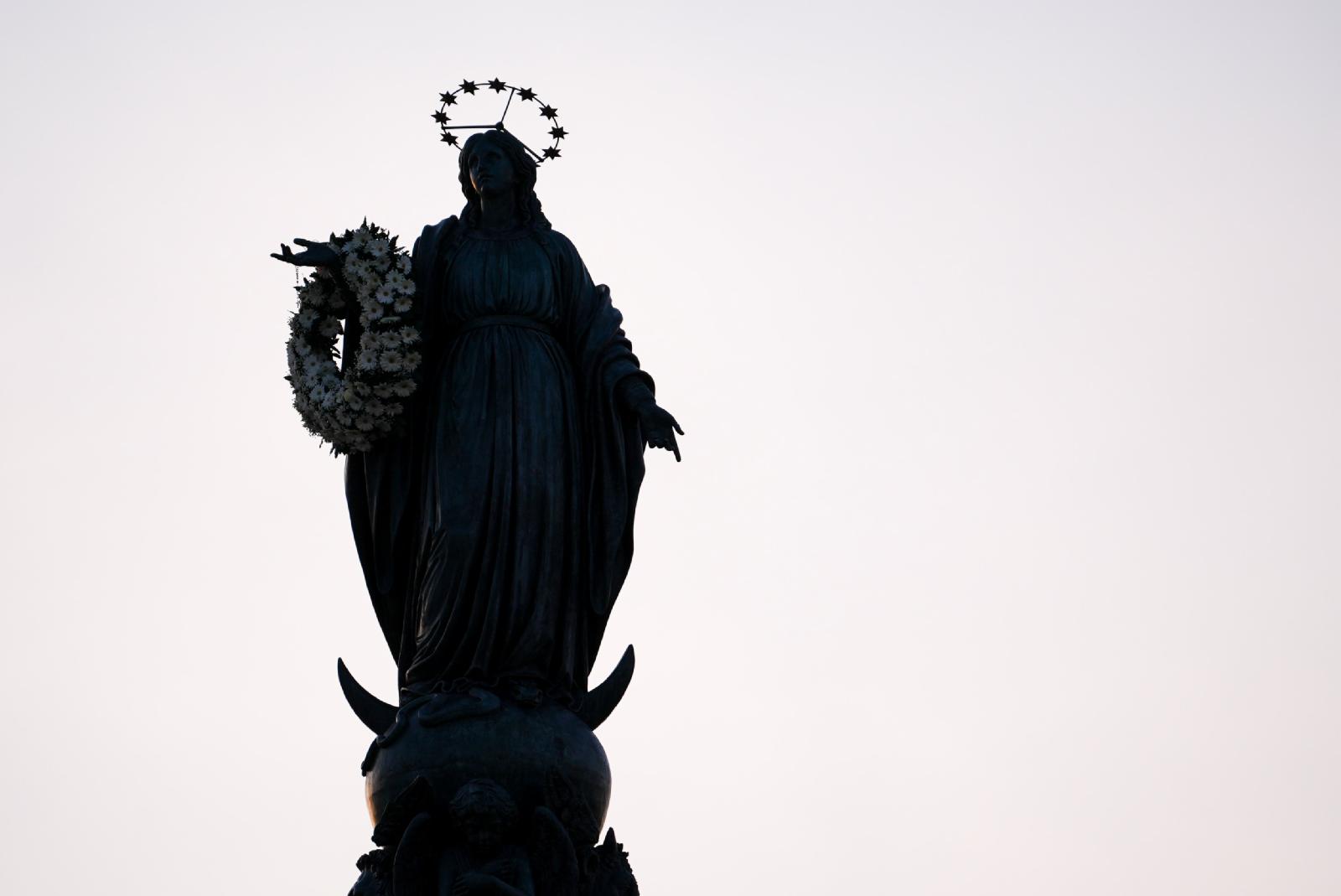
(OSV News) — On May 17, 1846, the U.S. bishops, 23 in number, consecrated the United States of America to the patronage of the Blessed Mother under the title of the Immaculate Conception.
The story behind this action, the story of the Immaculate Conception evolving as a dogma of the Church, was 14 centuries in the making.
It began during the ecumenical council held at Ephesus (Turkey) in 431, where the Church Fathers proclaimed that Mary was the Mother of God. This action was in response to groups of certain Christians (Nestorians) who argued that she was the mother of Jesus only. That night, following the proclamation by the bishops, the people of Ephesus marched through the town joyfully singing, “Holy Mary, Mother of God, Holy Mary, Mother of God,” again and again.
That day over 1,500 years ago was the beginning of an intimate relationship between the Church, the Church faithful and the Blessed Mother. Other than the Trinity, Catholics relate to Mary more than anyone or anything else. There are more schools, churches and children named after her than any other saint. Parishes have many Marian devotions: We venerate the Blessed Mother with statues, shrines, monuments, medals, necklaces, the rosary, the Angelus.
Countries throughout the world are consecrated under her patronage as the Immaculate Conception. So, too, the United States was consecrated under that same patronage centuries after the Council of Ephesus. It was during those in-between centuries that the dogma of the Immaculate Conception evolved.
Debate among the Church Fathers
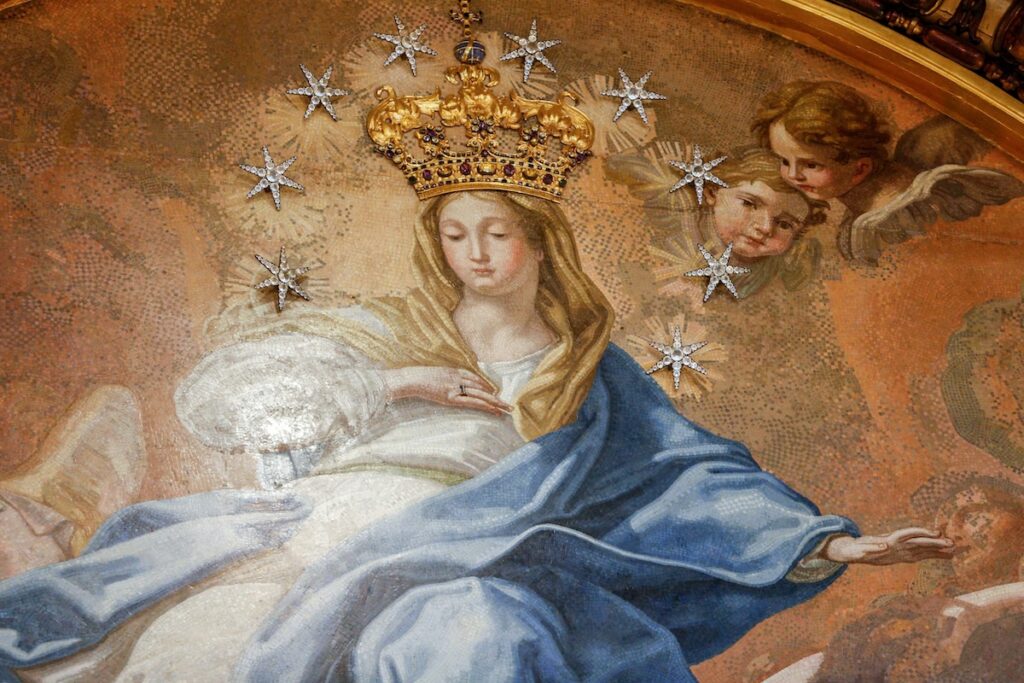
While many of the faithful long held that the Mother of God was immaculately conceived, this was not necessarily the opinion of all the Catholic theologians throughout the years, and it was not an article of faith until the 19th century. In the Middle Ages, St. Thomas Aquinas and St. Bernard of Clairvaux, among others, debated that everyone was born with original sin and that Jesus took that sin away. How could Mary be exempt from original sin before Jesus was born?
Eventually, Blessed John Duns Scotus (1266-1308) carefully explained that Mary was preserved from original sin in advance (preemptive redemption) while still in her mother’s womb. She was redeemed by Jesus, like everyone else, only in a different way.
Duns Scotus was greatly influenced by Eadmer of Canterbury who, some research claims, said about Mary’s Immaculate Conception: “God was able to do it, it was fitting that he did it, and so he did it” (Potuit, decuit, ergo fecit). To the people of God, going back to the time before Ephesus, it made sense that the person, the vessel, carrying the Savior of the world would be totally sinless, beginning at her conception.
The Church Fathers at the Council of Basel (called in 1431, and which later became the Council of Florence) gave clear credence to the preemptive doctrine: “This doctrine asserting that the glorious Virgin Mary, Mother of God, through the special preventing and operating grace of the divine Being, was never actually subjected to original sin, but was always exempt from original and actual sin, holy and immaculate, we define and declare as pious, and consonant to the Catholic faith, to right reason, and to Sacred Scripture; by all Catholics to be approved, and held, and embraced: (and also) that it is not lawful for anyone to preach or to teach anything to the contrary.”
Unfortunately, the bishops of the council were in a schism with the pope and this decree among others was not approved.
Devotion spreads
In 1477, Pope Sixtus IV (r. 1471-84) added a feast to the Church calendar: The feast of the Conception of the Virgin Mother thus encouraged belief in the Immaculate Conception, but it was yet to be defined as an article of faith in the universal Church.
The belief in the Immaculate Conception continued to grow, especially in France and Spain. In 1760, Pope Clement XIII (r. 1758-69) granted Spain approval to consecrate all the kingdoms of Spain to Our Lady of the Immaculate Conception.
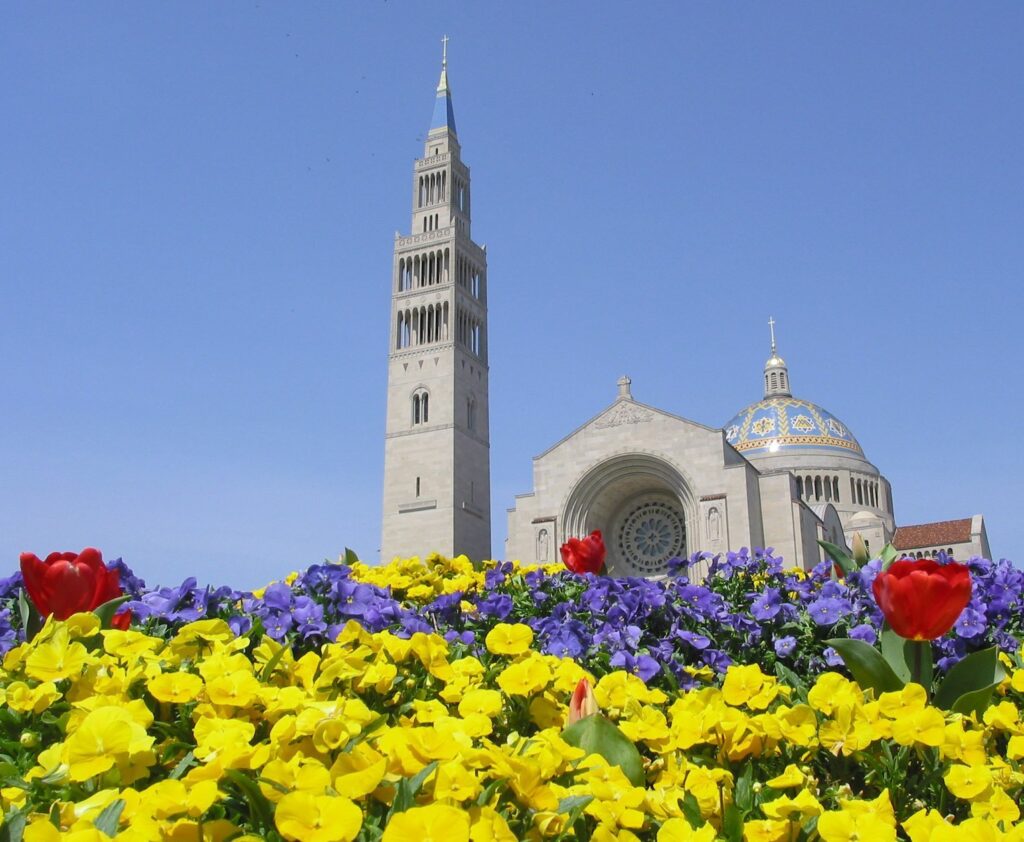
From the 16th century, Spanish explorers opening the borderlands, the southern coastline of the United States, dedicated their new discoveries to the Immaculate Conception of Mary. Her title was also given to ships, hospitals and churches. In the 19th century, the U.S. bishops were certainly aware of the role Spain played in the continued exploration of our nation and were likely influenced by the consecration of the new lands to the protection of Mary, immaculately conceived.
French connection
The 1840s were the era of expansion in the United States: the time of covered wagons going west, new settlements, the California gold rush, war with Mexico. The bishops of the United States sought divine intervention to protect all those involved in the evangelization of souls, exploration and the challenges facing the still fairly young independent nation. The bishops turned formally and publicly to the Blessed Mother — Immaculate Mary — as the nation’s patroness.
Initially, it was Bishop John Carroll (1737-1815), the first U.S. bishop, who placed the Diocese of Baltimore, as well as the 13 colonies, under the protection of the Blessed Mother in 1792.
Then in 1830, across the Atlantic Ocean, in France, Mary appeared to St. Catherine Labouré, telling her to create a medal for Mary with the words: “O Mary, conceived without sin, pray for us who have recourse to thee.”
Patroness of the United States
Part of the first order of business of the U.S. bishops meeting at the Sixth Provincial Council of Baltimore in May 1846 was to name the Blessed Mother, under her title of the Immaculate Conception, as the patroness of the United States; notably, they named her patroness of the United States, not the Church of the United States, meaning everyone was protected by the Blessed Mother.
The bishops wrote: “We take this occasion to communicate to you the determination, unanimously adopted by us, to place ourselves and all entrusted to our charge throughout the United States, under the special patronage of the holy Mother of God, whose Immaculate Conception is venerated by the faithful throughout the Catholic Church. By the aid of her prayers, we entertain the confident hope that we will be strengthened to perform the arduous duties of our ministry, and that you will be enabled to practice the sublime virtues, of which her life presents the most perfect example.”
The bishops requested the Holy See’s endorsement of this title, and in February 1847 Pope Pius IX (r. 1846-78) approved the declaration.
The actions of the U.S. bishops promoted and supported the doctrine that Mary was “full of grace” from the moment of her conception, a doctrine that had begun at Ephesus in 431.
An article of faith
Eight years after the pronouncement by the U.S. bishops, and encouraged by the universal belief held by laity and clergy alike, that Mary was immaculately conceived, Pope Pius IX made the Immaculate Conception an article of faith to be believed by all Catholics.
He promulgated this dogma through his 1854 encyclical “Ineffabilis Deus”: “We declare, pronounce, and define that the doctrine which holds that the most Blessed Virgin Mary, in the first instance of her conception, by a singular grace and privilege granted by Almighty God, in view of the merits of Jesus Christ, the savior of the human race was preserved from all stain of original sin, is a doctrine to be believed firmly and constantly by all the faithful.”
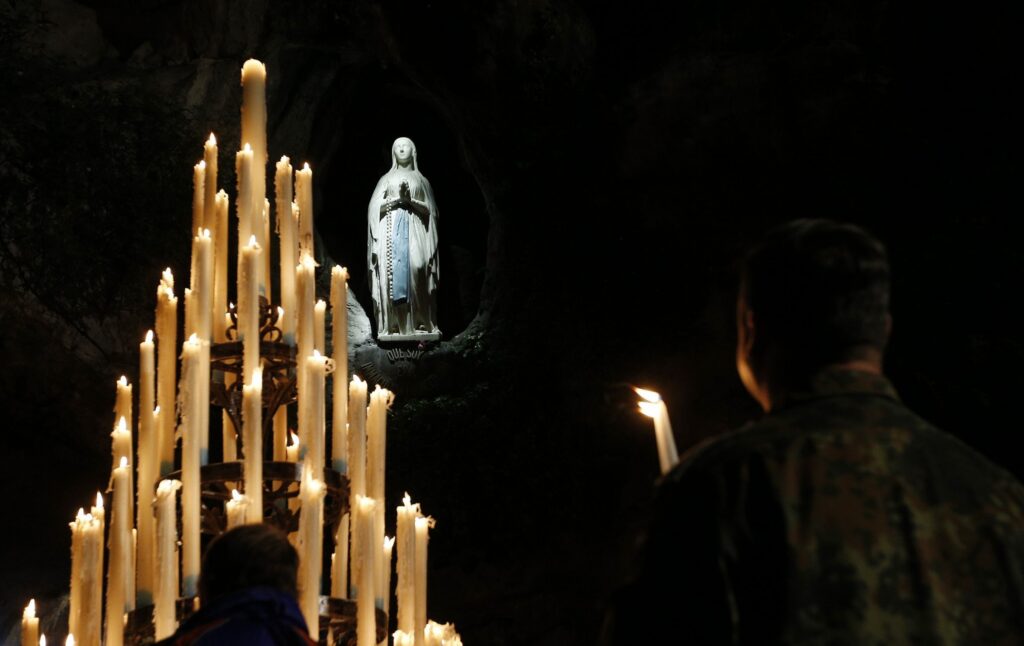
As if to affirm this dogma, Mary appeared to St. Bernadette at Lourdes, France, in 1858, calling herself the Immaculate Conception.
D.D. Emmons writes from Pennsylvania.
