


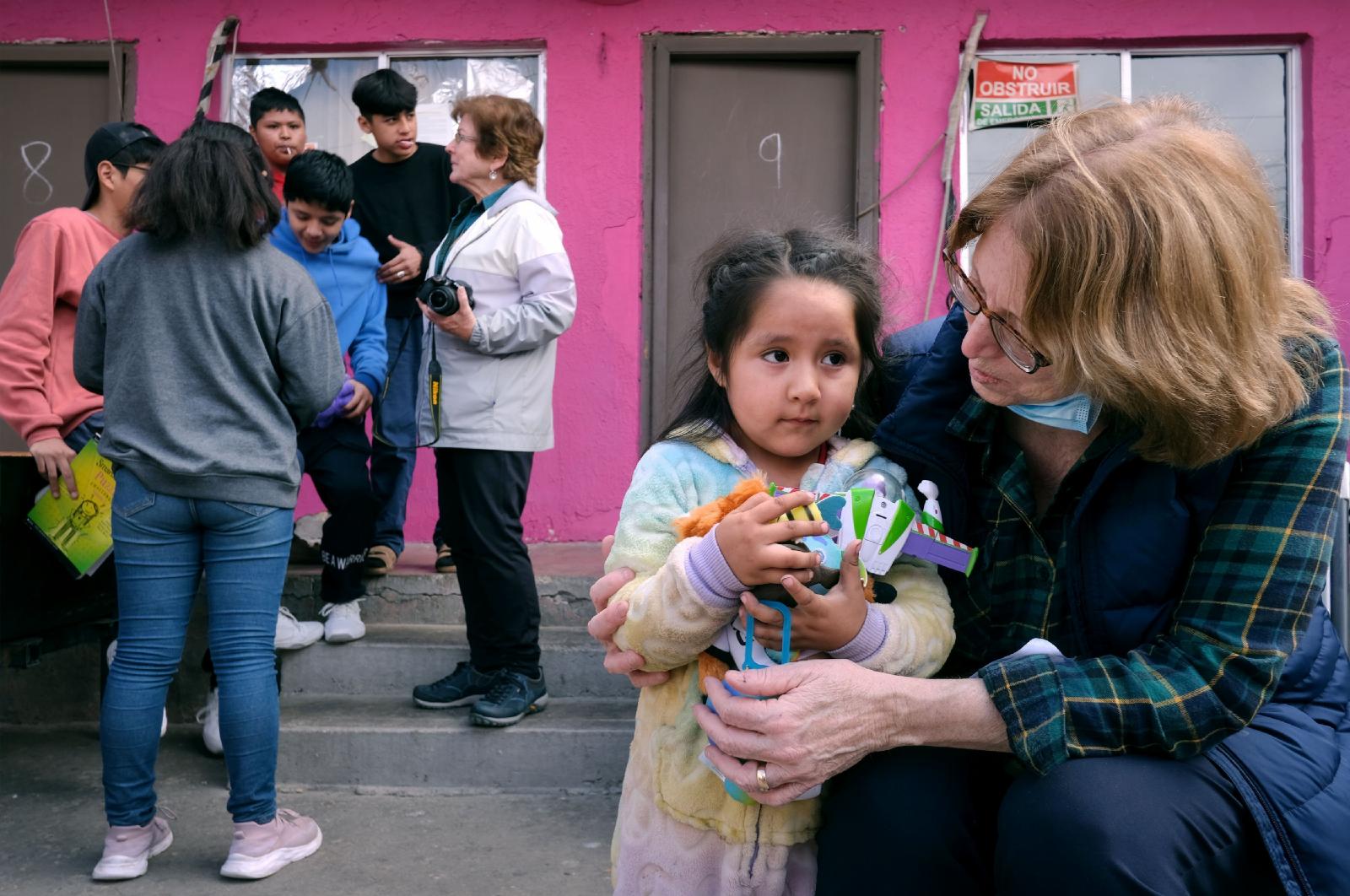
WASHINGTON (OSV News) — An Oct. 29-30 interfaith immigration policy summit hosted by the Catholic Legal Immigration Network, also known as CLINIC, brought together faith leaders, legal practitioners, advocates and scholars from Catholic, Protestant and Jewish faith traditions to find areas of commonality in their work serving immigrant communities.
Anna Gallagher, executive director of CLINIC, said in remarks at the summit, “We have much to learn from one another.”
“Across the traditions represented here, we encounter teachings about hospitality, justice, compassion, refuge, and responsibility,” she said.
The summit came during what participants described as a challenging time for their cause. A joint report from the National Association of Evangelicals, the U.S. Conference of Catholic Bishops‘ Migration and Refugee Services, the Center for the Study of Global Christianity at Gordon-Conwell Theological Seminary, and World Relief estimated that more than 10 million Christians living in the U.S. would be vulnerable to deportation under Trump administration policies implemented in 2025, and 61% were Catholic.
It also found more than 1 in 6 Catholics are either vulnerable to deportation themselves or could see a family member deported, barring law or policy changes.
‘Migration is not a footnote in the biblical narrative’
In reference to their interfaith dialogue, the Rev. Enid Almanzar, board chair at the National Latino Evangelical Coalition, said in remarks at the summit, “Migration is not a footnote in the biblical narrative.”
“Even Jesus began his earthly life as a child whose family had to flee political violence and seek refuge in Egypt,” she said.
Acknowledging broader doctrinal differences between the organizations, Rev. Almanzar said, “we may not agree on some of the larger theological questions, but we don’t have to agree on every doctrine to recognize the moral urgency of protecting the vulnerable.”
“Because ultimately, compassion without action becomes sentimentality and conviction without courage becomes rhetoric, and so our calling is to move beyond both to become communities where dignity is defended, where families are accompanied, and where love is made visible,” she said.
The summit also came shortly after a divided panel of the U.S. Circuit Court of Appeals for the District of Columbia allowed a lawsuit against the federal government from a coalition of more than two dozen religious organizations to proceed. The group is challenging a Trump administration policy that rescinded long-standing restrictions on arrests at sensitive locations, also including schools and hospitals, with exceptions for public safety or national security threats. Multiple panelists at the summit shared concerns about that policy change.
St. Louis Archdiocese’s lawsuit over ICE enforcement at ‘sensitive locations’
It also came soon after the Archdiocese of St. Louis filed a separate lawsuit against the federal government over a policy it said prohibits priests from distributing holy Communion to and hearing confessions of Catholics detained by U.S. Immigration and Customs Enforcement.
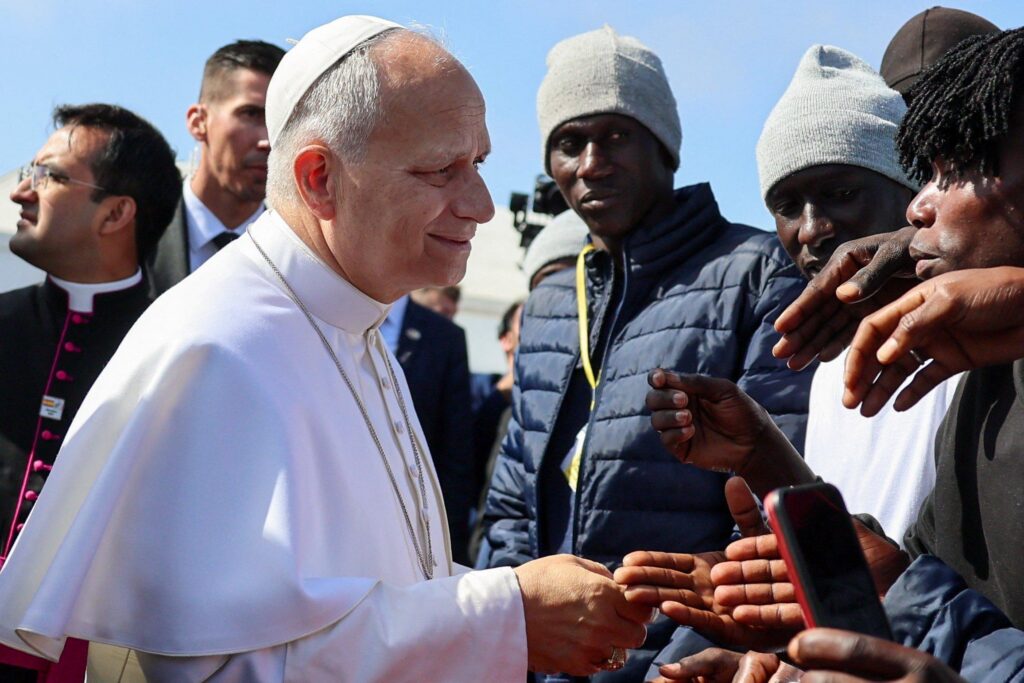
Pope Leo XIV sent a special message of support to the summit, thanking CLINIC for its work, “together with that of the many people, families, civic bodies and church communities who strive to uphold the dignity of migrants and refugees.”
“Too often, these most vulnerable members of society are caught in situations which strip them of their human rights — an injustice that cries out to heaven,” he said. “It is my hope, therefore, that this summit will encourage the participants to stir the hearts and minds of their fellow citizens to overcome that indifference and detachment which reduces the human person to a statistic.”
Pope Leo said he would pray the meeting “will help find new ways to awaken consciences to our shared moral duty for these brothers and sisters of ours, who, as Sacred Scripture and the saints untiringly remind us, are Christ visiting us in disguise.”
Gallagher said Pope Leo’s message was “a meaningful charge for the beginning of an interfaith gathering.”
Helping ‘our communities see more clearly, respond more faithfully’
“We are here to learn from one another, to strengthen our work, and to consider how we can help our communities see more clearly and respond more faithfully,” she said.
Rev. Almanzar argued that religious communities are well suited to advocate for humane immigration policies.
“Maybe the most prophetic thing we can do in this environment is refuse that false binary choice between security and humanity,” she said. “A nation should be able to uphold its laws without surrendering its conscience, and faith communities have a responsibility to remind our leaders and ourselves of that truth.”
“As faith communities,” she added, “I think we can be leaders in reframing the conversation and casting a vision about a future where people flourish, where people are welcome, where people are loved, and there’s not that false binary choice.”
Gallagher added, “Migration brings us into contact with questions that are central to religious life. Where do we belong? What do we owe one another? How do we respond to suffering? What does it mean to welcome someone whose language, history, or circumstances differ from our own?”
Kate Scanlon is a national reporter for OSV News covering Washington. Follow her on X @kgscanlon.
