


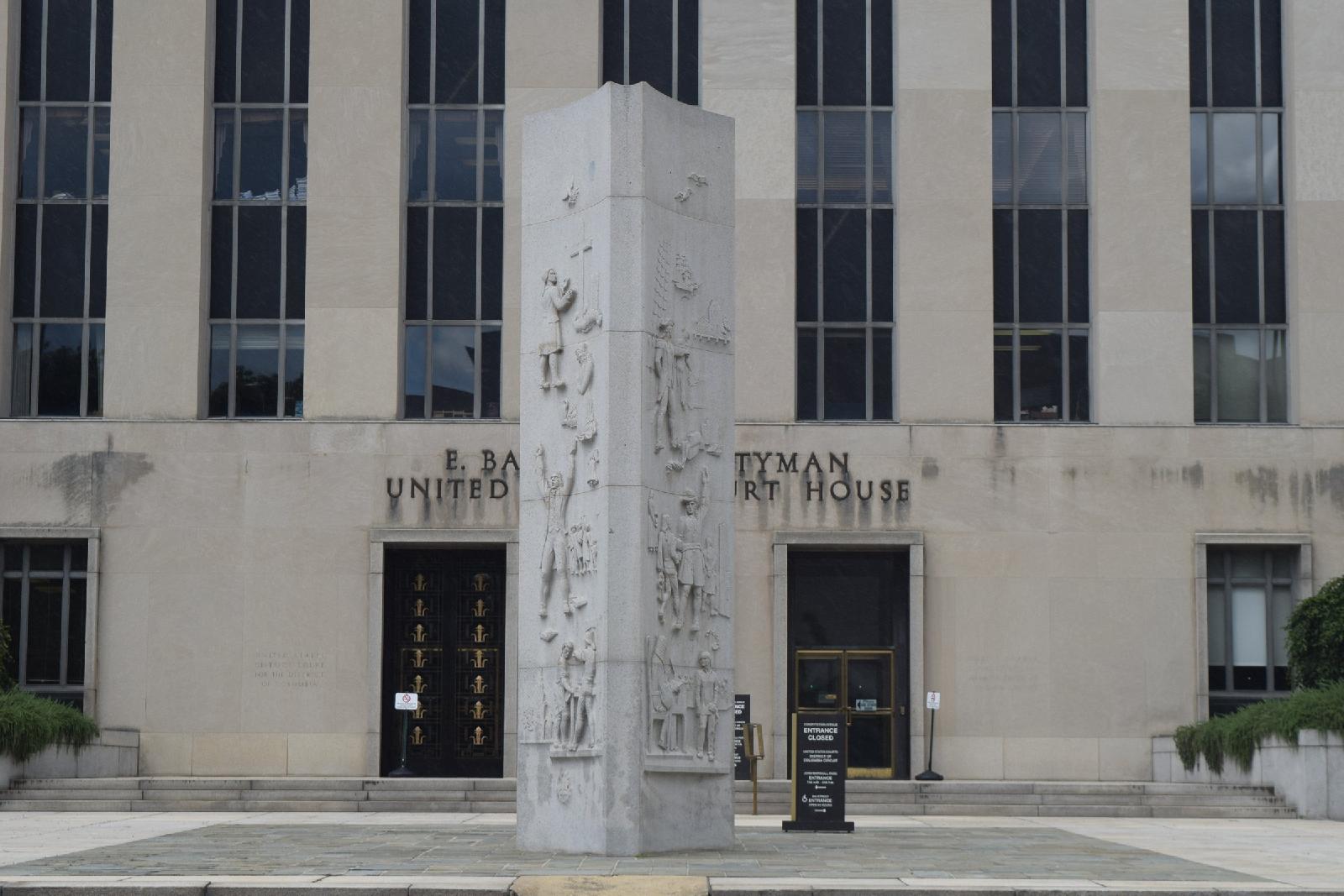
WASHINGTON (OSV News) — A divided D.C. Circuit panel Oct. 20 reversed a lower court ruling and allowed a multifaith coalition to continue its challenge to a Trump administration policy reducing restrictions on U.S. Immigration and Customs Enforcement actions at what are seen as sensitive locations, including houses of worship.
In 2025, a coalition of more than two dozen religious organizations filed a lawsuit to challenge a Trump administration policy that rescinded long-standing restrictions on arrests at sensitive locations, also including schools and hospitals, with exceptions for public safety or national security threats.
In its ruling, the panel of the U.S. Court of Appeals for the District of Columbia Circuit overturned an April 2025 decision by the U.S. District Court for the District of Columbia that the multifaith coalition lacked standing to challenge the Trump administration’s rescission of “sensitive locations” protection.
Kelsi Brown Corkran, the Supreme Court director for the Institute for Constitutional Advocacy and Protection at Georgetown Law and the lead counsel for plaintiffs, said in a written statement shared with OSV News, “The D.C. Circuit’s decision recognizes the real harm that DHS inflicted on religious communities when it rescinded the sensitive locations policy that had protected places of worship from immigration enforcement activity for over three decades.”
Victory for millions of people of faith represented by coalition
“It is an important victory for the millions of people of faith represented by the 27 Jewish and Christian denominations and organizations that came together to file this suit in defense of their right to worship and serve their communities without fear of intrusion by ICE officers,” Brown Corkran said.
The Rev. Carlos L. Malave, president of Latino Christian National Network, an organization among the plaintiffs in the lawsuit, said in a statement, “Our faith calls us to persevere in doing good.”
“The Latino Christian National Network celebrates the D.C. Court’s decision regarding our case to protect ‘sensitive locations,'” he said. “Houses of worship and sacred spaces must be respected, and the constitutional right of all church members to worship freely and without fear must be safeguarded.”
The U.S. Conference of Catholic Bishops was not a plaintiff in the lawsuit but filed an amicus brief in support of the plaintiffs.
Trump policy change creates ‘an untenable position’
That brief argued that the “rescission of the Sensitive Locations Policy at issue here,” which the brief noted was in effect for over three decades, “has had the predictable, deleterious effect of forcing Plaintiffs into an untenable position: they either increase the risk to their congregants of harmful enforcement action by maintaining the obligation to attend weekly services, or limit the provision of in-person religious services to their congregants in response to the imminent threat of an enforcement action, and their congregants’ well-founded fears thereof.”
They said either scenario presents “severe and concrete” injury that “the courts are ill-suited to dismiss as speculative.”
The Trump administration rescinded the long-standing ICE policy — which prohibits immigration enforcement arrests at certain locations, as well as other sensitive events like weddings and funerals without approval from supervisors — shortly after he returned to the White House in 2025. The previous policy had exceptions for public safety or national security threats.
In a separate lawsuit, a federal judge previously blocked immigration agents from conducting enforcement operations in houses of worship for Quakers and a handful of other religious groups limited to those who filed that suit.
Kate Scanlon is a national reporter for OSV News covering Washington. Follow her on X @kgscanlon.
