


LUANDA, Angola (CNS) — When more than 100 villagers’ homes were torn down because they sat atop mineral-rich land, it was the Catholic Church that went to court.
The case, brought by a commission of the Catholic Bishops’ Conference of Angola and São Tomé and Príncipe, resulted in new homes for displaced families in the southern province of Huíla, according to church officials.
Across Angola, church leaders say such interventions — legal, advocacy and negotiations — with mining companies are becoming more common.
Wellspring of vitality and growth
As the Catholic Church’s global leadership increasingly looks to Africa as a wellspring of vitality and growth, communities across the continent are pressing it to take a clearer stand on one of their most urgent concerns: the human and environmental cost of mining.
In resource-rich regions like Angola, Catholic leaders are navigating a fraught reality, caught between governments and multinational mining companies on one side, and communities facing displacement, pollution and deepening poverty on the other.
In Angola, that responsibility has often fallen to the Church.
The bishops’ Commission for Justice, Peace and Integrity of Creation works to ensure that affected communities’ voices are heard through advocacy, dialogue and, at times, legal action.
Families displaced due to mining deals
Jesuit Father Celestino Epalanga, undersecretary of the commission, has spent years working with communities impacted by mining projects.
Five years ago, the commission heard about the community impact of the government allowing mining companies to extract resources from the land peoples’ homes were built on. The government’s deal with the mining companies meant about 130 families in the area were displaced — forced from their homes and their land, Father Epalanga told Catholic News Service April 20 in Luanda. The bishops’ conference hired an attorney to represent the communities in court, and a judge ruled the company had to build new homes for the affected families.
Father Epalanga said he has seen other communities poisoned, displaced and left without basic services.
“It’s been over 100 years that we are exporting diamonds, but there is nothing in the area, absolutely nothing — no hospitals, no schools,” he told CNS.
Mining expanding rapidly
Mining across the Global South has expanded rapidly in recent years, driven in part by global demand for critical minerals used in batteries and clean energy technologies. According to the International Energy Agency, demand for lithium alone rose by nearly 30% in 2024.
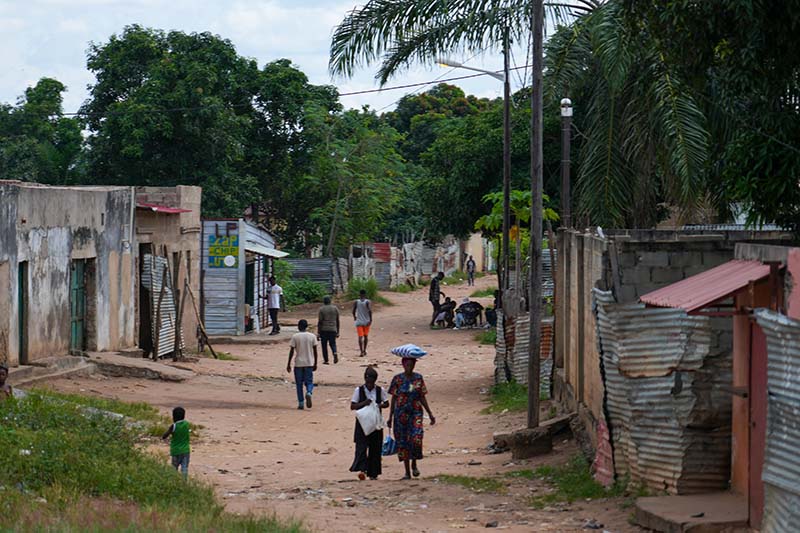
Angola is one of Africa’s top diamond producers, with government figures showing output reached 15.2 million carats last year. The country is also an emerging hub for minerals such as copper, cobalt and lithium, and much of the country remains underexplored, as investment continues to grow. The country produces roughly 1.2 million barrels per day in oil, accounting for 95% of Angola’s exports, according to the Chr. Michelsen Institute, a Norwegian research center.
The country has also become a key geopolitical player.
Major export route for minerals
Angola’s Lobito Corridor serves as a major export route for minerals from the Democratic Republic of Congo and Zambia, which together supply the majority of the world’s cobalt and a significant share of its copper, both essential for modern technologies. This area provides access to an estimated 73% of the world’s cobalt, which is used in electric vehicles, smartphones and laptops, and 14% of the global production of copper, which is a primary material for electrical wiring.
That has drawn competing interest from global powers. The Chinese government and state banks have invested heavily in Angolan infrastructure, contributing an estimated $17 billion to $20 billion, while the United States government has backed development of the railway as part of its own strategic push in the region.
Yet for many Angolans, the benefits remain unclear. Local economists Alves da Rocha and Wilson Chimoco have warned that expectations that the resource wealth tied to the corridor will reach the people impacted by the mines remain “very low,” in a published report in 2025.
Concern for those in need
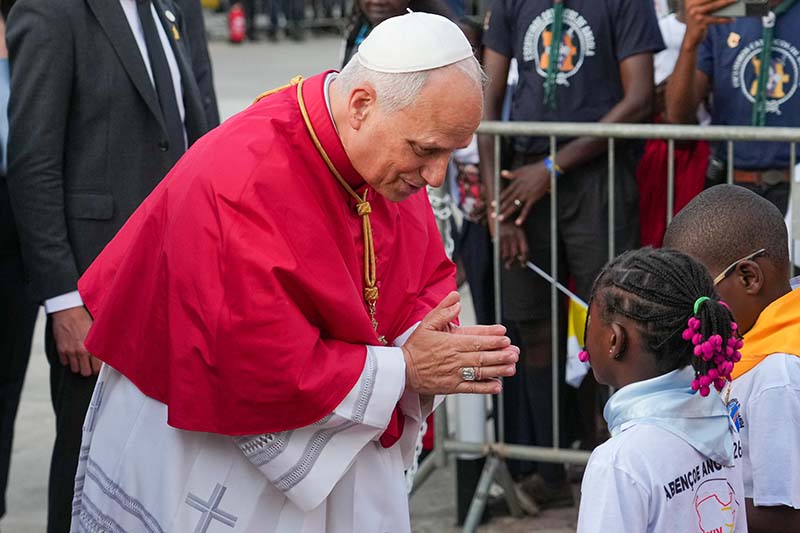
Throughout Pope Leo XIV’s multi-country tour of Africa, he has strongly urged countries to rethink their approach to exploitative mining industries that oftentimes does not benefit the poorest. Andin Angola, where more than 60% of the government’s revenue is dependent on oil and diamonds, this issue is especially relevant.
In his first stop in the county, Pope Leo echoed those concerns to Angolan President João Lourenço and the diplomatic corps April 18.
“You know well that all too often people have looked — and continue to look — to your lands in order to give, or, more commonly, in order to take,” Pope Leo said to the diplomatic corps. “It is necessary to break this cycle of interests, which reduces reality, and even life itself, to mere commodities.”
The pope was direct in his speech on the consequences: “How much suffering, how many deaths, how many social and environmental disasters are brought about by this logic of extractivism!”
He called for more economic justice in the country, where the inequality of wealth is high. An estimated 52 percent of those under the age of 25 are unemployed, according to some local media.
“All Angolans, without exception, have the right to build up this country and to benefit from it equitably,” the pope told the diplomatic corps April 18 in Luanda. “Your people have suffered time and again when this harmony was violated by the arrogance of a few.”
The Church often acts as an intermediary
For many communities, the Church has become one of the only institutions integrated into remote villages across the mining-affected areas.
Cornélio Bento, a journalist and project coordinator with the bishops’ conference’s commission, said the Church often acts as an intermediary between companies and communities.
In one village in Lunda Sul province, a river was polluted by mining waste, water that locals depended on for drinking, cooking and washing, Bento said.
In Mussolobela, another village, residents reported that nearby mining operations caused their homes to shake as heavy machinery moved closer. The bishops’ commission helped organize residents and is now in dialogue with company representatives.
“This land is our way of life,” Bento told CNS in an interview April 20.
The local church has also begun developing formal processes for communities to file grievances collectively, strengthening their ability to negotiate with companies. Bento learned about it when meeting with other Catholic activists in Africa working to support communities affected by mining.
Yet these efforts seem hampered by a lack of data.
Need for reliable data
Consolação Miguel, a lawyer with the bishops’ commission, said obtaining reliable environmental and health data remains difficult. She told CNS that one of their top priorities is getting accurate risk assessments and environmental impact reports of mining activities that could show that recent health concerns in areas near mining projects are related to the extraction.
“If the fact they are dying is because of this contaminant, we don’t have a solid explanation,” she told CNS in an April 20 interview in Kilamba. “We don’t have sources to prove that — but we all know.”
When asked if the church’s efforts had support from the government, Father Gabriel Cambala told CNS in Kilamba April 20: “We cannot categorically say, ‘yes.’ There is still resistance when it comes to dialogue between the Church and the local government — significant resistance.”
Human Rights Watch report
In 2025, Human Rights Watch reported that Angolan police were implicated in the killings, sexual violence, excessive use of force and torture of some activists and protesters. Some media have reported on the use of bullets to disperse crowds of protesters in the province of North Lunda.
For Father Epalanga, he said he will never forget going to Cafunfo in northeast Angola following a community protest of a mine that became violent.
He said they were chanting early in the morning against the diamond mining nearby.
But then later, “They had people carry the corpses to a river nearby,” the Jesuit priest told CNS.
In January 2021, the Angolan authorities classified this incident that resulted in the death of more than 30 people as a “rebellion and attempted robbery” in a police report in Cafunfo, some media reported. Even for some of those working with the local church, the issue is complex.
‘Many lives are destroyed’
Father Cambala told CNS he speaks daily about the impacts of mining activities on the region where he works in north Angola. Once, there was hope that these companies would come and help develop the region with much-needed infrastructure, like hospitals and schools.
“What happens, however, is that the population benefits almost not at all — nothing at all, in fact,” he said while waiting for the pope to arrive in Saurimo in northeast Angola. “Many lives are destroyed, people are killed, and afterward, there is no justice for those families. No, no — no one looks for the culprit, and the guilty are not punished.”
The pope encouraged the Angolan authorities to invest in social services, especially those that support the most vulnerable, like the elder-care home he visited in Saurimo April 20.
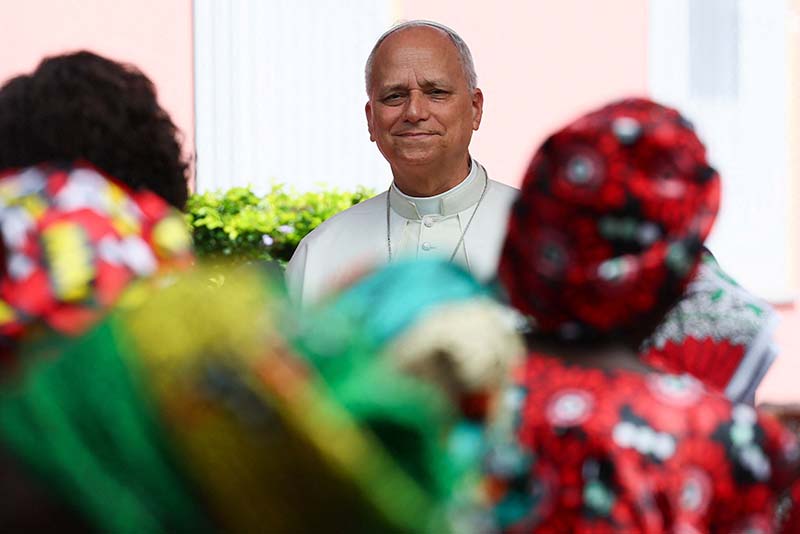
“The care of the weakest is a very important sign of the quality of the social life of a nation,” he told nursing home staff and authorities gathered there.
Many local clergy have taken it upon themselves to ensure that these villages have the resources they need to have a voice.
Some priests in affected regions have increasingly used their homilies to educate communities about their rights, while the bishops’ commission organizes workshops on environmental protection and legal recourse.
‘Never cease to denounce injustices’
Pope Leo encouraged clergy, religious and catechists in his speech to them in Luanda April 20 to continue to share the church’s social teaching, telling them it was “essential that, while interpreting current events with wisdom, you never cease to denounce injustices, offering solutions in accordance with Christian charity.”
He reminded them that sometimes such witness may come at a cost: “When difficulties arise, remember the heroic witness of faith given by Angolans –men and women, missionaries born here or coming from abroad — who had the courage to give their lives for this people and for the Gospel, preferring death to betraying the justice, truth, mercy, charity and peace of Christ.”
Miguel, the attorney with the commission, said the goal is not confrontation, but accountability.
“We don’t have to fight with guns,” she said. “We just fight with words, kind words, love words, Fathers’ words.”
Church advocates say the pope’s visit has strengthened their efforts.
“This is the Gospel,” Father Epalanga said. “He reminded us to take up this mission with seriousness.”
Pope’s words brought encouragement
During a Mass in Kilamba attended by an estimated crowd of 100,000, Pope Leo emphasized the Church’s responsibility to respond to suffering.
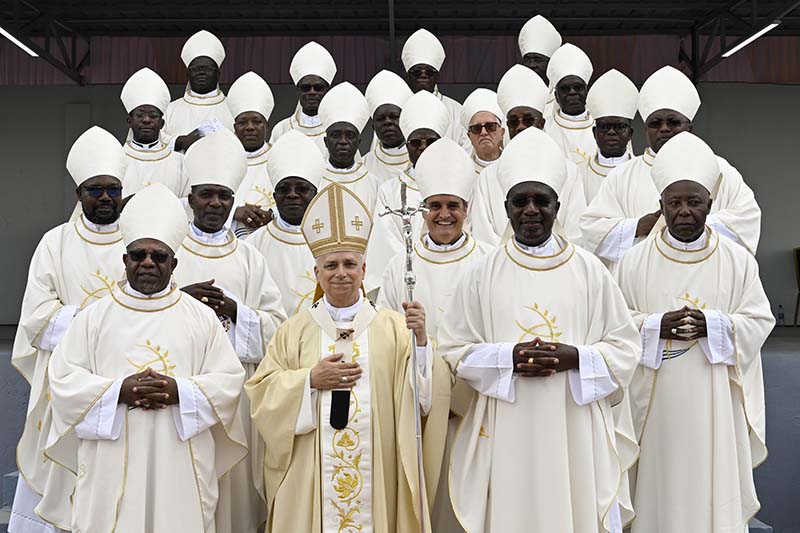
“The social and economic problems and the various forms of poverty call for the presence of a Church that knows how to walk alongside you and how to heed the cry of its children,” he said.
For Bento, that message has been energizing for him as a journalist. His team is now developing a guidebook to bring to mining-affected communities, helping them understand their rights and organize collectively, and seeing Pope Leo’s recent speeches as encouragement for their work.
“The pope has brought to us a very powerful tool,” he said. “We have to bring this as a pastoral teaching.”
Father Cambala said the visit came at a critical moment.
“His speech touched the hearts of our leaders,” he said. “We hope it will bear fruit, and that they will truly put into practice what they heard.”
