


(OSV News) — A new Georgia law criminalizing clergy sexual misconduct involving those under their pastoral or spiritual care is drawing praise from Catholic advocates, with one expert calling the legislation both “simply long overdue” and a potential model for other states to follow.
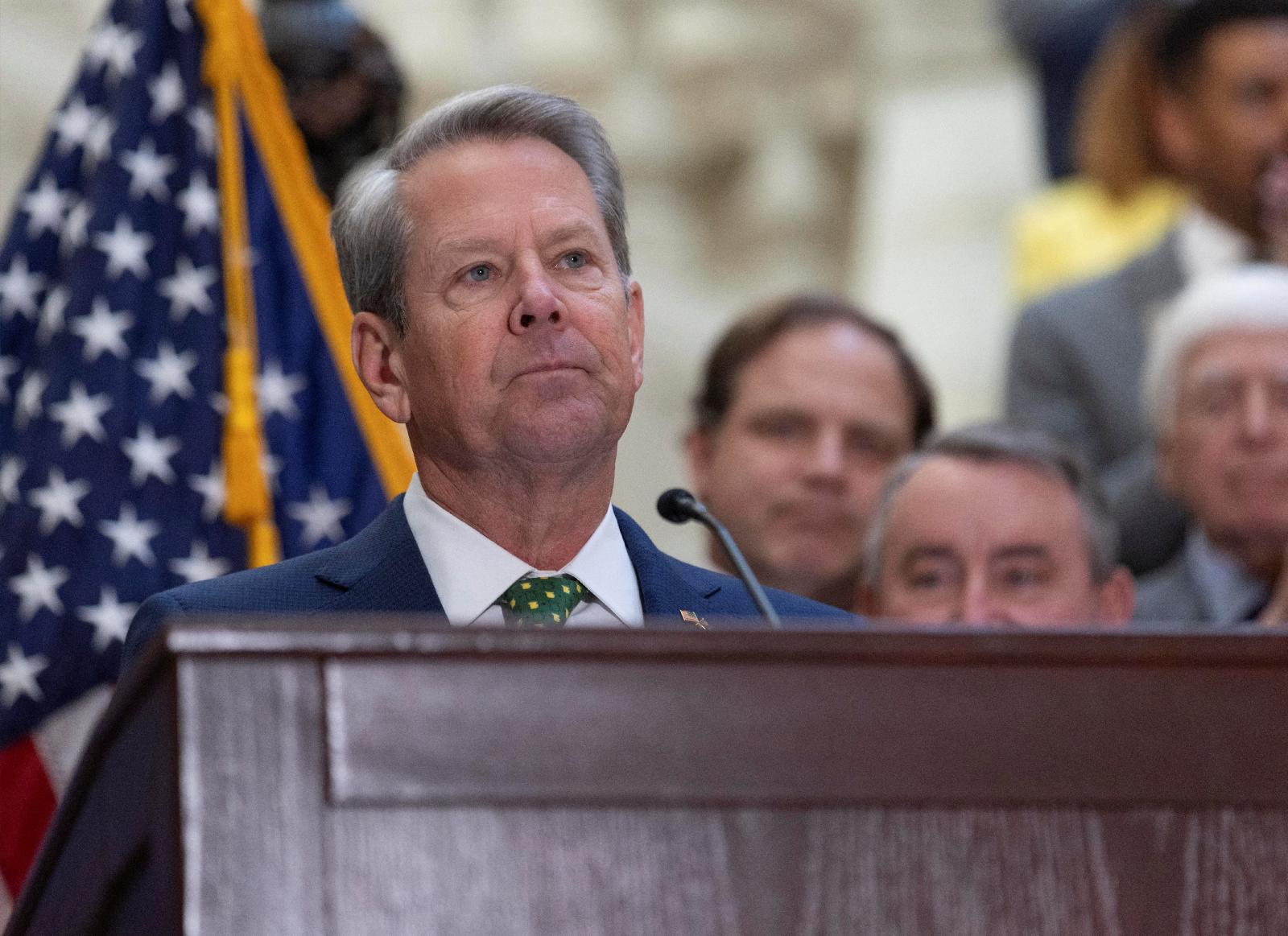
On May 11, Georgia Gov. Brian Kemp signed into law SB 542, which amends the state’s legal code to define sexual abuse by clergy against victims “under their pastoral care or spiritual guidance” as a specific criminal offense.
The law covers those relationships where “a clergy member provides spiritual guidance, pastoral care, religious instruction, confession, mentoring, or emotional or spiritual support in circumstances where a reasonable person would view the clergy member as exercising influence, trust, or authority over another person’s spiritual, emotional, or personal well-being.” It does not apply to sexual relationships “between individuals lawfully married to each other.”
The law offers “the basics of accountability and transparency” to those experiencing such situations, said Jesuit Father Gerard J. McGlone, a research fellow at Georgetown University’s Berkley Center for Religion, Peace and World Affairs, and a former assistant professor of psychiatry at the school.
Father McGlone — who previously served as chief psychologist and the director of counseling services at the Pontifical North American College — told OSV News he also derives “a sense of safety” from the new law — not only due to his extensive research in priestly formation and child protection, but because he is a survivor of clerical sexual abuse.

‘A measure of protection to vulnerable people’
“We know that there are people who will use positions of authority to manipulate and abuse the vulnerable,” said Jayna Hoffacker, executive director of the Georgia Catholic Conference, the public policy arm of that state’s Catholic bishops, in a May 13 email to OSV News. “This reform of Georgia law, which supports the safe environment policies we already have in place, offers a measure of protection to vulnerable people.”
The law — which was unanimously approved by the state’s house and senate, and backed by the Georgia Baptist Mission Board — describes a first-degree offense as involving sexually explicit conduct, punishable by a prison sentence of at least one and not more than 25 years, with fines up to $100,000.
A second-degree offense, which entails non-explicit sexual contact, marks a “misdemeanor of a high and aggravated nature” for a first conviction, with second or subsequent convictions counting as felonies carrying sentences of one to five years.
In addition, a person previously convicted of a sexual felony who violates the law is subject to life imprisonment or a “split sentence,” with jail time followed by lifelong probation and electronic monitoring.
The law provides for a 15-year statute of limitations on reporting criminal clergy sex misconduct from the time the crime occurred.
Student’s testimony spurred law
The legislation was spurred in part by the testimony of Hayle Swinson, a former student and athlete at Truett McConnell University, a Christian school in Georgia.
Swinson — a recent convert to Christianity when she enrolled in the school — later disclosed to Christian investigative news outlet The Roys Report and to law enforcement that she had been repeatedly sexually assaulted and raped by former university vice president and pastor Bradley Reynolds, under the guise of Christian discipleship.
In May 2025, The Roys Report posted an hour-long podcast interview with Swinson, in which she graphically recounted the alleged abuse, with some incidents taking place as Reynolds led her in prayer and Bible study in the basement of his family home.
“The progression of all of this was laced with, ‘This is God’s will for you,'” a tearful Swinson told journalist Julie Roys in the podcast.
According to a May 12 article by The Roys Report on the new Georgia law, a criminal case against Reynolds — who left the university in 2024 — is pending regarding a December 2025 indictment that he lied to law enforcement about his relationship with Swinson.
‘What a classic perpetrator does’
Father McGlone told OSV News that Reynolds’ alleged use of “obedience, saying that this is what God wants” is “what a classic perpetrator does.”
He also said that both as a survivor and a treatment provider, “the part that has been so frustrating” is “when you see that there are no sort of repercussions to this behavior. That it’s often framed as this sort of, ‘Oh, well, you know, she wanted it or he wanted it,’ because the person was an adult.”
Yet, said Father McGlone, such a view shows “little to no recognition of the power imbalance, and most especially of the spiritual power imbalance,” that was evident in Swinson’s situation.
Father McGlone also said he hopes the Georgia law “really becomes a model for other states to develop,” especially as some states look to legally challenge the Catholic Church’s seal of confession (which is inviolable under canon law, the Church’s main administrative code) to root out abuse.
“I think that if we are to keep the sanctity of the confessional seal, then we have to show the commitment to protecting the pastoral situation more completely,” said Father McGlone.
Clergy responsible for maintaining boundaries
The expansion of the Catholic Church’s safe environment protections — which in the U.S. were first implemented in 2002 for children and young people — to adults remains a far from complete process, experts previously told OSV News.
Many Church jurisdictions have yet to adopt the standard set by Archbishop Charles Scicluna, a key figure in the Church’s fight against clergy sexual abuse, for the Maltese Ecclesiastical Province. The archbishop of Malta also is adjunct secretary of the Dicastery for the Doctrine of the Faith.
Those 2014 directives make clear that sexual contact or sexualized behavior between a “pastoral functionary” — including any bishop, cleric, religious or lay person — and adults in a pastoral relationship “is considered to be always abusive, whether with or without consent.”
Those directives recognize the clergy are responsible for maintaining boundaries in their pastoral relationships, and prohibit a defense alleging the sexual relationship was consensual.
Pope Francis’ motu proprio “Vos Estis Lux Mundi” (“You are the light of the world”) included the term “vulnerable person,” later updated to “vulnerable adults,” defined as “any person in a state of infirmity, physical or mental deficiency, or deprivation of personal liberty which, in fact, even occasionally, limits their ability to understand or to want or otherwise resist the offense.”
Legislation part of wider approach
While Georgia’s new law is “a positive and important step” toward enhanced accountability and protection, “legislation alone cannot address the full depth of the harm survivors experience, nor fully repair the wounds already caused,” said Rebecca Dodge, survivor support and engagement coordinator for Awake, an independent, Milwaukee-based Catholic nonprofit that provides survivor support and advocacy.
“We must continue listening to survivors, seeking education around abuse dynamics and trauma-informed support, and working toward meaningful institutional reform in order to foster lasting healing and transformation,” Dodge told OSV News.
Gina Christian is a multimedia reporter for OSV News. Follow her on X @GinaJesseReina.
