

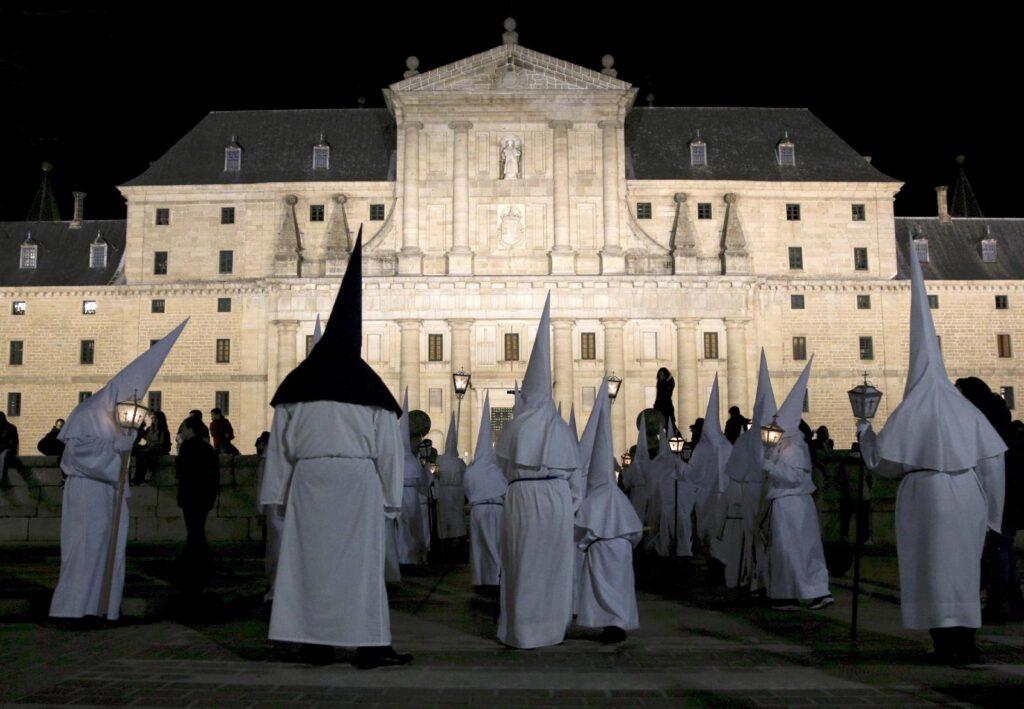
MADRID (OSV News) — Gonzalo and three of his friends earn pocket money in a rather unusual way for most university students. He sings in a traditional Spanish band, entering restaurants in a town northwest of Madrid known for its splendid history — San Lorenzo de El Escorial.
It is here where King Philip II of Spain built a spectacular pantheon — a massive complex containing the Basilica of St. Lawrence, a royal palace and an Augustinian monastery — and the biggest Renaissance building in the world. The construction was the perfect embodiment of an alliance of the altar with the throne.
King Philip II, who ruled from 1556 to 1598, governed an empire that spanned the globe, being the first monarch to preside over territories on every known continent, earning his empire the famous moniker “the empire on which the sun never sets.”
Just a few blocks from the grandeur of El Escorial, Gonzalo and his friends went into a local restaurant and, in a spontaneous moment, sang for a group of journalists — including OSV News — gathered over traditional Spanish fare in one of the town’s historic dining establishments. When asked how he felt ahead of the June 6–12 apostolic journey to Spain, Gonzalo responded without hesitation.
Speaking as a Catholic and a man of faith, he said, “I am very excited to be able to be with Leo XIV.”
Gonzalo is the perfect embodiment of the change observed in the Catholic Church in Spain in recent years, said Augustinian Father Alberto Sánchez Sánchez, top San Lorenzo de El Escorial organist and graduate of the Royal Conservatory of Madrid.
“Something is changing in Spain regarding the relationship between religion and, above all, young people,” said Father Sánchez, who will be able to personally greet Pope Leo in the nunciature with other Augustinians in Madrid on June 7. “Why do I say this? Well, because I see, above all, more participation from young people in religious celebrations and also less fear of identifying as a believer and as Catholic.”
He said that what Gonzalo testified to in a restaurant to a group of reporters would have been impossible a few years ago when young people were too ashamed to admit they’re Catholic in Spain.
Numbers drop, conscious Catholicism grows
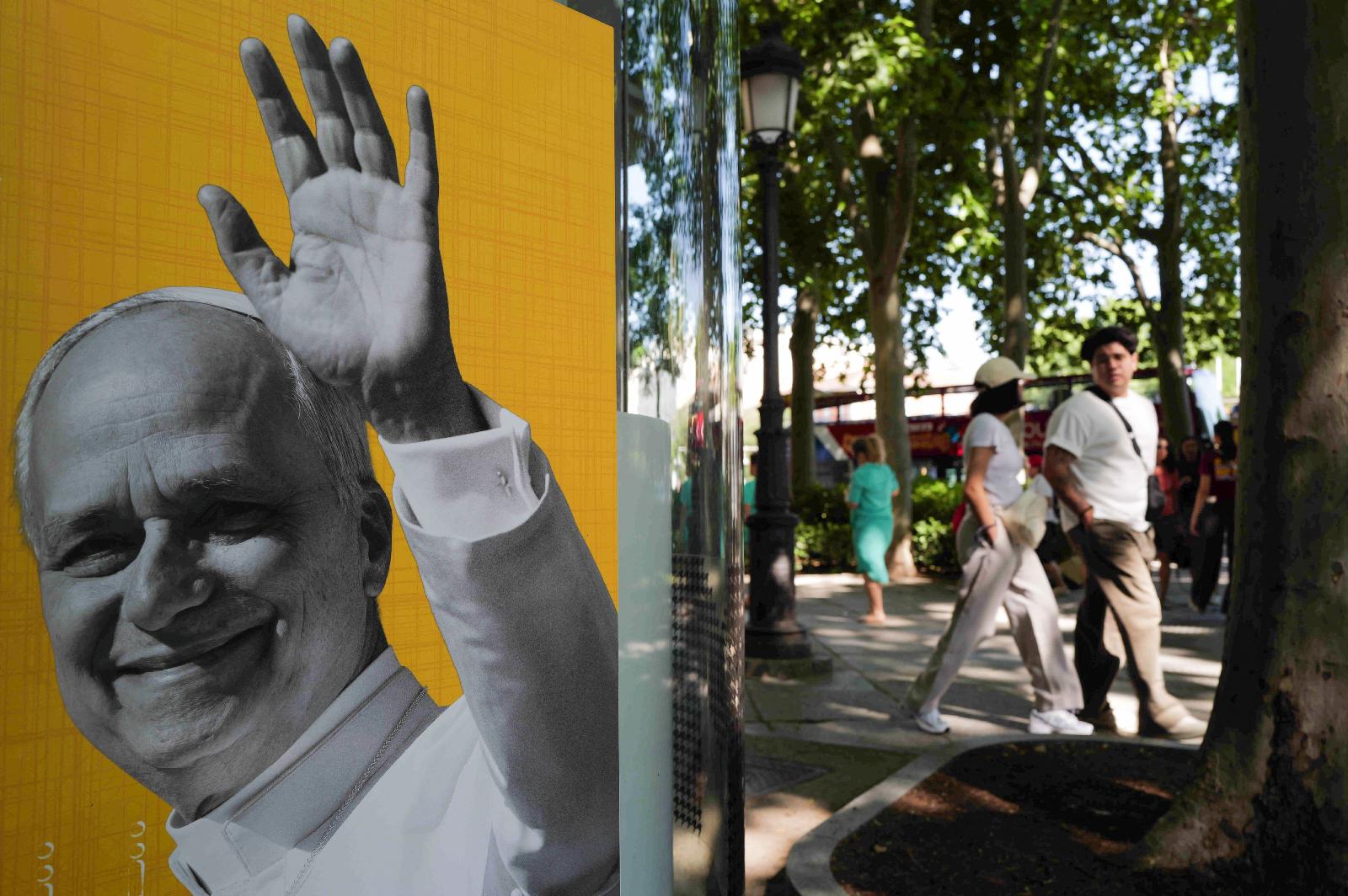
As Pope Leo XIV prepares for his June 6-12 apostolic visit to Spain, Church leaders say he will encounter a Catholic community at a pivotal moment. While the number of Spaniards identifying as Catholic has declined in recent decades, many observers point to signs of renewed interest among young people.
The Catholic Church in Spain has seen a sharp decline in numbers between 2011 to 2026, with a study conducted by the website Statista showing a 15.8% drop in those identifying as Catholic.
A comparison of the Spanish bishops’ conferences’ official activity reports from 2007 and 2024, showed that total yearly baptisms fell by roughly half, dropping to 159,693 in 2024, compared to 325,271 in 2007 (which the falling birthrates also contribute to).
The number of active priests shrank from 19,121 in 2007 to 14,994 in 2024, with similar drops recorded among seminarians and overseas missionaries.
But while those numbers have decreased, the Catholic Church more than doubled its charitable and social assistance centers to 9,060, compared to 4,459 in 2007, and supports over 3.8 million people in need across Spain.
Archbishop Luis Argüello of Valladolid, president of the Spanish bishops’ conference, told a small group of media representatives via phone conversation that while the Spanish Church — 15 years after the last papal visit — “desires the coming of the pope with a special longing,” it is also a Church “caught at a crossroad.”
“On the one hand, the Spanish Church has lived through a few decades of having to situate itself in a new social, economic, and political context, which has meant that, well, we have shrunk on the one hand,” but on the other, Archbishop Argüello said, “we have observed in the last two years a desire, a search by younger generations to get closer to the Church.”
And in such a sense of the crossroad, he said, “the pope’s visit is going to be a splendid moment to encourage this entire missionary path of the Church in Spain.”
Since 1982, 8 papal visits in 30 years but none in the last 15
As the first pope in modern history to have spent much of his priestly ministry as a missionary, Pope Leo arrives in Spain June 6 with a unique familiarity with the country — which he has visited almost 50 times — as well as its missionary zeal.
St. James, patron saint of Spain, brought Christian faith to Spain seven years after the crucifixion of Jesus. Since then, Spanish Catholicism has produced some of the most spectacular traditions, world famous saints, church buildings and art that people come to see from all corners of the world.
While St. John Paul II visited Spain five times and Pope Benedict XVI came to the country three times, Pope Francis was more interested in visiting peripheries of the world than traditionally Catholic European countries.
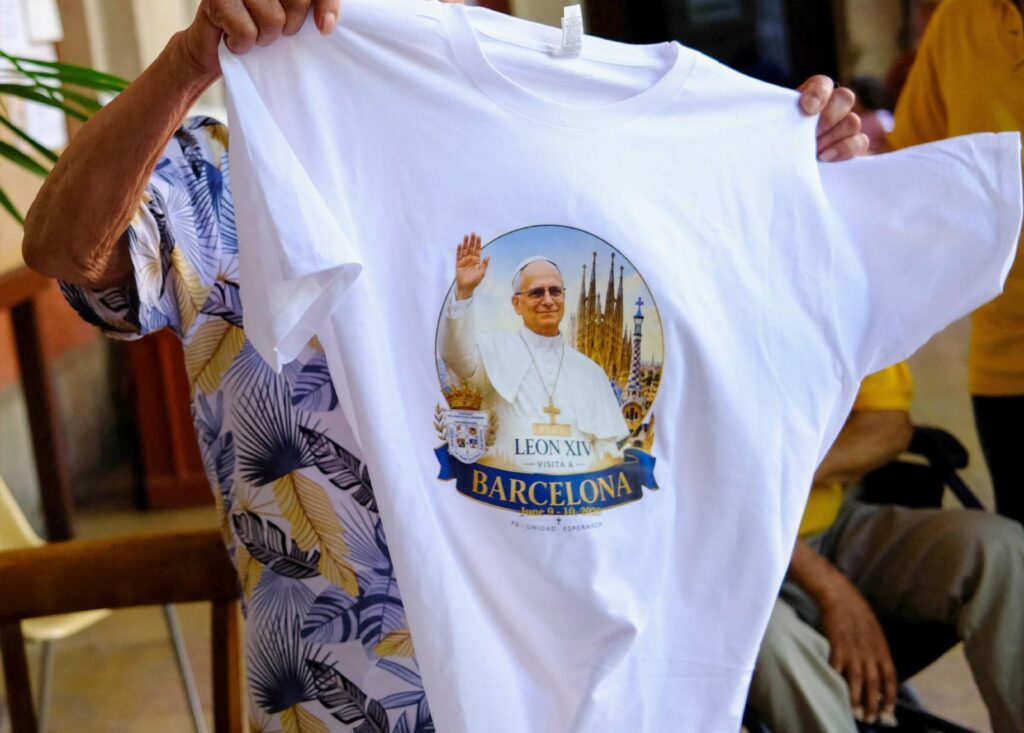
The coming apostolic trip can be dubbed historic as it’s the first major European trip of Pope Leo. But Spain is also a different country than it was when St. John Paul literally inflamed it in 1982.
“Spain has not ceased to be a country shaped by a Catholic cultural heritage, but it has ceased to be a society in which Catholic socialization happens automatically,” Narciso Michavila, president and founder of the research and communications consultancy GAD3, based in Madrid and Bogota, said in a written response to OSV News.
That, he pointed out, is the great difference between today and the 1980s — when John Paul was bigger than any superstar and 2011 — when Benedict came for World Youth Day.
“Spaniards’ relationship with religion is now more elective than inherited. Faith is increasingly chosen rather than received through social inertia,” he said.
Among young people, he pointed out, “we are not witnessing a ‘mass return’ to religion, but we are seeing signs of partial desecularization in some youth circles: interest in the liturgy, new communities, pilgrimages, music, social media and public expressions of faith.”
For Yago de la Cierva, general coordinator of Pope Leo’s trip to Spain, the Spanish Church today is also in a time of completely different challenges than when Pope Leo’s predecessors were arriving in the country.
A modest revival
“First, the society is different,” de la Cierva told OSV News. And secondly, “the church is in a different situation. We have good elements and sad elements,” he said, referring to dropping Church attendance and sacraments’ statistics.
“But at the same time,” he said, “there are many, many manifestations of a revival of old institutions and also new institutions.”
He said the signs of revival among young people are especially hopeful.
What brings them to the Church is the “lack of meaning in their own lives,” he said. “The Church, and many parish movements, are offering them … an emotional and welcoming environment,” as well as the sense of beauty which transcends especially through music, in many “new movements like Hakuna,” known for spectacularly beautiful performances, and a movement that will sing for Pope Leo in Madrid.
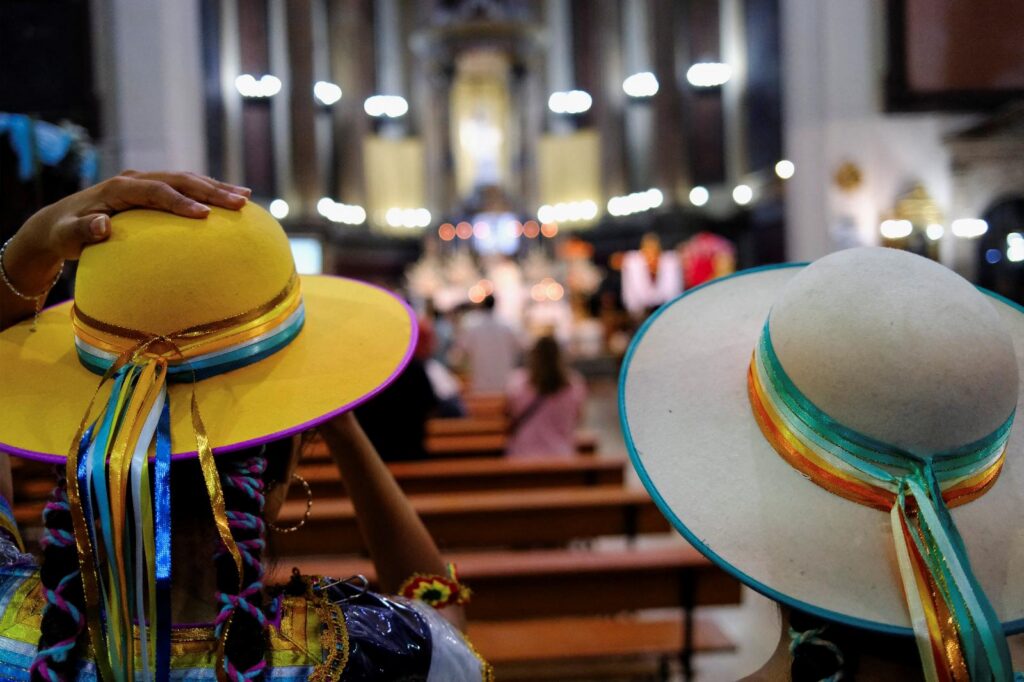
World Youth Day 2011, for which de la Cierva also was a key organizer, led the entire generation to the Church. Now, he said, Pope Leo can help stoke that fire anew.
Sara de la Torre, spokeswoman of the Archdiocese of Madrid, added, “There are also many figures in the world of culture — actors, singers, artists — who openly acknowledge their Catholic faith. Young people are no longer afraid of that search or of expressing it publicly,” she said.
“What is emerging is not so much a revival of tradition itself, but rather a renewed search — an interest in questions that previously did not provoke rejection, but indifference. Young people are asking: ‘I have doubts, concerns — what can faith offer me?'” she told a group of reporters, including OSV News, at Madrid’s archdiocesan headquarters.
She pointed to another important factor: Cultural Catholicism is still strong in Spain.
“There are civil holidays that transform and, in many ways, bring the city to a halt. We must also recognize that,” she said roughly two weeks after Madrid’s holiday on the feast of St. Isidore the Laborer. Observed May 15, the feast day meant “deserted streets, but full churches,” several organizers of the trip, including those in the tourist department of the city, pointed out to OSV News.
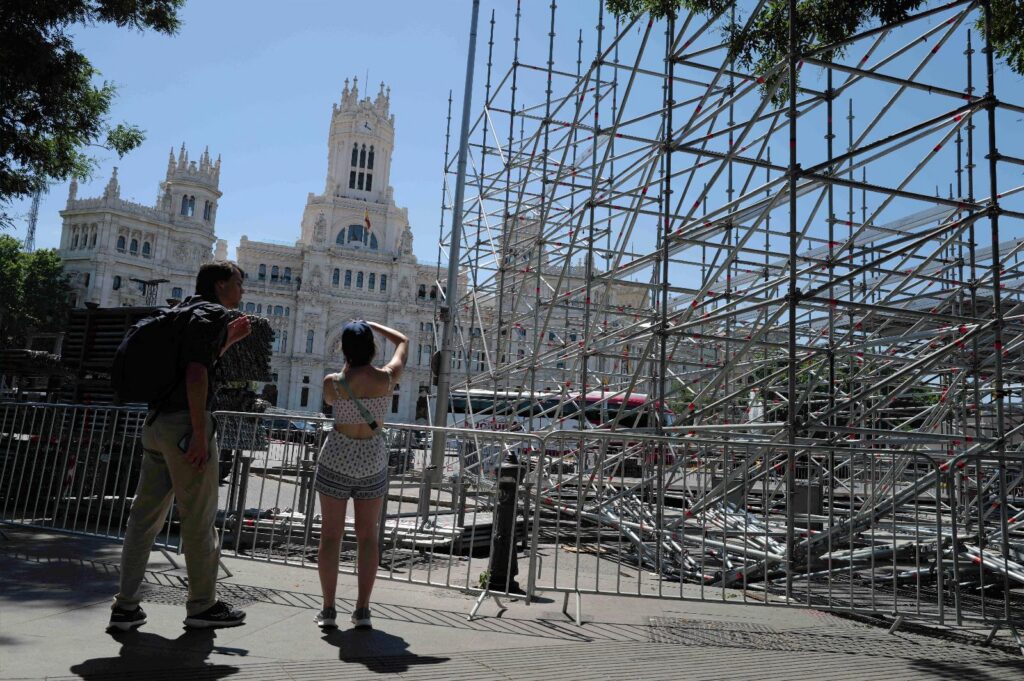
In a major sign of popular piety, Pope Leo will lead a Corpus Christi procession through the streets of Madrid after Sunday Mass at Plaza Cibeles June 7, an event projected with participation of 1.5 million faithful gathered around Palacio Cibeles in central Madrid.
A visit to Madrid, Archbishop Argüello pointed out, would be about “the challenge of evangelization in a large metropolis,” with the procession being “a great manifestation of the Church on the street, of the Church in the midst of the world, so that from there we too might have this drive to proclaim the Gospel, especially in the challenge of doing it in the public square, in public presence,” he stressed.
After the procession, Pope Leo will meet with representatives from the worlds of culture, sports, business, education and labor.
“The idea is to reflect on the major cultural movements shaping civil society today,” de la Torre, the archdiocesan spokeswoman, said. “Representatives from all sectors of society have been invited, and significant work has gone into preparing this encounter.”
Catholics in civil society need a stronger voice
That meeting is symbolizing another important hunger of the Church of Spain — for Catholics to be visible, and visibly heard, in the public space.
“Today’s Spain needs the pope even more than Spain did in 1982,” said Alberto Ruiz-Gallardón, a lawyer and former mayor of Madrid, who retired from politics when, betrayed by his allies, he failed to pass an anti-abortion bill — something his party promised its voters to do in the electoral campaign, and which was one of the reasons the Popular Party got an absolute majority.
“Today, Spain is under attack — not physical, but ideological and intellectual,” he told OSV News.
“And paradoxically, this is producing a spiritual rebellion, primarily among young people. But these young people need support, they need a role model, and they need someone who will courageously commit to continuing to support them. And that’s why Spain needs Pope Leo XIV’s visit today,” Ruiz-Gallardón said.
For de la Cierva, the trip’s organizer, the pope could serve primarily as what his title “pontifex” means — literally a bridge builder — “creating a bridge and telling politicians that they have to work for the common good, that they have to work together in order to improve the situation of everyone.”
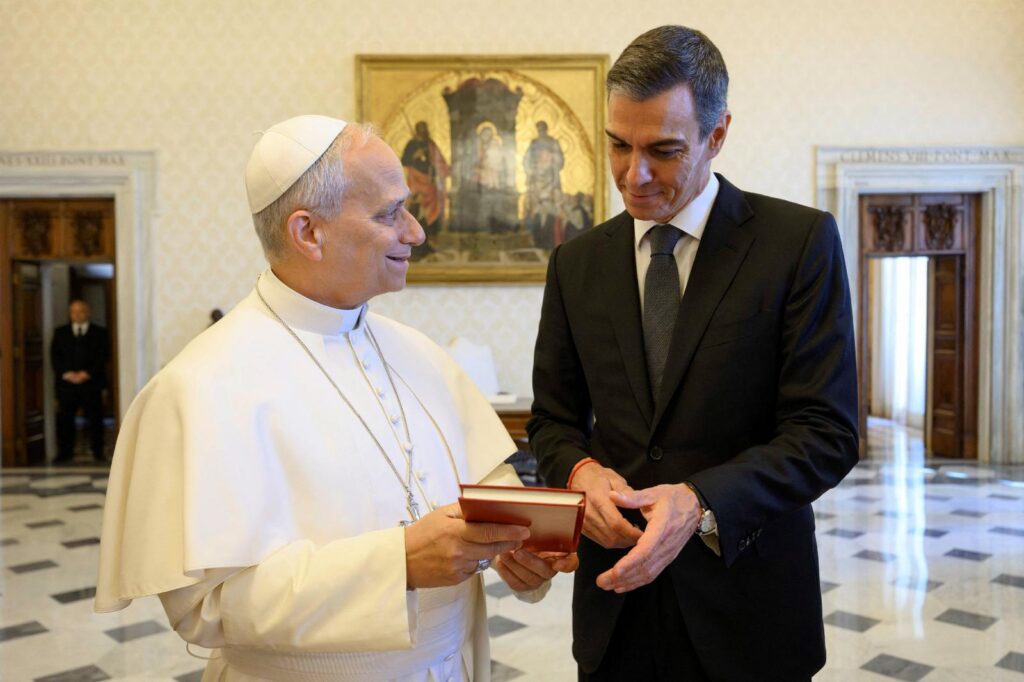
De la Cierva said that the government of Prime Minister Pedro Sanchez — who met Pope Leo at the Vatican May 27 — is promoting policies “really extreme from the point of view of the Catholic doctrine and regarding life” — starting from euthanasia and abortion a right for which the government would like to enshrine in the Spanish Constitution, following France’s move.
For Ruiz-Gallardón, the strength Pope Leo can bring lies less in “concrete changes in the legislative processes currently underway,” and more in “a change in the mindset of the citizens.”
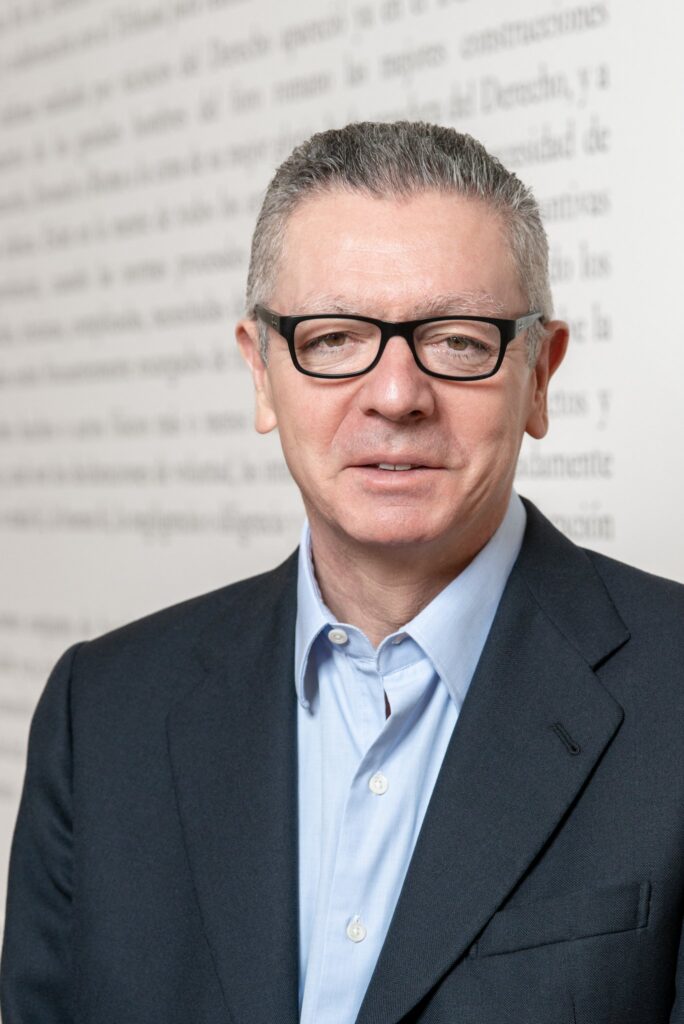
“In the end, politicians try to do what the majority of citizens want. But if we Catholics in Spain remain silent, if we are quiet, if we are cowardly, then those who don’t think like us can do whatever they want without facing any kind of reproach. I believe that the fundamental change that Pope Leo XIV can bring about in Spain is for Catholics to lose their fear of proclaiming their faith.”
Archbishop Argüello agrees. Spaniards need to “get our act together” and “express, from our own communion, from the embrace of the synodal proposal … a desire also to go out and proclaim the Gospel and be signs of encounter, dialogue and reconciliation in a society that, due to political tensions, is perhaps excessively polarized and even afraid to discuss certain issues for fear they might cause conflict.”
“I do believe that the pope’s visit will help us along these lines,” Archbishop Argüello said.
“Papal visits have a very powerful impact on visibility, community confidence and the mobilization of believers,” sociologist Michavila confirmed to OSV News, referring to past events such as World Youth Day Madrid in 2011 as “landmark” events proving “organized Church still existed … capable of occupying the public square in a positive way.”
Pointing out to the magnificent Catholic heritage of the Spanish state, Archbishop Argüello concluded that “if we compare it with the past of a tradition in which the throne and altar walked together” — today’s “church at the crossroads” is “a smaller community,” but “there is no doubt that it has the real possibility of being more significant.”
“And that is what the pope’s visit we hope will boost,” he said.
And that flame will be in the hands of young musician Gonzalo and his friends to carry on.
– – –
Paulina Guzik is international editor for OSV News. Follow her on X @Guzik_Paulina. Junno Arocho Esteves, international correspondent for OSV News, contributed to this report.
