

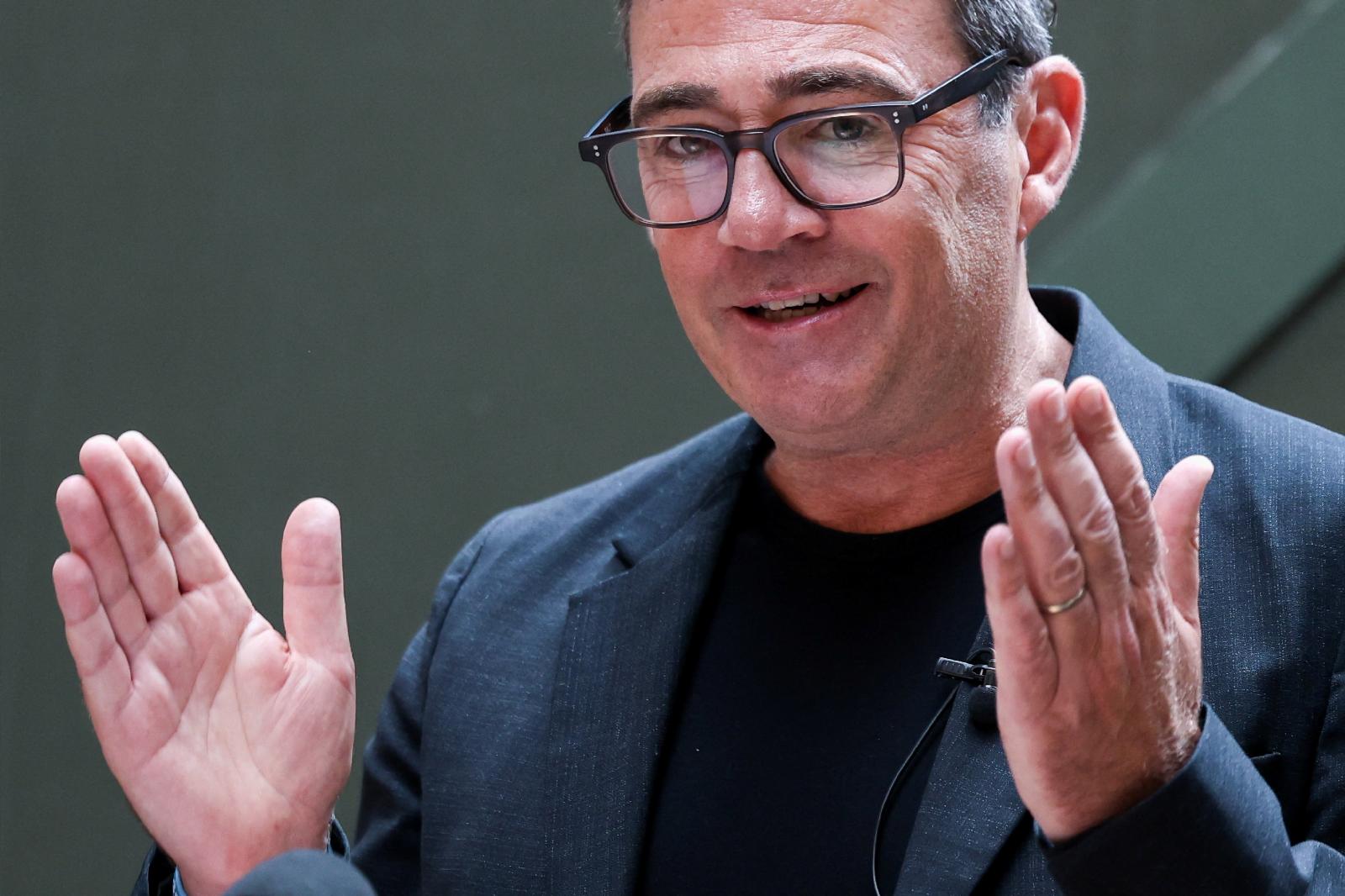
OXFORD, England (OSV News) — When — and if — Andy Burnham becomes prime minister of the United Kingdom later in July, he’ll be the first ever to identify publicly as a Catholic.
Yet while some Church members hope this could herald a more principled style of politics, others fear Burnham may be pressured to disregard his Catholic background.
“A lot of people here don’t like the Christian Church and don’t want any faith in the public square,” explained Bishop Brian McGee of Argyll and the Isles, vice president of the bishops’ conference in Scotland.
“But he’s said much of his inspiration comes from Catholic social teaching. If his conscience is really formed by the Gospel, we should hope this bears some fruit,” he added.
Previous mayor of Greater Manchester
The bishop spoke as Burnham, previously mayor of Greater Manchester, prepared to take over as head of the governing Labour Party following Prime Minister Keir Starmer’s resignation in the wake of plummeting support.
Although a previous Conservative Party head of government, Boris Johnson, was baptized a Catholic, he was raised as an Anglican and did not practice any faith.
In an OSV News interview, Bishop McGee said he recognized the need for compromise in politics, but counted on Burnham to adopt a “more welcoming stance, seeing the human person” in areas from poverty to migration.
Meanwhile, a Christian campaigner told OSV News several new groups, including Reform and the Greens, had gained ground from a loss of public trust in established mainstream parties, and said he saw no reason why politicians should not stand up for beliefs and principles.
Question over pro-life stand
“If someone professes to be a practicing Catholic, you’d expect them to adopt a pro-life stance without exceptions,” said Timothy Dieppe, head of public policy for the ecumenical organization Christian Concern.
“These are all conscience issues on which there’s no party line and no politician is forced to compromise. Voting with your conscience, the greatest arbiter on moral issues, should always matter more than party-political considerations,” he said.
Starmer, a professed nonbeliever, resigned under pressure June 22 after less than two years in office, insisting he had left the U.K. “far stronger and fairer,” with its “reputation in the world restored.”
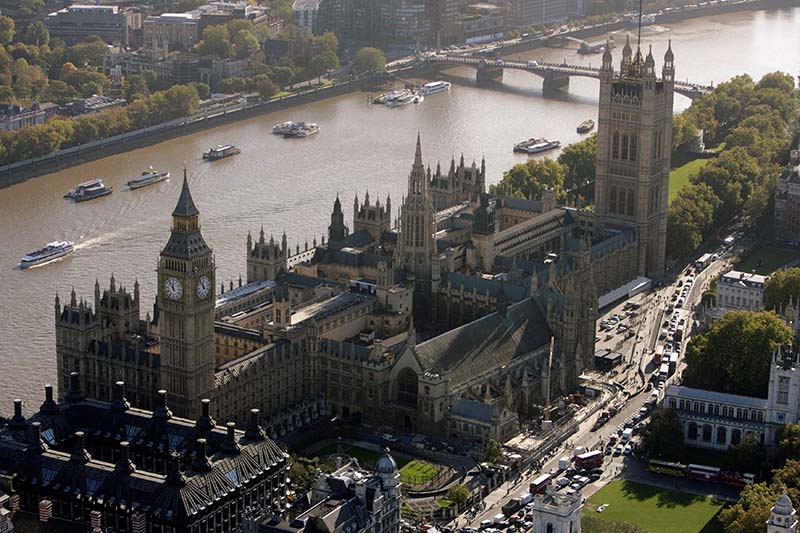
Burnham, a former government minister, entered Parliament the same day after winning a by-election at Makerfield, taking his oath as a member of Parliament on the Bible.
His outlook is ‘aspirational socialism’
The prime minister hopeful has described his outlook as “aspirational socialism,” strongly defending state education, welfare, taxation and housing, and was widely praised for his Manchester mayoral record on infrastructure reforms and investment.
Raised and educated as a Catholic in nearby Warrington, where he served as an altar boy, Burnham sent his children to Catholic schools and has spoken warmly of the Church, with at least one commentator detecting Catholic principles of subsidiarity, solidarity and the common good in what’s been dubbed his “Manchesterism.”
Yet Burnham has given mixed signals about his Catholic convictions, rarely attending Mass or describing what he believes.
Addressing London’s Theos think tank in October, he pledged to support faith-based organizations and a new politics based on “trust, community, faith and belief,” describing a 2023 meeting with Pope Francis as the “greatest privilege” of his life.
Liberal stand on abortion, assisted suicide, LBGTQ+ issues
He’s consistently taken a liberal stance, however, on abortion, assisted suicide, sex education and rights of LGBTQ+ community, urging the late pontiff in 2015 to “bring the Church into the 21st century” on same-sex marriage.
Bishop McGee thinks it’ll be a shame if a politician so close to Christianity merely conforms with the liberal, secularist preferences of the U.K.’s “political class.”
He thinks contemporary opinion yearns for “politicians with integrity,” who’ll state their beliefs and principles honestly and uphold them in public life.
“Political leaders face complex tasks and obviously can’t get everything they want through,” the bishop told OSV News.
“But if some things are important to them, they should be prepared to stand by them. There’s an obvious deficit among politicians today which is creating a vacuum for others to enter. People will respect those who show integrity, even if they disagree with them.”
Pledging regeneration, re-industrialization
In a June 29 keynote speech, Burnham pledged regeneration and re-industrialization, with increased public ownership of essential utilities such as water, energy and housing as part of a major “rebalancing of power.”
He said he’ll create a new government headquarters, “No. 10 North,” as “nerve center of a rewired Britain,” and continue living in Manchester as prime minister.
Regardless of his policies, the advent of a Catholic prime minister looks set to raise the profile of Catholics, who were admitted to public offices only in the 19th century and still face some restrictions in officially Protestant Britain.
As a Catholic, Burnham will be barred from involvement in appointments to the official Church of England and will have to tread carefully in the face of lingering prejudices.
Vaguely defined ‘cultural Catholicism’
Timothy Guile, a top Catholic historian, thinks this makes it unlikely he’ll go beyond a vaguely defined “cultural Catholicism” in practical politics.
Although Catholics enjoy legal protections, he points out, they can face hostility if they’re public about their faith — so few have had courage to do so.
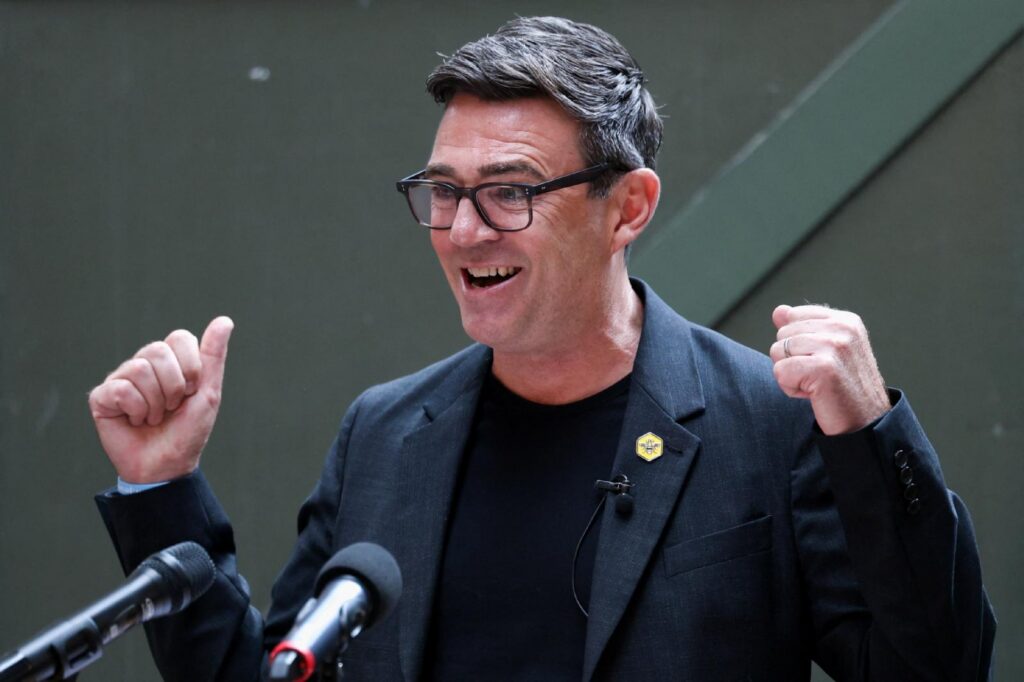
“A few Catholic politicians have sincerely practiced what they preach, whereas others just blow with the wind and say and do what’s needed to get elected,” said Guile, who chairs England’s Catholic History Association.
“In my view, you can’t be a pick-and-mix Catholic, just choosing those parts of the faith which suit you. But it remains to be seen how far Burnham’s Catholicism will extend when it comes to policy decisions,” he added.
Dieppe from Christian Concern is more hopeful.
Christianity still U.K.’s largest religion
Christianity is still the U.K.’s largest religion by far, with an important influence on its culture, social life, laws and conventions, making it essential for politicians to understand what it teaches.
He thinks society is tired of politicians who ignore their stated values, and now needs people who’ll “show some moral courage and encourage others to do the same.”
Bishop McGee agreed Burnham could make his mark if he stood by his Catholic identity.
“Looked at historically, having a Catholic prime minister here has to be something good,” the bishops’ conference vice president told OSV News.
“But it also shows how Catholics are now making a positive contribution in all areas of our society. And though it’s not for me to say which party they should belong to, it’s important they’re engaging in politics, trying to shape society in line with the Gospel.”
Jonathan Luxmoore writes for OSV News from Oxford, England.
