


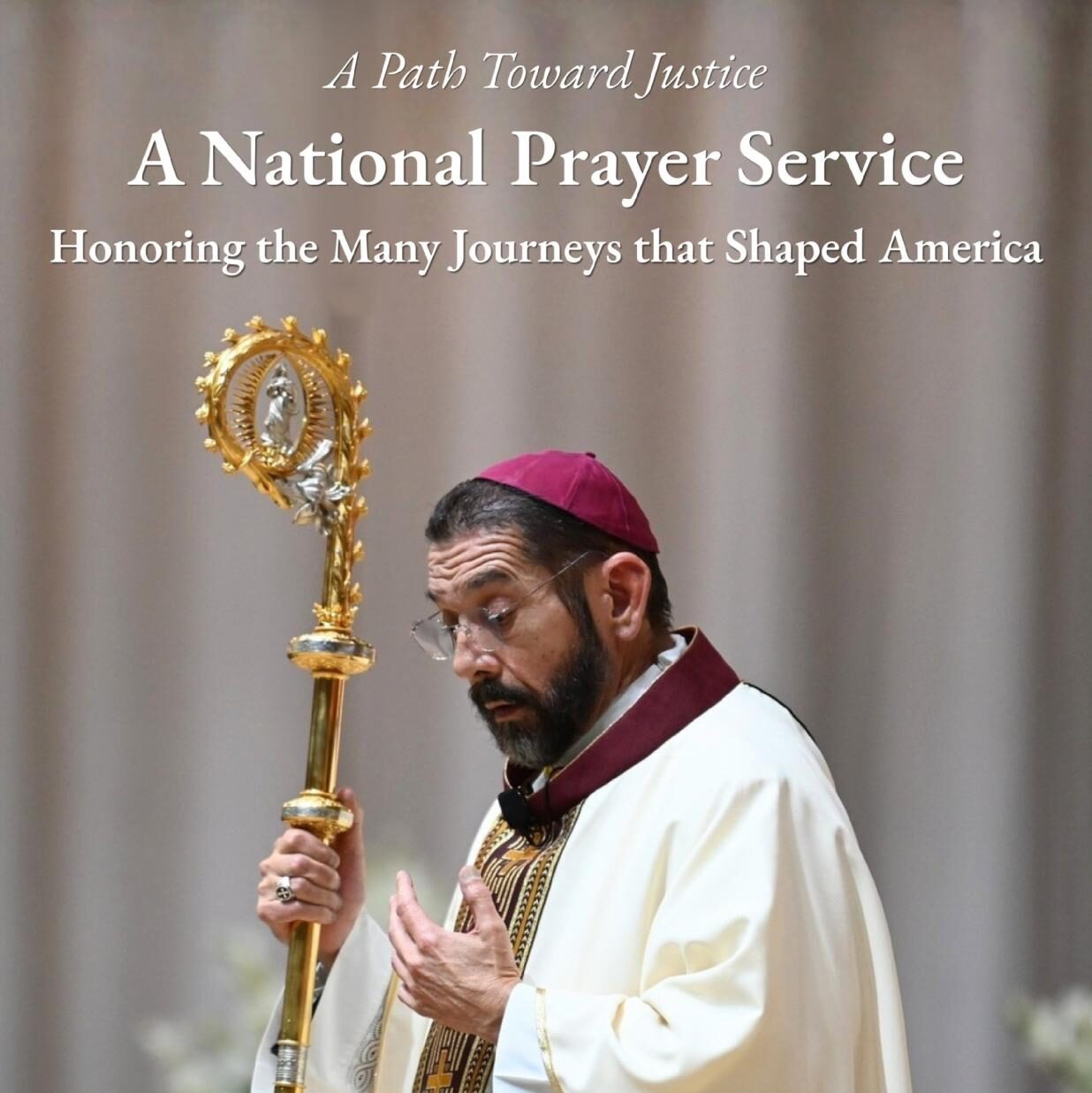
(OSV News) — As the U.S. marks its 250th anniversary, the nation’s Catholic bishops have released a prayer service text commemorating its immigrants and refugees, as well as those trafficked under historic and modern forms of slavery in the U.S.
The document also features prayers for government officials, asking God to “help them understand the great dignity of human persons.”
“A Path Toward Justice: A National Prayer Service Honoring the Many Journeys that Shaped America” was recently posted to the resource page of the U.S. Conference of Catholic Bishops‘ website.
The text was prepared by both the USCCB’s Committee on Migration and its Subcommittee for the Promotion of Racial Justice and Reconciliation.
The 15-page document, which is also available in Spanish, is designed “to acknowledge and honor the many diverse communities that have journeyed to the United States in search of hope, safety, and opportunity,” as the bishops stated in its introduction.
At the same time, the prayer service also recognizes “the voices, sufferings, and enduring contributions of those who were forcibly brought to this land,” they said.

Honoring the stories of those who came to the US
Scholars have estimated that as many as 100 million persons have immigrated to the U.S. since the end of the American Revolution in 1783. Today, the U.S. has 50.2 million immigrants, or 14.8% of its 340.1 million residents, according to the Migration Policy Institute.
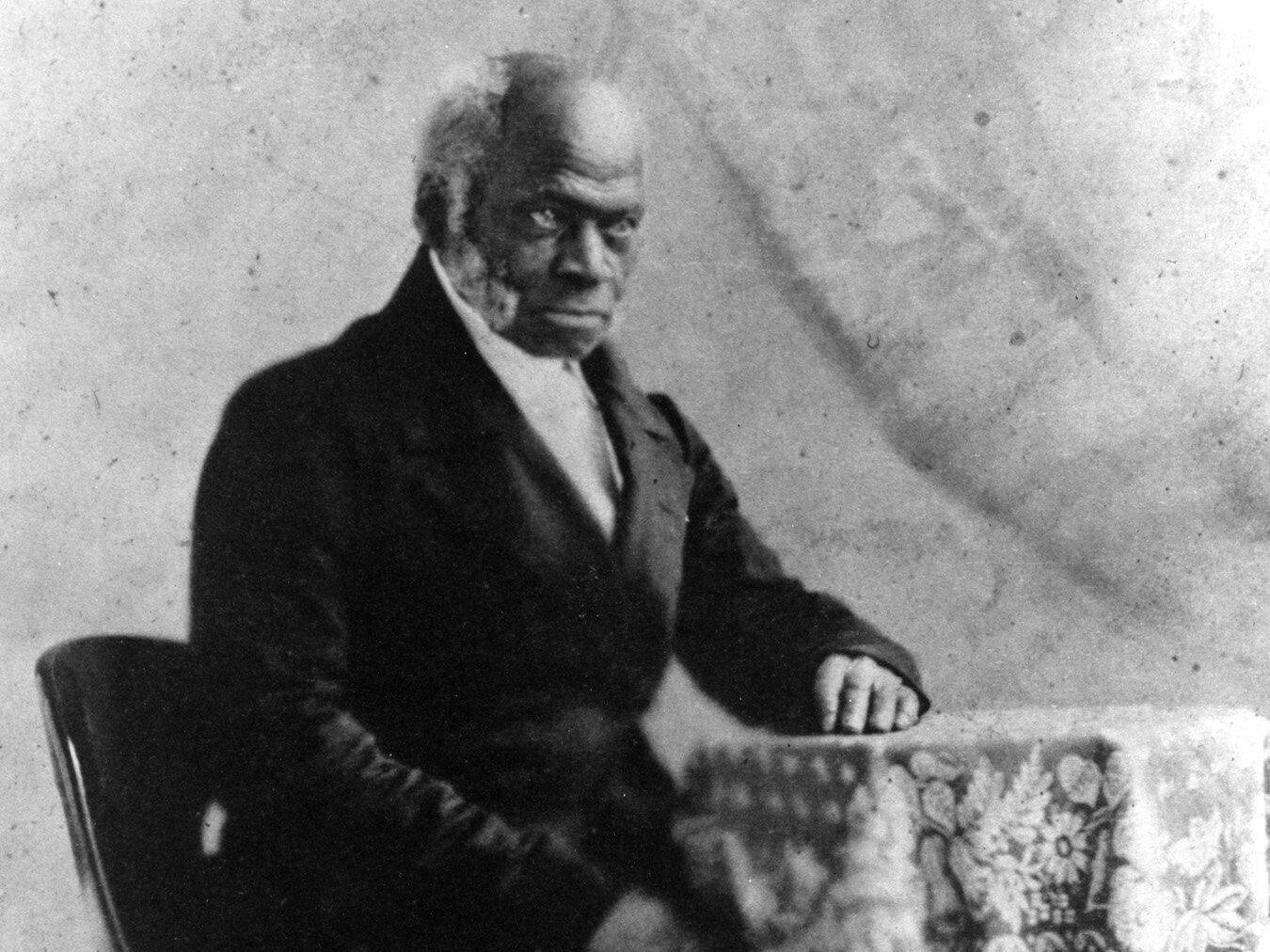
Of the approximately 12-20 million Africans who were forcibly transported to the Americas during the four centuries of the transatlantic slave trade, about half a million were taken to what is now the U.S.
In his recently released encyclical “Magnifica Humanitas,” Pope Leo XIV, himself a descent of Africans enslaved and taken to the Americas, issued a formal apology for the Church’s 18-century delay in recognizing the evils of slavery, calling it “a wound in Christian memory, one from which we cannot consider ourselves detached.”
The pope also decried modern forms of slavery, which take the form of both forced labor and sex trafficking, and which affected some 27.6 million globally in 2022, according to the International Labor Organization. In the U.S. the National Human Trafficking Hotline counted close to 22,000 victims in the U.S. in 2024.
Prayer service template ‘inspired by the Gospel call’
The U.S. bishops said the prayer service template is “inspired by the Gospel call to welcome the stranger and uphold the dignity of every human person,” and “seeks to provide a sacred space for reflection, remembrance, lament, and hope.”
The service invites participants “to encounter one another as members of the one human family and the one Body of Christ,” they added.
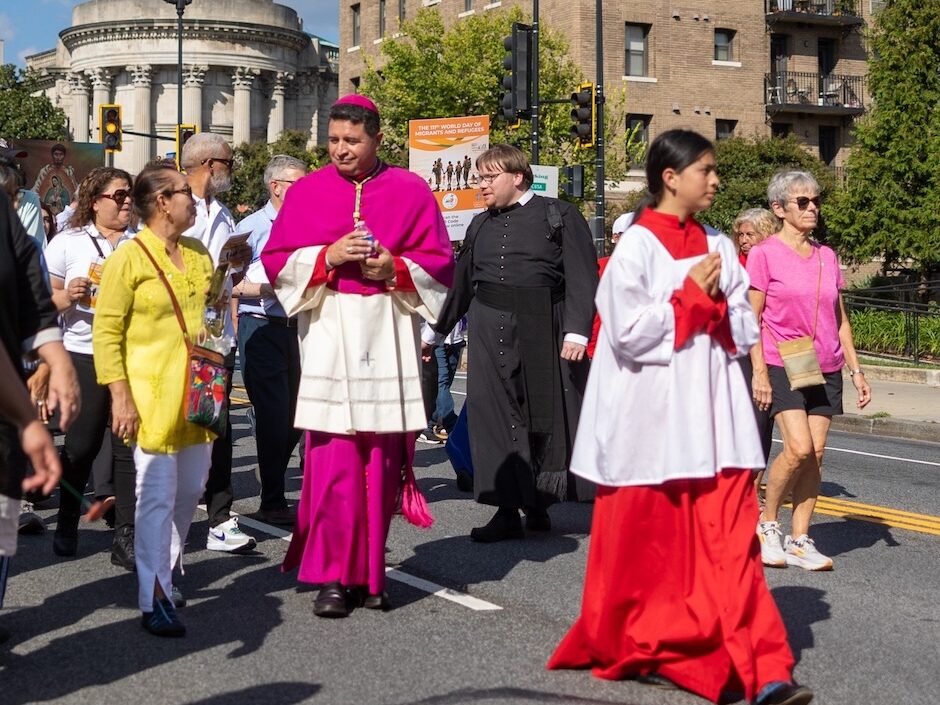
Prayer gatherings based on the template “may be celebrated at a variety of sites or points of entry throughout the country,” said the bishops.
The service is structured as a celebration of the Liturgy of the Word, with hymns, prayers, Scripture readings, a responsorial psalm and the proclamation of the Gospel.
The words of welcome preceding the opening prayer ask the “God of hope, freedom, justice and peace” for “the grace to walk in deeper solidarity with immigrant communities, each of which enriches the life of this nation through the diversity of its gifts and traditions.”
Scriptures focus on command to care for the stranger
The opening prayer invokes the intercession of St. Frances Xavier Cabrini, an Italian immigrant whose ministry to fellow immigrants ultimately led to her canonization as the first American saint.
The prayer service’s first reading is taken from Deuteronomy 10:12-22, where Moses exhorts the Israelites to love and serve the Lord, commanding them to “befriend the alien, for you were once aliens yourselves in the land of Egypt.”
Psalm 146 recalls that the Lord “secures justice for the oppressed, gives food to the hungry,” “sets captives free” and “protects strangers.”
The second reading, drawn from Chapter 13 of the Letter to the Hebrews, urges listeners not to “neglect hospitality, for through it some have unknowingly entertained angels,” and to “be mindful of prisoners as if sharing their imprisonment, and of the ill-treated as of yourselves.”
The Gospel passage, Matthew 25:31-46, describes the judgment of the nations, in which Jesus Christ — who identifies himself with the world’s marginalized and suffering persons — blesses those who have cared for the vulnerable, while chastising those who have shunned the works of mercy.
Additional resources for the prayer service
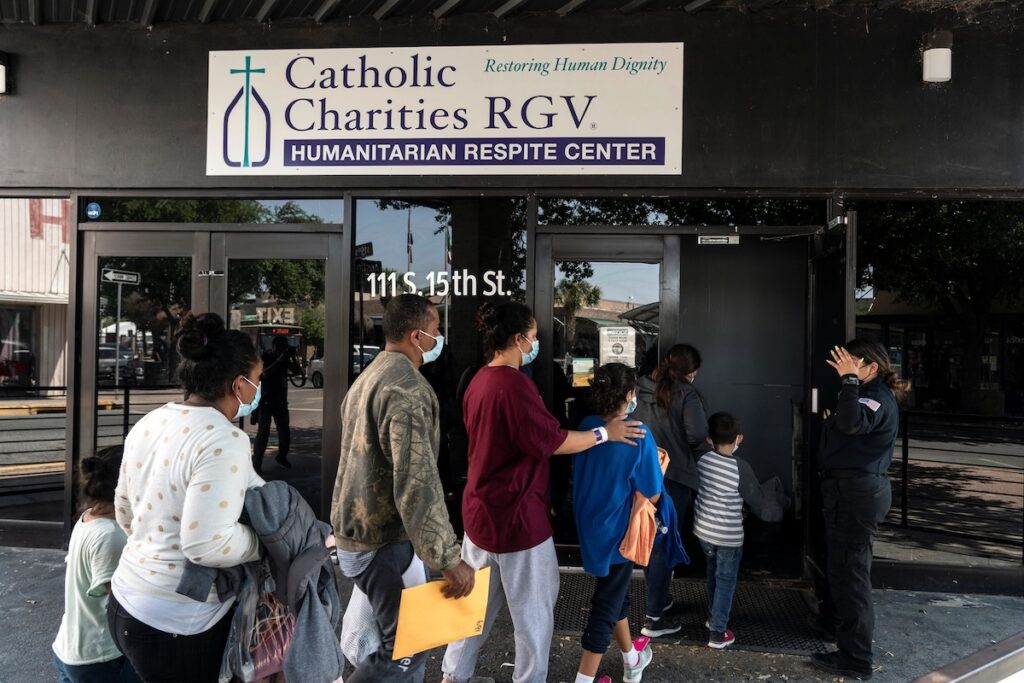
The prayer service includes a post-Gospel sharing of testimonies from immigrants, with pre-recorded messages permitted for reasons of safety and privacy.
As an aid to the service’s homily or guided reflection, the bishops provided a copy of their special message on immigration as well as excerpts from the Rev. Dr. Martin Luther King Jr.’s 1963 “I Have a Dream” speech.
The service’s “call to action” invites participants to “prayerfully reflect on what we, as the Body of Christ, are called to do collectively within our local parishes, communities, state, and nation” to assist immigrants and refugees in concrete ways, “while faithfully advocating for just and humane immigration reform that upholds the dignity of every human person created in the image of God.”
Rounding out the service is a moment of silence, followed by intercessory prayers petitioning for the end of modern slavery as well as for the care of migrants and refugees. It concludes with the Lord’s Prayer, a closing prayer for migrants, and a hymn.
Gina Christian is a multimedia reporter for OSV News. Follow her on X @GinaJesseReina.
