


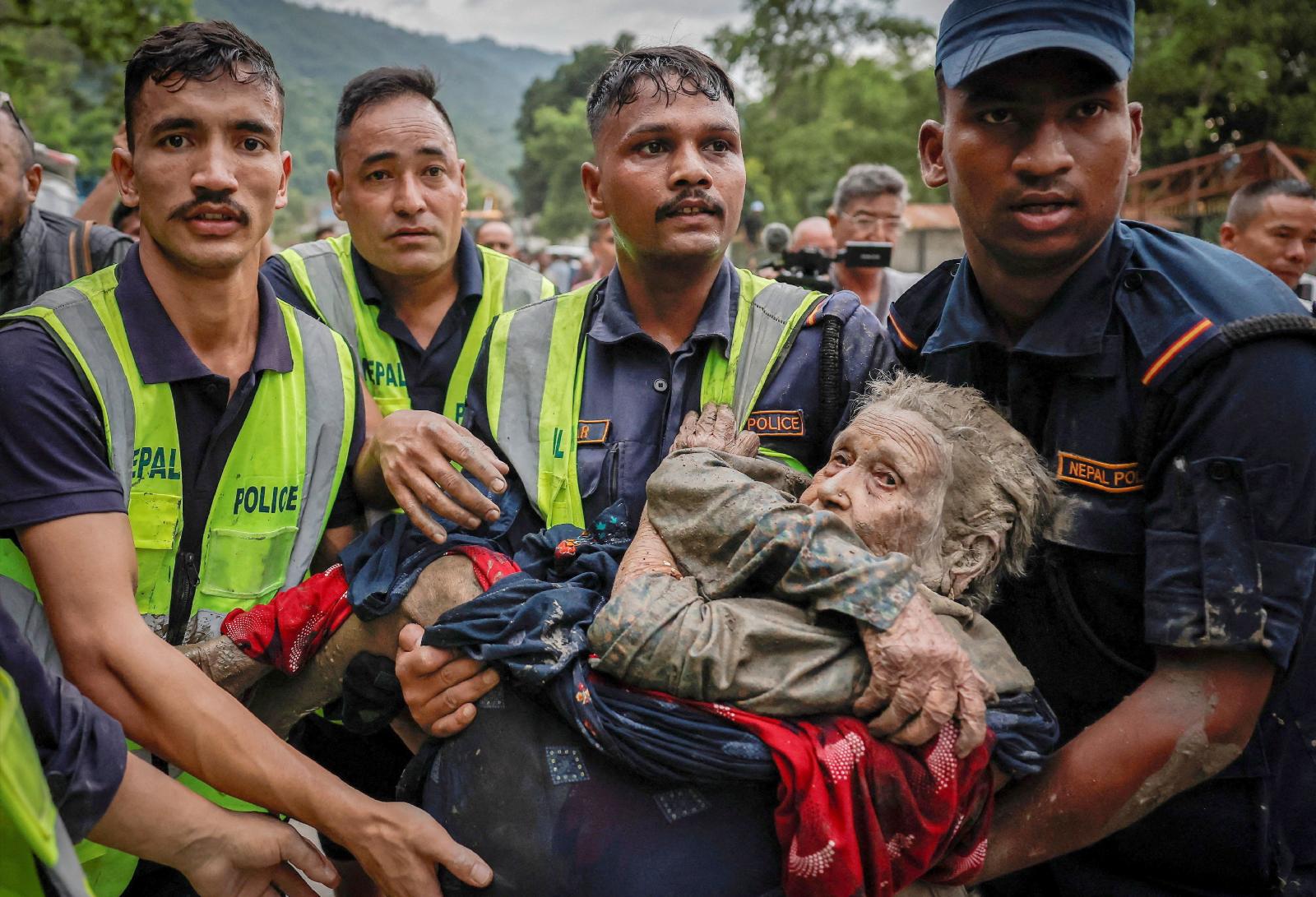
(OSV News) — Devastation from Aug. 26 flooding and mudslides along the Nepal-China border is staggering, and the road to recovery will be long, a Catholic aid worker now on the ground in that nation told OSV News.
“What we are actually witnessing is unprecedented in these areas,” said Senthil Kumar Gurunathan of Catholic Relief Services, the U.S. bishops’ official humanitarian and development agency.
Gurunathan, CRS country representative for India, spoke with OSV News by phone from Kathmandu hours after landing in Nepal’s capital to assist Caritas Nepal in responding to the disaster. CRS and Caritas Nepal are part of Caritas Internationalis, the Catholic Church’s global humanitarian agency network.
Thousands missing or killed
At least 955 people have been killed and over 4,470 remain missing following an Aug. 26 glacial collapse in Nepal’s Langtang National Park. Debris from the 5.2 magnitude event flowed more than 60 miles, resulting in what the U.S. Geological Survey called “catastrophic impacts downstream” in communities along the Trishuli and Bhote Koshi rivers.
Video and photographs from the region show rapid surges of water and mud churning through the river channels, sweeping away communities. Victims — many of them part of tour groups and Hindu pilgrimages — include hundreds of foreign nationals from some 32 nations, with some 85 Americans still missing.
Determining the number of casualties has been further complicated by the Chinese government’s information restrictions in China and Tibet, which preclude access by foreign journalists.
In his Aug. 30 Angelus address, Pope Leo XIV offered continued “prayers for those affected by the terrible flood that struck Nepal and Tibet.
“Let us pray for those who have lost their lives, for the injured, those missing, for the families and rescue workers,” said Pope Leo. “May the concern of everyone help to alleviate the suffering and provide the necessary aid to the people affected.”
CRS focused on pressing needs
Gurunathan said that “villages and towns have been washed away,” and that “the flood situation and the damage is still evolving.”
“We are very focused on the pressing needs, the essential needs,” which are “food, water, sanitation and shelter,” said Gurunathan.
Getting such aid to those impacted by the disaster is a challenge, he admitted.
“Many of the main roads have been washed away, either fully or partly,” Gurunathan said. “So what we are trying to do is to find alternative routes, working with local people to see what are the existing motorable roads. These may not be the main roads, but these are lifesaving roads, still intact.”
Gurunathan, whose agency has launched a donation campaign for relief efforts, said his team is “also closely coordinating with the government” to “see how we can airlift some of the relief material to those areas which are completely cut off, and where there isn’t a road connection.”
The CRS and Caritas Nepal teams are “trying to assess the needs continuously,” he added.
Longer-term efforts will continue to focus on “shelter,” “restoring water lines” for safe drinking water and helping communities rebuild “their livelihoods,” he said.
Assessing survivors’ trauma
The agency is also committed to addressing the trauma inflicted by the disaster, said Gurunathan.
“Focusing on mental health is going to be a key priority for us moving forward,” as part of a “coordinated effort” with the Nepalese government, he said.
“It’s going to be a long road for recovery,” said Gurunathan. “So I think it’s going to be important to actually express solidarity with the people affected in Nepal, and see how we can help them rebuild their lives.”
Gina Christian is a multimedia reporter for OSV News. Follow her on X @GinaJesseReina.
