


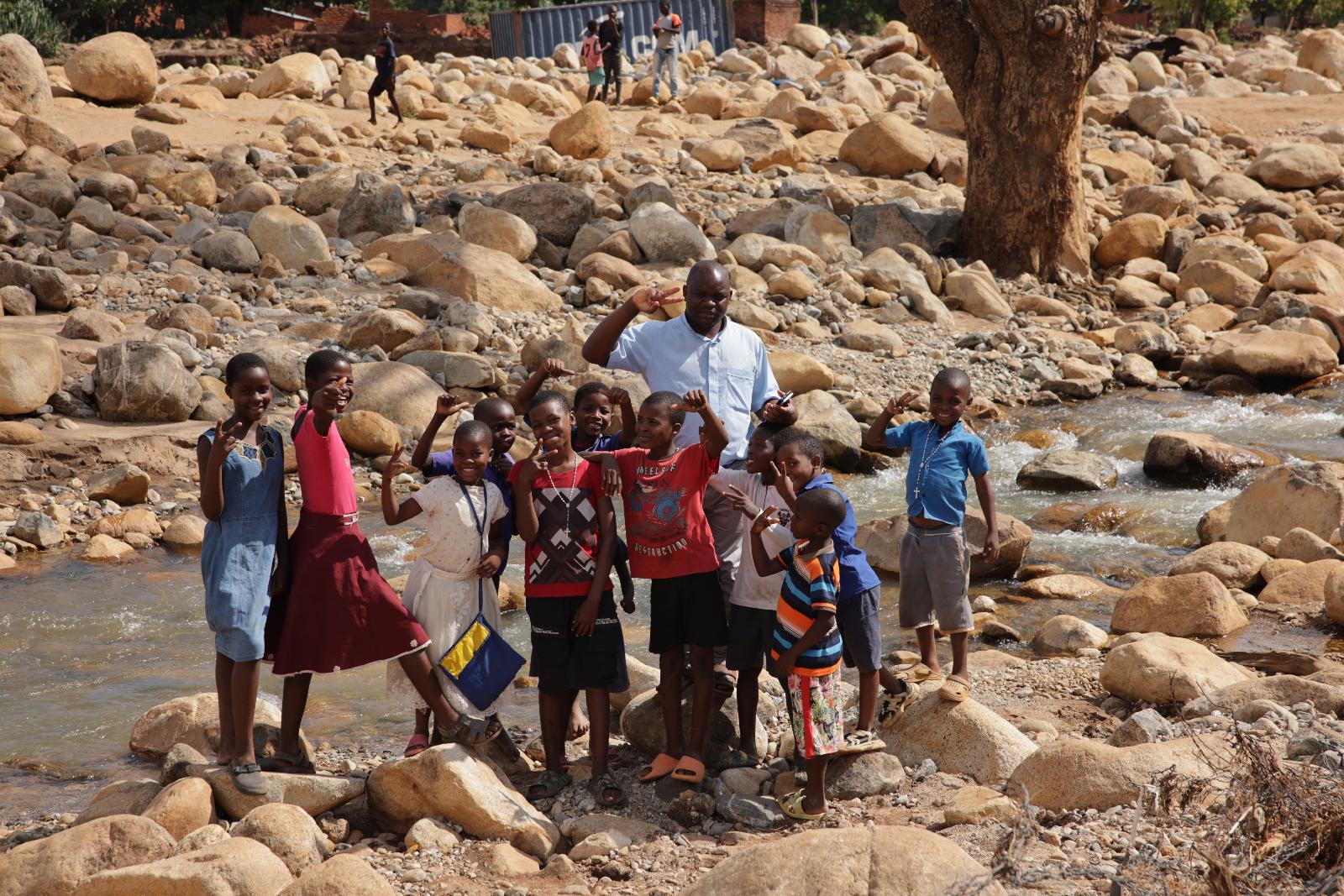
(OSV News) — Catholics around the world will mark World Mission Sunday on Oct. 18, and a “renewed energy” infuses the annual celebration of the Church’s missionary activity this milestone year, one expert told OSV News.
“There are more and more dioceses around the country that are finding innovative ways to tell the stories of missionaries, and the need to support missionaries, the need to pray for missionaries,” said Father Anthony D. Andreassi, a priest of the Oratory of St. Philip Neri in Brooklyn, New York, and a researcher for the Pontifical Mission Societies USA.
Pope Leo XIV has chosen the theme “One in Christ, united in mission” for this year’s celebration, with his message for the day encouraging “the whole Church to continue its missionary journey with joy and zeal in the Holy Spirit.”
A day for the missions
Established by Pope Pius XI in 1926 and universally observed by 1927, World Mission Sunday is a dedicated day of “prayer and missionary promotion throughout the Catholic world,” according to its founding decree.
Masses celebrated on the observance, which takes place on the next-to-last Sunday in October, are offered for the Church’s missions, with priests encouraged to preach homilies “of a missionary nature,” the decree states.
Father Andreassi explained the date was chosen with an eye to the feast of Christ the King (an observance also created by Pope Pius XI), which was initially celebrated on the last Sunday of October, ahead of All Saints’ Day, to underscore the Church’s missionary task ahead of Christ’s return. (Later, Pope Paul VI sought to highlight the eschatological dimensions of the Christ the King feast by making it the final Sunday of the liturgical year, immediately before the First Sunday of Advent.)
A collection for all
At first, the collection for World Mission Sunday was taken up in January, connecting the donations with the gifts brought by the Magi at Epiphany, said Father Andreassi, noting the mission collection was later moved to the actual observance in October.
Donations to the collection serve as the primary financial support for the Pontifical Mission Societies, a worldwide network operating at the service of the pope and consisting of four organizations designated as pontifical by Pope Pius XI in 1922.
The Society for the Propagation of the Faith supports the evangelization efforts of the local church; the Missionary Childhood Association educates children about their part in the church’s missionary outreach; the Society of St. Peter the Apostle trains the next generation of missionary clergy and consecrated religious; and the Pontifical Missionary Union focuses on forming clergy, religious and pastoral leaders more deeply in their role as evangelizers.
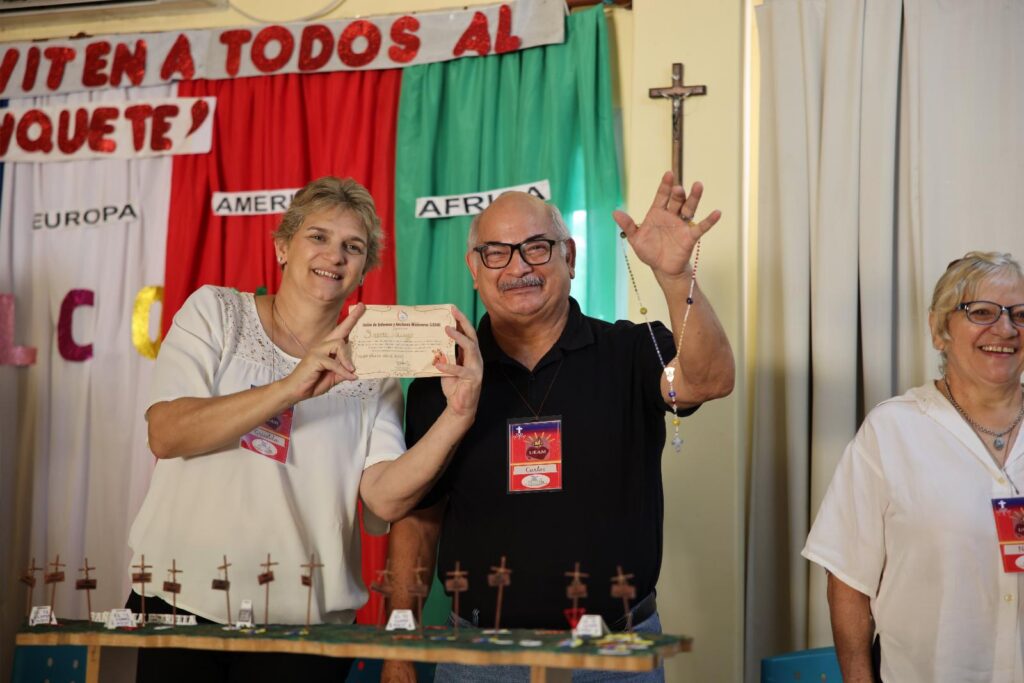
In 2025, donations from Catholics in the U.S. alone enabled the societies to provide more than $30 million to build churches, convents, orphanages and schools; fund catechetical projects; and support dioceses, seminarians, and men and women religious.
With 1,130 mission territories worldwide, “each gets a relatively small amount of money” through a “very collaborative process” of allocation, said Father Andreassi.
And, he said, “Even in the mission lands, even if they may be a recipient (of mission funds), they take up a collection.”
World Mission Sunday is “very much seen” as a day of “solidarity,” one on which the Church recognizes that “we are all in this together,” said Father Andreassi.
From the battlefield to the mission field
In contrast to that message of solidarity, World Mission Sunday surprisingly traces its roots in part to one of the most devastating conflicts in human history: the First World War.
That war “had dealt a serious blow to the missions, reducing the number of missionaries and disrupting many of the schools, hospitals, and charitable institutions they maintained,” Father Andreassi told OSV News, quoting from his original research on the history of World Mission Sunday.
In his 1919 apostolic letter “Maximum Illud,” Pope Benedict XV urged the Church to “rebuild and reinvigorate its missionary efforts,” said Father Andreassi.
But after a war that felled no less than four empires — Austro-Hungarian, German, Ottoman and Russian — Pope Benedict XV realized “you don’t just go back to doing what you used to be doing,” Father Andreassi said.
Instead, the pope placed “renewed emphasis — and in some places, emphasis for the first time — on growing a native clergy (in various nations), so that all the priests were not just from the Netherlands and England and Ireland,” Father Andreassi said.
In so doing, Pope Benedict strove to “free Catholic missionary activity from excessive identification with European nationalism and colonial interests,” said the priest. “At the same time, he sought to enlist the entire Catholic world in the missionary enterprise through prayer, missionary vocations, and financial support.”
The Sheen effect
Those efforts “exploded” when then-Msgr. — later Bishop, and now Blessed — Fulton J. Sheen was appointed the U.S. director of the Society for the Propagation of the Faith in 1950, said Father Andreassi.
A pioneer in Catholic communications with an already developed national audience, Blessed Sheen was able to place his popularity in service of the missions, said the priest.
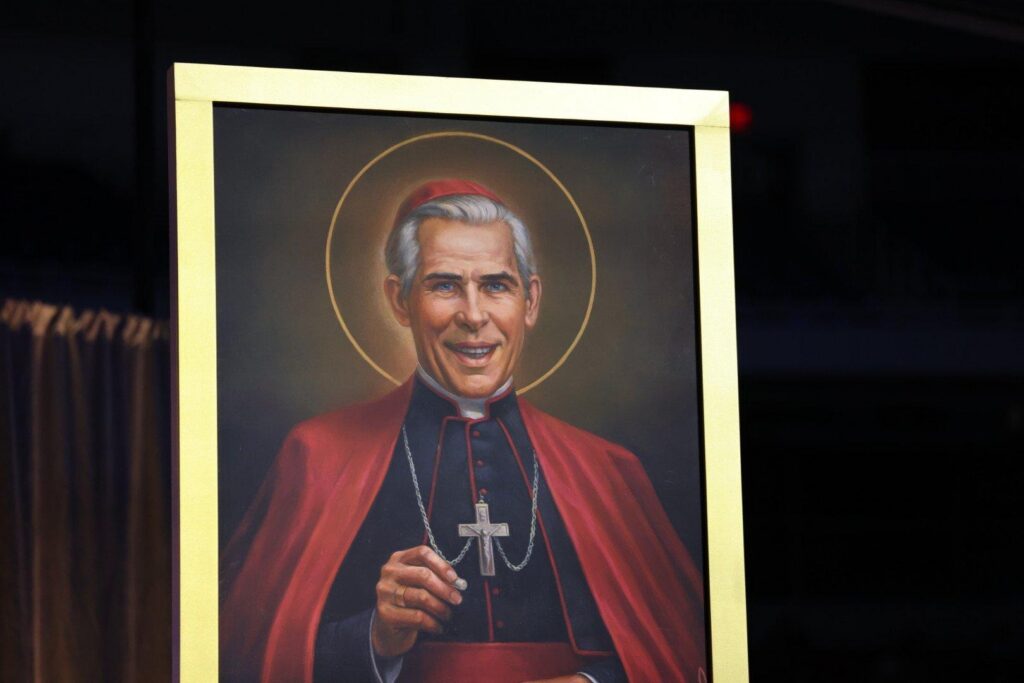
“Now you’re starting to see Sheen on local television stations talking about World Mission Sunday,” said Father Andreassi. “You’re seeing offers in anticipation of World Mission Sunday — if you send a few dollars to the national office, you’ll get a World Mission Rosary. So now World Mission Sunday is now becoming a huge event. There were a lot of things happening (on behalf of the missions), but he brought them up ten levels.”
The impact of Blessed Sheen “then had ripple effects on the diocesan offices” of the mission societies, the priest added.
Ahead of this year’s World Mission Sunday, the Pontifical Mission Societies have garnered increased attention with the recent beatification of the prelate in St. Louis.
Converting hearts and minds
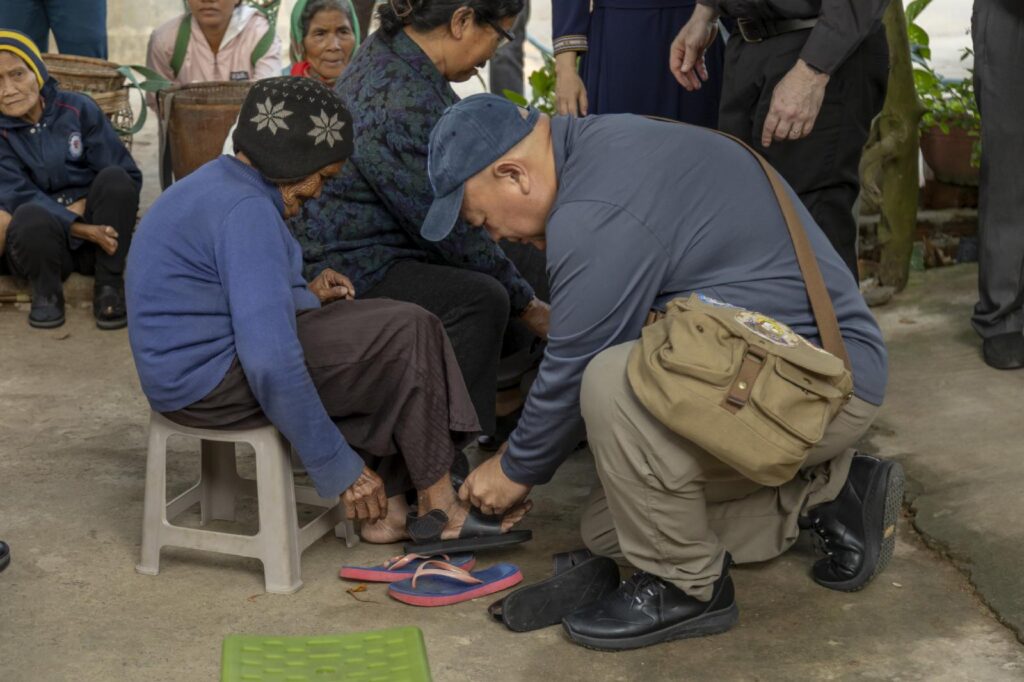
Father Andreassi noted that as Blessed Sheen expanded the profile of the Society for the Propagation of the Faith during his 16-year tenure as national director, the Church was invigorating the mission field throughout the latter 20th century by sending priests to minister in other nations and to help animate local vocations.
He cited the Fidei Donum (“gift of faith”) priests, diocesan clergy assigned to foreign missions.
“Historically, if you became a priest of the Diocese of Pittsburgh, you were going to work in Pittsburgh, with some rare exceptions,” said Father Andreassi, noting that while “many religious orders already had a missionary arm to them,” the commitment of diocesan clergy to missions marked a shift.
Other inflection points in more recent years have included the COVID-19 pandemic, after which “national and the diocesan offices have really been tapping into new media to get the word out like it’s never been done before,” he said.
Another challenge is simply “trying to get the attention of Catholics,” since “so many things are pulling at our attention,” Father Andreassi said.
But missionary outreach is “central to the life of the Christian,” even in places where the Church is seemingly well grounded — including the U.S., where “many things” still “challenge or threaten the faith,” he said.
Missionary efforts must “lead to an interior transformation,” said Father Andreassi. “We’re looking to convert hearts and minds.”
Gina Christian is a multimedia reporter for OSV News. Follow her on X @GinaJesseReina.
