



WASHINGTON (OSV News) — A war powers resolution directing President Donald Trump to end the conflict in Iran advanced in the U.S. Senate May 19.
The same week, several allies of the president won Republican primaries against their incumbent rivals, a reconciliation bill stalled over President Donald Trump’s attempt to secure a “weaponization fund,” and federal prosecutors announced charges against former Cuban President Raúl Castro amid Washington’s increasing pressure on Cuba’s communist government.
Senate approves war powers resolution
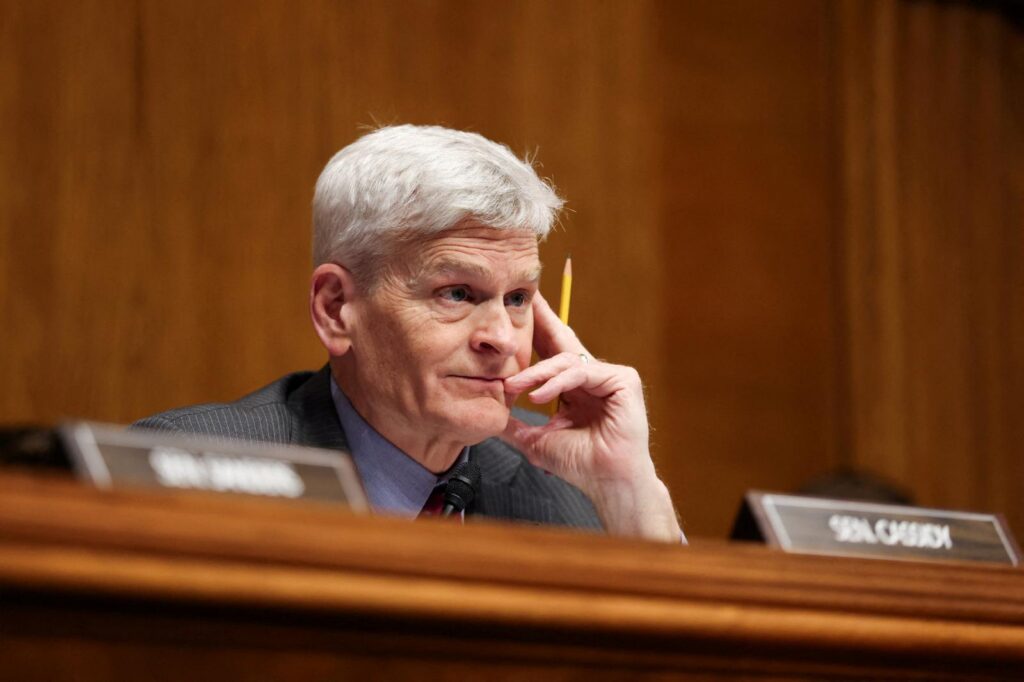
Sen. Bill Cassidy, who lost his bid for a third term in the Louisiana Senate Republican primary, became the fourth Republican senator on May 19 to join Sens. Rand Paul of Kentucky, Susan Collins of Maine and Lisa Murkowski of Alaska in supporting a motion to discharge a war powers resolution out of the Senate Foreign Relations Committee that directs the president to end the conflict in Iran.
The motion passed in a 50-47 vote, allowing it to proceed to the Senate floor.
“While I support the administration’s efforts to dismantle Iran’s nuclear program, the White House and Pentagon have left Congress in the dark on Operation Epic Fury,” Cassidy wrote in a post on X. “In Louisiana, I’ve heard from people, including President Trump’s supporters, who are concerned about this war. Until the administration provides clarity, no congressional authorization or extension can be justified.”
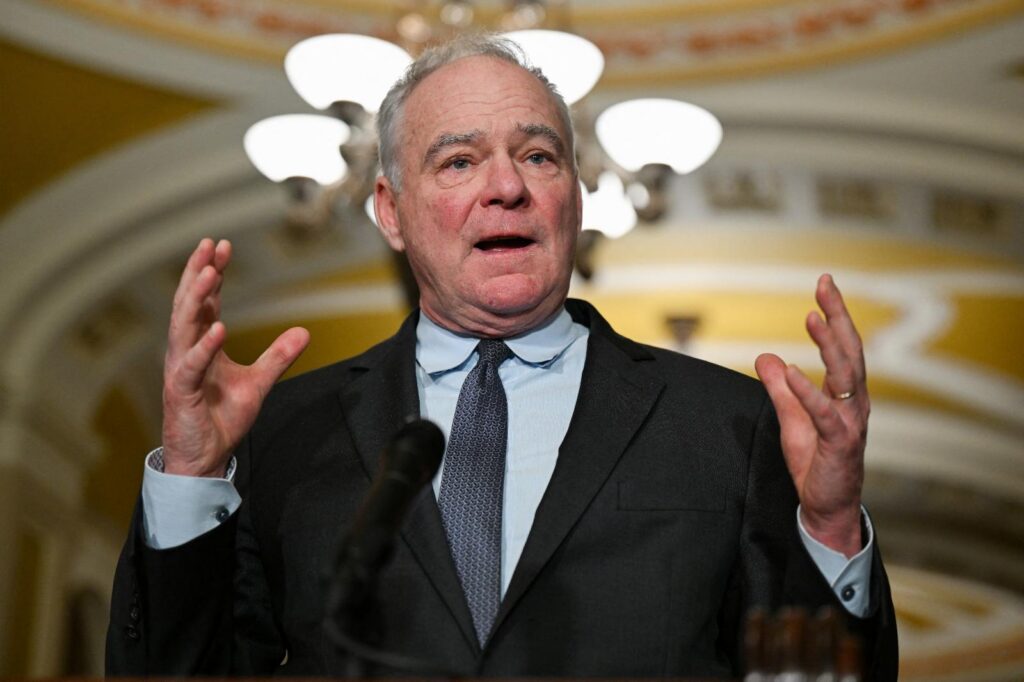
The resolution was sponsored by Sen. Tim Kaine, D-Va., who said in a statement that “President Trump’s deeply unpopular war of choice in Iran has imposed a tremendous cost on the American people — including deaths and injuries of our servicemembers and soaring gas prices.”
“For several weeks, my colleagues and I have been forcing votes in the Senate to ensure we have a real debate about whether it’s in our national interest to continue this war. I’m grateful that today, enough of my colleagues stood up for the Constitution and listened to their constituents,” he said. “This sends a strong message to President Trump, Vice President Vance, Secretary Hegseth, Secretary Rubio, and the rest of the Cabinet that the American people aren’t interested in more war in the Middle East.”
Sen. John Fetterman of Pennsylvania was the lone Democrat to vote to block the resolution.
Cassidy, Massie lose Republican primaries to Trump-backed candidates
In addition to Cassidy, Rep. Thomas Massie, R-Ky., also lost his primary to a Trump-backed challenger, Ed Gallrein, after his sharp criticism of U.S. support for Israel and breaking with Trump to call for the release of details of the sex-trafficking investigation into Epstein, a multimillionaire who was found dead in prison of an apparent suicide by hanging in 2019.
After those elections, Trump endorsed Texas Attorney General Ken Paxton in the Lone Star State’s Republican Senate primary over incumbent Texas Republican Sen. John Cornyn.
But some of Cornyn’s fellow Senate Republicans criticized the move, arguing that having Paxton, who has faced corruption allegations, as their nominee might make it more challenging to defeat Democratic candidate James Talarico in November and imperil Republicans’ chances of maintaining control of the upper chamber.
Trump’s moves were a departure from longstanding norms, as presidents do not typically endorse challengers to their own party’s congressional incumbents.
Negotiations stall on reconciliation package
Senate GOP leaders canceled plans to vote before a Trump-set June 1 deadline on a party-line immigration enforcement bill that would provide an additional $72 billion for immigration enforcement. The House soon followed suit.
Senate Republicans reportedly balked at the Trump administration’s controversial anti-weaponization fund.
The $1.8 billion fund sought by Trump became a point of concern among the Senate GOP, even after a meeting with Acting Attorney General Todd Blanche.
The Department of Justice said the fund would allow those “who were victims of lawfare and weaponization,” including those “whose online speech was censored at the behest of the government, parents silenced at schoolboards, Senators whose records were secretly subpoenaed, churchgoers targeted by the FBI, and so on” to apply for compensation.
But critics have argued those funds would go to those who broke the law, such as those pardoned by Trump for their convictions in the Jan. 6, 2021, Capitol riot, or to the president’s allies.
Before Trump sought to attach the fund to the reconciliation bill, the broader immigration enforcement package was the subject of concern for the U.S. bishops.
In a May 15 letter, Archbishop Paul S. Coakley of Oklahoma City, president of the U.S. Conference of Catholic Bishops, and Bishop Brendan J. Cahill of Victoria, Texas, chairman of the USCCB’s Committee on Migration, wrote to members of the House and Senate to “encourage members of both parties to reject partisan appropriations funding and instead rededicate yourselves to a collaborative process that pursues the common good and promotes human dignity and flourishing.”
Similarly, a group of U.S. bishops, most from the U.S.-Mexico border region, wrote a May 20 letter to members of Congress expressing “grave concern” over that legislation.
Federal prosecutors announce charges against Castro
The U.S. The Department of Justice on May 20 announced that it unsealed a superseding indictment charging former Cuban President Raúl Modesto Castro Ruz, 94, and other Cuban officials for their alleged roles in shooting down two small civilian planes operated by the group Brothers to the Rescue in 1996.
The charges come as the Trump administration increasingly pressures Havana to make significant economic and political reforms and has not ruled out military strikes as part of that pressure.
“For nearly 30 years, the families of four murdered Americans have waited for justice,” acting Attorney General Todd Blanche said May 20 in comments in Miami at an event tied to Cuban Independence Day. “They were unarmed civilians and were flying humanitarian missions for the rescue and protection of people fleeing oppression across the Florida straits.”
Trump, however, disputed the characterization that the move would result in the escalation of tension with Cuba, arguing, “I don’t think there needs to be.”
The island “is falling apart,” he said.
Humanitarian aid to Cuba was among the topics Secretary of State Marco Rubio recently discussed with Pope Leo XIV at their meeting earlier in May, Rubio said at the time.
Supreme Court dismisses death penalty case
The Supreme Court, in a 5-4 ruling May 21, dismissed on procedural grounds a case regarding how states should weigh intellectual disabilities in capital punishment cases.
The dismissal, in effect, leaves in place lower court rulings blocking the execution of Joseph Clifton Smith, who was convicted of capital murder in Alabama.
The unsigned majority opinion did not offer a rationale for its decision in the case, Hamm v. Smith, but Justice Sonia Sotomayor wrote in a concurring opinion that the court lacked relevant evidence in the case and was therefore “not equipped to provide any meaningful guidance on how courts should assess multiple IQ scores.”
In a dissent, Justice Clarence Thomas suggested that “to avoid execution, Smith tried to convince courts that he is not intelligent enough to be executed.”
“Today, the Court rewards Smith’s efforts,” he wrote.
The same day, the high court declined to hear a petition from Tony Carruthers, a Tennessee death-row inmate who has fought his conviction for a triple murder.
However, Tennessee failed to carry out Carruthers’ execution later that day when corrections personnel were unable to find a vein to set a backup injection line, as the state’s protocol requires.
He was then given a one-year reprieve by Gov. Bill Lee, R-Tenn.
Kate Scanlon is a national reporter for OSV News covering Washington. Follow her on X @kgscanlon.
