


(OSV News) — Beatifications are a tremendous milestone in the process of canonization. The Latin word “beatus,” a title bestowed on the individual in question at a beatification, means “blessed” or “happy.” This word also lends its name to the Eight Beatitudes, which lay at the heart of Jesus’ Sermon on the Mount, described by St. Augustine as “the perfect charter for the Christian life,” or roadmap to holiness.
A beatification is a papal act that declares it is worthy of belief that those who are beatified enjoy the beatific vision; that is to say, they are in heaven because they were killed “in odium fidei” (in hatred of the faith) as a martyr, lived a life of heroic virtue, or offered their life selflessly to preserve the life of others.
What is meant by ‘beatification’?
Beatification is the penultimate stage in the process that seeks canonization, whereby the pope solemnly and irrevocably proclaims that the person is truly in heaven. A beatification comes not only after a long juridical process in which a person’s life, reputation and writings are meticulously investigated.
While this process ends with canonization, two major hurdles must be cleared for beatification. After all phases of the investigation are completed, the individual is declared “venerable” — whereby the pope recognizes that the virtue by which the person lived is worthy of the Church’s imitation and worthy of veneration.
Except in the case of martyrs, beatification comes only after a miracle has occurred, been reported and rigorously investigated. A miracle is required for canonization also, even for martyrs, but this necessity has occasionally been waived by the pope.
Canonization causes begin with a local emphasis. Devotion to and veneration of the individual begins first with those who knew the person individually or by reputation. The fame for holiness and intercessory powers (or martyrdom) gradually spreads first regionally, then universally. For this reason, a beatification has most commonly been celebrated locally, by a papal representative, while a canonization is typically celebrated in Rome and always by the pope himself.
A brief history of beatification
Before the 11th century, local churches moderated the recognition and veneration of holy men and women. Diocesan bishops, individually or collaboratively, typically investigated and approved a person’s “cultus.” As the medieval papacy expanded its authority, canonizations became reserved to the pope, something formalized in 1234 under Pope Gregory IX. Subsequently, the Holy See permitted limited local veneration of certain persons not yet canonized. When Benedict XIV refined canonization procedures in the 18th century, many already venerated locally were recognized as blesseds.
In 1971, with the rite for Maximilian Kolbe, Pope Paul VI became the first pope to preside personally at a beatification. He presided similarly on several subsequent occasions. Pope John Paul II regularly presided at beatifications, often in a local setting during a pastoral journey, and the practice continued throughout his papacy.
This post-conciliar innovation unconsciously blurred the lines of beatification and canonization. In 2005, Pope Benedict XVI desired to return to the Church’s more traditional approach of delegating a representative to preside over the beatification on the pope’s behalf. A twofold consideration was at play: to more clearly delineate between beatifications and canonizations, and also more clearly involve the local churches. The pope reserved the option to preside over a beatification, as it is always an act of the pope.
Beatification vs. canonization
While the pope unequivocally proclaims an individual is in heaven with a canonization, a beatification is more specifically aimed at officially permitting public cultus for the individual whose virtues to a heroic degree, or martyrdom, have been formally approved.
A blessed may be venerated publicly and celebrated liturgically only if the law permits. While canonized saints may be invoked in the public and official prayers of the Church throughout the world, keeping with the theme of locality in beatification, those who are beatified enjoy this on a more restricted or local basis.
The beatified are afforded public cultus in the diocese or religious order in which their canonization cause was promoted. This would include inscription in local liturgical calendars, permitting celebration of a liturgical memorial (commonly referred to as a “feast day”) at Mass and in the Liturgy of the Hours, displaying the blessed’s image in a church or naming churches in their honor.
Other congregations or dioceses can request the same for the beatified in their jurisdictions, especially appropriate for those who have some ties to the blessed (former residence, location of burial, or even the entire nation for those enjoying broad cultus, and the like). The requests for veneration and liturgical commemoration of the blessed in these additional locales must receive approval from the Holy See.
After beatification, use of a halo is also permitted in artistic depictions. If first-class relics are available of the blessed, they may be distributed for public veneration by the faithful.
Although there are currently three blesseds on the United States’ liturgical calendar, the U.S. bishops have in recent decades decided to rarely pursue inscription of beatified Americans on the calendar until they have reached canonization.
Where is a beatification held?
The celebration of a beatification occurs in a special rite, most typically situated in the context of a Mass, although it is permitted to occur in some circumstances in a celebration of the Liturgy of the Hours.
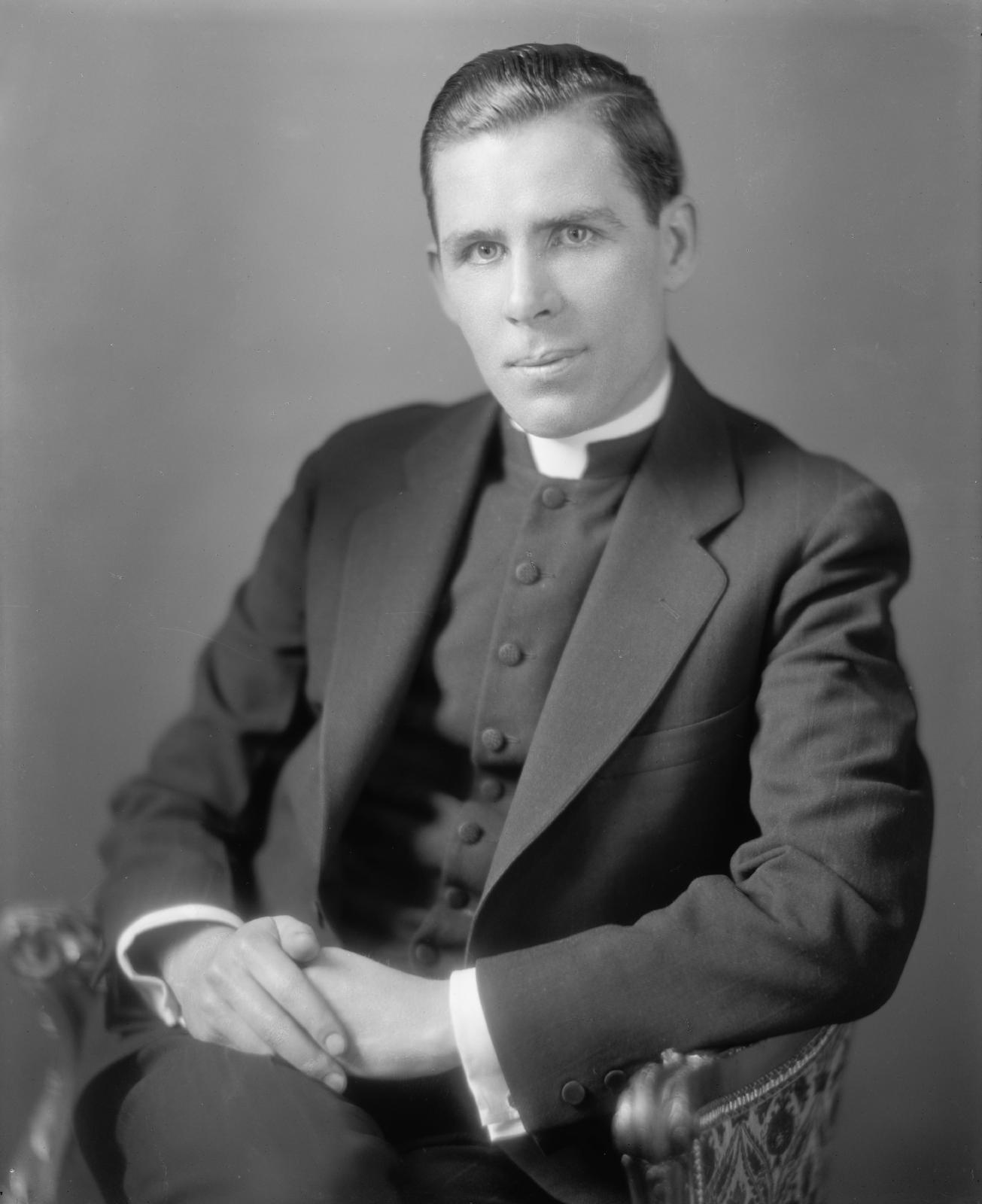
It is to be celebrated in the diocese where the cause has been promoted, although it is permitted to hold the beatification in a place more suitable in the same ecclesiastical province or region. This latter option is true for the Sept. 24, 2026, beatification of Archbishop Fulton J. Sheen, whose cause has been promoted by the Diocese of Peoria but whose beatification is being celebrated in the more urban St. Louis, Missouri, a couple hours south by car.
In rare cases, there is also the option that the Holy See might decide to hold the beatification in Rome.
What happens at a beatification?
When celebrated within Mass, the beatification rite takes place between the Penitential Rite and the Gloria.
First, a formal request for beatification is made to the papal representative by the local bishop of the diocese where the cause was promoted. This is followed by a public reading of a short biography of the person to be beatified, with special emphasis on his or her virtues.
A formal decree of beatification is read, in the form of an apostolic letter from the pope. Typically this is read in its official Latin and followed by another reading in the vernacular. By this public proclamation of the decree, the person is officially counted among the blessed.
Following this, an image of the newly beatified is revealed, usually with a halo for the first time. A first-class relic, if available, or another relic is then presented to the papal delegate, usually venerated with incense and adorned with candles and flowers.
After the Gloria, the collect prayer proper to the newly beatified’s liturgical cultus is prayed for the first time. The Mass then proceeds as usual.
Michael R. Heinlein is author of “Glorifying Christ: The Life of Cardinal Francis E. George, O.M.I.” and a promised member of the Association of Pauline Cooperators.
