


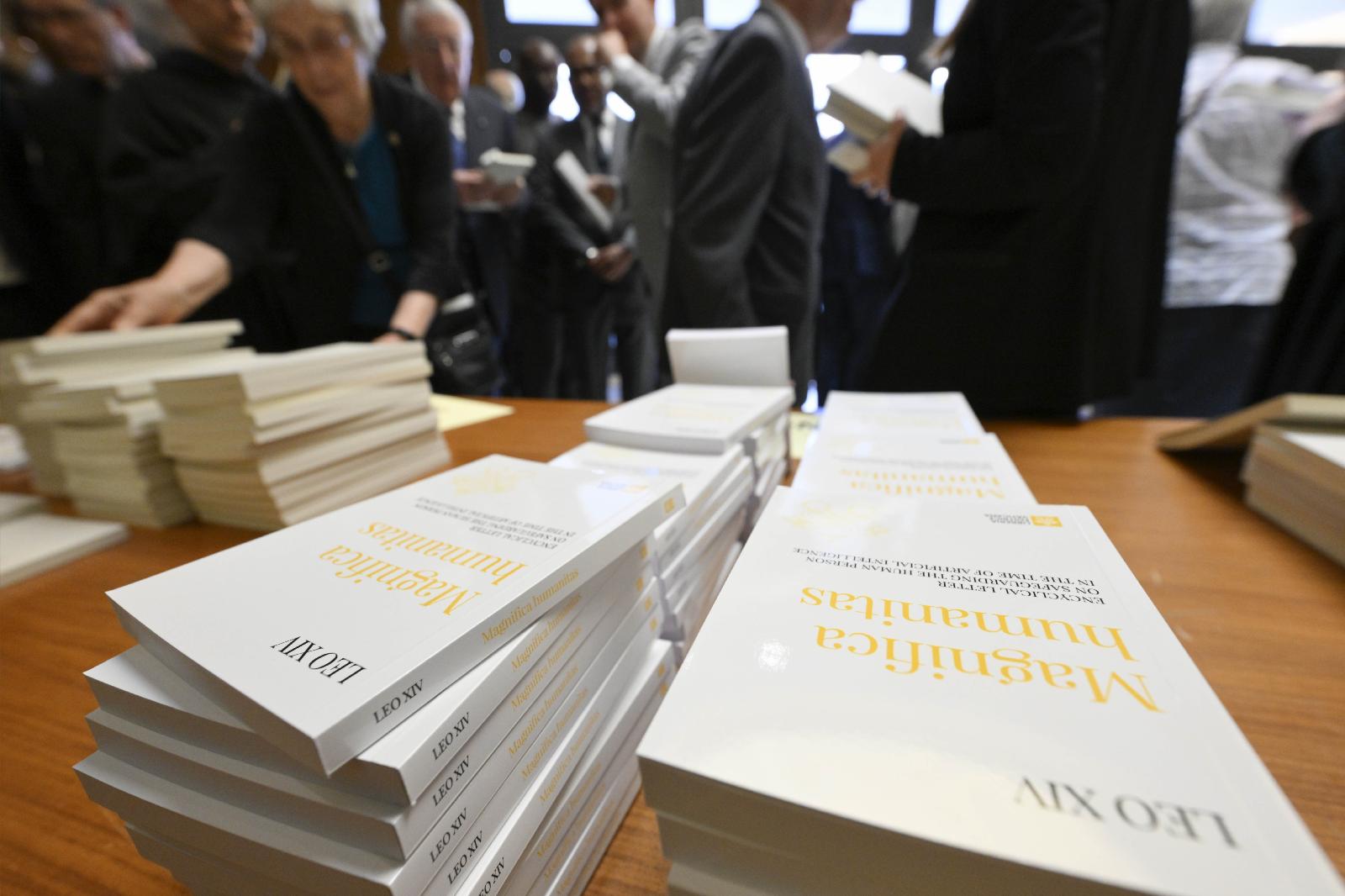
WASHINGTON (OSV News) — Policymakers reacted to Pope Leo XIV’s May 25 encyclical on artificial intelligence, including on the pontiff’s concerns about AI’s impact on warfare and efforts to combat online sexual exploitation.
The same week, the residence of Supreme Court Justice Amy Coney Barrett was targeted in a “swatting” attempt, and the Trump administration authorized the admission of additional white South Africans into the U.S.
— Vance, Klobuchar among US officials to weigh in on ‘Magnifica Humanitas’
In his first encyclical, “Magnifica Humanitas: On Safeguarding the Human Person in the Time of Artificial Intelligence,” Pope Leo XIV warned that the development of AI technology must be accompanied by safeguards to protect human dignity, as it is “threatened by new forms of dehumanization.”
Among those concerns was AI’s implications for warfare, with the pontiff calling for “the most rigorous ethical constraints” on the technology in that area.
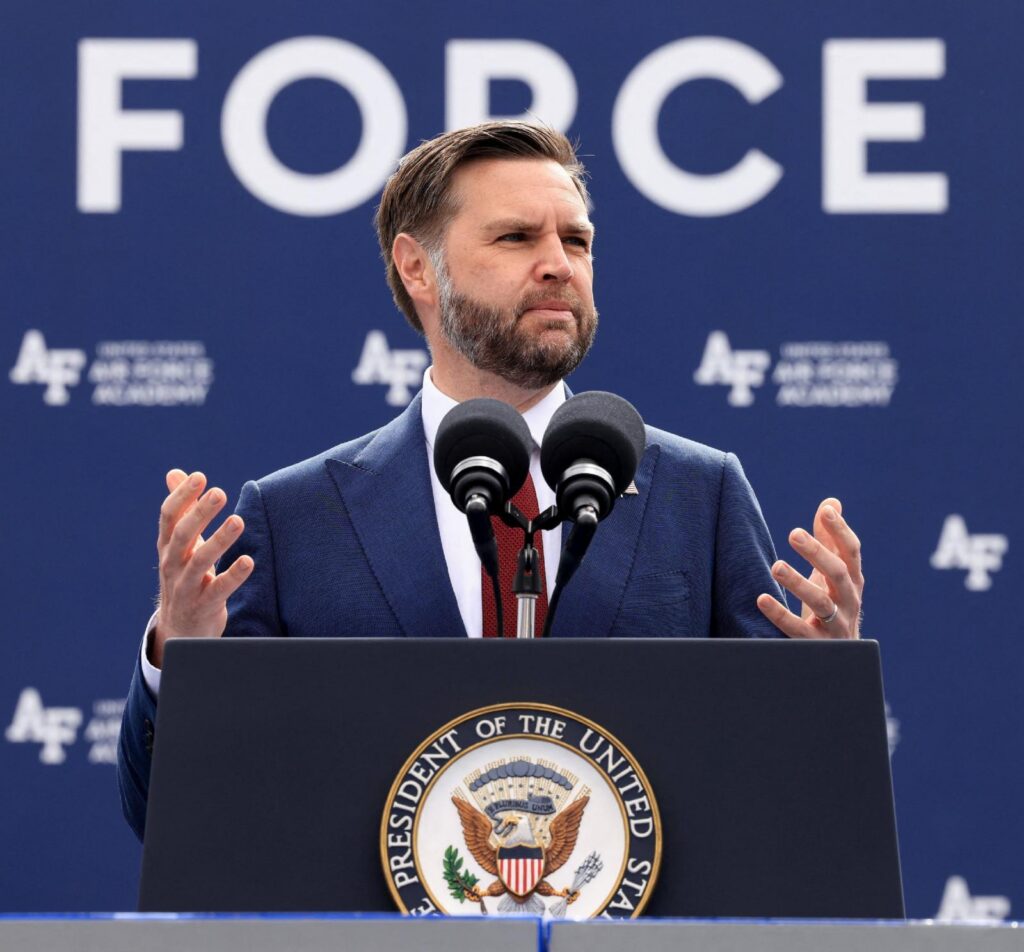
Vice President JD Vance, the second Catholic to hold the office of vice president and a proponent of AI technology, said he wanted to “endorse” Pope Leo‘s concerns in that area during a commencement address at the U.S. Air Force Academy on May 28.
“If the warfare of the future is to live up to the moral values of our ancestors, decisions over life and death must be made by humans and not machines,” Vance said, also urging that the Air Force graduates, as members of the armed forces, be “jealous and selfish about your role as a decision-maker in warfare.”
“Use technology to make you better, but never submit to it,” he said. “You are the masters of warfare, and both your minds, but also your hearts, are the opposite of artificial.”
In the encyclical, Pope Leo wrote that “moral judgment cannot be reduced to calculation,” and so “it is not permissible to entrust lethal or otherwise irreversible decisions to artificial systems.”
The encyclical was released just a few days after the Federal Trade Commission began enforcing the Take It Down Act, a bipartisan law that created new penalties for the nonconsensual online publication of sexually explicit images and videos — both authentic or generated by artificial intelligence, sometimes called “deepfakes.”
Sen. Amy Klobuchar, D-Minn, said in written comments to OSV News, “I’m glad the pope has called for action to protect minors from harms associated with AI, and we know more must be done.”
“With the bipartisan Take It Down Act now law, we are helping victims get nonconsensual intimate images — real or AI-generated — removed from online platforms,” she said May 26. “It’s a vital first step, but it cannot be the last.”
In the encyclical, Pope Leo addressed “the risk of dehumanization” in the development of AI technology, including “easy access to violent or degrading content that offends sensibility, to pornographic and hypersexualized material, to messages that trivialize the body and emotions, and to proposals that normalize risky behavior.”
— Death-row inmate to have new trial after Supreme Court ruling
The U.S. Supreme Court on May 27 issued a ruling in favor of a Black death-row inmate from Mississippi who alleged the white prosecutor in his case demonstrated racial bias in the jury selection for his trial.
The inmate, Terry Pitchford, alleged that Black jurors were improperly dismissed during his jury trial. The 12-member jury included only one Black member, despite the county where the trial took place having a population that was at the time 40% Black. The Supreme Court issued a similar ruling in a case involving the same prosecutor in 2019.
Previous Supreme Court precedent — Batson v. Kentucky — prohibits excluding jurors based on their race.
A federal judge previously overturned his conviction, but an appeals court reversed that ruling.
Justice Brett Kavanaugh wrote for a 5-4 majority that “in this case, whether due to confusion, oversight, an overly hurried jury selection process, or some other cause, things broke down,” and the ordinary trial-court procedure for resolving such claims “never occurred.”
In effect, the ruling means Pitchford will have a new trial.
— Barrett residence targeted by ‘swatting’ attempt, Virginia police say
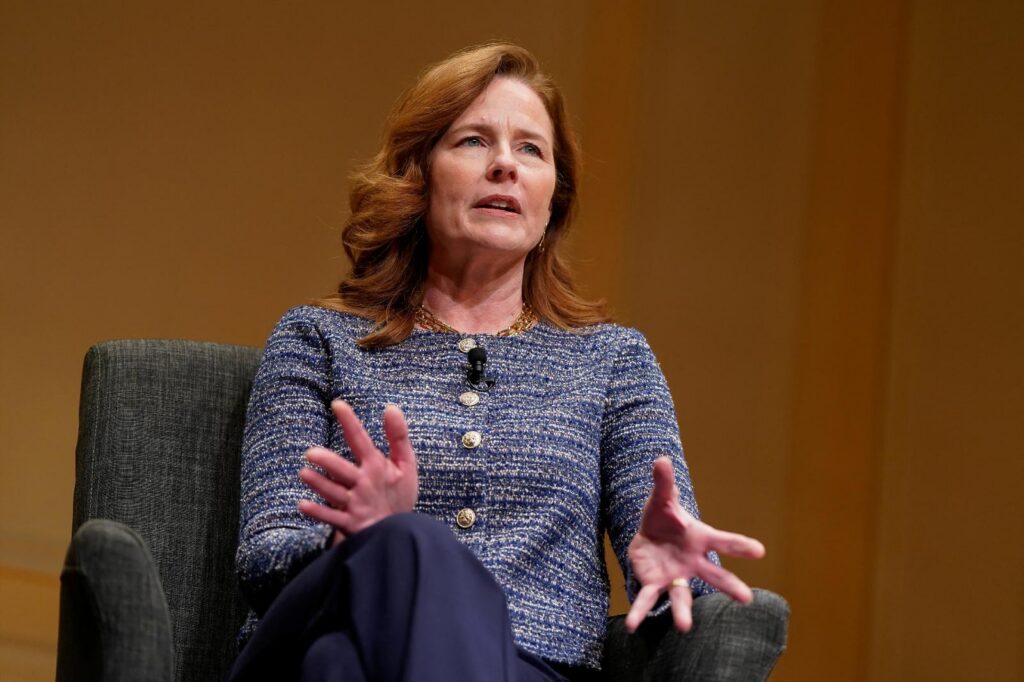
Barrett’s residence was targeted in a swatting incident on May 27, police in Fairfax County, Virginia, said.
A call made to the department’s nonemergency line reporting gunshots at the residence was quickly determined to be a hoax, they said.
“Officers immediately coordinated with Supreme Court Police personnel assigned to the residence and quickly determined that the report was fictitious,” Fairfax County police said in a statement. “No additional police resources were utilized.”
Officials and the justices themselves have acknowledged a heightened threat environment for the federal judiciary after a series of high-profile or controversial rulings by the nation’s highest court on topics including abortion, presidential immunity, the administrative state and gun policy, among others.
In 2022, an armed man was arrested near the Maryland home of Justice Brett Kavanaugh. The man. Nicholas John Roske, was sentenced in 2025 to eight years in prison for attempted murder.
Chief Justice John Roberts’ 2024 annual report acknowledged “a significant uptick in identified threats at all levels of the judiciary” as among what he called threats to judicial independence.
— Trump increases refugee cap to admit more white South Africans
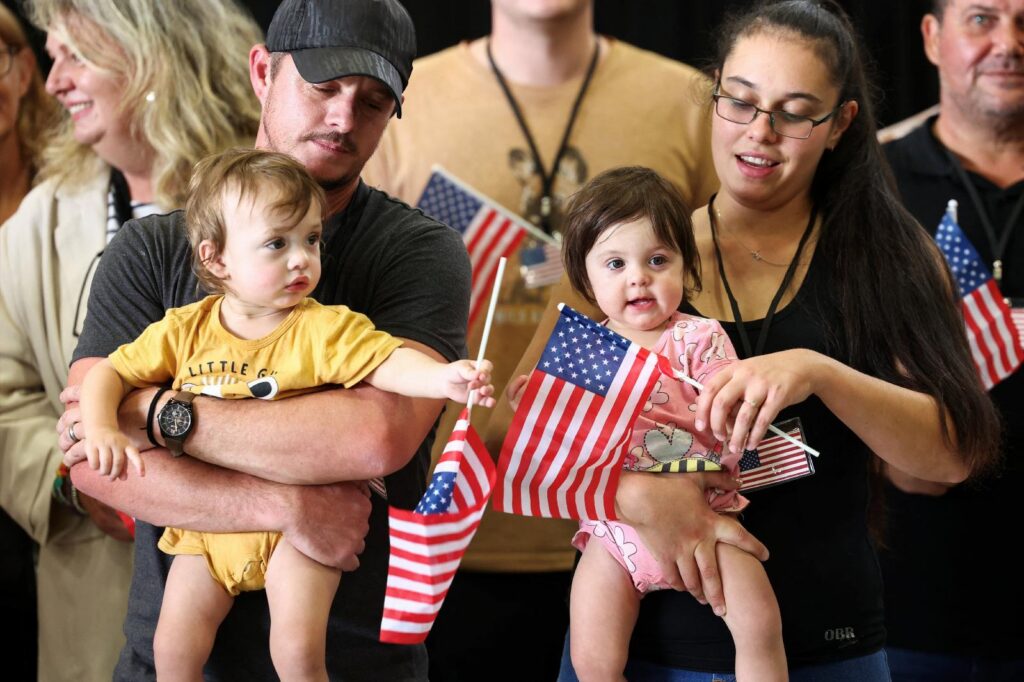
President Donald Trump raised the refugee admissions cap to allow the admittance of another 10,000 individuals, but those slots must be “allocated among Afrikaners from South Africa,” according to a regulation published in the Federal Register May 27.
The Trump administration has set low rates or refugee admissions more broadly, but has previously carved out an exception for the predominantly white Afrikaner population.
Bishop Brendan J. Cahill of Victoria, Texas, chairman of the U.S. Conference of Catholic Bishops‘ Committee on Migration, said in a May 28 statement, “Offering refuge to the world’s vulnerable and persecuted is a founding principle of our country and it is uniquely what makes this country great.”
“For decades, the United States was known for offering this opportunity, not favoring one particular group, but granting relief in accordance with our laws, our shared values, and the national interest. Today, however, that is sadly not the case,” he said. “We appreciate the Administration’s acknowledgement that our country can continue to resettle refugees, and we renew our call for resettlement to be extended further to others in need, including those persecuted on the basis of their faith, the likes of whom have no access to refuge in our country at this time.”
Trump has previously alleged there is an ongoing “genocide” against white farmers in South Africa. However, while South Africa has a relatively high crime rate, there is no evidence that crimes against white farmers are disproportionate, a BBC analysis found. A 2019 country report by the State Department during Trump’s first term also disputed that argument, which is sometimes circulated by white nationalist groups.
Catholic social teaching on immigration balances three interrelated principles — the right of persons to migrate in order to sustain their lives and those of their families, the right of a country to regulate its borders and control immigration, and a nation’s duty to regulate its borders with justice and mercy.
Kate Scanlon is a national reporter for OSV News covering Washington. Follow her on X @kgscanlon.
