


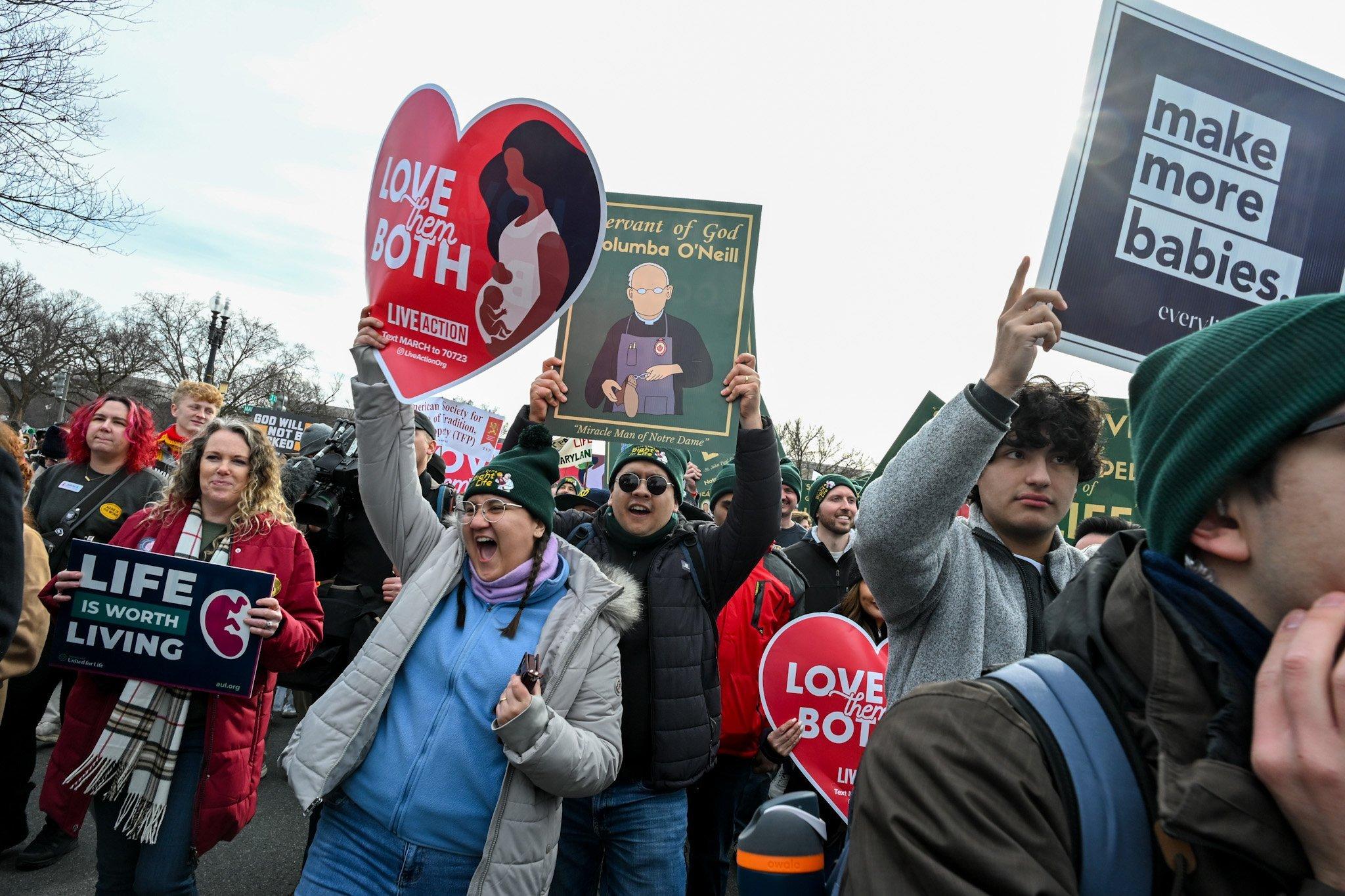
(OSV News) — New data estimates show the number of abortions in the U.S. remained stable in 2025, totaling some 1.126 million, with apparent declines in out-of-state travel for abortions offset by increasing access to telehealth abortions.
The actual number of abortions is likely higher, given certain exclusions in the estimates.
At the same time, abortion data remains incomplete amid the lack of a mandatory, federal-level reporting system, researcher Mia Steupert of the Charlotte Lozier Institute — the education and research arm of Susan B. Anthony Pro-Life America — told OSV News April 15.
Data from ‘Monthly Abortion provision Study’
On March 24, the Guttmacher Institute, a national policy and research firm that supports legalized abortion, released data from its “Monthly Abortion Provision Study” for calendar year 2025.
The study collects data on both surgical and chemical abortions performed in facilities, along with chemical abortions obtained through telehealth providers — including recipients who were protected by shield laws in states with abortion bans.
Guttmacher found that the 2025 figures were “largely unchanged from 2024,” when the institute counted 1.124 million clinician-provided abortions.
Supreme Court’s Dobbs ruling in 2022
The 2025 estimate marks a 21% increase from 2020, which Guttmacher said was “the last year of comprehensive national estimates” before the Supreme Court’s 2022 decision in the Dobbs v. Jackson Women’s Health Organization case overturned the 1973 rulings that legalized abortion in the U.S.
Guttmacher clarified that its data “does not include self-managed abortions” — for example, those involving drugs sourced from community networks or acquired from outside of the U.S.
“Evidence suggests self-managed abortions have increased since Dobbs,” the institute said.
States without total bans saw a slight decrease in the number of abortions during 2025, down to 1.036 million from 1.049 million.
Spike in telehealth-provided abortions in some states
In contrast, states with total bans saw a spike in telehealth-provided abortions, with the figure totaling 91,000, up from the previous 74,000.
Guttmacher said its estimates exclude “advance provision” of chemical abortion pills, the “limited number” of abortions performed as exceptions to full bans and abortions “that are not provided by U.S. clinicians,” such as “those provided through community health networks, online pharmacies or other means.”
“These exclusions mean that these findings represent an underestimate of the total number of abortions nationally,” said Guttmacher.
The data showed a noticeable decline in the number of those crossing state lines for abortions — 142,000 in 2025, down from 154,000 in 2024.
Reduced travel by people in states with total bans
The downturn “was almost entirely driven by reduced travel from residents of states with total bans,” said Guttmacher. “In 2024, 74,000 people living in ban states traveled out of state for care; this dropped to 62,000 in 2025.”
Still, said the firm, “travel across state lines remains a major avenue for accessing abortion care for people living in restrictive settings.”
Guttmacher said the 62,000 reported for 2025 was “more than double the number who traveled from these states prior to Dobbs.” Between 2013-2020, that figure ranged from 19,000-25,000 annually.
The 2025 number also does not count “those who traveled out of states with six- or twelve-week bans or with other major obstacles to in-clinic provision,” a segment that saw “an additional 47,000 people” travel to other states for abortions, said Guttmacher.
7 states have significant shares of out-of-state abortions
Several states — Illinois, Kansas, New Mexico, North Carolina and Virginia — had significant shares of out-of-state abortions, with Illinois “accounting for almost a quarter” of the 142,000 national total in 2025.
“I think it’s important to realize that there’s still a ton of out-of-state care happening,” said Steupert.
But she stressed that with “no federal requirement” for the collection of abortion data, researchers rely on “a patchwork of whatever states do.”
States and jurisdictions are not required to report their abortion data to the Centers for Disease Control’s Abortion Surveillance System, with the agency saying on its website that its Division of Reproductive Health “prepares surveillance reports as data become available.”
States data unreliable on telehealth abortion numbers
Steupert said that “we really can’t rely on any of the states’ data anymore, because almost none of them track telehealth abortions.”
Massachusetts and Nevada each do “a good job,” while Oregon “attempts to do it,” said Steupert — but “the quality and variety of the data” differs “vastly.”
“A lot of them aren’t tracking out-of-state shipments” of abortion drugs, she said. “They’ll track within the state, but they don’t track if you’re in Illinois and somebody sends you drugs from New York.”
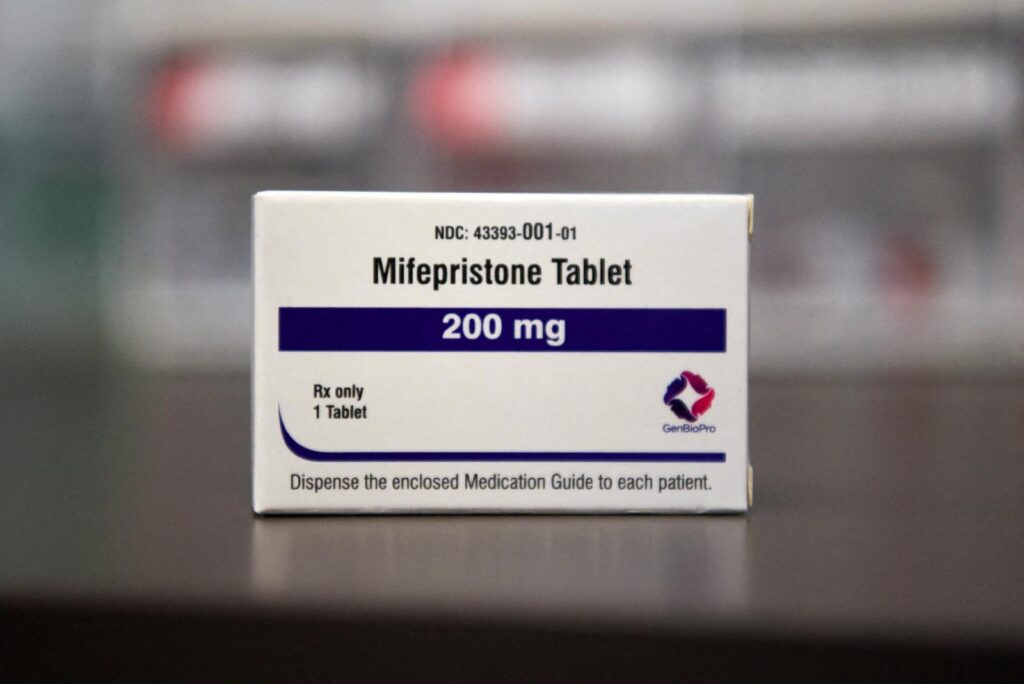
Steupert said the Charlotte Lozier Institute is examining public health models for better abortion data collection — a task that is “kind of like starting from scratch” because, she said, “we just don’t really have a good model to work off of.”
She pointed to the difference between counting abortion drugs mailed and completed abortions.
Guttmacher tracks abortion drugs sent
“Even Guttmacher, in their methodology, notes that they’re not tracking the number of completed abortions,” said Steupert. “They’re only talking about abortion drugs sent. That’s a really big caveat. We always have to tell people that this isn’t the number of known, completed abortions through abortion drugs. It’s just the number of drugs sent.”
Steupert stressed that “there’s no way that we’re going to be able to track the number of completed abortions” from abortion drugs.
And, she said, “There’s also no way you can track abortions occurring outside the formal health care system.”
Steupert cited the Canadian nonprofit Women on the Web, which according to its website ships the abortion drugs mifepristone and misoprostol to recipients in more than 180 countries, providing “24/7 support in 16 languages.”
Self-administering abortions and toxic herbs
Attempts to self-administer abortions through the use of certain herbs — promoted on TikTok following the Dobbs decision and alarming public health officials due to poisoning risks — also elude data counts, said Steupert.
She said both pro-life advocates and those who argue for legalized abortion “have agreed for a while” that the data is important, although for “differing reasons.”
“But I think there is a public health aspect to it, too,” said Steupert. “If you’re going to claim that it (abortion) is health care, then why isn’t it tracked like cancer and car accidents? We’re relying on the private sector to collect this data, and they have an interest in this data because they’re pro-abortion.”
‘Facility-level data’ critical to assessing abortion rates
“I don’t doubt that over a million abortions are occurring” annually in the U.S., said Steupert — but she stressed that while “we don’t want patient-level data,” having the “facility-level data” is critical in assessing abortion rates as part of “good social science.”
The Catholic Church teaches that human life must be respected and protected absolutely from the first moment of conception, and since the first century it has affirmed the moral evil of every procured abortion.
Following the 2022 Dobbs v. Jackson Women’s Health Organization decision, U.S. church officials have reaffirmed the Church’s concern for both mother and child, and have called for enhancing support to those made vulnerable to abortion through poverty and other factors.
Gina Christian is a multimedia reporter for OSV News. Follow her on X @GinaJesseReina.
