


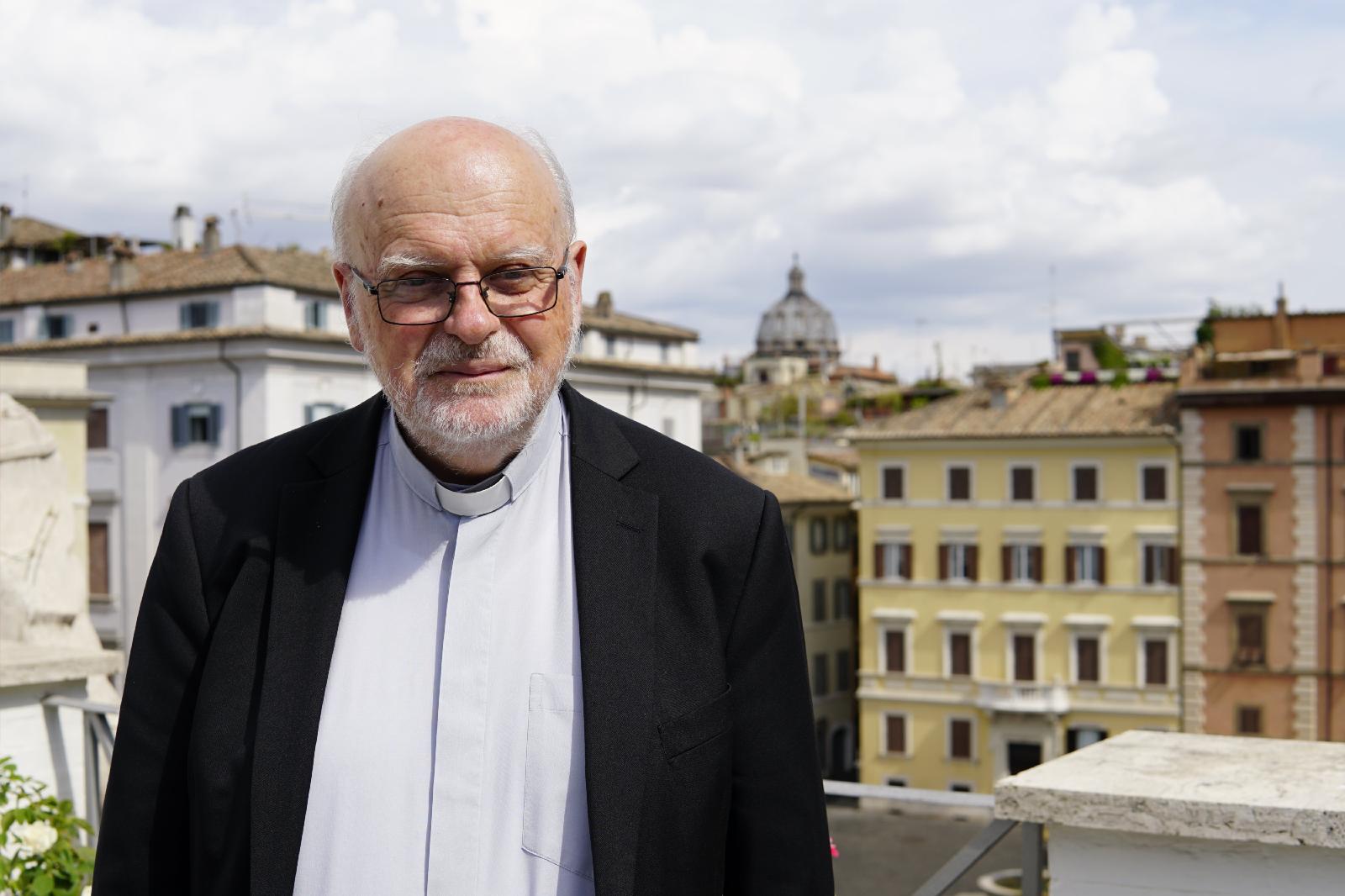
KRAKOW, Poland (OSV News) — “He is not afraid of anything. He talks to everybody and is not against anybody. He always aims for the positive,” Pope Francis once said of Swedish Cardinal Anders Arborelius of Stockholm.
Calling it “the best laudation ever,” Cardinal Grzegorz Rys of Kraków introduced, by the words of the late pontiff, the recipient of the honoris causa doctorate of Pontifical University of John Paul II in Kraków — which Cardinal Arborelius received May 18 for “an integrative approach combining theological reflection, spirituality and pastoral responsibility,” as well as for “showing the importance of interior prayer, contemplative life and maturing of faith.”
OSV News sat down with Cardinal Arborelius ahead of the ceremony to talk about prayer, Sweden’s Catholic surge and artificial intelligence — a major topic in the Church ahead of the release of Pope Leo XIV’s first encyclical, “Magnifica Humanitas,” on May 25.
Cardinal Arborelius was Lutheran for the first 20 years of his life and following his conversion to Catholicism became the first Swedish cardinal in history and a member of a number of Vatican dicasteries. He has been archbishop of Stockholm for almost three decades, a Discalced Carmelite friar for more than half a century, and a well-known writer and preacher.
In demand in other countries as a preacher
“Here, one can even find a kind of a tension,” Cardinal Rys said at a ceremony on the Kraków campus of the pontifical university. In some European countries, he said, “he is admired and demanded as a preacher, especially retreat master.” But in his own country, his writings “seem to be of much more importance. … In Sweden there are many people seeking spirituality, but with such an attitude they turn primarily to books, not to the churches,” Cardinal Rys said.
Sweden is a predominantly Protestant country where Catholics make up roughly 1.5% of the population of about 10.5 million people. Pope Francis visited the country in 2016 for an ecumenical commemoration of the 500th anniversary of the Protestant Reformation.
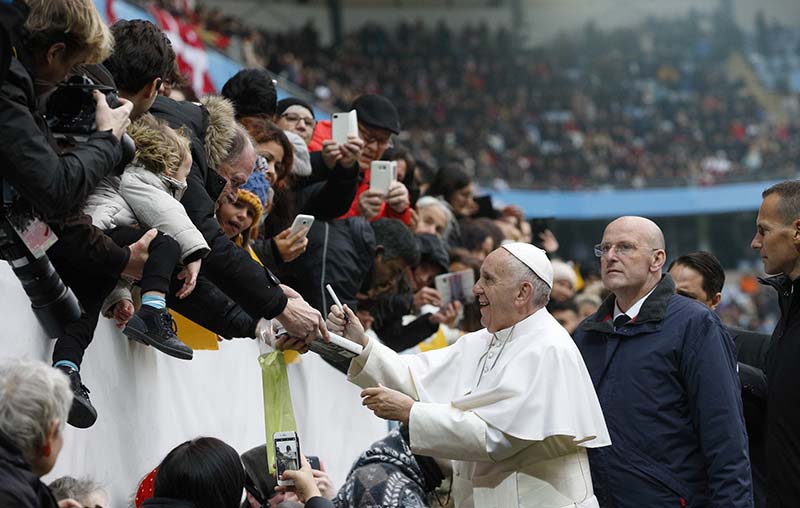
The Catholic Church however is growing in numbers.
On May 1, Cardinal Arborelius consecrated St. John’s Church in central Stockholm. Acquired from the Church of Sweden due to a growing international Catholic population, this cathedral-sized building now serves as an important diocesan church.
Able to acquire ‘this fantastic church’
“I am deeply grateful that we were able to acquire this fantastic church and for the trust that the (Evangelical Lutheran) Church of Sweden has shown us as a result,” Cardinal Arborelius said on the occasion, as reported by kath.net.
“People are getting tired of a secular, materialistic world,” Cardinal Arborelius told OSV News May 18. “In many parts of the world, we see there are more adults becoming baptized. Of course, at the same time, there is a very strong secular movement, but there is a kind of spiritual and moral awakening, I think. And that’s very hopeful.”
He said that while “we shouldn’t exaggerate” about the scale of Catholic Church growth in Sweden, he emphasized “there are two components that we have tried to integrate” — the immigrants and the Church. “I always say that when I go to Germany because they are a bit separated,” but he said in Sweden they “tried” and it paid off for the Church.
“It’s not always so easy. But we really try to bring people of all nations and all parts of society together. And maybe that’s easier as a minority, because somehow we have a distance to the power and to those who have influence. And somehow we try to build up the family of all these groups of people,” he said.
Young people in Germany even turning to Church
“Germany is a bit special, but I was in Berlin lately and they said, especially in eastern Germany, they have the same phenomenon that young people are turned to the Church,” he said. “So it’s a providential time. But of course we have to be able to receive them and integrate them. And that’s our main concern.”
And a challenge, Cardinal Arborelius added, as “some priests are used only to work with people from Poland, the Middle East,” and to “receive young Swedish people who are eager” to enter the Church — and mostly men — that’s also interesting.”
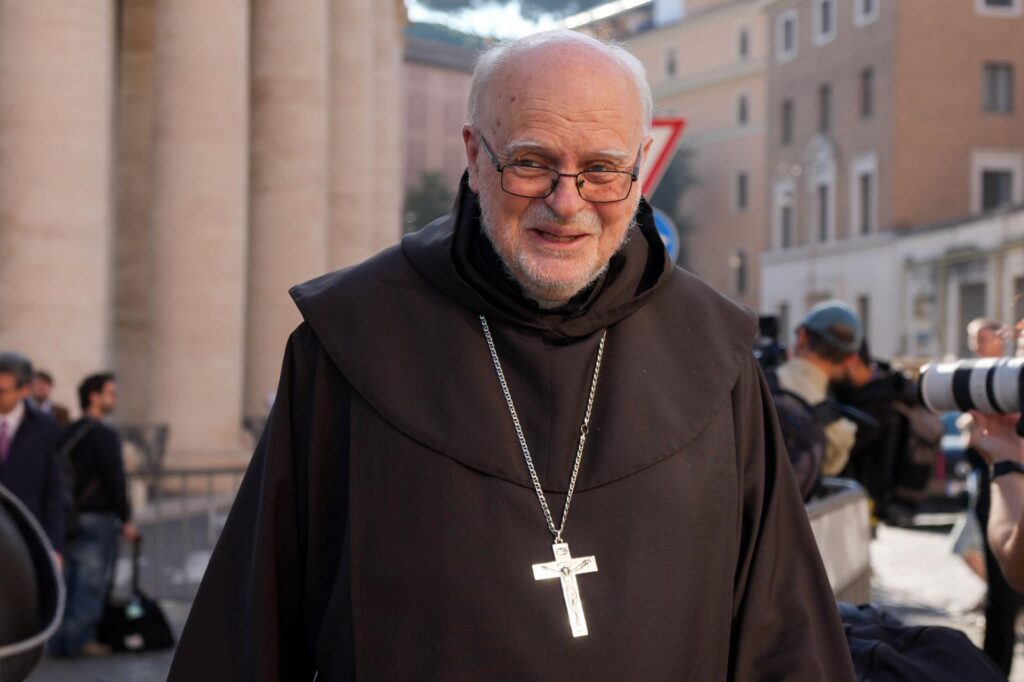
He said that in his archdiocese, “we’ve been able to buy more than 20 churches from the Protestants. So there is also a very good ecumenical relationship on that level, and they are happy that it can remain a church and not become something else.”
Asked why people turn to God, Cardinal Arborelius said, “People are getting tired of a secular, materialistic world,” and while secularization is still strong, the cardinal said that “there is a kind of spiritual and moral awakening” that he is observing. In Sweden, Cardinal Arborelius emphasized, “people become more aware of the threats” of modernity “and are more open to God.”
‘We forget our spiritual, moral value’
Asked about challenges for Catholics today, especially in the age of artificial intelligence, Cardinal Arborelius told OSV News today “we forget our spiritual and moral value.”
“Material values have become a very important power, influence. But notions of service, gratitude … contemplation — are forgotten. … On a world level, you see that there are so many other voices who want to use it for their own benefit and not for the common good, as we say in our social doctrine. And I think that’s why it’s so important to find a new way of bringing together people of goodwill, helping scientists, politicians, but also the Church to realize that we have … to help people to realize their real dignity, their real vocation,” the cardinal said.
Asked about the dangers and advantages of AI, the Swedish cardinal said that just as with nuclear science, “everything that we invent can be for the good, but also for the bad. And that’s why the moral aspect has to be more important in all fields.”
St. John Paul II, he said, reminded the world that “we have to regard the spiritual and moral values in a world where human beings are able to destroy the world, destroy the human person,” calling it “a prophetic voice.”
Understanding ‘the challenges and the dangers’
Now, with Pope Leo, the church is overtaking “the task of the Christian community to listen and to try to find other people of goodwill who understand the challenges and the dangers. Because if there is no moral consensus, it can bring about catastrophes,” he said only days before the launch of “Magnifica Humanitas,” Pope Leo’s encyclical on the care of the human person in the time of AI.
Asked what he would teach AI, the cardinal said it would be “to create a world of love and fraternity,” “help the world to overcome conflicts” and “to bring the Gospel to AI.”
Dedicating his lecture on May 18 to “ecumenical and ecclesial dimension of contemplative prayer,” Cardinal Arborelius said during his speech that “if you try to start the dialogue in a more spiritual and prayerful way, it is much easier to come closer to each other” throughout Christian denominations.
“In recent years, it has been interesting to see how many non-Catholics find help and inspiration in Catholic and Orthodox saints and mystics,” he said in his speech, adding that “prayer is more a grace and gift than an achievement or the result of our own effort. When we really realize this immense sign of God’s mercy, our entire life tends to become a life in prayer.”
In prayer is realization ‘God is always present to us’
Asked by OSV News how — in his busy schedule as a bishop, cardinal and world’s preacher — he finds time for prayer, he told OSV News that fundamental for prayer life is the realization “that God is always present to us.”
“You can find him everywhere and anywhere … and then gradually learn to find those moments where nothing happens and to have the intention to live to God’s honor and praise wherever you are.”
“So in that sense, I think if you have this insight that from God’s side, there is always an openness — I just have to try to respond. It’s more to respond to the voice of God, the presence of God, than to force yourself to say some prayers now and then.”
Asked about his favorite prayer, he said that while “the prayer that Jesus taught us can give us everything,” sometimes it can be “just a few words: Lord have mercy.”
‘St. John Paul has meant a lot to me’
About receiving an honoris causa doctorate from the university named after the pope from Poland, Cardinal Arborelius said, “St. John Paul has meant a lot to me. He made me a bishop. He gave me that (bishop’s) cross. He came to Sweden,” and “somehow I am the son of his, because … just a few days after I came to Rome, he was elected there,” he said of the time when he started his studies at Rome’s Teresianum, a pontifical faculty of theology. “So somehow he has followed me during my personal life.”
Reflecting on what he learned from St. John Paul, the cardinal said: “He told us that you have to give more importance to spiritual anthropology. I remember that was his main message, and I think that was somewhat prophetic because we see that ‘what is human being’ is discussed now” with AI and other pressing issues.
St. John Paul “asked us to really give more importance to Christian anthropology, the dignity of man,” the cardinal concluded. “And today it’s even more acute, I would say.”
Paulina Guzik is international editor for OSV News. Follow her on X @Guzik_Paulina.
