


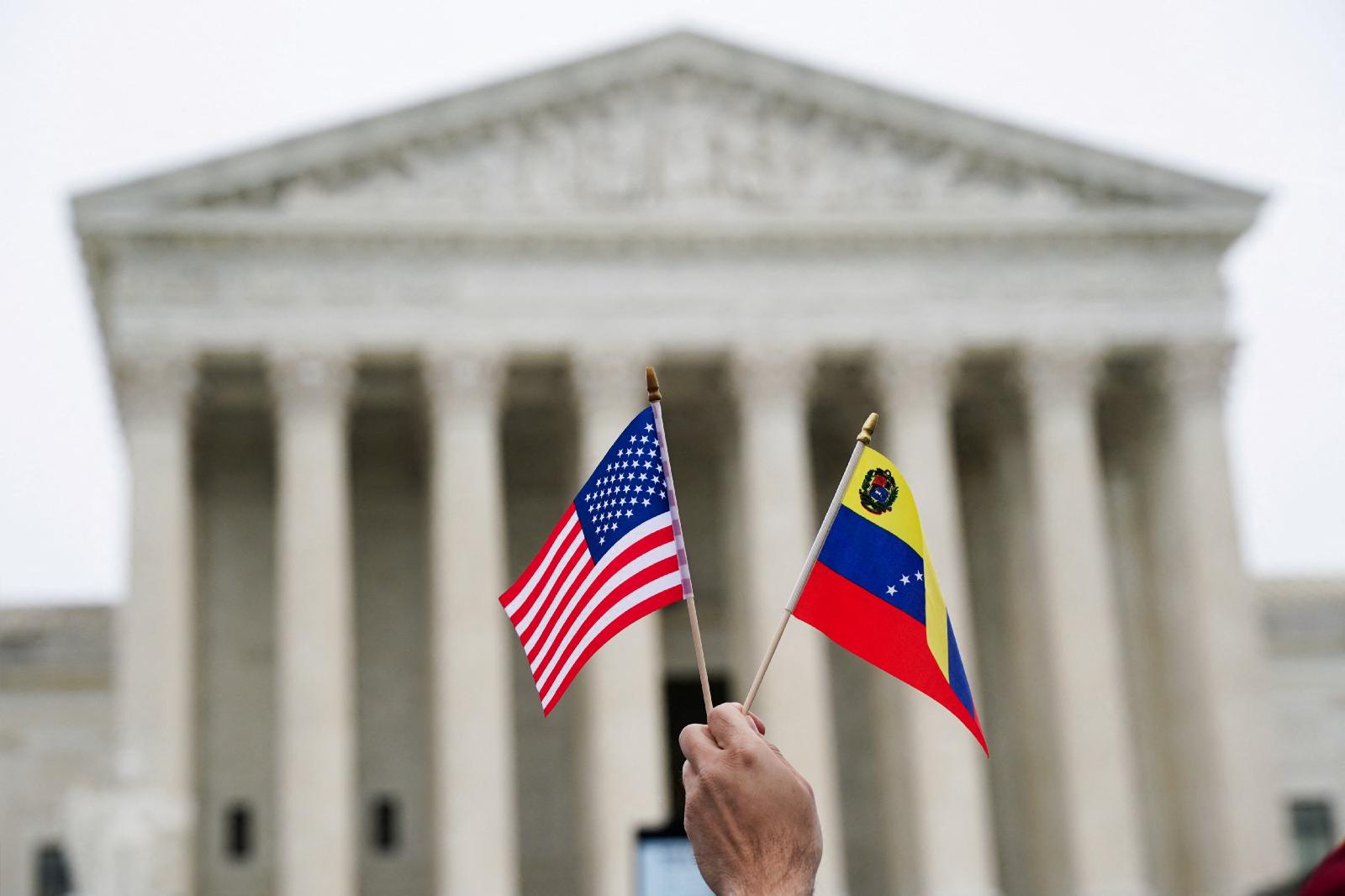
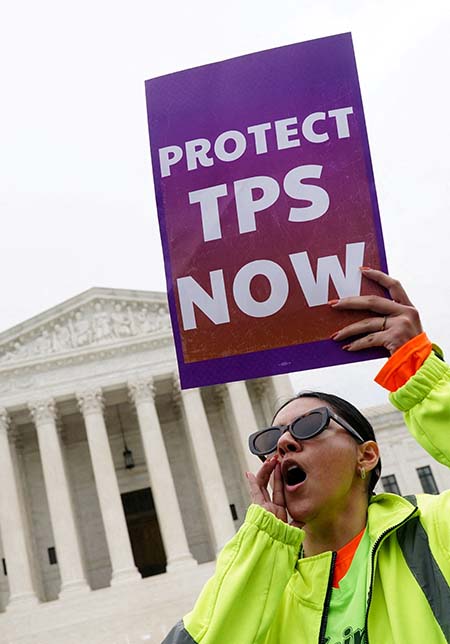
WASHINGTON (OSV News) — The U.S. Supreme Court heard oral arguments April 29 in a pair of consolidated cases on whether the Trump administration can end a program temporarily shielding eligible Haitian and Syrian immigrants living in the U.S. from deportation.
Earlier this year, the Trump administration asked the high court to pause rulings by federal judges that barred the government from ending Temporary Protected Status designation for Haitian and Syrian nationals. The U.S. bishops have urged that TPS for eligible Haitians remain in place due to ongoing unsafe conditions in that country.
Protection from deportation
The program authorized the U.S. government to grant protection from deportation to people from countries experiencing dangerous conditions such as war, disaster, or other unrest.
During arguments, U.S. Solicitor General D. John Sauer argued the court should end “judicial micromanagement” of what he cast as foreign policy decisions that should be made by “the political branches” of government.
Geoffrey M. Pipoly, who represented the Haitian migrants with TPS status, pointed to comments made by former Secretary of Homeland Security Kristi Noem in which she argued people from Haiti and other “non-white countries” were “killers, leeches, entitlement junkies,” and that “we don’t want them, not one.” He argued that those comments, contrasted by specifically prioritizing White South Africans for refugee status, showed discrimination by the government.
Questioning baseless claims about Haitians
Justice Ketanji Brown Jackson questioned Sauer about comments from Trump and other officials, baselessly claiming Haitians in Springfield, Ohio, were eating their neighbors’ pets, among other comments critics said suggested racial animus.
Sauer argued that “wrenched from context,” the officials were “talking about problems of crime, poverty, welfare dependency, again, problems that have been emphasized again and again by not just President Trump, not just the secretary, but many others who favor a tough immigration policy.”
A ruling in the case could have far-reaching implications for those who hold TPS status, including 350,000 Haitians, typically a Catholic population, who are living and working in the U.S. legally under the program. About 1.3 million people from 17 countries in total hold TPS status.
Catholic social teaching on immigration balances three interrelated principles — the right of persons to migrate in order to sustain their lives and those of their families, the right of a country to regulate its borders and control immigration, and a nation’s duty to regulate its borders with justice and mercy.
Part of broader immigration policy
Dylan Corbett, executive director of the Hope Border Institute, a group that works to apply the perspective of Catholic social teaching in policy and practice to the U.S.-Mexico border region, told OSV News, “It’s important to understand that the Trump administration’s actions to cancel TPS are part of a broader effort to take away immigration status from more than a million persons in the country legally, who have parole, TPS or some other form of legal status.”
“It’s not that they are attempting to address the larger issue of unauthorized immigration in good faith, but are in fact actively taking steps to push people into the shadows and make them vulnerable to the administration’s campaign of mass deportations,” Corbett said. “The fate of those here legally for decades, their U.S.-born children, and their vital economic contributions as taxpayers all hang in the balance with this Supreme Court case. We need to pivot away from mass deportation to real solutions so that we can manage our border responsibly, protect families and address migration in a way that benefits everyone.”
Nearly 1.3 million on TPS
In a statement, Todd Schulte, president of FWD.us, which advocates for immigration reform, said, “Nearly 1.3 million people in the United States hold Temporary Protected Status. They own businesses, pay taxes, serve in the military, and raise U.S. citizen children.”
“The Trump administration’s assault on TPS is part of its unlawful, unprecedented effort to strip legal status from millions of immigrants living and working in this country, an effort that is causing real harm to families across America,” Schulte argued.
Kevin Appleby, senior fellow for policy and communications at the Center for Migration Studies of New York and the former director of migration policy for the U.S. Conference of Catholic Bishops, told OSV News, “The basic question here strikes at the heart of who we are as a people and as a nation founded on the protection of human rights.”
“Should we deport our fellow human beings back to life-threatening conditions in their home countries?” he said. “My hope is that the justices respond with a resounding no.”
A decision in the case is expected by the end of the court’s term, which typically ends in June.
Kate Scanlon is a national reporter for OSV News covering Washington. Follow her on X @kgscanlon.
