


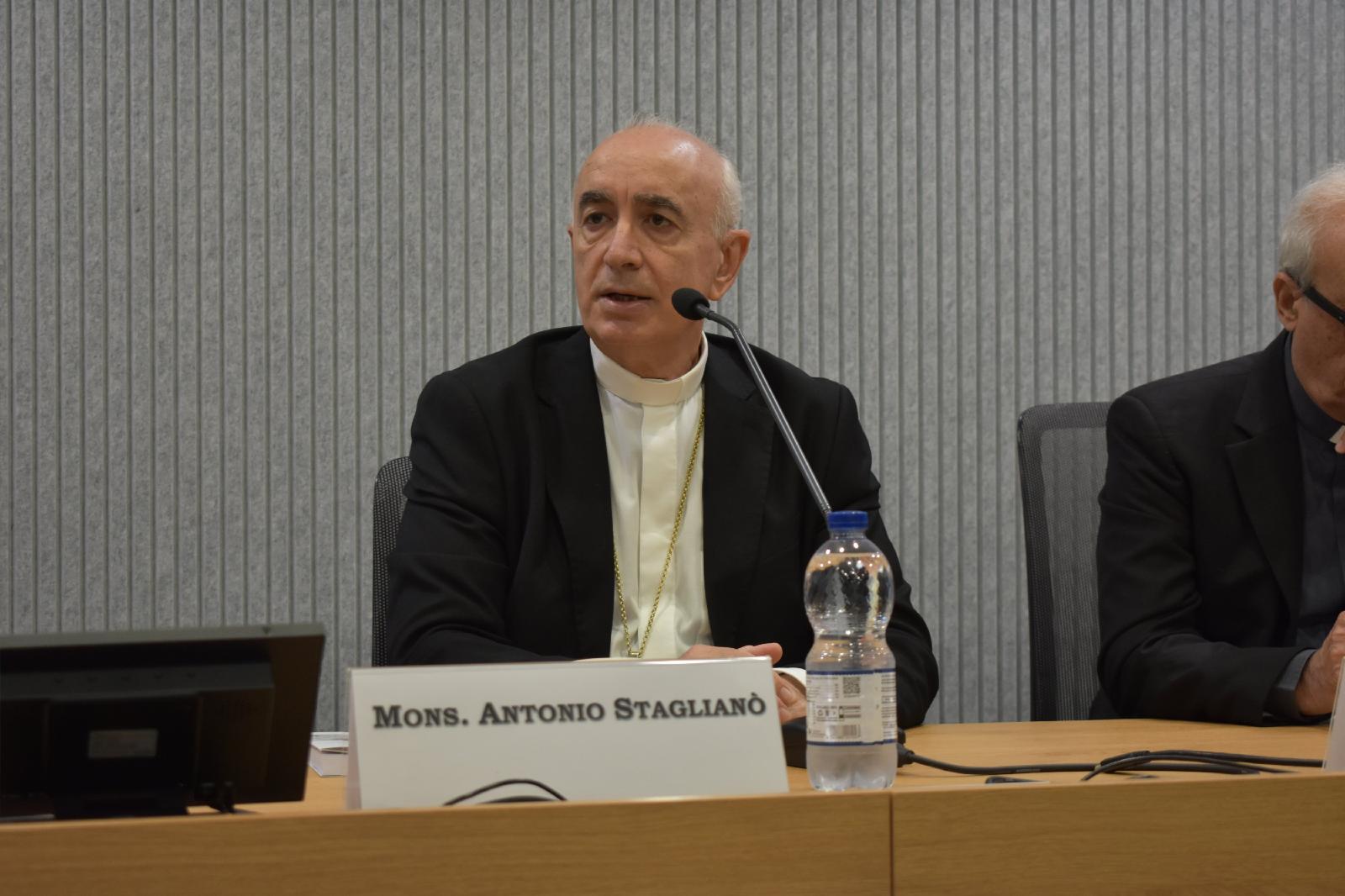
VATICAN CITY (CNS) — Pope Leo XIV knows an ethical approach to artificial intelligence and digital technologies is not enough, and he will stress the need for embracing the Christian vision of humanity and creation in his upcoming encyclical, the head of a papal academy said.
A set of ethical guidelines by itself is just “a cold code of regulations” that are difficult to enforce, Bishop Antonio Staglianò, president of the Pontifical Academy of Theology, told reporters May 18, the day the Vatican announced Pope Leo’s first encyclical would be titled “Magnifica Humanitas,” (“Magnificent Humanity”), and would focus on the protection of the human person in the age of AI.
“It’s clear that if we were to organize a code of ethics,” he said, then profit-driven tech giants “would manipulate it, bypass it and exploit it as they please.” After all, “how many charters of fundamental human rights have been written? They’re beautiful. But then, who has abided by them?”
“We must change the human heart,” which requires a “true great political and social revolution” of recognizing the earth as a gift and all human beings as children of God who deserve love, solidarity and protection, he said at a press conference held at the Vatican News’ headquarters May 18.
Bishop Staglianò and others spoke during a presentation of a new initiative by the academy to create an “observatory” or “hub” dedicated to bringing multiple stakeholders together to monitor and propose concrete proposals for building a sustainable “digital” ecology that respects all of creation, including the mental and relational well-being of young people.
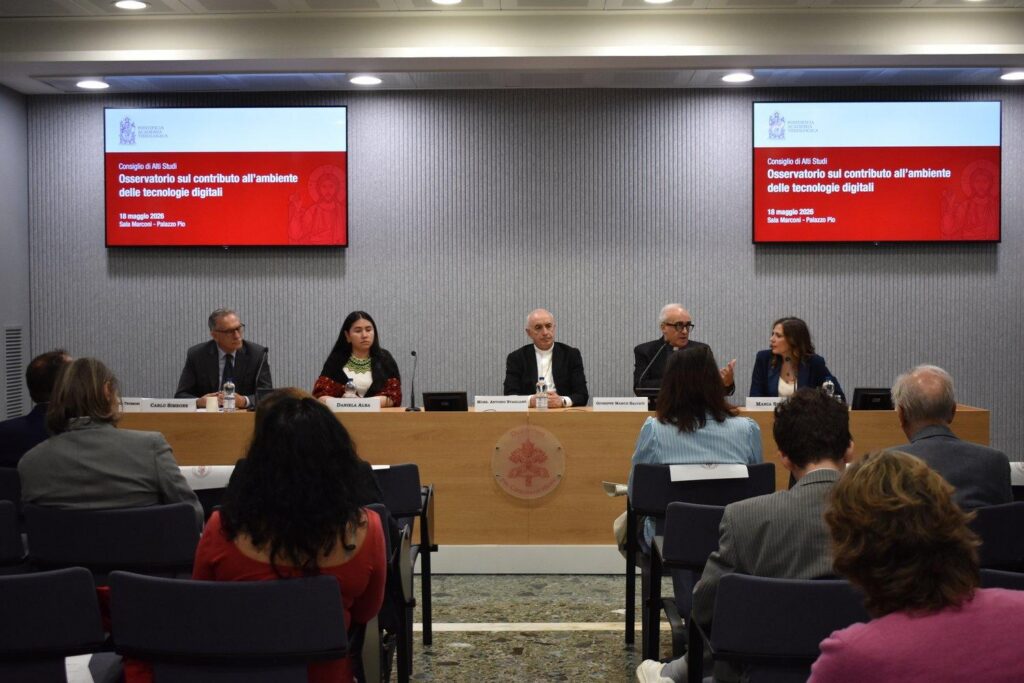
Pope Leo had told members of the papal academy Sept. 13, 2025, that the social doctrine of the Church must be at the service of all of humanity “in all its dimensions — personal, social and political” — as well as “provide wise answers to digital challenges.”
“Theology must be directly involved because an exclusively ethical approach to the complex world of artificial intelligence is not enough,” the pope had said. “Instead, we need to refer to an anthropological vision that underpins ethical action and, therefore, return to the age-old question: What is a human being? What is his or her inherent dignity, which is irreconcilable with a digital android?”
New observatory to offer ‘space for dialogue and theological reflection’
The Pontifical Academy of Theology then created an “observatory on the contribution of digital technologies to the environment,” which quietly launched three months ago, well before the Vatican announced the creation of an inter-dicasterial commission on artificial intelligence.
That commission, which will be made up of representatives of four dicasteries and three papal academies — for life, of sciences and of social sciences — will engage in “activities and projects concerning artificial intelligence, including policies on its use within the Holy See, promoting dialogue, communion and participation,” according to the Vatican announcement May 16.
The Pontifical Academy of Theology operates independently under the “umbrella” of the Dicastery for Culture and Education, which is part of the new commission. Even though the academy did not receive a “direct invitation” or placement within the new commission, its work “will certainly be valuable” for this “synodal journey” of facing the new challenges of AI, Bishop Staglianò told Catholic News Service.
“Today’s digital world is closely intertwined with the issue of conflict: there can be no true peace without technology that respects human beings, relationships and creation,” he said in a written press release.
The observatory will offer “a space for dialogue and theological reflection capable of raising awareness in the world of business and the economy regarding a use of technology that is truly sustainable, ethically oriented and attentive to the dignity of the human person,” he said in the statement. “Only in this way can innovation become an ally in the care of creation and a promoter of a truly peaceful, just and supportive coexistence.”
Maria Vittoria Trussoni, head of sustainability and “green tech” at the Japanese-owned NTT Data in Italy, said sustainability and safeguarding must start at the design stage of technology and not be an afterthought, tacked on only after problems have emerged.
Carlo Simeone, secretary of the academy’s council of higher studies, said the observatory wants to “build a bridge to those companies that demonstrate a certain sensitivity and are already developing products and solutions” that truly serve all people and care for creation.
Plans for October international forum
The academy plans to hold an international forum in October, he said, “bringing together the key players in this sector to present the contributions that can alleviate and resolve the many problems we face today across the globe.”
Maria Siclari, director general of Italy’s public Institute for Environmental Protection and Research (known as ISPRA), emphasized the importance of the observatory including scientific study, as well as making that data comprehensible and publicly available.
Having an arsenal of accurate facts helps drive public engagement and gives people the “courage” needed to be vocal and active in the public sphere, both in regard to governance and accountability, she said.
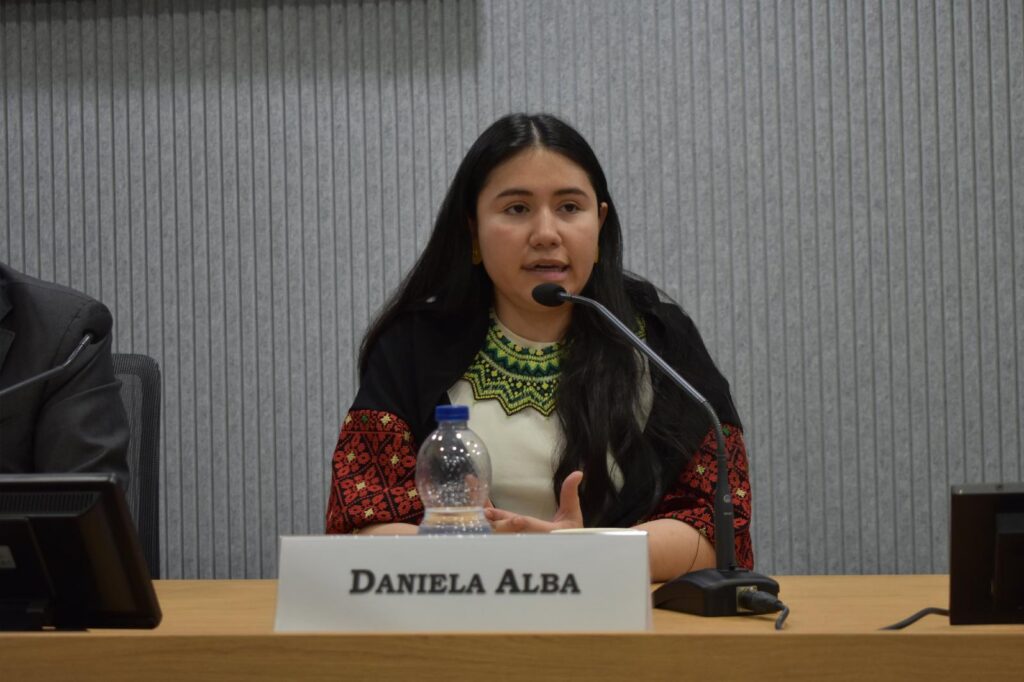
The observatory will seek to amplify the voices of those who have long been knowledgeable practitioners of sustainability, such as local farmers and Indigenous peoples, said Daniela Alba, secretary for social justice and ecology for the Society of Jesus in Rome.
“It’s not that we don’t have a voice; it’s because we were silenced,” she said. “We are at the table waiting for others to come talk with us.”
Bishop Staglianò told CNS people must choose between a “Hobbesian,” dystopian world made up of “wolves” or a civilization of love, “where humanity shows itself in the care to others, in the care of creation, in solidarity, in recreation, justice and peace in our human relationships,”
Christian ethics goes beyond a “rational” ethics dictated “from above,” and instead is rooted in the heart, he said.
Theology is about feeling truly responsible and giving of oneself out of love to serve others as Christ did, he said.
“We welcome the new encyclical,” which will be published May 25, he said. “Pope Leo will surely give us guidelines, not only ethical but theological guidelines for the future of our humanity in a new world ahead, a new world in times to come with a peace that’s disarmed and disarming.”
