


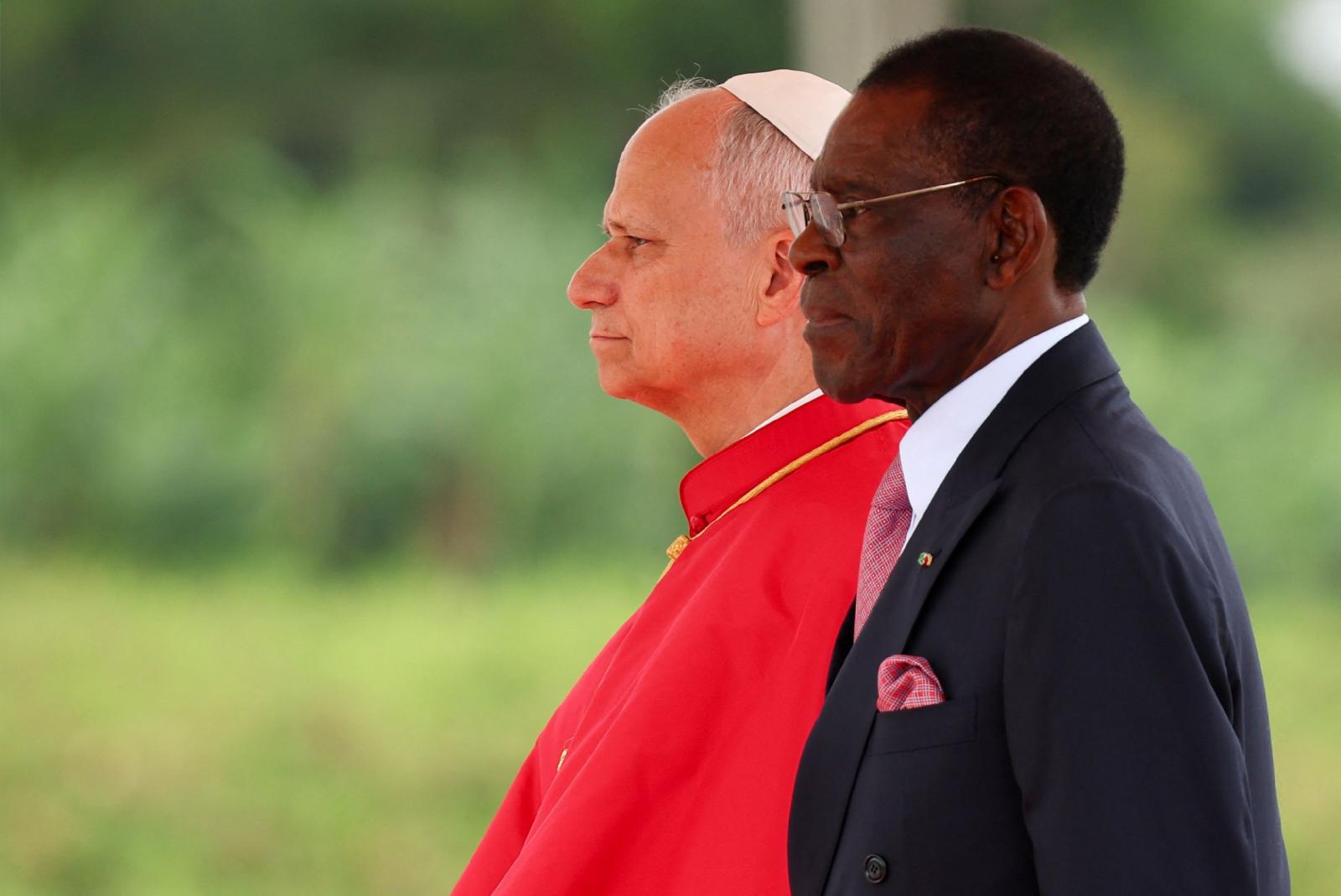
MALABO, Equatorial Guinea (OSV News) — Pope Leo XIV arrived April 21 in Equatorial Guinea, the fourth and final country of his 11-day apostolic journey in Africa, where the pope met the country’s longtime ruler and urged the country’s civil authorities to choose justice over power, quoting St. Augustine’s “City of God.”
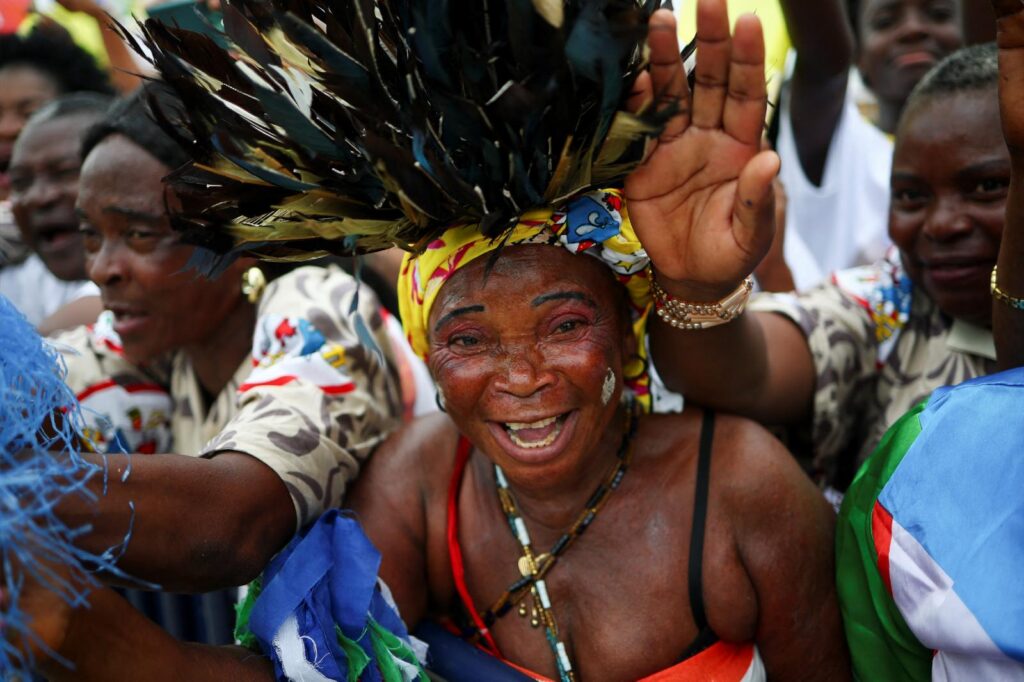
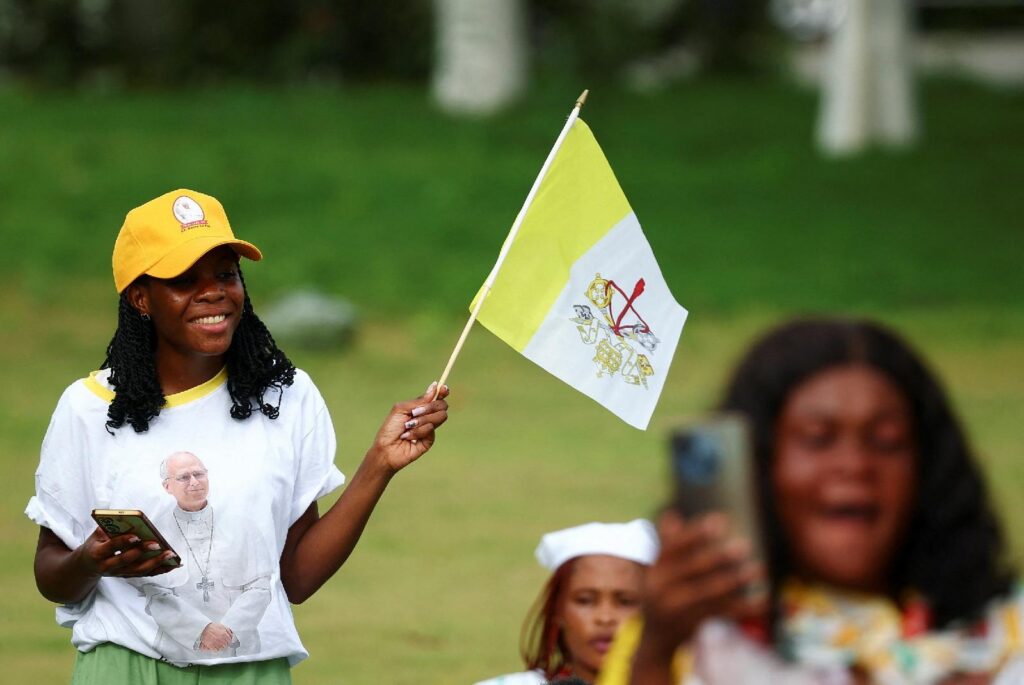
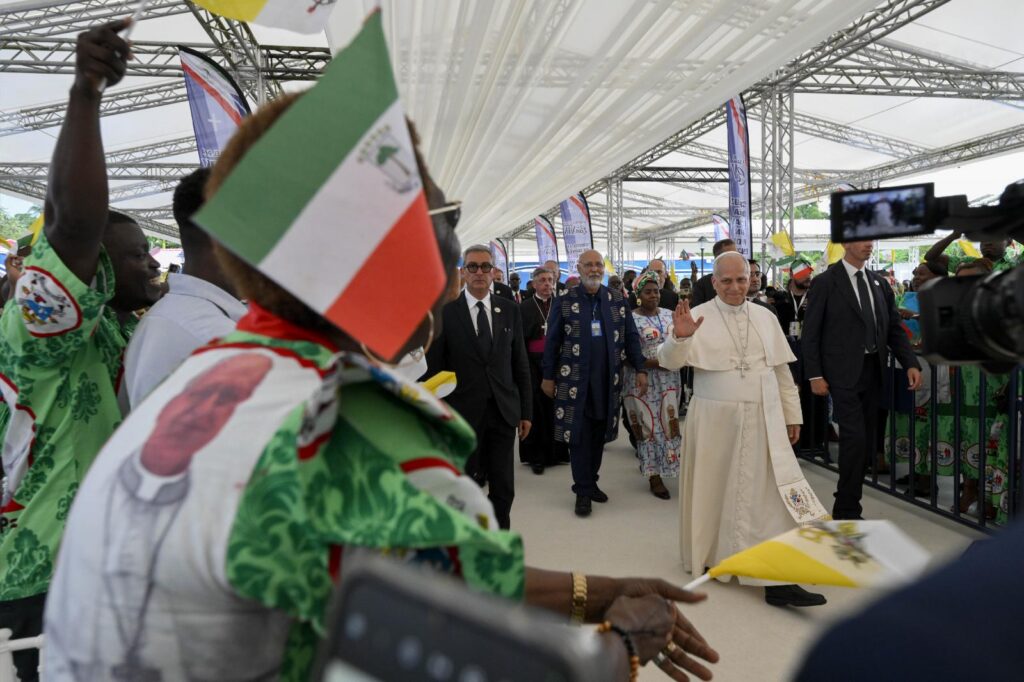
The pope flew northwest from Luanda, Angola, crossing central Africa before landing on the island of Malabo, which served as the country’s capital until January. Crowds lined the streets from the airport to the presidential palace, waving Vatican flags and cheering as Pope Leo passed in the popemobile. Many wore yellow hats bearing his image, while women in brightly colored dresses emblazoned with his image danced and sang.
At the airport, Pope Leo was welcomed by a military band and President Teodoro Obiang Nguema Mbasogo, who has ruled the oil-rich Central African nation since seizing power in a 1979 coup and is widely regarded as one of the world’s most authoritarian leaders.
‘People hunger and thirst for justice’
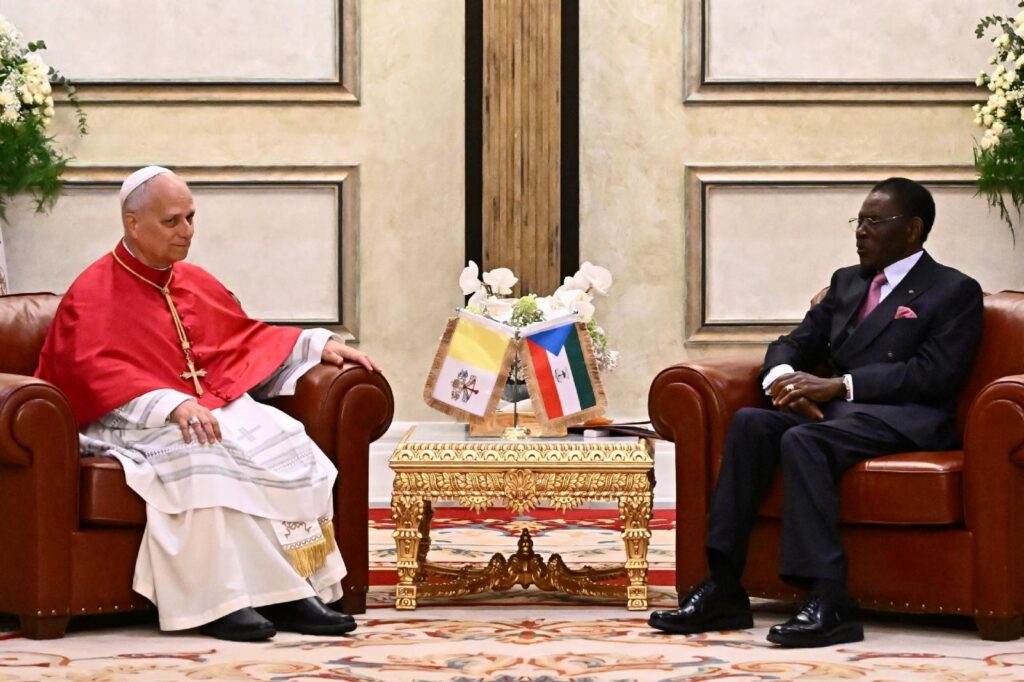
Speaking in Spanish at the presidential palace, with Obiang seated beside him, Pope Leo delivered a pointed appeal for justice and ethical governance in a country long criticized for corruption and human rights abuses.
“In a world wounded by arrogance, people hunger and thirst for justice,” the pope said, telling the authorities that the Church can help to form “free and responsible consciences.”
Pope Leo began his speech by recalling words spoken by St. John Paul II during his 1982 visit to the country, emphasizing the enduring need for “authentic liberty, justice, respect and promotion of the rights of every person.”
“These are words that remain timely and that challenge anyone entrusted with public responsibility,” Pope Leo added.
A tale of two cities
Turning to St. Augustine, the pope reflected on the contrast between two “cities” described in St. Augustine’s classic work “The City of God”: one built on love of God and neighbor, the other on self-interest and the pursuit of power.
The “city of God” is characterized by love, especially for the poor, Pope Leo said. “The earthly city … is centered upon the proud love of self, on the lust for power and worldly glory that leads to destruction.”
He urged leaders and citizens alike to discern “which city they wish to serve.”
The pope also made a reference to the government’s effort to move the country’s capital from Malabo to the mainland city of Ciudad de la Paz, meaning “City of Peace.”
“You have chosen to give it a name that seems to echo the biblical city of Jerusalem,” he said. “May such a decision prompt every person to ask themselves which city they wish to serve.”
‘God does not want this’
Equatorial Guinea, a former Spanish colony that gained independence in 1968, is one of sub-Saharan Africa’s largest oil producers. Despite its high per capita income, much of the population lives in poverty, with wealth concentrated among elites.
In his speech, Pope Leo warned against economic systems that exclude the poor, echoing his predecessor Pope Francis and his criticism that “such an economy kills.” He added that global conflicts are increasingly driven by the exploitation of natural resources “with no regard for international law or the self-determination of peoples.”
“The destiny of humanity risks being tragically compromised without a change of direction,” Pope Leo said. “God does not want this.”
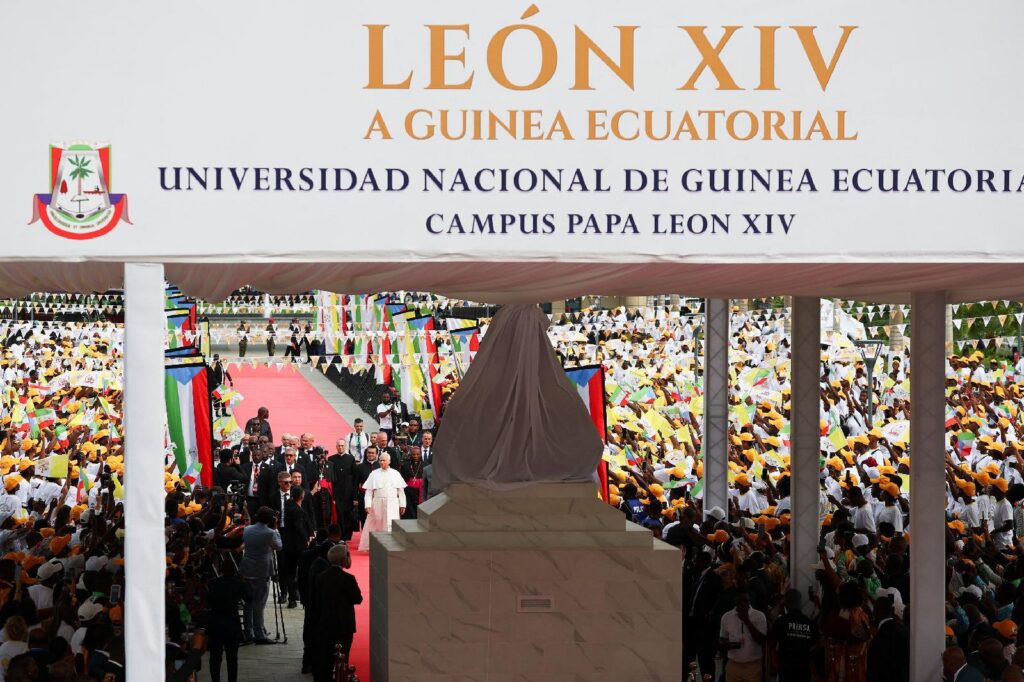
León XIV Campus
After the meeting, Pope Leo stopped briefly at Malabo’s cathedral for prayer before the Blessed Sacrament. Built in 1897 during Spanish colonial rule, the cathedral is dedicated to St. Elizabeth of Hungary.
Later, the pope inaugurated a new campus named in his honor of the National University of Equatorial Guinea. Students gathered under palm trees singing and cheering his name in Spanish as he arrived at the modern university facility.
“I am aware that such a decision goes beyond the person being honored,” Pope Leo said, referring to the naming of the campus. “It reflects the values that we all want to pass on to others.”
He entrusted the academic community to the protection of the Virgin Mary and prayed that the institution would form young people in truth and human dignity.
‘A sign of the civilization of love’
In the afternoon, Pope Leo visited the Jean-Pierre Olie Psychiatric Hospital, a modern facility aimed at transforming mental health care in a country where stigma has long surrounded mental illness.
“A truly great society is not one that hides its weaknesses, but one that surrounds them with love,” the pope said, praising efforts to care for the vulnerable. “A facility such as this … can become a sign of the civilization of love.”
Roughly 75% of Equatorial Guinea’s population of about 1.6 million is Catholic, making it one of Africa’s most Catholic countries. The visit marks only the second papal trip to the nation, following St. John Paul’s visit more than four decades ago.
The papal visit coincides with the 170th anniversary of evangelization in the country. Pope Leo is scheduled to travel April 22 to the country’s mainland region, where he will visit a prison in Bata and pray at a memorial to victims of a 2021 military base explosion that killed more than 100 people. A papal Mass in Mongomo at the Basilica of the Immaculate Conception, the second largest Catholic church in Africa, is expected to draw 100,000 Catholics.
Courtney Mares is Vatican editor for OSV News. Follow her on X @catholicourtney.
