


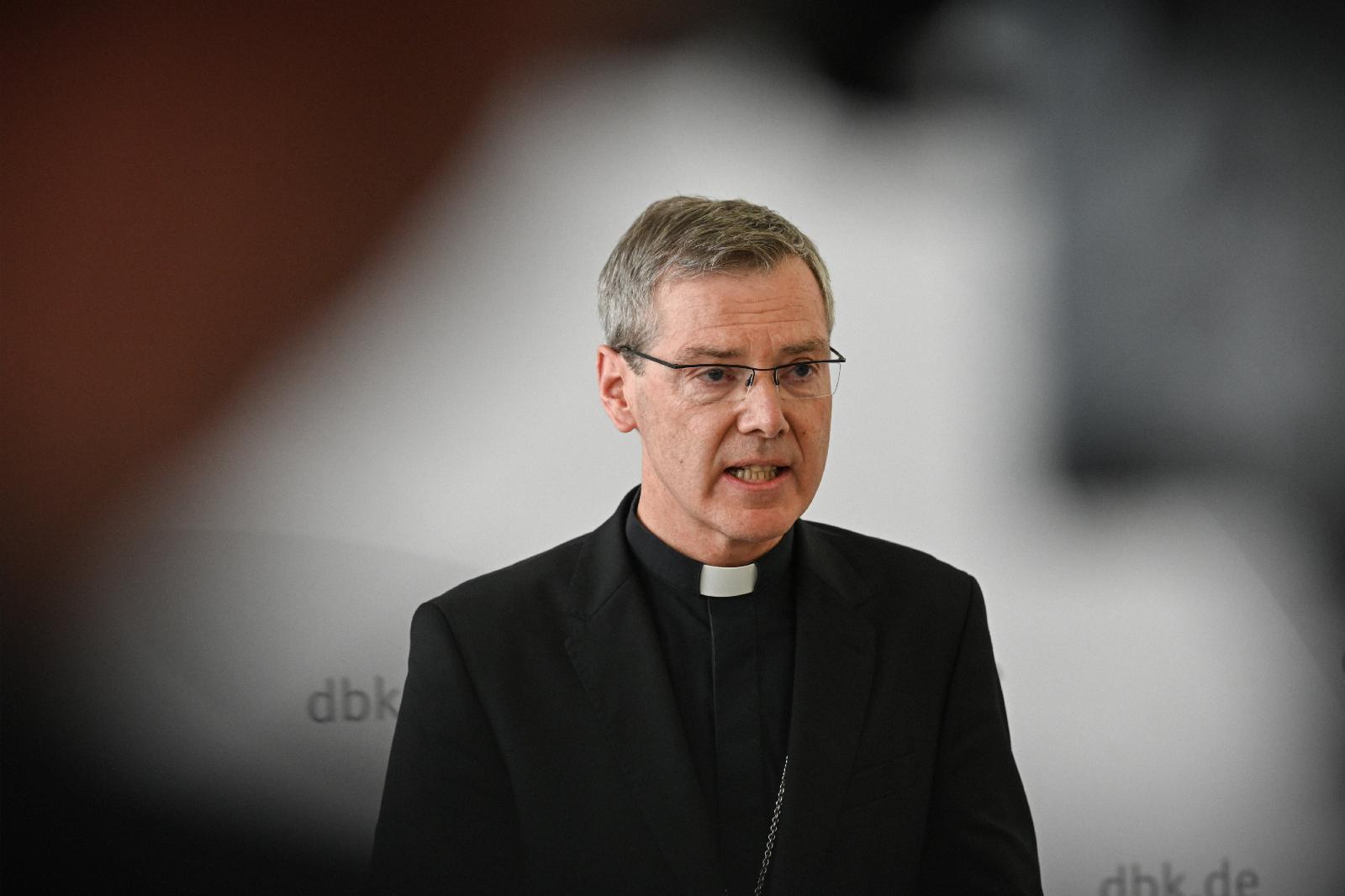
(OSV News) — The German bishops’ conference announced that it has elected Bishop Heiner Wilmer of Hildesheim as its next president.
He will serve as president for a six-year term, succeeding Bishop Georg Bätzing of Limburg, who chose not to seek reelection during the conference’s Feb. 23-26 spring plenary assembly in Würzburg.
Bishop Wilmer has supported Germany’s controversial Synodal Way reforms, including blessings for same-sex couples and expanded roles for women.
Gratitude to fellow bishops
At a press conference after his election Feb. 24, Bishop Wilmer expressed his gratitude to his fellow bishops for their trust and to Bishop Bätzing for leading “our conference in difficult times.”
Addressing German Catholics in the country, the new president of the German bishops’ conference said they were the “living face of the Church” and said faith was a “source of strength” that provides “support and connects generations.”
“Pope Francis made clear to us that the Gospel is joy; a joy that sustains and moves us. Pope Leo (XIV) continues this path with spiritual clarity,” he said. “The worldwide synodal process has shown us how valuable it is to listen together. Synodality remains a spiritual attitude: journeying together, sharing responsibility, bearing decisions together.”
Survivors of clergy sex abuse
Bishop Wilmer also addressed victims and survivors of clergy sexual abuse, acknowledging that “their voices carry weight.”
“Every step of coming to terms with the past gains depth and truth through their testimony,” the bishop said. “Listening and reliability shape this path. In this way, a space can emerge in which dignity is protected and trust can grow anew.”
Bishop Wilmer was ordained a priest of the Congregation of the Sacred Heart Fathers, or Dehonians, in 1987. After serving as a provincial of his congregation in Bonn and Rome, he was appointed bishop of Hildesheim by Pope Francis in 2018.
He drew criticism a few months after being made a bishop for comments he made against the Catholic Church’s approach toward abuse. In an interview with the German newspaper Kölner Stadt-Anzeiger, Bishop Wilmer said he believed that “abuse of power is in the DNA of the Church.”
‘Structures of evil’ within church
He also said that Catholics “must abandon this notion” that the Church is entirely pure and spotless because there are “structures of evil” within it, according to the Bonn-based Katholisch.de online news agency.
Cardinal Rainer Maria Woelki of Cologne responded to Bishop Wilmer’s statement, saying that “if that were the case, then I would have to leave the Church.”
While countering Bishop Wilmer’s assertion, Cardinal Woelki acknowledged that “for far too long, we did not believe the victims and that for far too long we did not consider such a thing possible. This is a grave guilt that we have incurred.”
Commission for Social and Societal Issues
Prior to his election, Bishop Wilmer served as chair of the bishops’ conference’s Commission for Social and Societal Issues as well as the Commission for Justice and Peace.
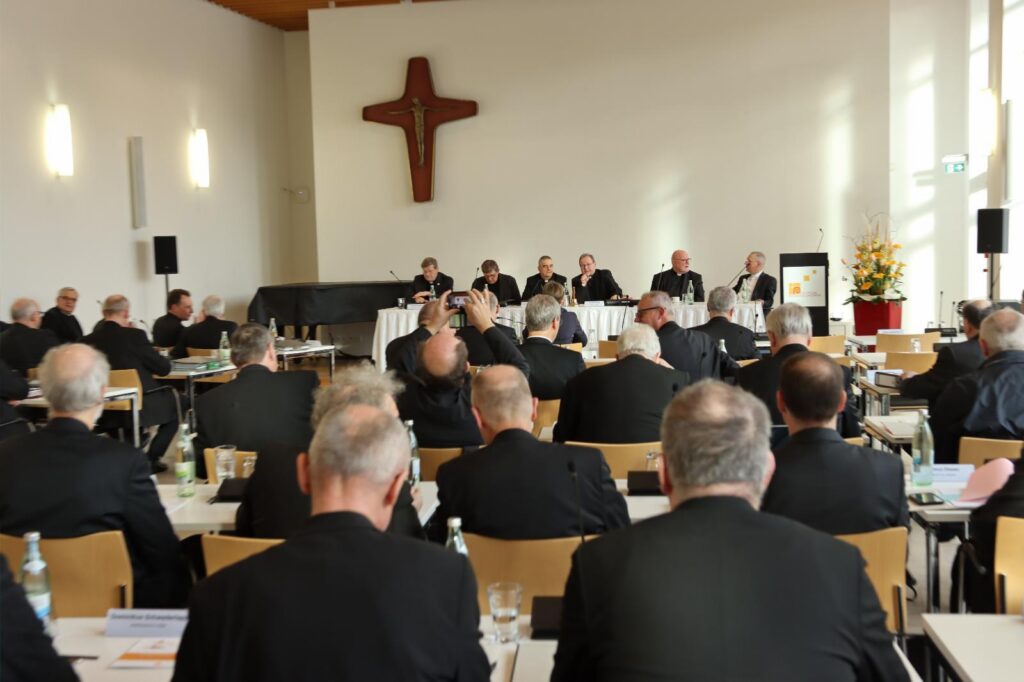
The new bishops’ conference president has also been a strong supporter of the Synodal Way, a reform process established in response to a 2018 report known as the Mannheim, Heidelberg and Gießen study, or MHG, a comprehensive investigation into clergy sexual abuse in Germany from 1946-2014.
The Synodal Way’s push for revising established church teachings on homosexuality, women’s ordination and priestly celibacy prompted concerns by bishops around the world that it would set a dangerous precedent that would ultimately break German Catholics away from the universal Church.
Synodal Way’s proposals
Bishop Wilmer has spoken in favor of allowing blessings for same-sex couples, which was among the Synodal Way’s proposals. In a 2023 letter addressed to the faithful of his diocese, the bishop said that it had become clear “that we need significant changes in sexual morality within the Catholic Church.”
“It is very important to me that LGBTQ people receive pastoral, spiritual, and liturgical accompaniment,” he wrote. “I welcome the fact that the Synodal Way advocates establishing a working group to develop guidelines for blessing ceremonies for same-sex couples as well as for divorced and remarried couples.”
In the past, he has also advocated for women’s ordination. According to German radio station Domradio, Bishop Wilmer said, “Women urgently need to assume leadership and positions of responsibility.”
Women’s ordination issue
“We can no longer simply say: The question of whether women should be admitted to ordination is settled. I trust in the Holy Spirit on this,” he said in a 2019 interview with German newspaper Süddeutsche Zeitung.
In December, the Vatican published a seven-page synthesis report from the “Study Commission on the Female Diaconate,” which voted against ordaining female deacons and deferred the issue to “further theological and pastoral study.”
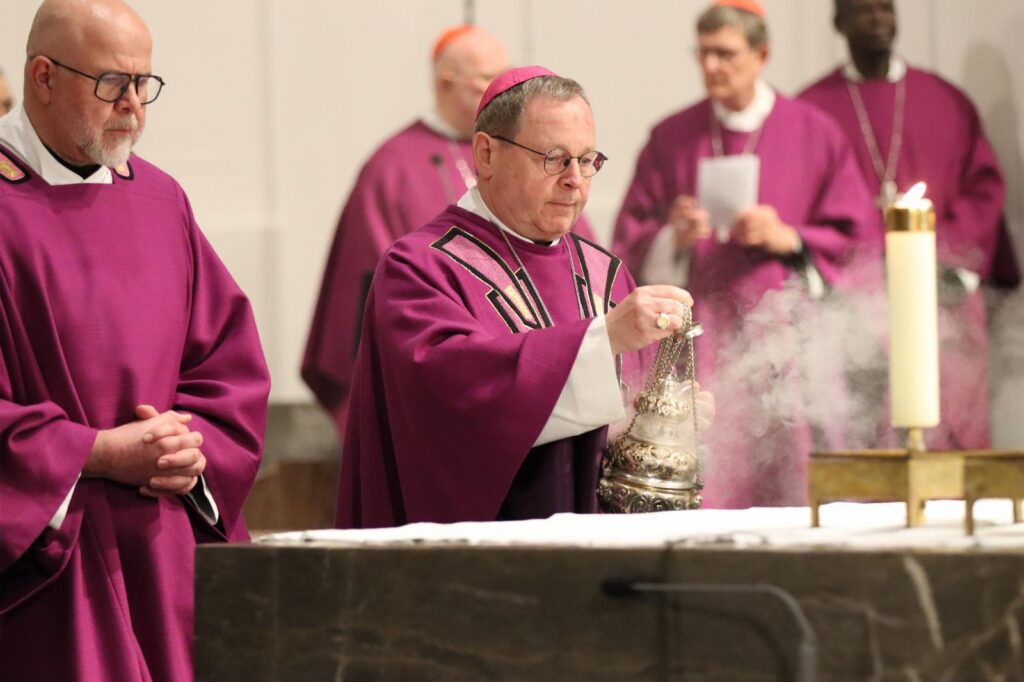
At the press conference, Bishop Wilmer was asked what he would like to “say to women in the Church” and those hoping for change. However, his response was cut from the video published on the German bishops’ conference YouTube page.
In response to another journalist, who asked about his 2019 remarks regarding women’s ordination, the bishop did not respond directly about his remarks and instead welcomed “the fact that the global Synod (of Bishops) has placed the topic of women in ministries and services on the agenda.”
‘Convinced Holy Spirit is at work’
“I remain convinced that the Holy Spirit is at work today as well. I look forward to the surprises of the Holy Spirit,” he said before concluding the press conference.
Among those most concerned by the direction the Synodal Way was taking was Pope Francis, who had criticized the path the German bishops were taking.
In a 2023 interview with The Associated Press, the late pontiff said Germany’s synodal process was being led by the “elite” and warned that it was guided by ideological principles rather than the Holy Spirit.
“When ideology gets involved in church processes, the Holy Spirit goes home, because ideology overcomes the Holy Spirit,” he said.
Junno Arocho Esteves is an international correspondent for OSV News. Follow him on X @jae_journalist.
