


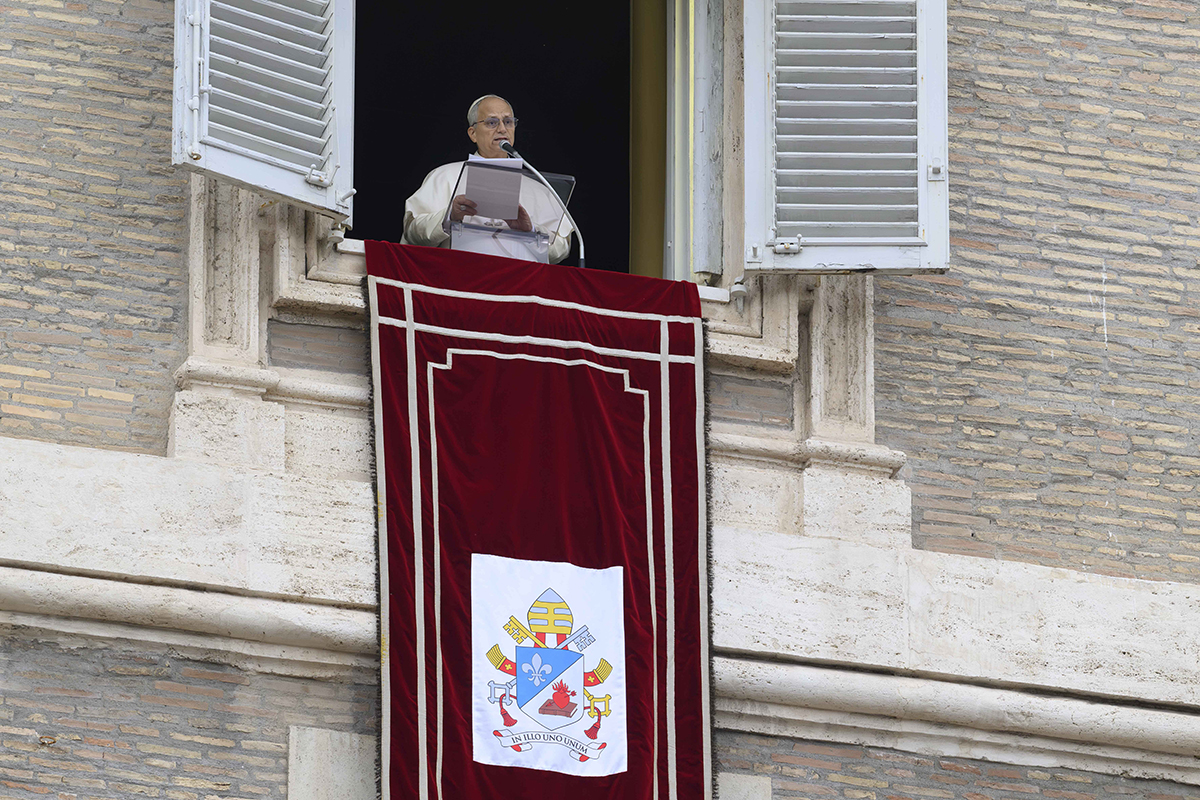
VATICAN CITY (OSV News) — This is the text of Pope Leo XIV’s Angelus address given Jan. 18, at St. Peter’s Square.
Dear brothers and sisters, happy Sunday!
Today’s Gospel reading (cf. Jn 1:29-34) speaks to us about John the Baptist, who recognized Jesus as the Lamb of God, the Messiah, proclaiming: “Behold, the Lamb of God, who takes away the sin of the world!” (v. 29). He adds: “I came baptizing with water, that he might be revealed to Israel” (v. 31).
John recognized Jesus as the Savior; he proclaimed Jesus’ divinity and mission to the people of Israel and then stepped aside, having completed his task, as his words attest: “After me comes a man who ranks before me, for he was before me” (v. 30).
The Baptist was a man whom the crowds dearly loved, to the point that he was even feared by the authorities in Jerusalem (cf. Jn 1:19). It would have been easy for him to exploit this fame; instead, he did not succumb to the temptations of success and popularity. Before Jesus, he recognized his own littleness and made space for Jesus’ greatness. John knew that he was sent to prepare the way of the Lord (cf. Mic 1:3; Is 40:3), and when the Lord came, with joy and humility he acknowledged God’s presence and stepped out of the spotlight.
How important his witness is for us today! Indeed, approval, consensus and visibility are often given excessive importance, to the point of shaping people’s ideas, behaviors and even their inner lives. This causes suffering and division, and gives rise to lifestyles and relationships that are fragile, disappointing and imprisoning. In truth, we do not need these “substitutes for happiness.” Our joy and greatness are not founded on passing illusions of success or fame, but on knowing ourselves to be loved and wanted by our heavenly Father.
The love of which Jesus speaks is the love of a God who even today comes among us, not to dazzle us with spectacular displays, but to share in our struggles and to take our burdens upon himself. In doing so, he reveals to us the truth about who we are and how precious we are in his sight.
Dear friends, let us not allow ourselves to be distracted from the Lord’s presence in our midst. Let us not waste our time and energies chasing after appearances. Rather, let us learn from John the Baptist to remain vigilant, to love simplicity, to be sincere in our words, to live soberly, and to cultivate a depth of mind and heart. Let us be content with what is essential and make time each day, when possible, for a special moment to pause in silence to pray, reflect and listen — in other words, “to withdraw into the desert,” in order to meet the Lord and remain with him.
May the Virgin Mary, model of simplicity, wisdom and humility, help us in this resolve.
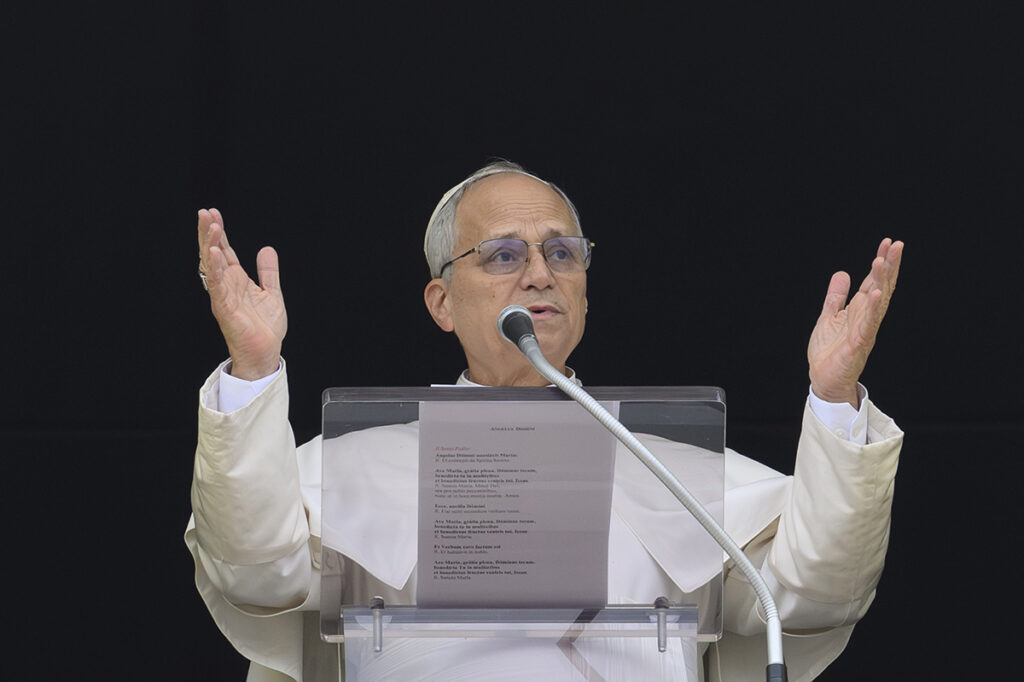
After the Angelus
Dear brothers and sisters,
Today marks the beginning of the Week of Prayer for Christian Unity. The origins of this initiative date back two centuries, and Pope Leo XIII greatly encouraged it. Exactly one hundred years ago, “Suggestions for the Octave of Prayer for Christian Unity” were published for the first time. This year’s theme is drawn from St. Paul’s Letter to the Ephesians: “There is one body and one Spirit, just as you were called to the one hope of your calling” (4:4).
The prayers and reflections were prepared by an ecumenical group coordinated by the Armenian Apostolic Church’s Department of Interchurch Relations. During these days, I invite all Catholic communities to deepen their prayers for the full, visible unity of all Christians.
Our responsibility for unity must be accompanied by a steadfast commitment to peace and justice in the world. Today, I would like to recall in particular the great suffering of the people in eastern Democratic Republic of the Congo. Many have been forced to flee their country — especially to Burundi — due to violence, and they are facing a serious humanitarian crisis. Let us pray that dialogue for reconciliation and peace may always prevail among the parties in conflict.
I would also like to assure the victims of the recent floods in southern Africa of my prayers.
I extend a warm greeting to all of you, Romans and pilgrims!
I am pleased to greet the group from the Piggot School in Wargrave, England, as well as the Fratres group from the parish community of Compitese. I also greet the faithful from various countries, families and associations. Thank you for your presence and your prayers!
I wish all of you a happy Sunday.
