


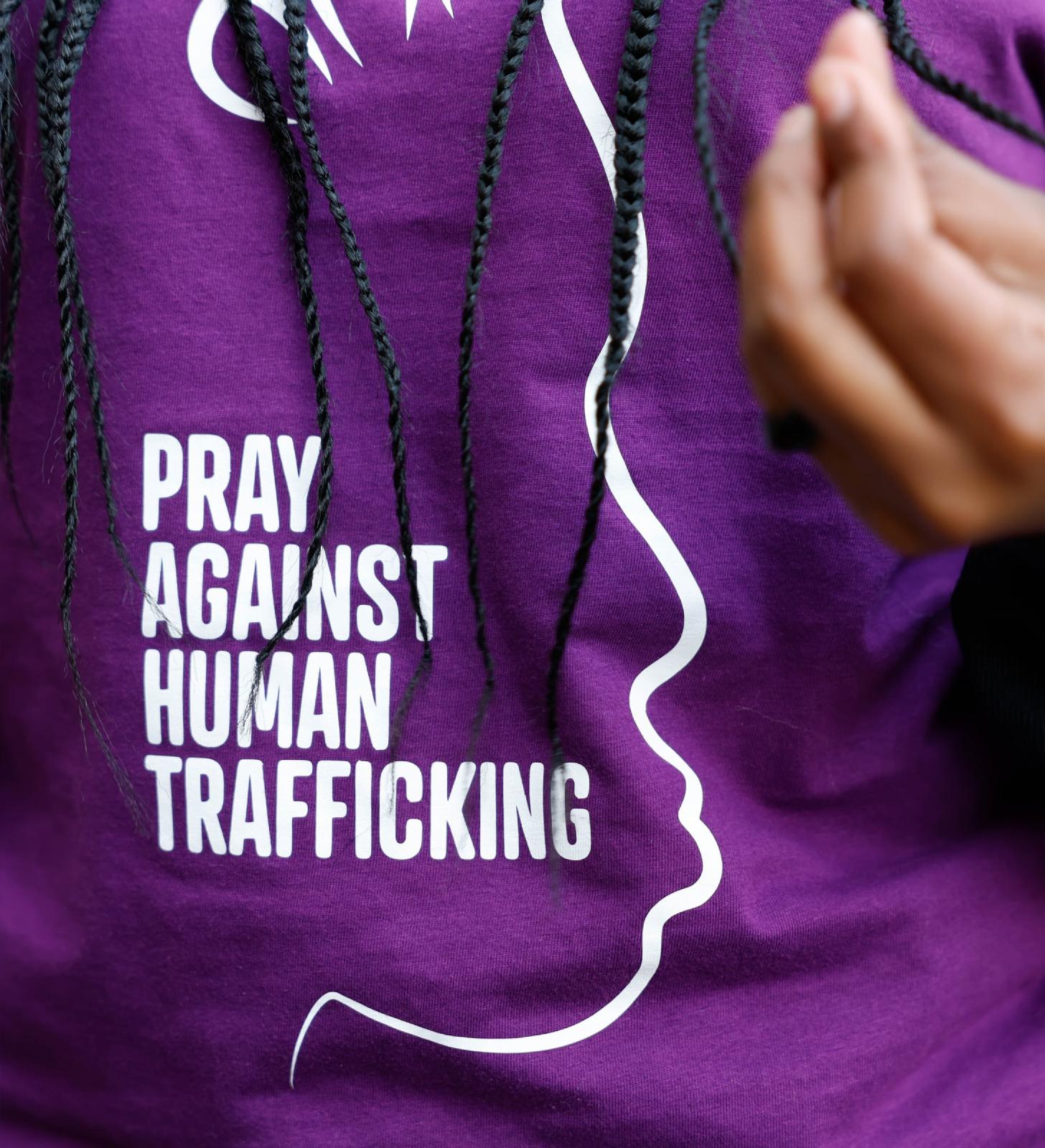
WASHINGTON (OSV News) — Efforts to combat human trafficking have languished in the first year of the second Trump administration and their revival requires bipartisan support, according to five former diplomats who served as ambassadors-at-large to combat human trafficking.
Speaking on a panel at the Columbus School of Law at The Catholic University of America Jan. 22, diplomats from the previous four presidential administrations largely did not directly criticize the current administration, but they expressed concern over resources that have been redirected away from anti-human trafficking efforts and the impact of that loss on the international humanitarian crisis.
Former ambassadors speak on anti-trafficking panel
Luis C.deBaca, ambassador-at-large during the Obama administration from 2009 to 2014, praised major policy strides, especially the 26-year-old Trafficking Victims Protection Act, that combatted trafficking in the past, but said, “We are at a point when that kind of consensus is at risk.”
The current administration “seems to respect power and only power,” he continued. “I think we have the moral case to make on slavery and trafficking. Whether (state) governors respond remains to be seen.”
The panel discussion, titled “Global Anti-Human Trafficking Movement at a Crossroads,” was held as part of the university’s observance of January as National Human Trafficking Prevention Month. The event was co-sponsored by the law school’s Bakhita Initiative for the Study and Disruption of Modern Slavery and the Immigration Law and Policy Initiative, with CUA’s departments of global studies and politics.
Panelists included C.deBaca; Mark Lagon, who served under the Bush administration from 2007–2009; Susan Coppedge, who served under the Obama and first Trump administrations, 2015-2017; John Cotton Richmond, who served under the first Trump administration, 2018–2021; and Cindy Dyer, who served under the Biden administration, 2023–2025.
All held the title and role of “ambassador-at-large to monitor and combat trafficking in persons,” who leads the Office to Monitor and Combat Trafficking in Persons in the U.S. State Department and reports directly to the secretary of state.
The second Trump administration has not yet named an ambassador for human trafficking. Coppedge noted that during President Donald Trump’s first term, his daughter and close adviser Ivanka Trump persistently elevated the issue.
Since Trump’s second term began in January 2025, however, funding and human resources to continue the work have received deep cuts. The Office to Monitor and Combat Trafficking in Persons, created in 2000 as part of the Trafficking Victims Protection Act, was cut by more than 70% and merged into another bureau. The State Department also ended 69 international programs aimed at combating human trafficking, child labor and forced labor, all considered modern slavery.
Beyond the State Department, initiatives on human trafficking were cut back at the departments of Justice, Labor, Health and Human Services, and Homeland Security.
Combatting trafficking a bipartisan issue
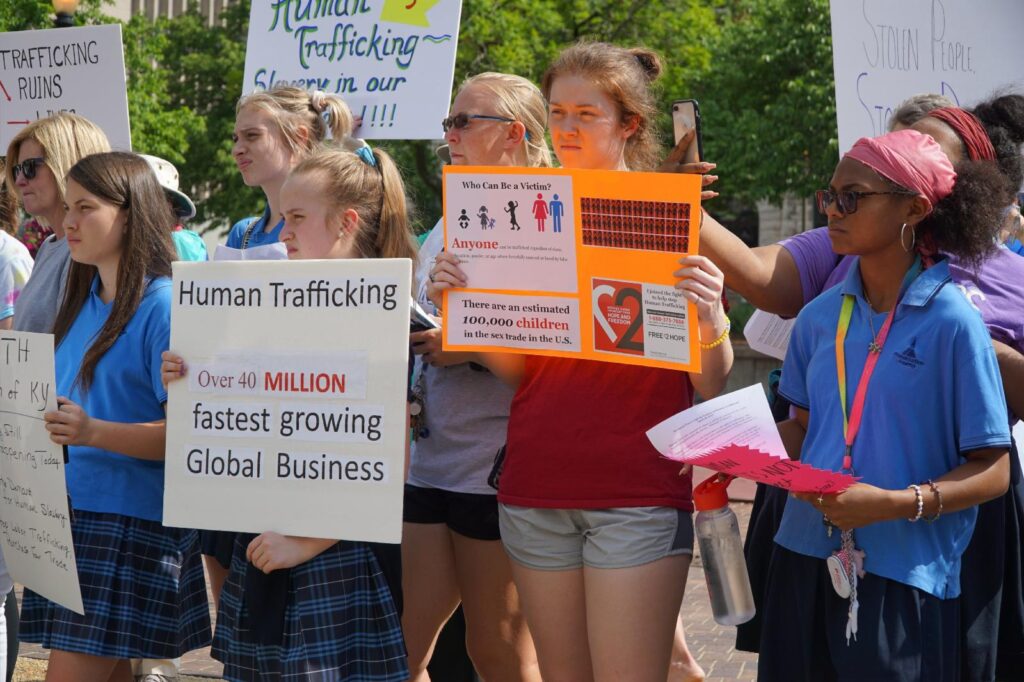
The panelists discussed ways to persuade the State Department to alter its course and to restore bipartisan consensus.
“When the Trafficking in Persons office was being cut, no one in Congress was running around screaming, and there was a time when someone would be doing it,” said Lagon, who is now chief policy officer for Washington-based Friends of The Global Fund to Fight AIDS, Tuberculosis and Malaria. In the current political climate, “I feel like compromise is seen as weakness,” he said.
For holding traffickers to account and extended protection to the victims after the traffickers are prosecuted, “bipartisanship is crucial,” he said.
But political rhetoric is “one risk to progress. The knowledge that an undocumented immigrant could be a victim of human trafficking is under threat.”
C.deBaca, now a professor of practice at the University of Michigan Law School, noted the enormous change brought about by the Trafficking Victims Protection Act. “The idea that members of law enforcement of any country … would look at anything equal to prosecution is tectonic,” he said.
Dyer noted that when the State Department released its annual Trafficking In Persons report in September, it was three months behind schedule and required a hard push from advocates.
“I don’t know that we’re going to have one next year,” said Dyer, now chief program officer for the McCain Institute.
Coppedge said she was initially “thrilled” when U.S. Sen. Marco Rubio of Florida was nominated as secretary of state, since “he had always grilled ambassadors about human trafficking.” But, she said, “that interest on his part has not been sustained.”
Meanwhile, “we have always seen the anti-trafficking effort as bipartisan,” said Coppedge, now executive director of Georgia Legal Services.
“Funding priorities change with the seasons, and they’re going to change again,” said Richmond, now chief impact officer of Atlas Free and president of the Libertas Council.
But the structural changes in the State Department are “really concerning,” he continued. “I’m concerned about our ability to have enforcement.”
According to the International Labor Organization, some 27.6 million are trapped in a form of forced labor, and another 22 million in forced marriages.
Of those in forced labor, 39.4% are women and girls: 4.9 million in forced commercial sexual exploitation and 6 million in other economic sectors. Some 3.3 million, or 12%, are children, more than half of whom are commercially exploited for sex. Forced labor generates $236 billion in illegal profits annually.
