


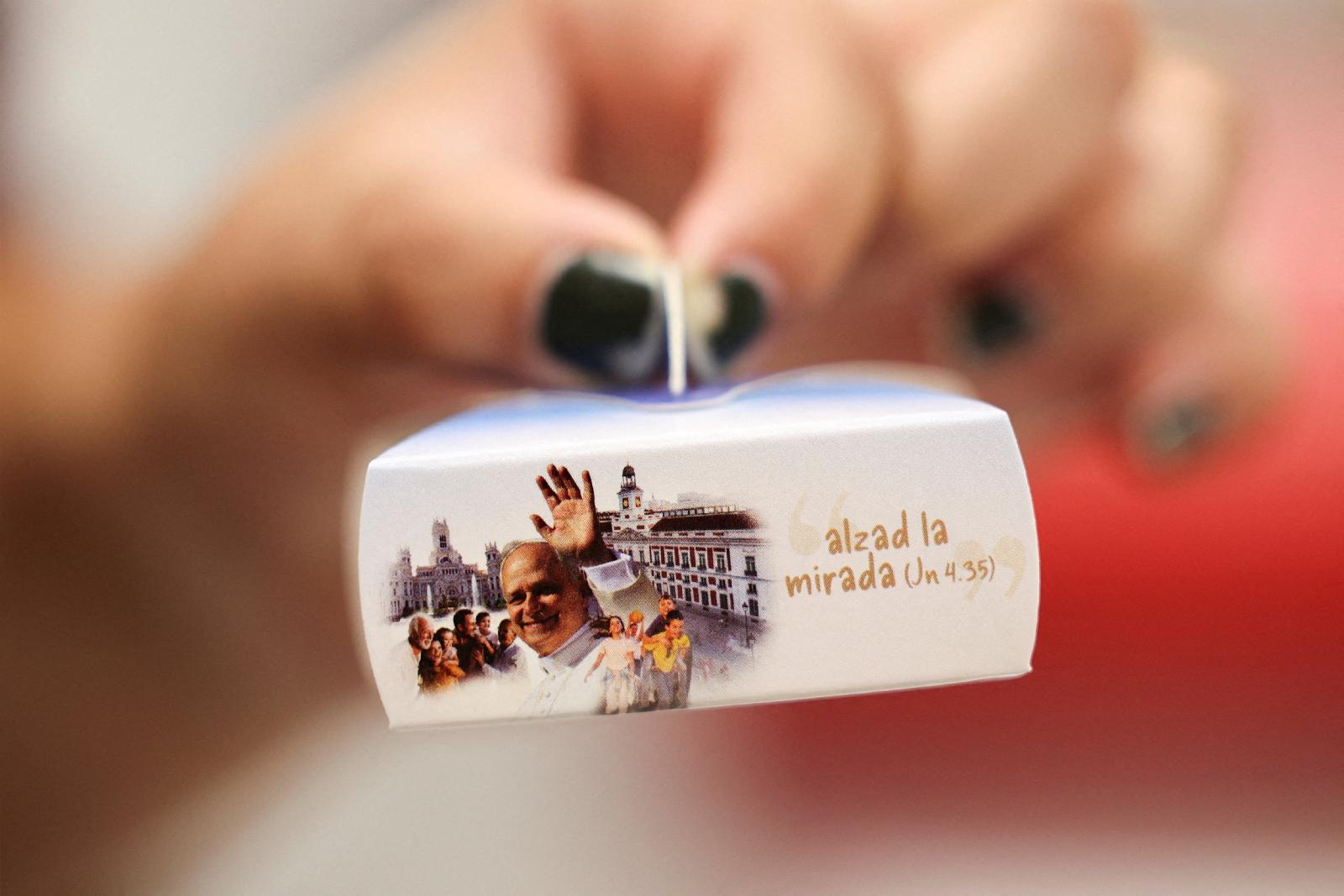
(OSV News) — In the weeks leading up to Pope Leo XIV’s first visit to Spain, organizers found themselves facing an unexpected problem: Too many people wanted to help.
Chefs offered to cook. Winemakers volunteered bottles from their cellars. Ham producers dispatched prized jamón ibérico to the nunciature — where the pope will live while in Madrid.
Singers asked for a chance to perform. Artists called looking for a role, and Antonio Banderas, famous for playing, among other things, Zorro, managed to snatch one.
“It’s really moving,” said Yago de la Cierva, one of the coordinators of the June 6-12 papal visit.
After 15 years without a papal visit, Spain is preparing to welcome Pope Leo the Spanish way: with flowers, faith, packed soccer stadium and, yes, jamón.
Traditions shaping Spanish Catholicism for centuries
The trip will take the first U.S.-born pope to Madrid, Barcelona and the Canary Islands. Along the way, he will encounter traditions that have shaped Spanish Catholicism for centuries, from Corpus Christi processions and flower carpets to ancient choirs and Marian devotions.
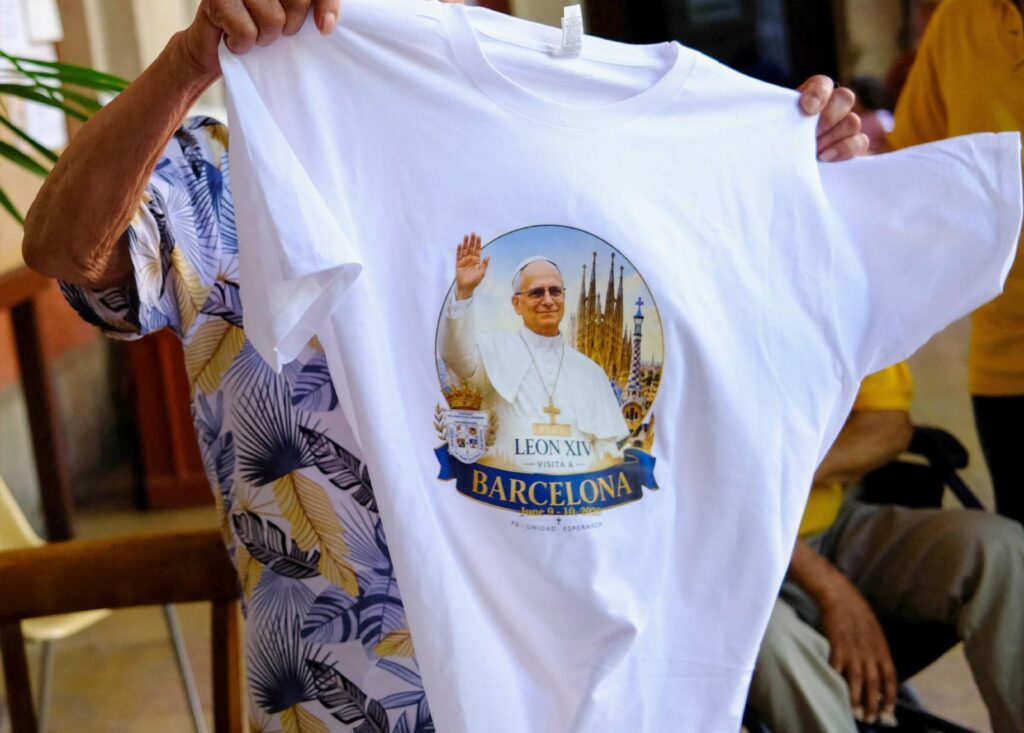
Yet organizers also hope the visit will reveal something less expected: signs of renewed spiritual curiosity among younger generations in one of Europe’s most secularized countries.
“It is true that the secularization process in Spain has been strong,” said Sara de la Torre, spokeswoman for the Archdiocese of Madrid. “But it is also true that year after year, the number of people participating in events such as public Holy Week processions and the Corpus Christi celebration here in Madrid has grown,” she told OSV News and a small group of reporters in Madrid ahead of the papal visit.
That blend of tradition and renewed interest will be on display from the moment the pope arrives.
One of Spain’s most historic corners
After landing in Madrid, Pope Leo will head directly to the Royal Palace, located beside the city’s cathedral and overlooking one of the most historic corners of the Spanish capital.
There, among his first public encounters will be one with an institution that embodies centuries of Spanish Catholic culture: the Escolanía of El Escorial.
The boys’ choir belongs to the Augustinian-run Royal Monastery of El Escorial, the monumental 16th-century complex built by King Philip II. The choir’s members receive both academic and musical education and sing regularly at liturgical celebrations throughout the school year.
For many of the boys, Pope Leo is not a distant figure.
Father Pedro Alberto Sánchez, organist and choirmaster at El Escorial, recalled that several choir members met the future pope years ago, when then-Father Robert Prevost greeted them in Rome after a concert.
“They know he is an Augustinian pope,” Father Sánchez said. “Many of them had the opportunity to greet him in Rome when he was still a priest, not even a cardinal.”
If the sounds of the visit will be distinctly Spanish, so too will its sights.
Thousands of banners in Vatican yellow and white
Across Madrid, thousands of banners in Vatican yellow and white have appeared on balconies and public buildings. The regional government has illuminated major landmarks in papal colors and transformed the historic Real Casa de Correos, located at the city’s famous Puerta del Sol, into an international media center for more than 2,000 accredited journalists.
The visual centerpiece of the Madrid portion of the visit, however, may come on Corpus Christi.
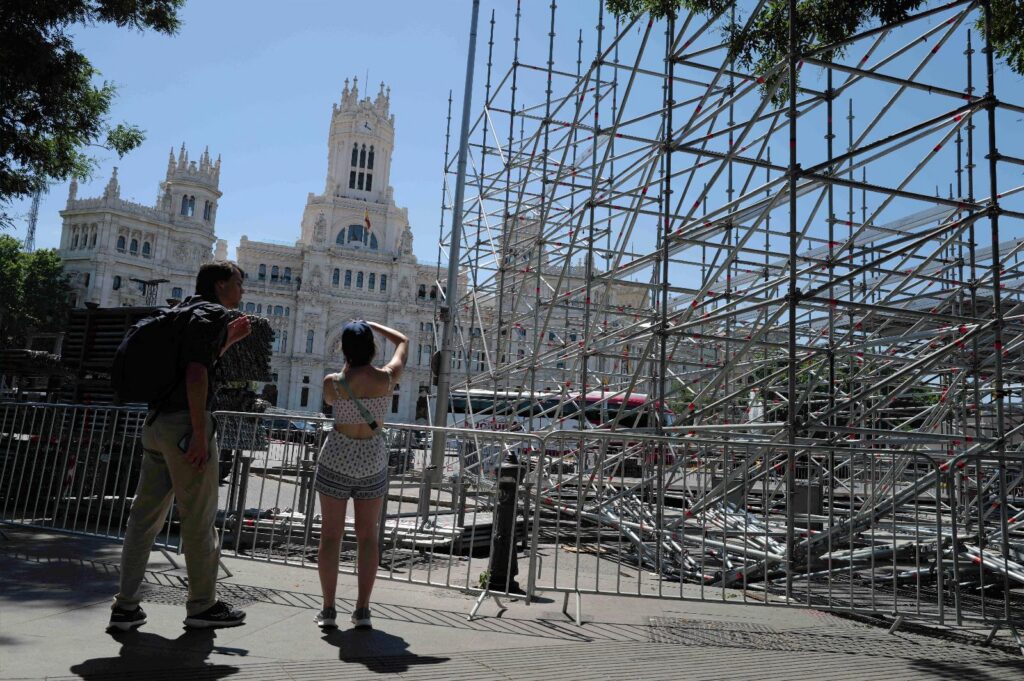
Following a Mass celebrated by Pope Leo in Plaza de Cibeles, the pope will walk through the streets of Madrid accompanying the Blessed Sacrament in a Eucharistic procession stretching about a mile and a half through the city center.
For Spaniards, Corpus Christi remains one of the country’s most beloved public expressions of faith.
“In Spain, Corpus Christi and Holy Week are celebrated on a grand scale,” de la Torre said. “These traditional feasts reveal how deeply rooted popular piety remains in Spanish culture.”
Transforming street into tapestry of floral art
To mark the occasion, artisans from the Galician town of Ponteareas will transform almost a square mile of Calle Alcalá into a tapestry of floral art.
Working alongside more than 160 volunteers, the alfombristas — artisans known for creating intricate flower carpets — will use over 30,000 carnations to construct 16 enormous floral carpets depicting Eucharistic and Christian symbols.
The tradition dates back more than two centuries and has become one of Spain’s most distinctive expressions of popular devotion.
Madrid’s Santiago Bernabéu stadium, home to Real Madrid, will provide another uniquely Spanish backdrop, where Pope Leo will meet thousands of Catholics from across the archdiocese in an event designed to showcase the many faces of the local Church.
Before the pope’s arrival, two of Madrid’s most beloved devotional images — Our Lady of Almudena and Jesus of Medinaceli — will enter the stadium on massive processional platforms similar to those carried through Spanish cities during Holy Week.
An orchestra and 1,000-member choir
Behind the pope, an orchestra and choir of 1,000 musicians and singers will provide the soundtrack, among them members of Hakuna, the youth movement founded in Spain that many Catholics credit with helping inspire renewed religious engagement among young adults.
More than 200,000 young people are expected for a Saturday evening vigil — the only event during the entire trip in which they will be the principal protagonists — with participants arriving from every Spanish diocese and from neighboring Portugal, combining music, testimony, prayer and conversation with the pope.
Following the vigil, churches throughout the city will remain open for prayer, confession and rest, while museums will welcome visitors as part of what organizers are calling a “White and Yellow Night.”
As a bocadillo to this cultural night will be the rosary prayed during the vigil, using some of the most iconic paintings of Madrid’s El Prado museum.
Yet, no matter how beautiful the events in Madrid might be, the most dramatic visual moment of the entire trip will certainly come in Barcelona, even if the photo of the trip will probably be the crowd for the Mass in the center of the Spanish capital.
Papal Mass at Sagrada Familia
On June 10, Pope Leo will celebrate Mass at the Basilica of the Holy Family — Sagrada Familia — coinciding with the anniversary of the death of Antoni Gaudí, the architect whose unfinished masterpiece has become one of Christianity’s most recognizable modern churches.
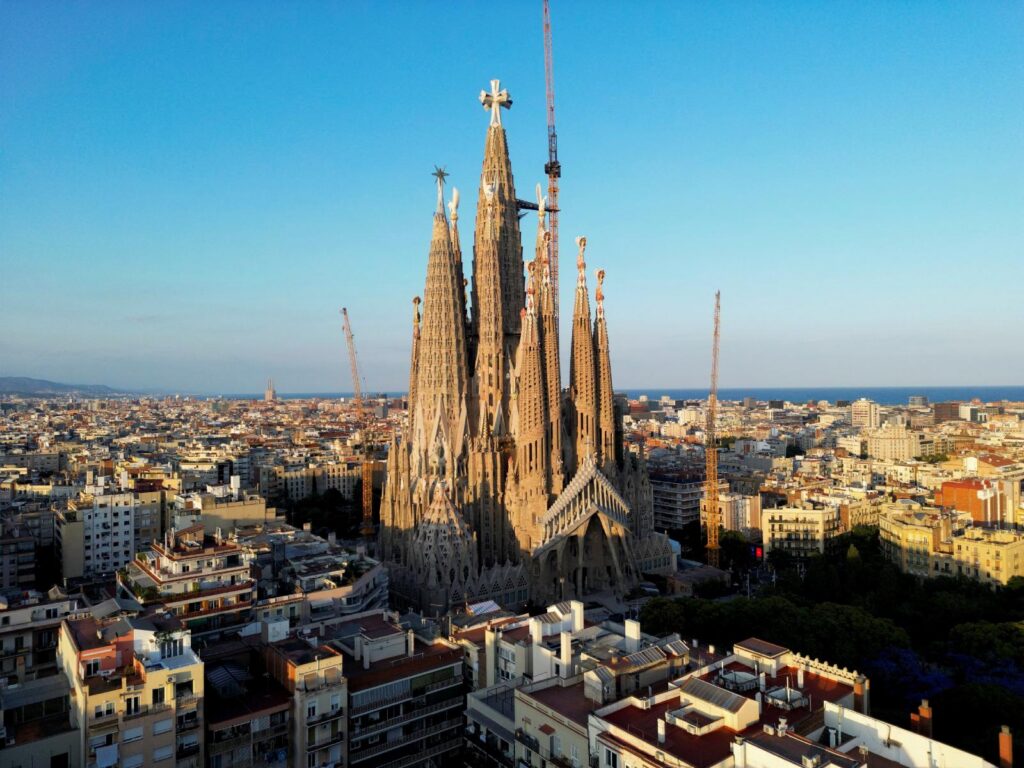
Known as “God’s Architect,” Gaudí was famously private, disliked publicity and rarely agreed to be photographed. Yet his work attracts millions of visitors each year and has become one of Europe’s most visited religious monuments.
During the visit, Pope Leo will bless the Tower of Jesus Christ, which at over 560 feet recently made the Sagrada Familia the tallest church in the world.
The ceremony comes amid continued interest in Gaudí’s cause for sainthood. Many Spanish Catholics had hoped the pope might beatify the architect during the trip, though no such announcement has been made.
Heavy focus on migration, hospitality
The final chapter of the visit, however, will offer a different image of Spanish Catholicism. In the Canary Islands, where thousands of migrants arrive each year after dangerous journeys across the Atlantic from Africa, Pope Leo’s schedule will focus heavily on migration and hospitality.
The symbolism will be difficult to miss.
During the closing Mass in Santa Cruz de Tenerife, three wooden cayucos — the boats used by migrants to reach the archipelago — will be anchored beside the altar. Organizers describe them as a silent but powerful reminder of one of the realities that has shaped life in the islands in recent years.
The pope will also visit migrant reception centers and meet with organizations accompanying new arrivals.
In neighboring Gran Canaria, one stop carries particular significance. Pope Leo will visit the Port of Arguineguín, which became an international symbol of the migration crisis that unfolded in 2020.
“It was known as the Pier of Shame,” local organizer Enélida Hernández said during a briefing on the visit. “We want that port to stop being the Pier of Shame and become the Port of Hope.”
The phrase captures something larger than the pope’s time in the islands. Across Spain, organizers have sought to present not only the country’s traditions, but also the social realities that continue to shape its Catholic identity.
Ines San Martin writes for OSV News from Madrid. She is the editor of Mission Magazine, a publication of the Pontifical Mission Societies USA.
