


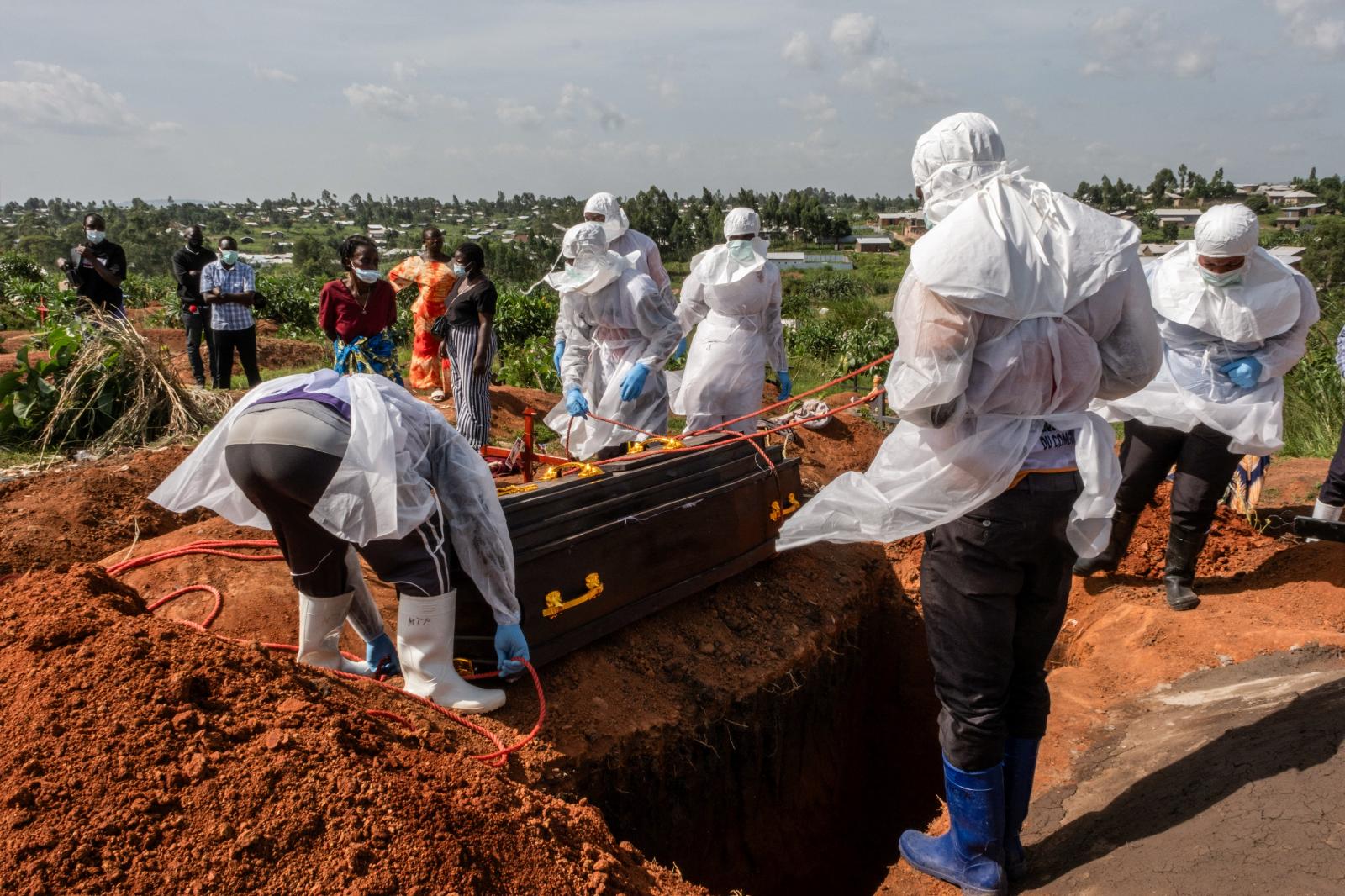
WASHINGTON (OSV News) — As international health officials warn the Ebola outbreak in central Africa had a “big head start,” Catholic Relief Services, the overseas relief and development arm of the Catholic Church in the U.S., is among the groups seeking to stop the spread of the highly fatal disease.
The outbreak in Congo, stretching into neighboring Uganda, is the first Ebola outbreak since the Trump administration shuttered the U.S. Agency for International Development, folding its remaining functions into the State Department, and withdrew from the World Health Organization last year.
According to the WHO, amid the outbreak of the rare Bundibugyo strain of Ebola — a variety of Ebola that has no medication or vaccine — they have confirmed 344 cases in Congo, including 60 deaths.
CRS mobilizing Catholic efforts in Congo
Rafaramalala Volanarisoa, CRS head of office in Congo, told OSV News in a June 3 interview that CRS “mobilized quickly” to help its local partners.
The group, she said, is raising funds for food and medical supplies as well as water.
“There is a huge need for water: water to clean, clean beds, clean wards, clean hands,” she said.
Critics of the Trump administration’s cuts to foreign aid have said the absence of USAID slowed detection of the virus and led to a more disjointed response among aid agencies on the ground. But during June 2 testimony before the Senate Foreign Relations Committee, Secretary of State Marco Rubio sparred with Sen. Cory Booker, D-N.J., over his argument that the U.S. is now less prepared to deal with disease outbreaks, saying, “I don’t agree with that assessment.”
While praising the efforts of entities on the ground, Volanarisoa said, “There are really some gaps” in the absence of USAID, particularly in disease surveillance data. But she said, despite a delayed start, the distribution of that data has started to improve.
But there are additional challenges to containing the Ebola outbreak, Volanarisoa said. They include cultural practices surrounding burial, as contact with victims’ remains must be limited to reduce transmission of the virus, the reduced capacity of treatment centers to provide routine care with Ebola patients in quarantine, as well as misinformation surrounding the virus and its risks.
CRS and clergy battle Ebola misinformation
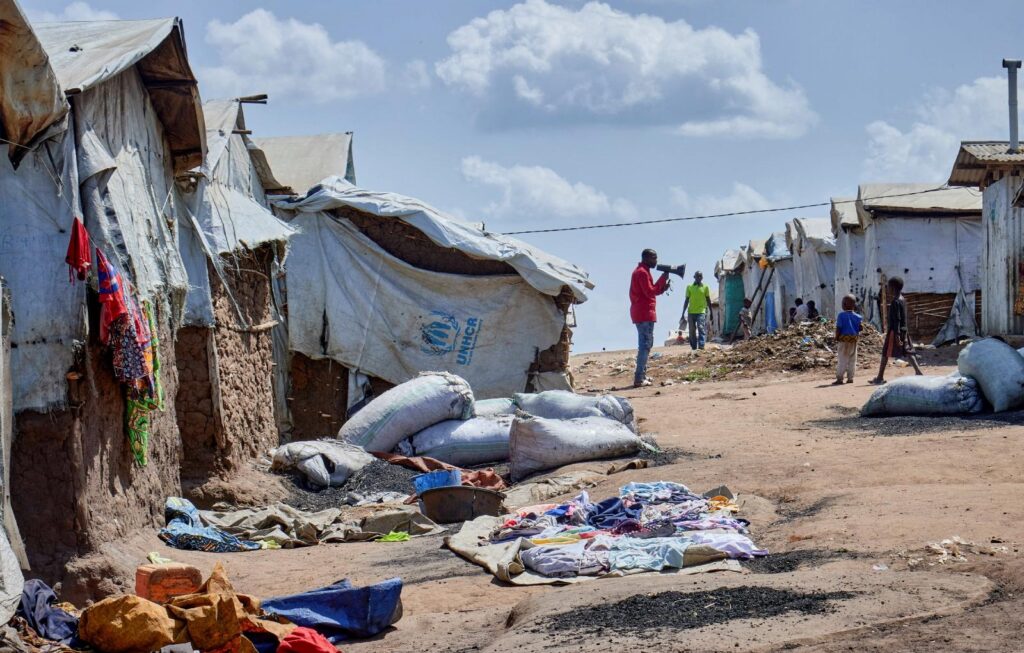
An Ebola burial team in Congo’s eastern South Kivu province was attacked June 1, the country’s health ministry said June 4. The attack forced the workers to abandon a coffin, sparking concerns of further transmission.
“Misinformation — the fact that people do not believe that there is an outbreak, they don’t believe that this is deadly,” Volanarisoa said, is among their biggest challenges.
“There’s a lot of mistrust of response actors,” she said. “They believe that it’s a fabricated disease for response actors to get money, and that this results from COVID; there are lots of monies that poured in the region. There are lots of new cars and people moving around, and they did not really see, they did not really have trust in those response actors.”
WHO Director-General Tedros Adhanom Ghebreyesus during a June 3 press conference also stressed that “building trust” is “critical” to bringing the outbreak under control.
“Community mistrust is a serious barrier,” Ghebreyesus said. “Some community leaders told me that they believe Ebola is not real.”
CRS has been in communication with the bishops and priests of local dioceses to ask them “to speak up and (communicate) in church that yes, Ebola is real,” Volanarisoa said.
Backlash over US Ebola quarantine policy
Meanwhile, plans for Americans exposed to Ebola to be quarantined in Kenya faced increasing backlash in that country.
In an open letter to Congress on June 1, a group of U.S. healthcare officials raised alarm about the plan by U.S. officials to transfer “American citizens with Ebola exposures requiring quarantine, isolation, or medical care” to a facility in Kenya or countries in the European Union rather than “to specialized treatment centers in the United States.”
“This policy raises profound clinical, ethical, operational, and legal concerns,” the letter said, noting that the U.S. has already “demonstrated that safe repatriation is both feasible and effective.” It warned the new policy risked undermining the Ebola response, stating, “If responders believe they may be denied access to optimal medical care should they become ill, many will understandably reconsider whether they can safely serve.”
The U.S. Embassy in Kenya said in a June 2 statement that as “the health security situation evolves, we are working in tandem with Kenya and international partners to enhance protocols for detection and spread of this deadly disease.”
“The bio-isolation facility in Laikipia is part of a holistic response to prevent spread of the disease and lessen health risks for the region as a whole; it does not pose risk to nearby communities,” the statement said.
In a June 3 Ebola Response Update issued by the State Department, a spokesperson said the department “in close coordination with the U.S. Centers for Disease Control and Prevention (CDC), and in partnership with the governments of the Democratic Republic of the Congo and Uganda, is continuing to mount a rapid and comprehensive response to the Ebola outbreak.”
“The Department’s highest priority remains protecting the health of the American people and preventing this Ebola outbreak from reaching our shores,” the memo said.
Kate Scanlon is a national reporter for OSV News covering Washington. Follow her on X @kgscanlon.
Editor’s note: More information on how to support CRS in fighting the Ebola spread can be found here.
