


(OSV News) — Catholic Charities has been responding to various disasters in the United States this summer and although this is not the most disaster-prone season in recent memory, it did have memorable events.
Catholic Charities USA in Alexandria, Virginia, has so far disbursed 15 grants nationwide since July 1, according to the social service agency’s senior director of disaster strategy and grants oversight, Kathleen Oldaker.
She said about half of those grants were for flood response and apart from floods, this summer the area her office has kept close watch over is the central Pacific, where the tiny American islands of Guam and the Northern Marianas sit.
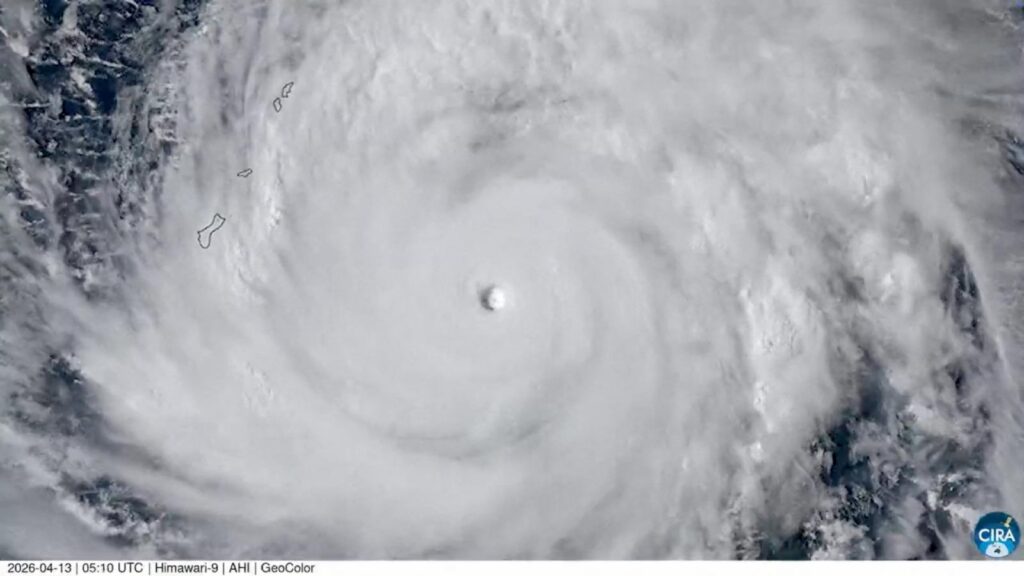
Oldaker told OSV News, “They’ve had an incredibly active typhoon season. They were hit with a super typhoon right away, before the season really technically starts, at the end of April, Super Typhoon Sinlaku.”
According to an eyewitness on National Public Radio, Sinlaku’s 150 mph winds knocked out power for more than a month and “devastated” Saipan Island, the Northern Marianas’ largest island and its capital. There were 17 reported deaths.
Powerful tornado in northeast Wisconsin’s Fox Valley
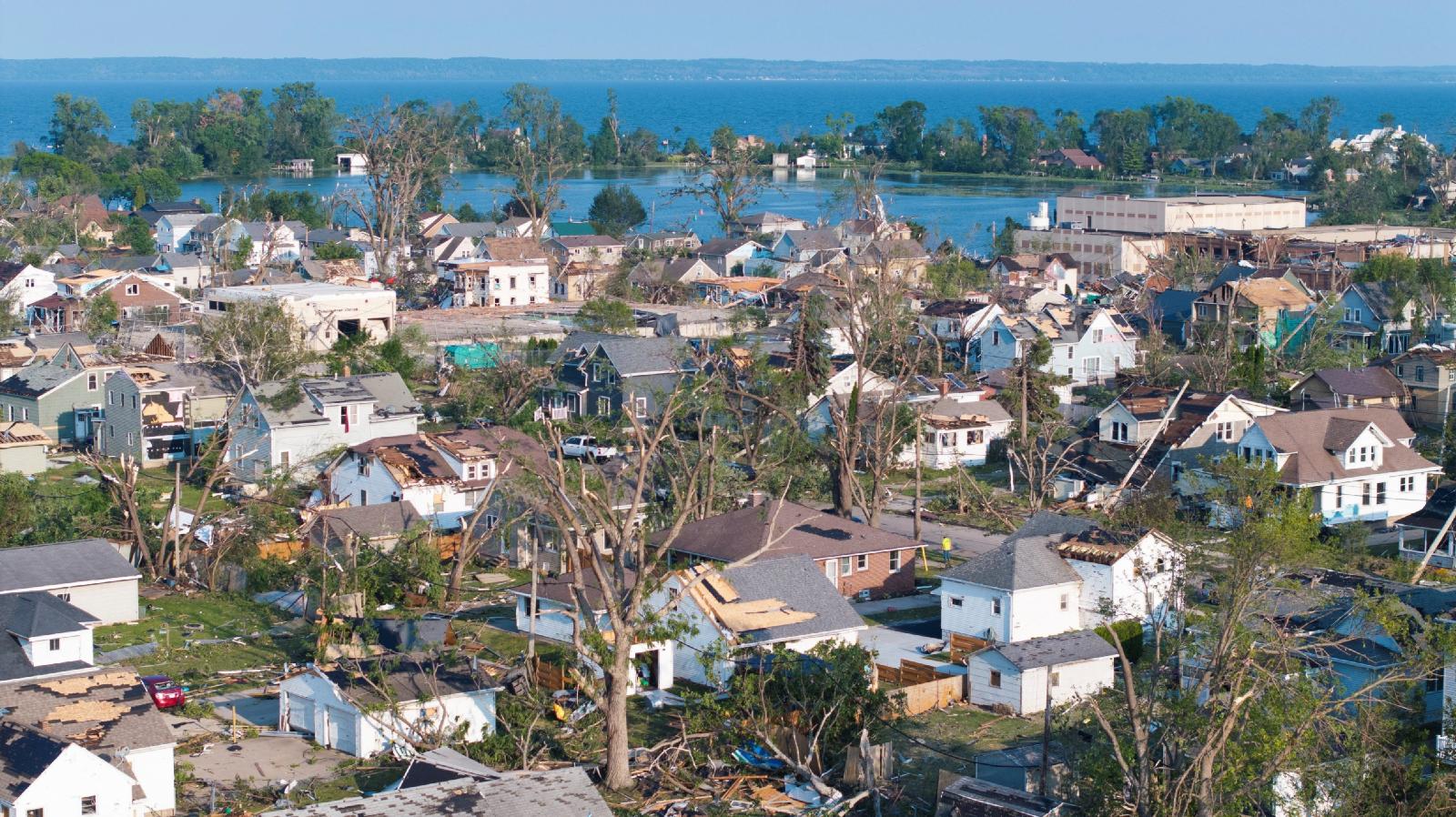
On the U.S. mainland, a powerful tornado a mile wide touched down and lingered for 20 minutes in northeast Wisconsin’s Fox Valley cities of Appleton, Menasha and Neenah July 27, leaving about 60 people injured. The area has about 100,000 residents.
Heavy thunderstorms and heat ushered in the twister, which knocked out power, overturned cars, tore off roofs and left nothing but outer walls of homes in some places, leaving downed power lines and trails of fallen tree branches in its wake.
The Wisconsin governor’s office said more than 2,300 residential properties in the area sustained damage varying in degree from complete destruction to minor problems.
“I’ve seen the devastation there,” said Karmen Lemke, executive director of Catholic Charities Green Bay. “The pictures really don’t do it justice.”
Lemke told OSV News her office is not typically a crisis response center but within 24 hours of the disaster, which she said was “by far the largest” the area had dealt with in recent years, it coordinated with a number of social service agencies and local parishes to get residents help.
50% of area’s homes became uninhabitable
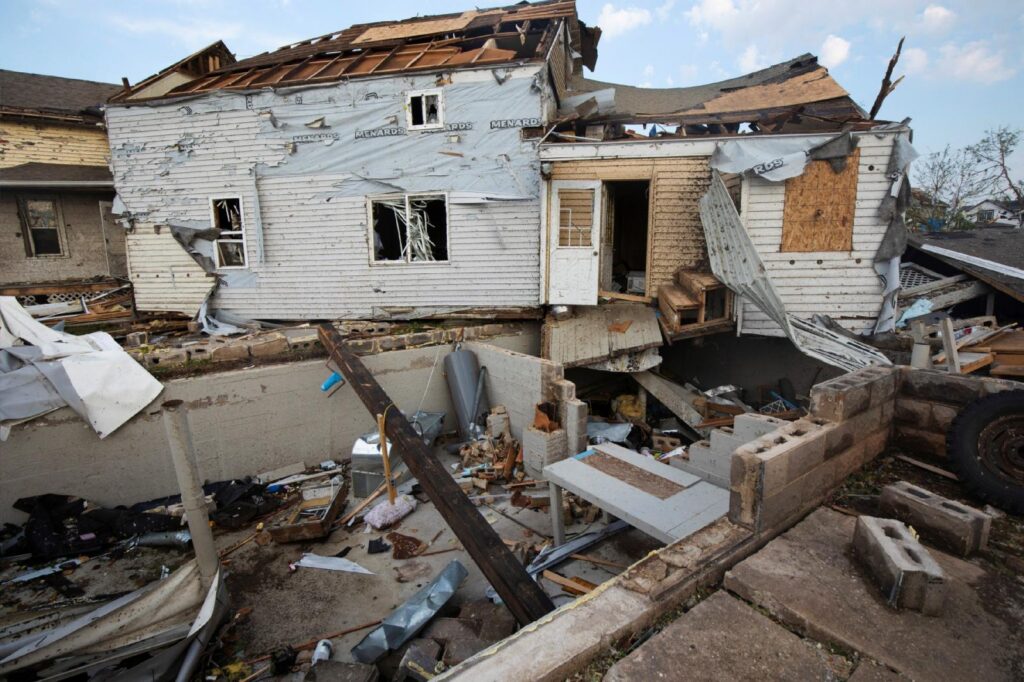
Apart from giving out gift cards for groceries, gas and other household items, the agency was focused on housing for residents where she said 50% of the affected area’s homes became uninhabitable.
Four weeks out Lemke said the agency has shifted gears from crisis response to long-term recovery. It was helping with rent and utilities, giving partial assistance on home insurance deductibles and getting people with no insurance temporary lodging.
The loss of homes was also dramatic in the Spokane, Washington, area, according to Rob McCann, executive director of Catholic Charities Eastern Washington. On Aug. 1 the eastern half of the state was hit by a “wildfire complex,” where several smaller wildfires came together. There were no deaths reported.
“I’ve been at Catholic Charities here in Spokane for 26 years and I’ve never seen anything like what I’ve seen this month,” McCann told OSV News in August. “We had 719 homes completely destroyed, another 65,000 people evacuated and returned to their homes. But their homes are heavily smoke-damaged, so they need carpets cleaned and pulled up or upholstery cleaned or replaced, walls cleaned. Lots of issues there. But the devastation is, entire neighborhoods are just wiped off the map.”
Within 2 hours of fire starting, agency took action
McCann said within two hours of the fire starting, the agency “sprung into action” first taking care of its employees who lost homes, including several who, with their families, lived in his house for about a week. His office secured temporary Airbnb shelter for 1,500 families. It also worked with the local Knights of Columbus, some of whom had to evacuate or lost their homes to the fires, who filled and distributed 200 backpacks with school supplies and packed and distributed 3,000 suitcases full of winter clothes.
Two case workers from Catholic Charities Hawaii were flown in to help in Spokane, after having worked the devastating 2023 fires on Maui. Catholic Charities USA also sent case workers and $176,000 in grant money for food, gas and grocery gift cards.
In West Virginia, the local Catholic Charities in the Diocese of Wheeling-Charleston, which covers the whole state, was dealing with the aftermath of significant flooding in mid-August. Powerful storms caused flash floods, mudslides and high winds, prompting Gov. Patrick Morrisey to declare a statewide emergency in all 55 counties of the disaster-prone state.
6 national disaster designations since April 2024
This recent disaster would be added to the local Catholic Charities’ long-term recovery work from tornados and floods since April 2024. In a little over two years, the federal government has declared six national disaster designations, according to Lora Pierce, the agency’s disaster services specialist. She said there are also nine events that did not receive the federal designation.
“We assist with everything in the housing repair aspect from roofs, the floors to whatever, because we’ve had floods. We’ve had tornadoes. We just had a gamut of storms. … We also assist with bridges and culverts,” she explained to OSV News.
Pierce said the appearance of tornados in the past several seasons has been surprising in her mountainous home state.
She said more than 1,100 residents affected by the latest flooding have applied for Federal Emergency Management Agency grants. And a major component of her agency’s long-term recovery work is securing case manager support to help them navigate the process of receiving the FEMA funding.
Catholic Charities Twin Cities, which is situated in a major metropolitan area also is not typically a first responder agency. However, Keith Kozerski, chief program officer, said this summer, its service area was blanketed by smoke from both Canada’s and northern Minnesota’s wildfires that brought dangerous air quality levels. The agency handed out 2,000 N95 masks to people who regularly drop by their multiple locations.
‘Clients have limited access to transportation’
“So many of our clients have limited access to transportation, and even if they’re using transportation, they probably have to walk some distance to and from where they are to the public transit,” he said. “They also are more likely to spend more time outside. So we wanted to make sure people could protect themselves.”
Kozerski said this is the third season in a row the agency has had to respond to dangerous smoke, particularly from Canadian wildfires.
Catholic Charities USA’s Kathleen Oldaker said the national agency’s main focus in handling disasters is “capacity building.”
“How do we build the capacity of the network so that they’re able to absorb that impact of a disaster in their community better,” she said. So for the rest of the summer, her office is “keeping an eye on fires, keeping an eye on our daily look at the National Hurricane Center … what could be forming both in the Atlantic and Pacific. And then also, there’s a lot of floods.”
Simone Orendain is an OSV News correspondent. She writes from Chicago.
