

MONTREAL (OSV News) — The contrast between Latin American-Caribbean and Canadian progress toward creating a synodal — or “listening” — Church could not have been starker than in two presentations Canada’s bishops heard during their Sept. 21-25 plenary in Montreal.
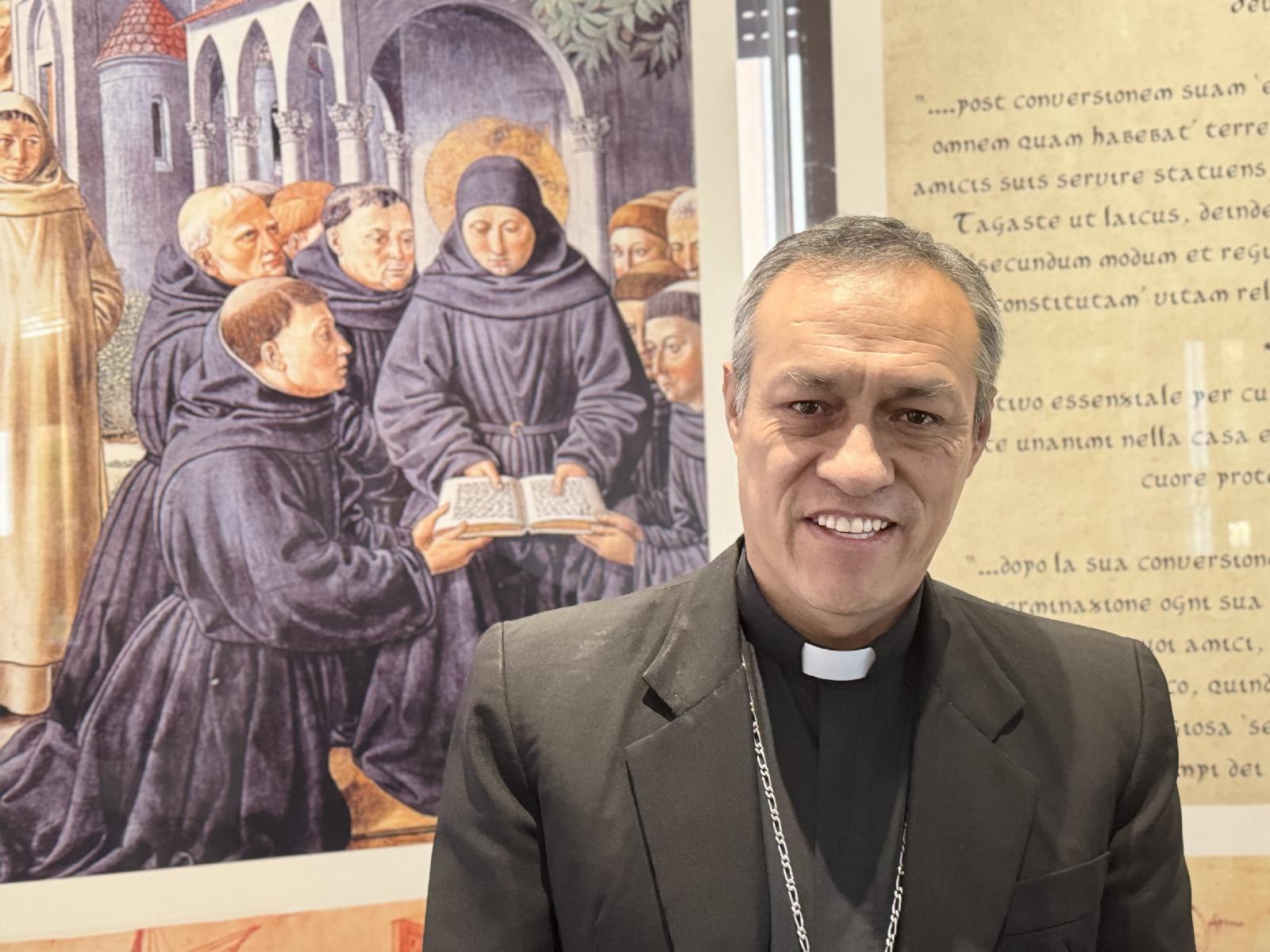
In a 55-minute keynote Sept. 22, Coadjutor Archbishop Bishop Lizardo Estrada Herrera of Cusco, Peru, secretary general of the Latin American and Caribbean Episcopal Council, known as CELAM, traced the roots of the region’s synodal development back 70 years to the organization’s founding in 1955.
Quebec’s Bishop Alain Faubert needed only 17 minutes for his “small update” during the Canadian Conference of Catholic Bishops‘ annual plenary meeting on activities of the Ad Hoc Committee on the Implementation of Synodality in the Church in Canada since 2021.
However, both Bishop Faubert and Archbishop Donald J. Bolen of Regina noted in thanking the CELAM secretary general for his work, the whole concept of synodality came from the Vatican to Canada, while in Latin America and the Caribbean it was an outgrowth of existing Church culture.
Synodal process has ‘grown organically for you’
“It feels like (CELAM bishops) were following instructions from the Holy See that really originated in your churches,” Archbishop Bolen told the Peruvian archbishop. “It’s a little different experience than for us (where) it feels a little more like something that’s come from the outside. We’re experiencing something that’s grown organically for you.”
In his presentation, Bishop Faubert told his fellow prelates. that “after the presentation of Msgr. Lizardo, the work of synodality in Canada will appear modest, but it’s the reality that has been given us. There are important phases coming in the next few months.”
Among the “must do” steps Bishop Faubert identified, he said another meeting of the ad hoc committee will take place on Oct. 15, five years almost to the day after the global synodality process was officially begun by Pope Francis.
Speed of adaptation aside, the Canadian and Latin American-Caribbean messaging about synodality was identical in stressing the necessity of transforming the Church by turning the concept into lived experience.
Synodality is meant ‘for the realization of evangelization’
“We can continue to talk about synodality, but the most important thing is to live, to experiment and to understand the Catholic dimension of this synodality,” Bishop Faubert said. “As Msgr. Lizardo said, the purpose of is not to be synodal for (the sake of) synodality. It’s for… realization of evangelization.”
Archbishop Estrada emphasized that purpose in two videos he showed tracing the historical development of CELAM from a conference of the Latin American episcopate in 1955 to a means of grappling with the question of how to deal with the region’s concrete realities following the Second Vatican Council.
A 1979 episcopal conference inaugurated by St. John Paul II on evangelization on the future of Latin America “reminded us that to evangelize means to look at the concrete faces of our peoples and recognize the presence of Christ in them,” Herrera said.
That paved the way for a dedication to increasing networks and “episcopal, ecclesial and pastoral relations across borders” and led to a 2007 conference under Benedict XVI, whose final document was presided over by then Cardinal Jorge Mario Burgoglio, the late Pope Francis.
Pope Francis’ challenge was to ‘imagine something new’
“When we presented a proposal for a future conference to (then) Pope Francis, his response was provocative: ‘Imagine something new.’ We dare to do so,” said the Peruvian archbishop, who was an auxiliary bishop of the Archdiocese of Cusco until Pope Leo XIV named him coadjutor bishop for the archdiocese Aug. 29.
By November 2021, a month after global synodality took shape at a meeting in Rome, CELAM had already wrapped up a “listening stage and synthesis” assembly that was in-person but also had about 70,000 people participating through digital media.
“The experience anticipated, in some way, the path that was subsequently taken regarding the synod process and synodality,” he said.
But the newness of the Church represented by synodality, Archbishop Estrada stressed, was not just a renaming of old governance and operational structures.
“The true novelty lay in the way of walking together. The ecclesial assembly sought to begin by listening to the people of God. It was a broad listening process that sought to reach the peripheries, and also beyond the Church’s own borders: different forms of participation, thematic forums, personal and community contributions, various modes of encounter.”
Process is ‘a true laboratory for synodality’
Archbishop Estrada called the process “a true laboratory for synodality” which meant that by October 2021 and the formal start of the Synod on Synodality, “the Church in Latin America and the Caribbean was not starting from scratch. It has already travelled a long and winding path (and) truly learned to listen deeply.”
The change activated, he said, went to the heart of the question underlying synodal listening itself. Time, he concluded, will tell how deeply the Church transforms in concrete ways through application of synodal approaches. But the first steps have been taken by learning the need to listen.
“Here we find one of the great transformations the synodal journey produced. The question was no longer just, ‘What does each person think?’ It began to be, “What is the Spirit saying to the Church when we begin listening together?'”
During their plenary, the bishops also discussed pastoral initiatives to explore in preparation for celebrations to mark the upcoming 500th anniversary of the apparitions of Our Lady of Guadalupe. Mary appeared to St. Juan Diego on Tepeyac Hill in 1531, which is part of modern-day Mexico City and the site of the Basilica of Our Lady of Guadalupe.
The bishops’ plenary agenda also included sessions on Indigenous relations, family life, and ministry to migrants and refugees and a Holy Hour with vespers for victims and survivors of sexual abuse.
Peter Stockland is publisher of The Catholic Register, Canada’s national Catholic newspaper based in Toronto. This story was originally published by The Catholic Register and distributed through a partnership with OSV News.
