


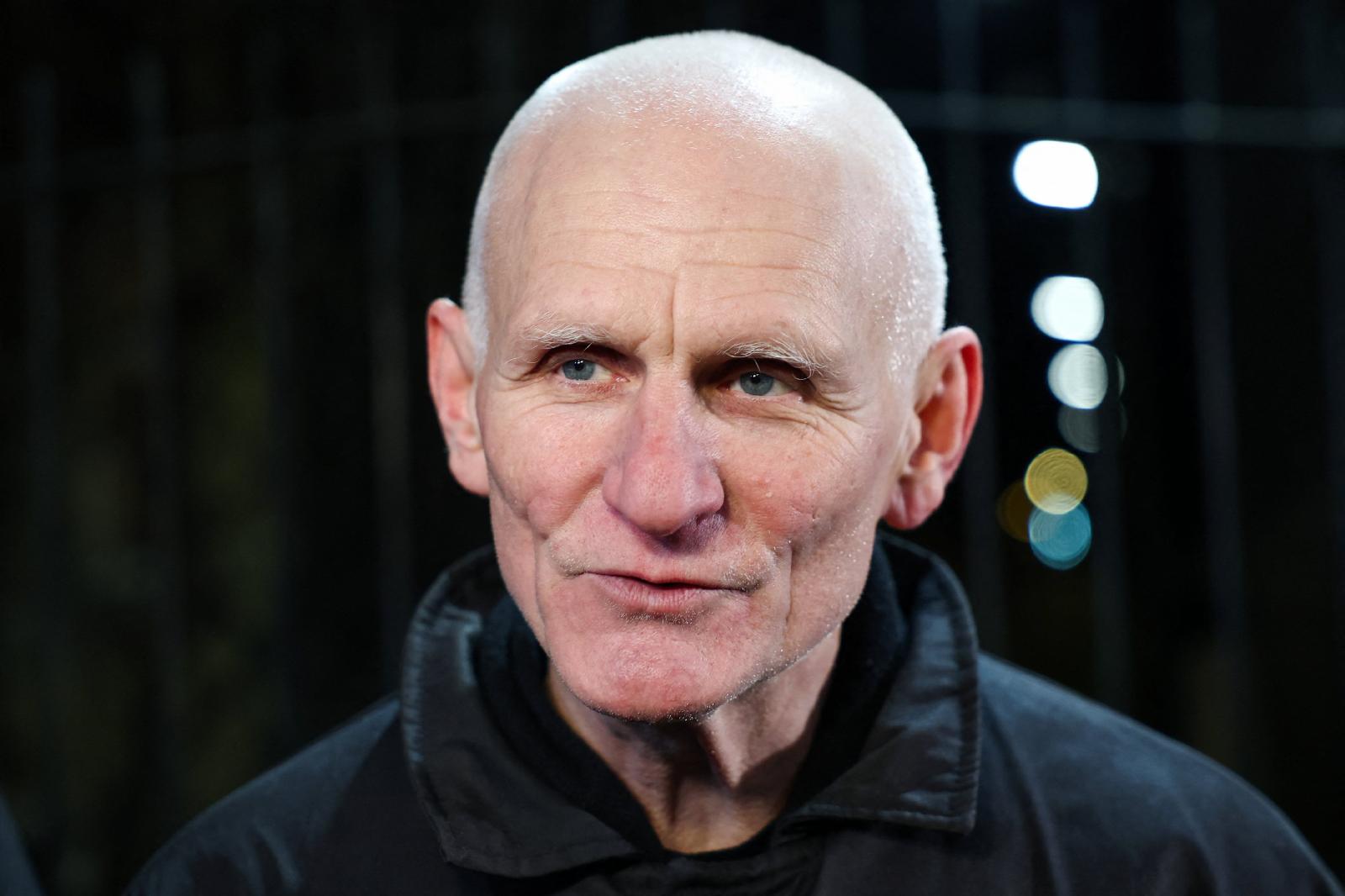
(OSV News) — Belarus’s foremost Catholic dissident has urged Church leaders not to ignore the plight of his country’s political prisoners amid a continuing crackdown on religious freedoms.
“Our own bishops and priests face harsh conditions, and I’m not judging them for their silence,” said Ales Bialiatski, who was awarded the Nobel Peace Prize while detained in 2022.
“But Western church leaders and Vatican diplomats should be helping more against current restrictions,” he said. “Although prisoners rarely hear what’s said and done on their behalf, it’s supremely important for them to know people remain concerned.”
Founder of Belarusian Catholic Assembly
The lay Catholic, who founded a Belarusian Catholic Assembly in the 1990s, spoke as the Greek Catholic Church faced possible liquidation after the closure of its parishes and as Father Anatoly Parakhnevich, a Catholic parish rector from Alkovichi in the Minsk region, began his second month under KGB arrest. The priest has been held since his March 16 arrest.
In an OSV News interview, Bialiatski said he was still receiving medical treatment after being released in December from a 10-year penal colony sentence for “smuggling” and “grossly violating public order.”
However, he added that he was actively monitoring the torture of fellow-victims of repression, and hoped to explain current needs to the pope at an upcoming Rome meeting. Bialiatski said he has been informed that Pope Leo XIV would like to see him, but the date has not been confirmed yet by the Vatican.
Meanwhile, another human rights campaigner told OSV News Belarusians were becoming less willing to provide information about victims of the regime of Aleksander Lukashenko.
Repression ‘more extensive and less visible’
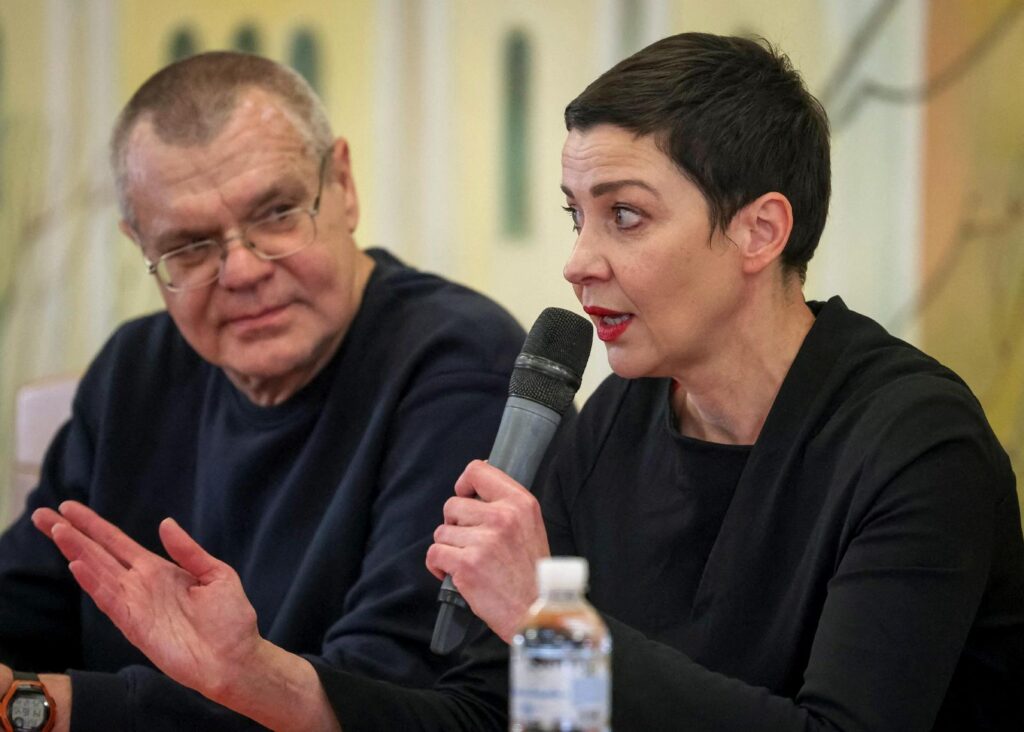
“Today, the repression is both more extensive and less visible, and affecting people with nothing to do with politics,” said Natallia Vasilevich, coordinator of Belarus’s exiled ecumenical Christian Vision organization.
“Their families are more afraid now of informing the human rights groups. Instead, they hope things will improve if they just keep quiet.”
Belarus’s Minsk-Mohilev Archdiocese notified clergy of Father Parakhnevich’s disappearance when he was arrested March 17 by masked KGB agents, who searched and sealed his church and presbytery, northwest of Minsk.
It added that “no official information” had been provided about the 65-year-old Polish-trained priest, who celebrated his 30th ordination anniversary in 2025, although parishioners reported he was being held at a pretrial detention facility, facing anti-state charges.
Vatican intervention in November
Vasilevich said she believed the priest’s arrest was connected with the case of his friend, Father Henrykh Akalatovich from nearby Valozhyn, who was freed from an 11-year “high treason” sentence following Vatican intervention in November and is currently in Rome with another released priest, Oblate Father Andrzej Juchniewicz.
She added that Belarus officials had continued acting against Father Akalatovich since his release, seizing his savings and his parents’ house and land, and said Father Parakhnevich could have been “taken as a hostage” to ensure Father Akalatovich remained silent.
Meanwhile, Bialiatski told OSV News he had long known Father Parakhnevich as a “sincere and conscientious priest” and viewed his detention as part of a “pattern of intense repression.”
‘Serve people honestly and genuinely’
“Far from being political, he’s always served people honestly and genuinely, speaking courageously about what he’s witnessed with his own eyes,” said the Nobel laureate, who is Catholic and who was released and deported to neighboring Lithuania Dec. 13, 2025, in exchange for a partial lifting of U.S. sanctions.
“Since this repression began, the Lukashenko regime has followed a policy of restricting the Catholic Church’s development. Father Parakhnevich’s arrest is just the latest sign of this.”
Catholics make up around a 10th of the 8.95 million inhabitants of Belarus, where Lukshenko began a seventh term as president in January 2025, after 31 years in power, and claiming 86.8% of votes in elections.
Dozens of Catholic, Orthodox and Protestant clergy have faced arrest since a previous ballot in 2020, which was followed by international sanctions and the flight of half a million citizens abroad.
Religious communities stripped of legal status
Meanwhile, a number of religious communities have been stripped of legal status, according to an April 2 Christian Vision report, under a new freedom of conscience law. In force since July 2024, the law prohibits religious activities deemed to infringe on Belarus’s “sovereignty, constitutional system and civil harmony.”
The number of Catholic parishes was put at 440 in December by Sergei Herasimenya, Belarus’s deputy commissioner for religious and national affairs, compared to the 500 registered in 2024.
Three parishes belonging to Belarus’s small Greek Catholic Church were also declared closed April 9, following the rejection of a Supreme Court appeal, in Belarus’ western Brest region, where the Catholic eastern-rite tradition was founded in 1596.
In his OSV News interview, Bialiatski said the sudden move could threaten the Greek Catholic Church’s survival in Belarus, adding that the country’s predominant Orthodox church, which remained “very loyal to Lukashenko,” appeared to have “inspired and incited” the closures.
Action against minority church
Meanwhile, Vasilevich said she also believed Orthodox leaders, who are traditionally hostile to Greek Catholics, had encouraged action against the minority church, whose newspaper, Cirkva, was forcibly closed in 2020.
She added that at least five Greek Catholic clergy had been arrested over the same period, and said she regretted the Vatican’s new Eastern-rite nuncio to Belarus, Archbishop Ignazio Ceffalia, appointed in March 2025, and former nuncio Cardinal Claudio Guggeroti, now prefect of the Vatican’s Dicastery for Eastern Churches, had not publicly acknowledged “the hardships facing Greek Catholics.”
“Being few in number, Greek Catholics are naturally vulnerable, and it’s sad and worrying that this whole confession now faces erasure in Belarus, in conditions of fear and instability, surveillance and repression,” the Christian Vision coordinator told OSV News.
Large pool of potential hostages
“When it comes to political prisoners, the regime knows it has a large pool of potential hostages in Belarus. The same counts for the persecution of Catholic priests. It can take one, negotiate terms with the Vatican and then just take another,” she said.
Bialiatski said he had “no information” about what might be happening through diplomatic channels to obtain the release of Father Parakhnevich and other repression victims.
“I know from my own experience how good it is to be free, with time to recover and rebuild oneself — and if I get to meet the pope, I’ll inform him of our Church’s needs,” said the Catholic Nobel winner, whose home was seized and family dispersed after his 2023 sentence, which was condemned by United Nations experts.
“If care and concern are shown for Belarusans, I truly believe things will one day get better. We must continue striving for this and never give up.”
Jonathan Luxmoore writes for OSV News from Oxford, England.
