


In a previous column, I reflected on the loneliness epidemic and suggested that perhaps beneath our loneliness is a crisis of friendship. We have more ways to connect than ever before, yet many of us struggle to build relationships capable of carrying the weight of life.
But there may be another layer to our loneliness that we need to confront: our growing inability to remain in relationship with people who disappoint us, disagree with us or hurt us. The crisis of division can also become a crisis of dehumanization. We live in a moment when it is remarkably easy to separate ourselves from one another.
Different perspectives
Political differences divide families. Different perspectives end friendships. We organize ourselves into silos where most people think, vote and see the world as we do. Without realizing it, we can begin to treat disagreement as a question of dignity. But people do not lose their dignity because they think differently than we do. They do not lose their dignity because they make mistakes. They do not even lose their dignity when they sin.
This is one of the great challenges of Christianity: learning to see another person as God sees them. I often think about the parable of the prodigal son. We know the younger son’s story well. He leaves his father, wastes his inheritance and eventually returns home broken. And yet, when the son returns, the father runs toward him. He knows exactly what his son has done. Yet he refuses to make his son’s failure his permanent identity. He embraces him, restores him and celebrates his return.
It is easy to miss, but we are called to become like that father. In the inability to love past our differences, many of us have become like the elder son.The elder son stayed home. He worked. He followed the rules. He could clearly identify everything his brother had done wrong. But when his brother came home, he could not rejoice.
A human reaction
There is something painfully human about his reaction. When someone has hurt us, do we actually want that person to change? When someone admits, “I was wrong,” can we allow that person to become more than their mistake? When someone we have judged begins to change, repent or return to God, can we rejoice? Or have we become so attached to their guilt that we no longer know what to do with their conversion? Our culture often encourages the latter.
Social media makes it possible for someone’s worst moment to become their permanent identity. Our political divisions encourage us to categorize people quickly: good or bad, compassionate or hateful, with us or against us. Two thousand years after a crowd cried, “Crucify him,” I sometimes wonder whether the human heart has completely lost its appetite for crucifixion.
‘Throwaway culture’
We may not stand in a public square demanding a cross, but we remain remarkably interested in condemnation. And not so much in redemption. Pope Francis refers to this as a “throwaway culture.” Perhaps that mentality has also entered our relationships.
We may engage in relationships using a simple formula, You disagree with me: disposable. You voted differently: disposable. You failed: disposable. Eventually, we can protect ourselves from everyone who might disappoint, challenge or disagree with us, and then wonder why we are so lonely.
Of course, forgiveness does not mean pretending nothing happened. Mercy does not eliminate accountability. Some relationships require boundaries, and reconciliation is not always possible or prudent. But even when boundaries are necessary, dignity remains. There are wounds too deep to overcome through good intentions. There are people whom, if we are truthful, we simply do not know how to love.
Christianity is not asking us to manufacture feelings we do not possess. It is inviting us to allow God to give us a heart more like his. Perhaps in our prayer we can ask God to let us see people like he does, and to let us love like he does. Do not let us become the older son. To not allow my wounds, my politics, my pride or even my certainty that I am right make me forget the dignity of the person in front of me.
There is one final detail in the parable that gives me great hope. The father does not only run toward the younger son. He also goes outside to find the elder son. The father’s mercy is big enough for both.
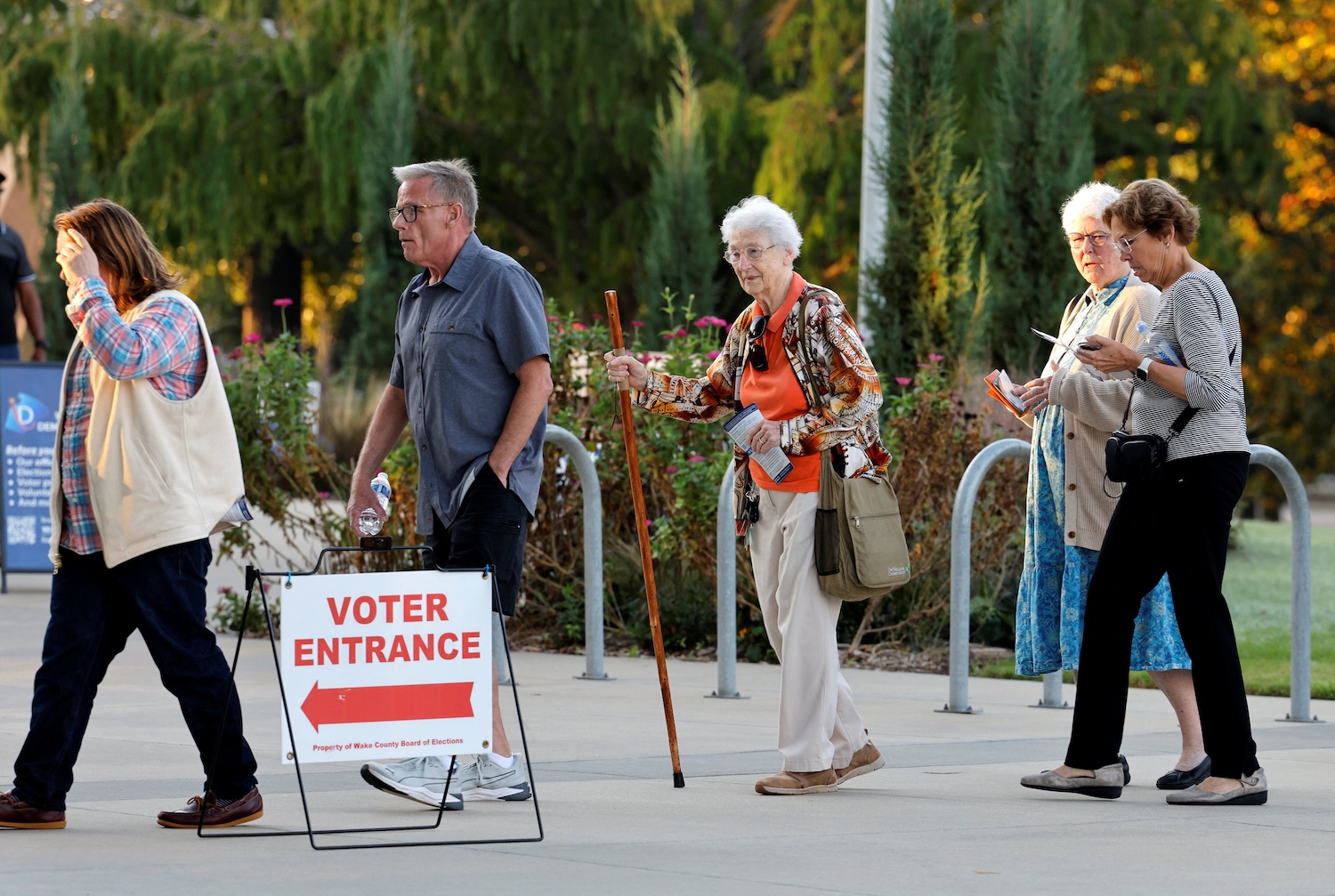
In this divided and lonely moment, especially as we approach the midterm elections and enter an even more politically charged season, perhaps our greatest task is not simply to determine who is right and who is wrong.
Perhaps it is to become more like the father: people capable of truth without cruelty, disagreement without contempt, justice without abandoning mercy and forgiveness that leaves room for someone to come home. Because if we want to overcome our crisis of loneliness, we must also confront our crisis of division. And if we want to overcome our division, we must begin by refusing to dehumanize one another.
Vicente Del Real is the founder and CEO of Iskali, a Catholic nonprofit dedicated to forming and empowering young Latino leaders. He writes from Chicago, where he leads Iskali’s mission of faith, service and community. This column was written in collaboration with Maria De Leon-Sanchez.
