


(OSV News) — Enthusiasm for the missions was a Europe-wide phenomenon during the pious 17th century.
Eusebio Kino was born eight years after fellow priest-explorer Father Jacques Marquette in the Italian Tyrol. Like the famous Father Marquette, he entered the Jesuit order as a young man and soon conceived an intense desire to be a missionary. Sent to Mexico City in 1681, the energetic, handsome, charming priest went on to plant two dozen missions in Baja California, Sonora and today’s Arizona before his death in 1711. He was declared “venerable” in 2020.
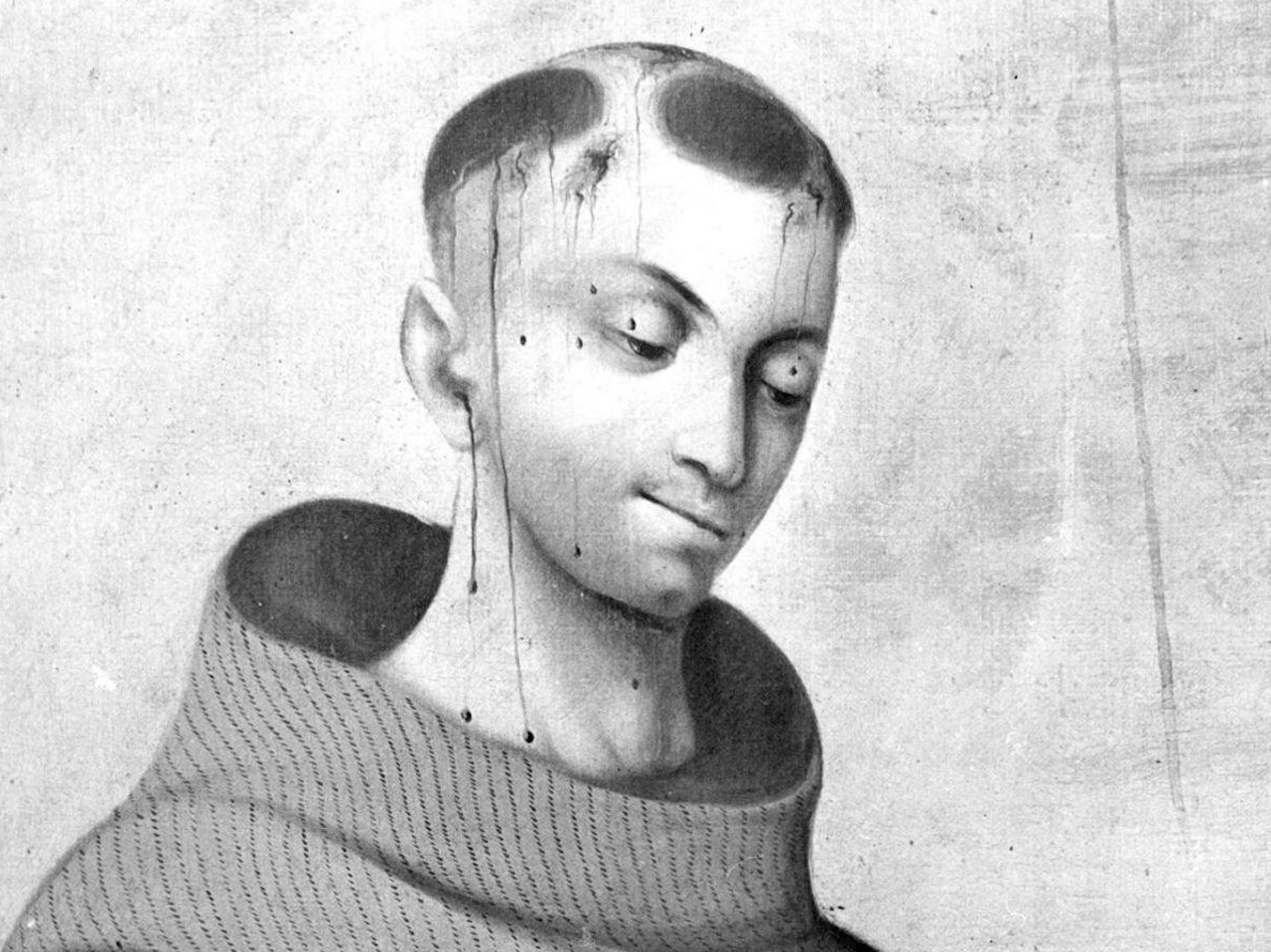
But Kino, who spent little time within the borders of today’s United States, is not our subject here, but rather his most able successor at the remote mission of San Xavier del Bac: a Franciscan friar named Francisco Garcés.
A native of the Spanish province of Aragon, Father Garcés arrived in 1768 at San Xavier, located a few miles south of Tucson. Over the next eight years he would undertake a series of incredible journeys — the Spanish called them entradas — into the unknown (to Europeans, at least) lands to his north and west.
No less than Father Marquette, he bequeathed a precious documentary record of the lands he discovered and the Indians he encountered. Like Father Marquette, he also left a legacy of peaceful intercourse with and high respect for the Southwest’s native peoples.
Work with St. Junípero Serra
Father Garcés’ first two entradas took him north to the Gila River. Working his way westward, he discovered from the friendly peoples who lived there — peoples known today as the the O’odham and Piipaash — that there was established trade and communication with the natives living along the California coast, where his acquaintance and fellow Franciscan friar Junípero Serra had recently begun to establish missions.
This was important, for the Spanish did not know of an overland route to Alta California from New Spain’s northwestern frontier — today’s Sonora and Arizona.
Father Garcés therefore set off to find one. In summer 1771, traveling with few supplies, no other Spaniards, and native guides whom he engaged along the way, he picked his way by muleback across the blazing, bone-dry Sonoran Desert until he arrived at the junction of the Gila and Colorado rivers.
He was greeted by a man the Spanish knew as Salvador Palma, powerful headman of the Quechan Indians that controlled the area. Against the advice of his friendly hosts, Father Garcés proceeded westward through even more inhospitable country until he spied the mountain chain that he figured, correctly, stood between him and the coast.
Three years later, Father Garcés repeated the feat, this time as the chief guide in an official expedition that included 20 soldiers led by a frontier military official named Juan Bautista de Anza.
Surviving largely, if only barely, on water found in remote mountain tanks, the Anza Expedition eventually found its way from the Spanish presidio at Tubac, Arizona, to Yuma, to Mission San Gabriel outside today’s Los Angeles, where the gaunt, dirty and bedraggled men were hailed joyfully by four friars dressed in rags. Father Garcés celebrated Easter 1774 with St. Junípero Serra at Mission San Diego before returning to San Xavier del Bac.
Solo exploration
The achievement of the Anza Expedition led Spain to organize another in 1775. This time, Anza would lead nearly 300 men, women and children to Monterey and San Francisco to become the first true European settlers of Alta California. Father Garcés left that expedition at Yuma. From there he embarked upon a truly extraordinary solo journey of exploration that made much of what we know as the American Southwest newly legible to European eyes.
His goal was to reconnoiter a better route both from Sonora to Monterey and from Monterey to New Mexico. Over the next 10 months, he rode down the Colorado River to its mouth, then upriver to the vicinity of today’s Laughlin, Nevada (which state he was the first European to enter), then across the unforgiving Mojave Desert to San Gabriel Mission, then into California’s great Central Valley through today’s Bakersfield, then back through the Mojave and northwestern Arizona to the Grand Canyon (where he made a frightening descent into the canyon to visit the Havasupai who lived, then as now, near the famous falls that bear their name), then further east to the Hopi village of Oraibi, before finally returning to San Xavier del Bac.
Father Garcés typically encountered both receptiveness to the Gospel (he found that a banner showing the Madonna and child on one side and a man suffering the torments of hell on the other did wonders to communicate his fundamental message) and lifesaving hospitality (he often carried little if any food in his baggage).
Native hospitality was not even reserved solely for humans. One day, his mule became stuck in a mudhole. The Cocopah Indians with whom he was staying “all ran to help him, took him out in their arms, and carried him to the fire to get warm.”
Trading horse for slaves’ freedom
Father Garcés’ diary is filled with such heartwarming incidents. But there was also plenty of darkness. Along the Colorado River, for example, Father Garcés encountered a band of Chemehuevis who had with them two Halchidhoma girls taken as slaves. Slavery was practiced throughout native America, and although it was illegal, Spaniards on the frontier abetted the trade by frequently purchasing and keeping slaves themselves, a practice that churchmen like Father Garcés spent much time and ink exposing and criticizing. As for the Halchidhoma girls, Father Garcés traded a horse for their freedom.
Intertribal warfare was as endemic as intertribal slavery. As humble as he was hardy, Father Garcés had a special talent for winning native trust and friendship (one of his fellow friars said that Father Garcés was “so well suited to getting along with the Indians and going among them that he seems to be very much like an Indian himself”), and wherever he went he attempted, sometimes successfully, to broker peace deals. He dreamt of planting a dozen or more new missions in today’s Arizona and southern California not only to save native souls, but also to extend what he saw as the manifest blessings of Spanish civilization — civil peace foremost among them.
It was not meant to be. Broken Spanish promises, imprudent military leadership and Quechan jealousies led to an uprising at Yuma in July 1781 in which Father Garcés and three other friars, along with 127 other Spaniards, were killed.
The monument to Father Garcés that stands along the Colorado River in front of St. Thomas Indian Mission today is more impressive than the one honoring Father Marquette in St. Ignace, Michigan. But it is even less visited.
Jeremy Beer is the author, most recently, of “Beyond the Devil’s Road: Francisco Garcés and the Spanish Encounter with the American Southwest” (University of Oklahoma Press).
