


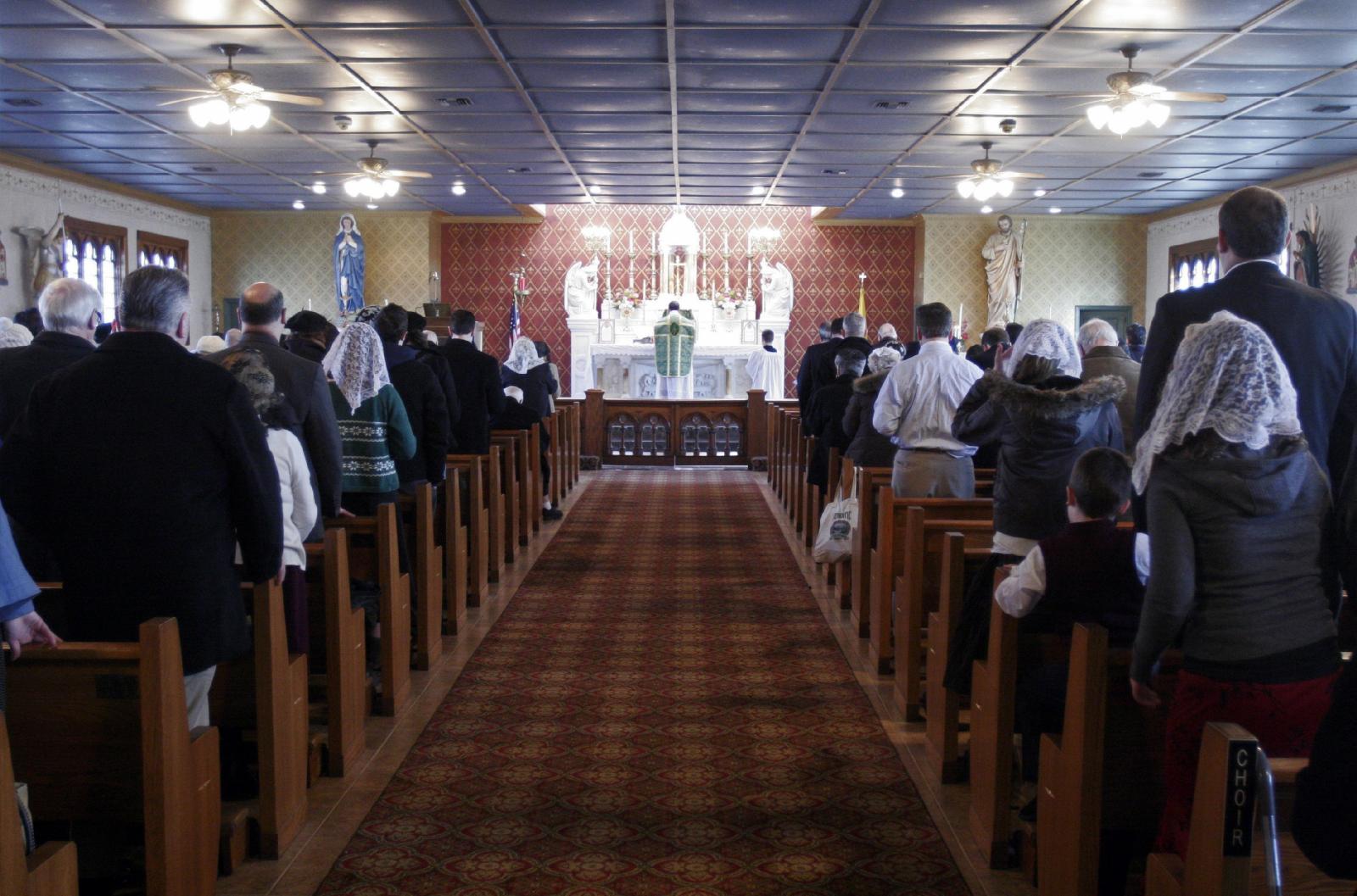
(OSV News) — What happens now?
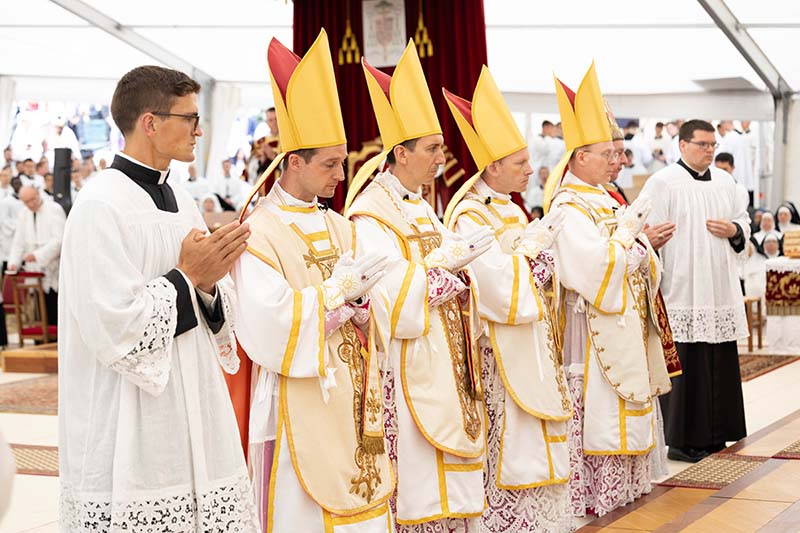
Following the July 1 illicit consecration of four bishops at its seminary in Écône, Switzerland, by the now-schismatic traditionalist Society of St. Pius X — an action without papal approval that incurred automatic excommunication — that question isn’t simply one of Church politics.
It’s also a question of unity — especially when viewed through the lens of Jesus Christ’s prayer for his Church “that they may all be one” (John 17:21) — and of renewing pastoral outreach to SSPX adherents, as some bishops, including one whose diocese includes an SSPX stronghold, have already expressed.
Father Gerald E. Murray, a canon lawyer who has studied the SSPX in relation to the Church’s law, said the practical implications of the situation are continued erosion of whatever relationship remains between SSPX adherents and those still in the fold of the Catholic Church.
The longer defiance lasts, ‘the deeper the separatist spirit’
“The longer the SSPX operates in defiance of the Holy See, the deeper the separatist spirit will become embedded among the clerics of the SSPX and the religious and laity who attend Masses celebrated by SSPX priests,” Father Murray, pastor of St. Joseph’s Church in New York City and a frequent commentator on EWTN’s “The World Over” broadcast, told OSV News. “This will lead to greater antagonism towards Catholics who fully submit to papal authority.”
“The excommunicated SSPX bishops will be considered by many, if not most, SSPX sympathizers as the only reliably Catholic bishops. The pope and bishops in full communion with him will likely be considered by many SSPX sympathizers as obstacles to promoting the mission of the Church,” Father Murray said.
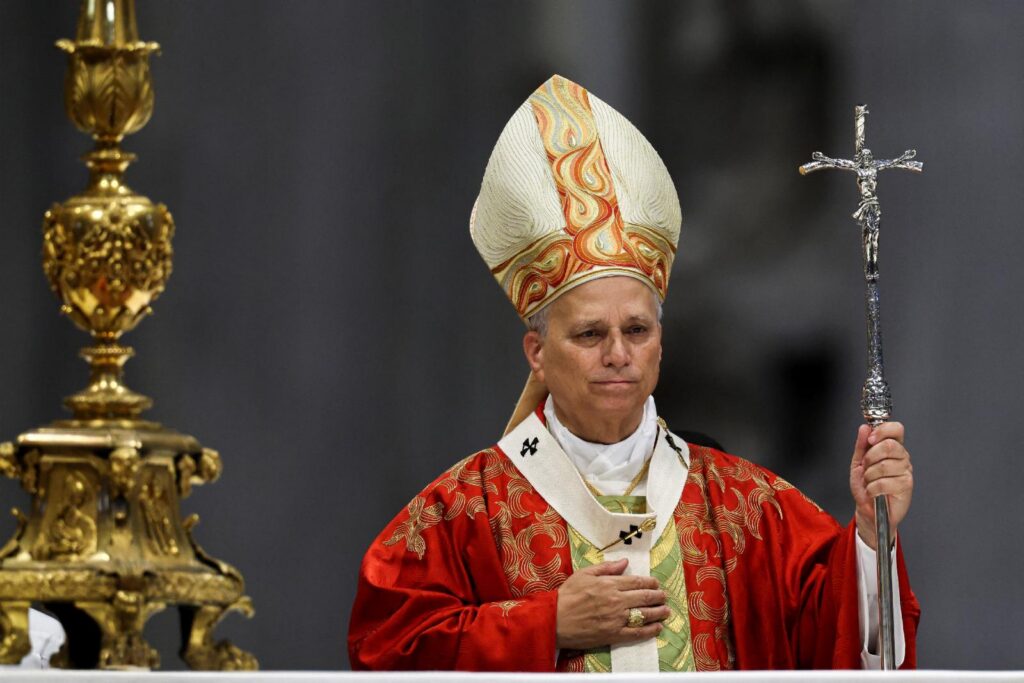
“This is the danger that flows from removing oneself from the due submission owed by every Catholic to the successor of Peter,” he underscored.
The First Vatican Council in its 1870 dogmatic constitution on the Church in Christ, “Pastor Aeternus,” taught that the “jurisdictional power of the Roman Pontiff is both episcopal and immediate” over the entire Church.
Unity wih pope in communion, ‘profession of same faith’
“Both clergy and faithful, of whatever rite and dignity, both singly and collectively, are bound to submit to this power by the duty of hierarchical subordination and true obedience, and this not only in matters concerning faith and morals, but also in those which regard the discipline and government of the Church throughout the world,” the council declared. “In this way, by unity with the Roman Pontiff in communion and in profession of the same faith, the Church of Christ becomes one flock under one Supreme Shepherd.”
On July 2, the Vatican’s Dicastery for the Doctrine of the Faith confirmed the SSPX episcopal ordinations incurred automatic excommunication of participating bishops, SSPX clergy and any lay faithful who formally adhere to the SSPX. It also sent a communication to bishops worldwide, outlining steps to welcome back those who decide to leave the SSPX following the schismatic act that led to excommunication.
On June 30, Pope Leo XIV made a final appeal to avoid schism. “I plead with you and ask you with all my heart: please turn back!” the pope said in a letter addressed to Father Davide Pagliarani, SSPX superior general.
Father Murray explained the applicable canon law, a set of ordinances and regulations established by Church leadership to govern the internal affairs of the Catholic Church and its members.
Holy See instructed SSPX ‘to desist’
“The Holy See instructed the SSPX to desist from carrying out on July 1 the illegal ordination of any new bishops. The SSPX rejected this instruction,” Father Murray emphasized. “This defiance of Pope Leo is an act of grave disobedience that the Holy See judges to be a schismatic act that involves ‘the refusal of submission to the Supreme Pontiff'” — defined by Canon 751 — “in a serious matter involving an act forbidden by canon law, namely the ordaining of bishops without a papal mandate,” addressed by Canon 1387.
That last canon states: “Both the Bishop who, without a pontifical mandate, consecrates a person a Bishop, and the one who receives the consecration from him, incur a latae sententiae (automatic) excommunication reserved to the Apostolic See.”
“These episcopal ordinations involve not simply the absence of a papal mandate,” Father Murray said, “but clear disobedience in direct defiance of Pope Leo.”
Because the SSPX persisted with the bishops’ consecrations, the outcome of excommunication was not really avoidable, Father Murray said.
Wants to keep ordaining but not ‘submit’ to Holy See
“The SSPX would like to continue ordaining priests who celebrate the traditional Latin Mass without having to submit to the ordinary governance of the Holy See. The Holy See already provides for such ordinations to be carried out for the members of the Priestly Fraternity of St. Peter, the Institute of Christ the King and Institute of the Good Shepherd,” he noted, naming other traditionalist Catholic orders of priests with regular canonical status in full communion with the pope.
“Ordaining new bishops against the will of the pope is a necessary action for providing new priests for the SSPX only if it plans to continue operating apart from the Holy See,” explained Father Murray. “Full communion with, and obedience to, the Roman pontiff is not a discretionary practice that can be set aside by any group in the Church, especially a group that publicly asserts it is fully Catholic and submits to the supreme authority of the Church.”
Father Murray also speculated that the SSPX might have miscalculated the Vatican’s reaction.
“The SSPX, in my judgment, used the announcement of the impending episcopal ordinations as a tactic in trying to get the Holy See to agree to allow the ordinations and to endorse its various criticisms of the documents of the Second Vatican Council and subsequent magisterial teachings, thinking the Holy See would want to avoid a schism at all costs,” he said.
Holy See offer ‘to continue doctrinal discussions’
“The Holy See offered to continue doctrinal discussions with the SSPX only if the threat of episcopal ordinations were withdrawn. The SSPX would not agree to this,” continued Father Murray. “To demand a hearing from the pope without agreeing to the very reasonable condition the pope sets for such hearing — ‘stop threatening an act of grave disobedience if I do not give you what you want’ — is not a manifestation of filial submission to the authority that the SSPX recognizes as divinely established and sustained.”
In 1988, St. John Paul II excommunicated the society’s founder, Archbishop Marcel Lefebvre (1905-1991), and four bishops he consecrated without papal mandate. Nevertheless, for decades the Vatican sought ways to fully reintegrate SSPX members into the life of the Catholic Church.
Talks between the Vatican and the society began under St. John Paul II and continued during the pontificates of Pope Benedict XVI and Pope Francis. Pope Benedict lifted the excommunications of the four bishops in 2009, opening the way for more regular talks. Pope Francis built on that initiative, making special provisions to allow SSPX priests to give valid absolution in confession and allowing SSPX bishops to ensure the validity of the sacrament of matrimony taking place in their communities. The new SSPX schism once more deprives SSPX clergy of the faculties to give valid absolution or preside over valid sacramental marriages.
Recent events not surprising to professor
Richard DeClue, a theology professor at the Word on Fire Institute who has written about the history of the SSPX, said he didn’t find the recent events surprising.
“I was sort of surprised at first when the society announced that they were going to do this — but in the end, it sort of just tracks with their whole history,” he said.
DeClue is nonetheless concerned for the impact upon those who ignore — or don’t realize — the canonical implications of the SSPX’s actions.
“It’s going to have some on-the-ground effects, for a couple of different reasons,” he explained. “Pope Francis had given them faculties to hear confessions and assist at weddings in some circumstances. Those have now been revoked, so the people who come to them for confession will be receiving invalid absolutions, and invalid marriages.”
“I am concerned that people who continue to go to them in general might incur a ‘latae sententiae’ excommunication for formally adhering to the schism,” continued DeClue, referring to an automatic excommunication. “I’m worried about that because you’re already seeing a number of people still taking their side and agreeing with the consecrations — and that constitutes formal adherence. There’s penalties for other people, not just those involved in the actual consecration.”
‘An extremely sad day for the Church’
“It’s an extremely sad day for the Church,” DeClue reflected. “Of course, like everything that happens in the Church, you can have a wide spectrum of responses — from those who are completely apathetic and don’t care, to those who are almost gleeful at the notion of people incurring communication, to those who will try to water down the importance of the canonical censures.”
DeClue hopes the episode might spur “dialoguing with and taking seriously the questions and concerns that traditionally-minded Catholics have.”
He said, “There’s a lot of people who reject the schismatic act of the SSPX; they’ll share many of their concerns or confusions … (but) stay within the Church despite that they feel like they’re pushed to the margins.”
“Those people deserve to be treated pastorally as well,” he said. “They shouldn’t feel like orphans within their own Church just because they love tradition, and they love magisterial teachings from decades ago, and they love the traditional liturgy that’s part of their conciliar U.S. Church’s liturgical heritage.”
Faithful traditionalists ‘are hurting as well’
Noting the Church’s frequent references to accompaniment and walking with various groups, DeClue added that he doesn’t want the faithful traditionalists who remain in the Church “to be forgotten in this. They are hurting as well. I think they’re part of the margins that need to be reached out to.”
Such pastoral care could also have a practical, as well as spiritual, purpose.
“Finding ways of helping to allay their concerns or confusions, as well as to affirm them in their faith, make them also feel like they’re welcomed into the universal Church — that they’re not despised by the hierarchy — would go a long way to helping keep that number that’s still in communion with Rome larger.”
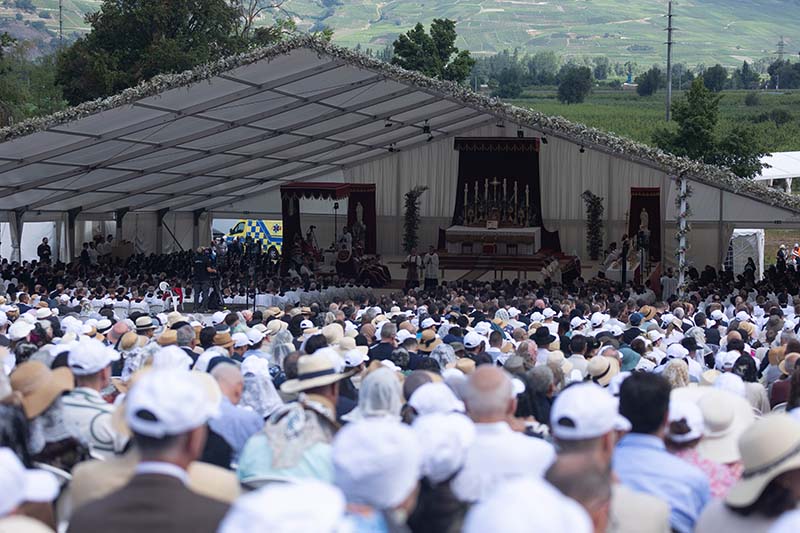
Twenty-six Franciscan University of Steubenville, Ohio, faculty members and administrators wrote a June 25 open letter to SSPX leadership urging them to retain communion by desisting from the episcopal consecrations and entering into renewed dialogue with the Holy See.
Michael Sirilla, a theology professor at the university, but not a signatory on the letter, noted his concern for what perhaps appears to him as selective enforcement of Church discipline.
Church’s ‘surprising tolerance for immorality, dissent’
“In a period of surprising tolerance for immorality and dissent, the decision to only discipline people whose desire is to remain faithful to the perennial Catholic doctrine on faith, morals, and the ancient liturgies is confusing,” Sirilla told OSV News via e-mail.
“Catholics should pray for wisdom for Pope Leo and that he extend to the SSPX goodwill, understanding and interest in dialogue as he has done with problematic groups like the German Bishops’ Conference,” he added.
Catholic bishops have issued statements affirming the consequences of the SSPX schism, while pastorally reaching out to Catholics involved with the SSPX, urging them to retain full communion with the Church.
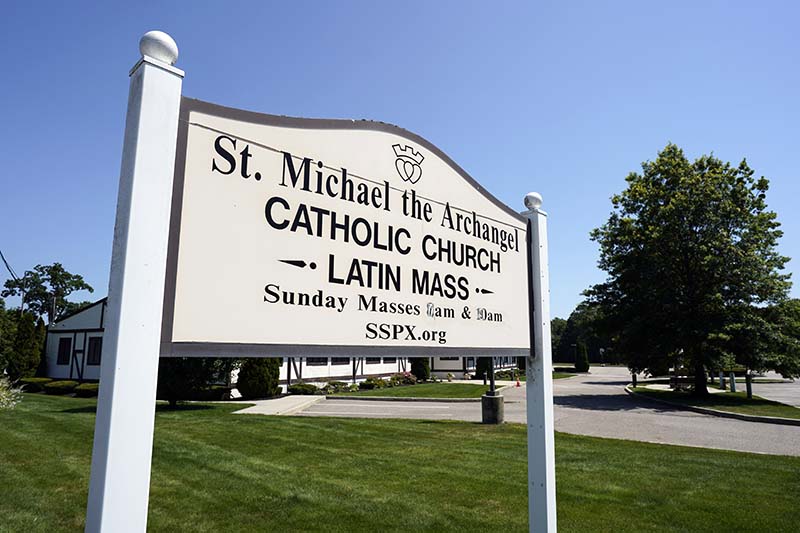
In a July 2 statement, Bishop James V. Johnston Jr. of Kansas City-St. Joseph, Missouri, whose diocese includes within its geographic borders the SSPX’s U.S. headquarters in Platte City, called the SSPX episcopal consecrations “unfortunate and indeed, a source of grief.” He said he will be preparing guidance to assist clergy and laypeople “who have worshipped locally with the SSPX.”
Unity with Church ‘no longer’ possible for SSPX adherents
“Despite the fruitful efforts of past decades from the Holy See and our local Church to move towards a fully-restored ecclesial communion, the schism which has occurred will impact those who choose to formally adhere to the Society of St. Pius X,” he said. “While it is imperative to not abandon future efforts toward full communion and to fervently pray for such, those who wish to maintain communion with the Catholic Church, including valid reception of the sacraments of Matrimony and Penance (Confession), will no longer find that possible within the SSPX.”
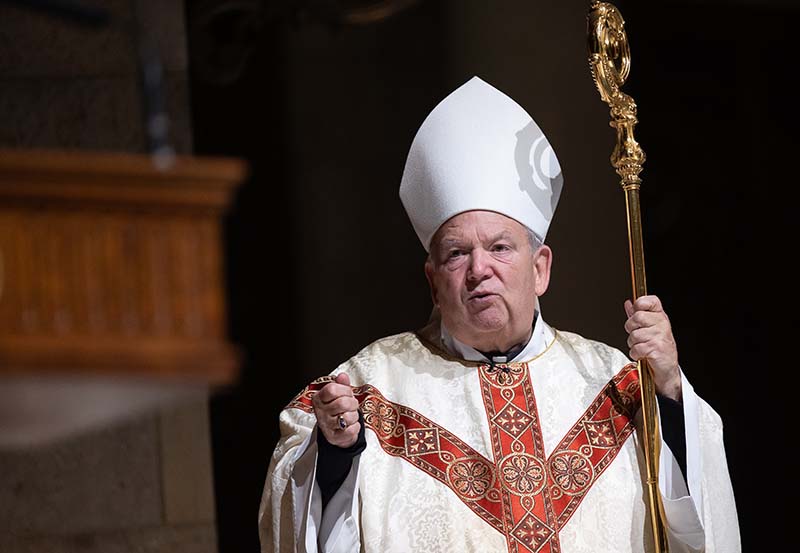
Archbishop Bernard A. Hebda of St. Paul and Minneapolis issued a statement July 2 noting that the excommunications will affect Catholics involved with the SSPX as a result of the schism.
“In the ten years that I have led this local Church, I have met many sincere people who worship regularly or occasionally at the chapels of the SSPX within the territory of our Archdiocese. I have been impressed by the strength of their families and their commitment to traditional Catholic values,” he said.
The archbishop noted there are at least six locations in his archdiocese that offer them the same older form of the Mass that these Catholics found with the SSPX.
“It is my hope they will not follow the above-mentioned bishops in separating themselves from the Successor of Peter, Pope Leo XIV, and from the Church that he humbly leads,” he said. “Throughout the centuries, our Catholic Church has consistently echoed the teaching of St. Ambrose: Ubi Petrus ibi ecclesia (Where there is Peter, there is the Church).”
Kimberley Heatherington is an OSV News correspondent. She writes from Virginia.
