


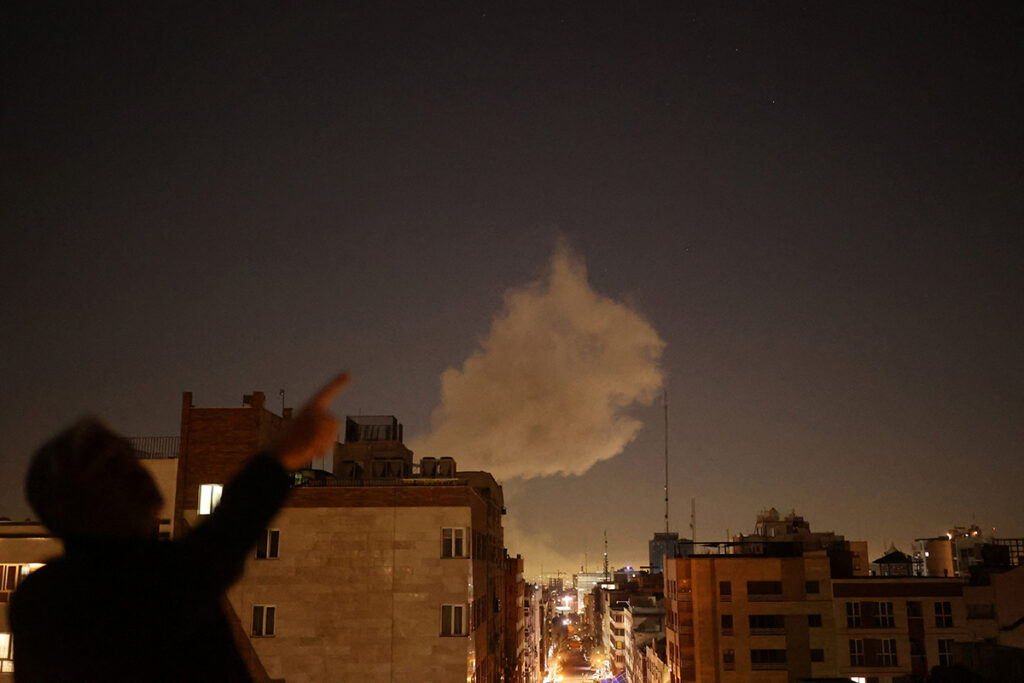
(OSV News) — Catholics across the Middle East are reeling with shock and sorrow, and responding with prayer, amid joint strikes Israeli and U.S. forces launched on Iran Feb. 28, plunging the region into war.
The U.S. and Israel revealed that Iran’s supreme leader, 86-year-old Ayatollah Ali Khamenei, is among the country’s senior leaders killed in the initial assault, which targeted Tehran and cities across Iran. Following initial denials, Iranian state television authorities confirmed Khamenei’s death.
U.S. President Donald Trump described the attacks as part of “major combat operations” to overthrow Iran’s regime in order to “defend the American people.”
Trump, who gave an 8-minute statement from his Mar-a-Lago residence, warned that “the lives of courageous American heroes may be lost, and we may have casualties.”
By March 2, U.S. officials confirmed at least four U.S. soldiers had died and several more were seriously wounded in the military operation.
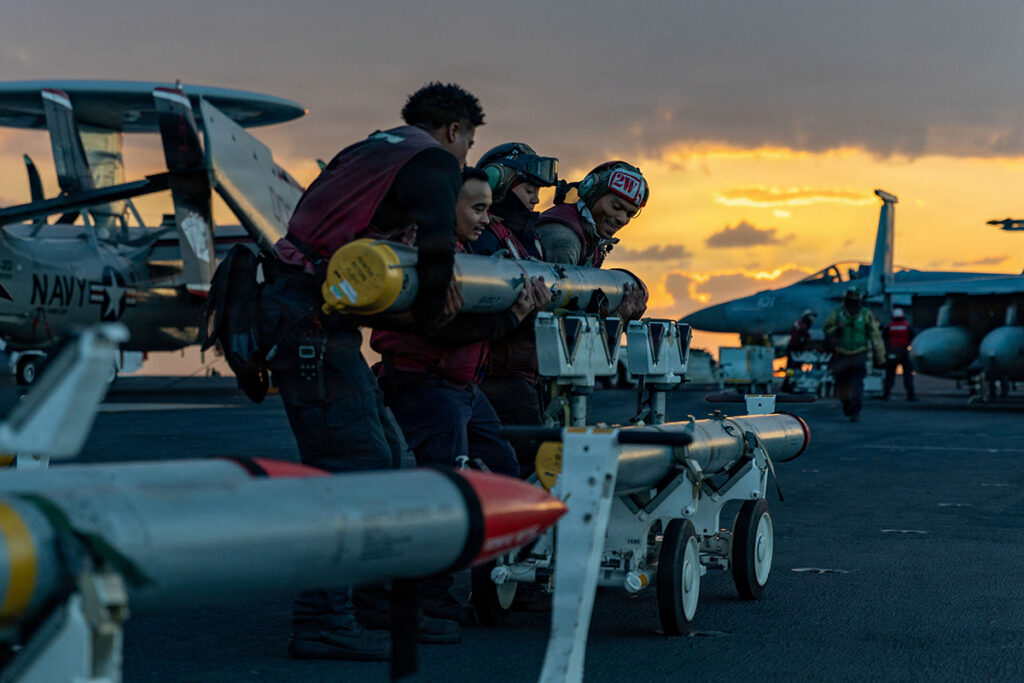
Separately, Israel’s Defense Minister Israel Katz announced the Feb. 28 “preemptive strike” against Iran, with a state of emergency declared across Israel.
The strikes follow a June 2025 attack by the U.S. that saw precision strikes on three Iranian nuclear facilities — Fordo, Natanz and Isfahan — which Trump at the time said were aimed at destroying Iran’s nuclear enrichment capacity.
Strikes on Iran lead to counterstrikes
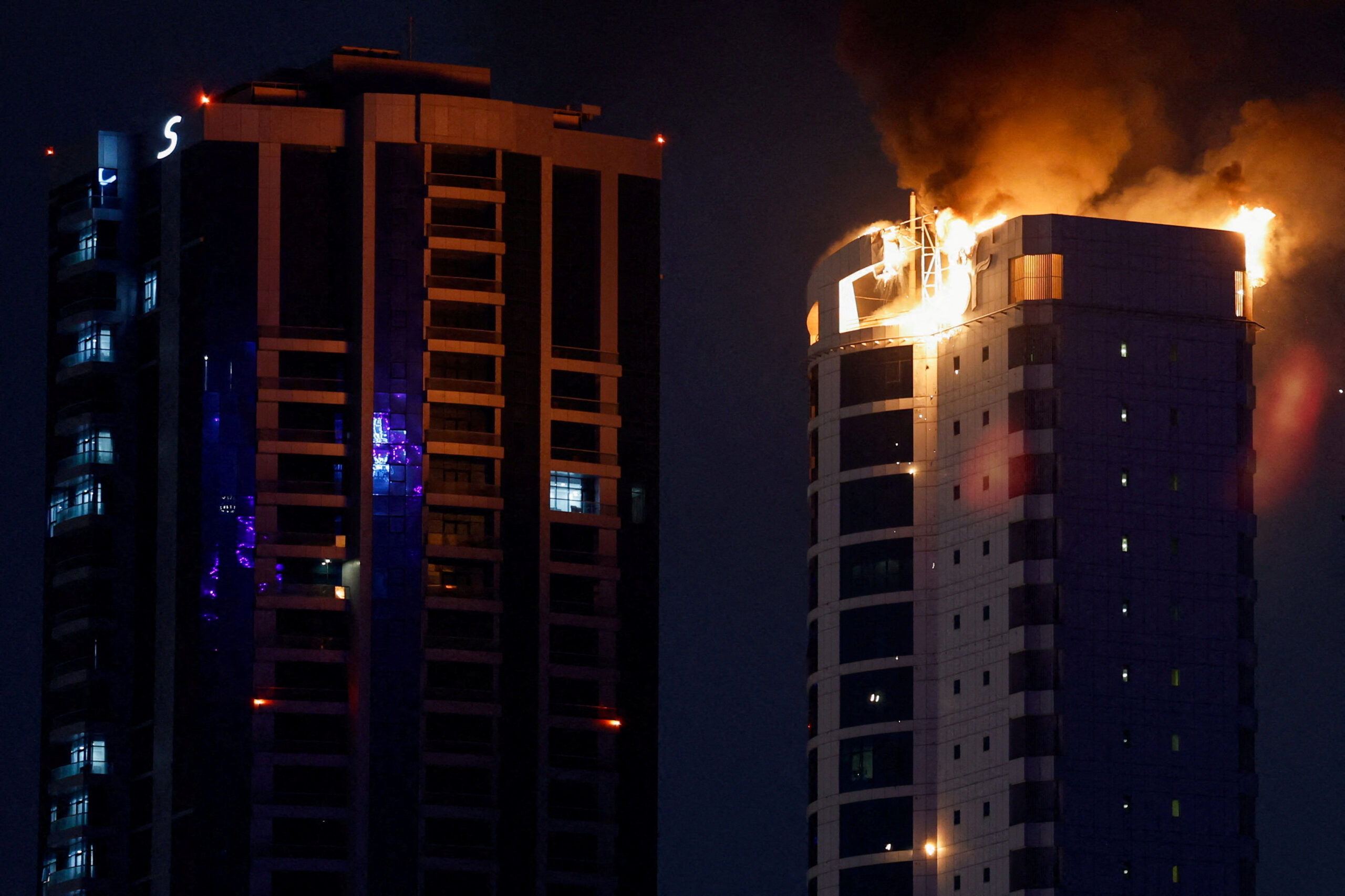
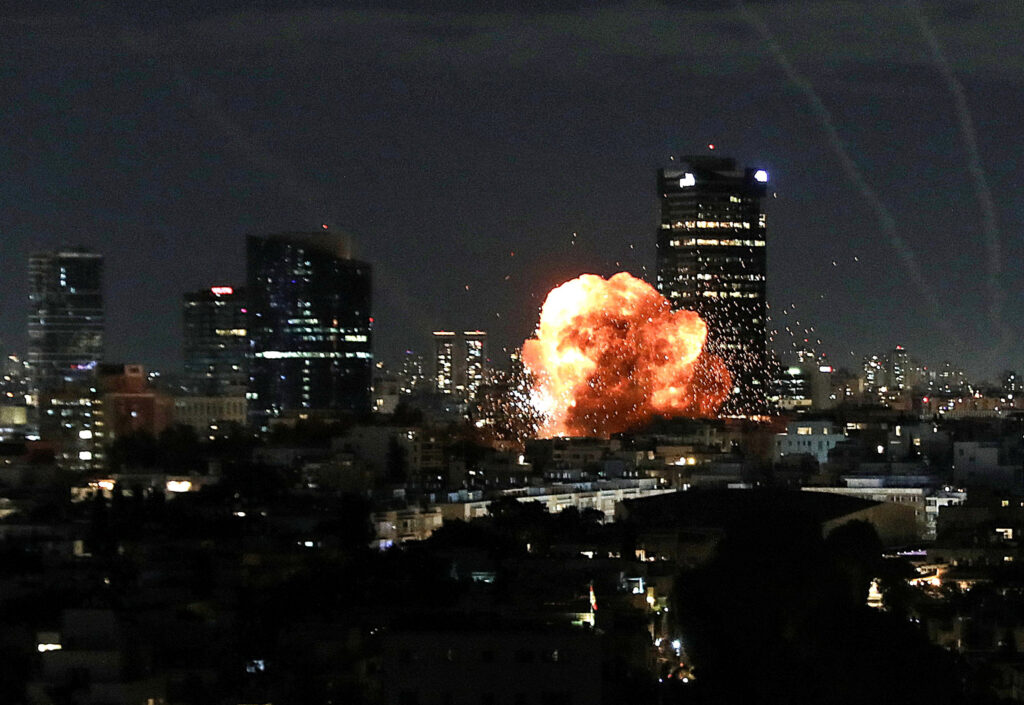
Iran has retaliated with counterstrikes, targeting Israel and several U.S.-interest locations across a number of Middle East nations, including Dubai, the United Arab Emirates, Kuwait, Bahrain and Qatar. Flights across the Middle East have been disrupted.
Casualties on all sides — including from countries caught in the crossfire — are still being assessed amid the ongoing exchanges.
Iran’s foreign minister, Seyed Abbas Araghchi, claimed on the X social media platform that a girls’ school in Minab was bombed in the U.S.-Israeli air assault and showed a photo.
Dozens of innocent children have been murdered at this site alone,” he said. “These crimes against the Iranian People will not go unanswered.”
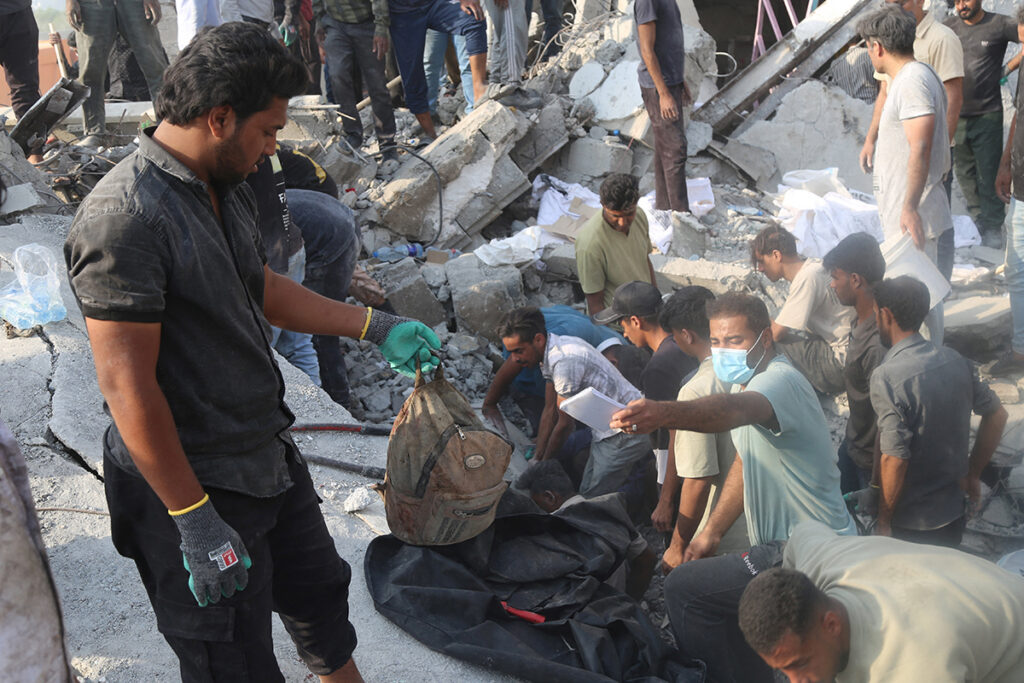
By March 2, Iranian media updated the death toll to at least 175 people, mostly children, killed from the strike.
Iran’s Red Crescent organization (part of the Red Cross global humanitarian network) reported more than 550 killed in Iran by the U.S.-Israel strikes as of March 2.
World leaders warn of widening war
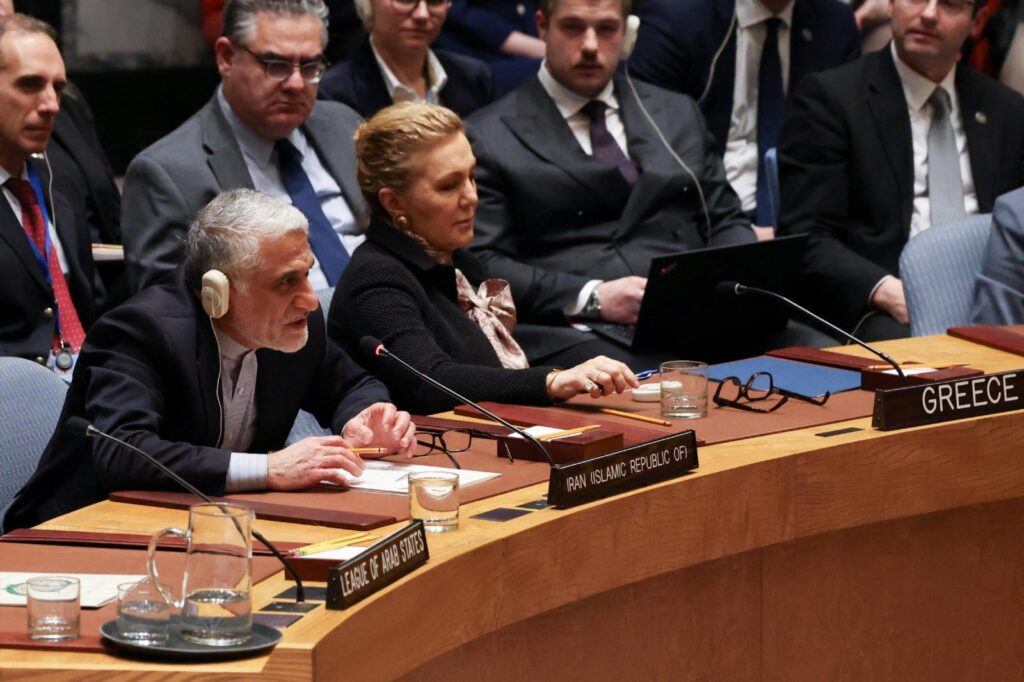
The United Nations Security Council convened an emergency session Feb. 28 in response to the attacks.
U.N. Secretary General António Guterres begged “all parties to return immediately to the negotiating table, notably on the Iran nuclear program,” warning “the alternative is a potential wider conflict with grave consequences for civilians and regional stability.”
On March 1, Pope Leo XVI spoke out in the Sunday Angelus at St. Peter’s Square telling the warring parties they had a “moral responsibility” to end the fighting and return to diplomacy before the violence led to an “irreparable abyss.”
Archbishop Paul S. Coakley of Oklahoma City, president of the U.S. Conference of Catholic Bishops, issued a statement shortly after echoing the pope’s words, and warned, “We are faced with the possibility of a tragedy of immense proportions.”
The war has expanded to Lebanon, where Israeli warplanes March 2 struck Hezbollah militants who fired rockets into Israel in support of its ally Iran.
In the U.S., the New York Police Department announced it was monitoring the situation and would be “enhancing patrols to sensitive locations throughout the city, including diplomatic, cultural, religious, and other relevant sites,” citing “an abundance of caution.”
The FBI is investigating a mass shooting that took place early March 1 at a bar in Austin, Texas, for a nexus to terrorism that left three people dead, including the shooter, and 14 injured.
Arabian churches call for calm, prayer
Bishop Aldo Berardi, apostolic vicar of northern Arabia — who shepherds the estimated 2.2 million Catholics, most of them migrant workers from other nations, in Bahrain, Kuwait, Qatar, and Saudi Arabia — issued a Feb. 28 statement on Facebook, urging the faithful “to remain calm, united in prayer, and attentive to the safety of everyone.”
“Please follow carefully the instructions of civil authorities and take all necessary precautions in your homes, workplaces, and parishes,” said Bishop Berardi.
He also directed “all parish priests and rectors to take appropriate action and to make the necessary decisions, with prudence and responsibility, to ensure the safety of the faithful entrusted to their care.
“Let us remain united in faith and charity, caring especially for the elderly, the sick, and the vulnerable,” said Bishop Berardi. “May the Lord protect you and your families, and may Our Lady of Arabia, our mother, watch over us all.”
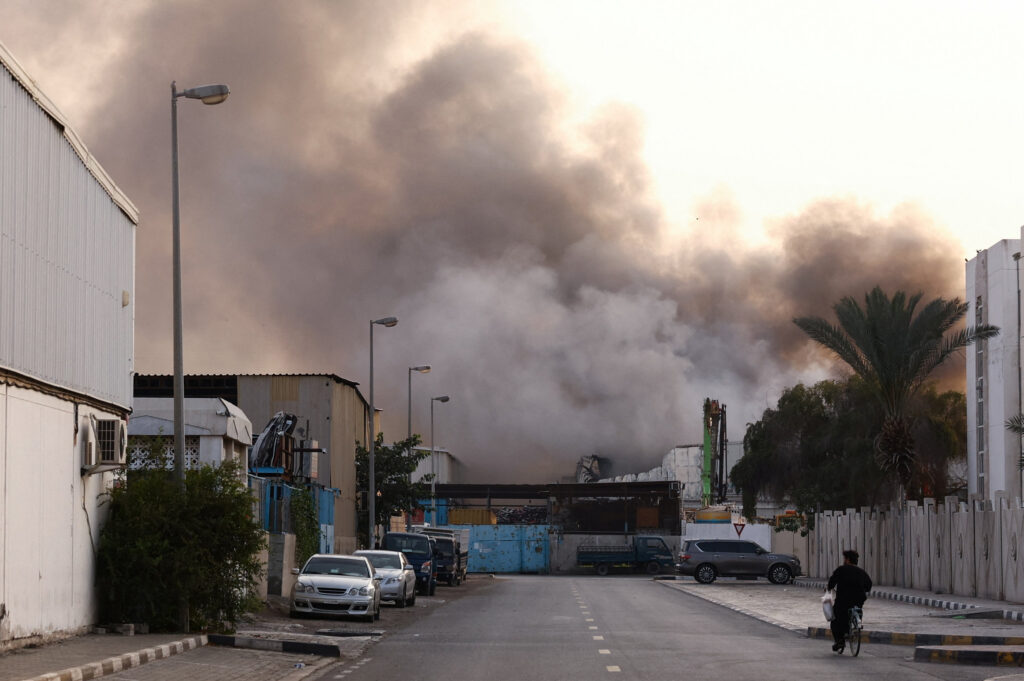
In Doha, Qatar, Our Lady of the Rosary Church announced on its website that it would “remain closed until further notice,” given “recent events in Qatar” and “the advisory issued by the ministry.”
Chaldean Catholic Archbishop Bashar M. Warda of Irbil, Iraq, told OSV News March 2 he “could see the whole scene” of nearby missile attacks by Iran on a U.S. military base near the Irbil airport.
“The missiles, the anti-missiles, the noise and the bombing — we can see it,” he said. “You can imagine the fear and horror.”
In a message to OSV News two days earlier, he shared that schools in the area — including the Catholic University of Irbil, which he established in 2012 and formally opened in 2015 — were closed “for the time being.” Archbishop Warda added that the faithful in the Irbil region were “really holding strong.”
“Prayer is the only hope we have,” he said, while also asking for prayers, noting that the faithful had been marking Lent as “a very blessed season for the community.”
Catholics in Holy Land caught off guard by Iran strikes
In Israel, Benedictine Father Nikodemus Schnabel — abbot of Dormition Abbey on Mount Zion in the heart of Jerusalem and of Tabgha, the community’s priory on the northwest shore of the Sea of Galilee — sheltered with some 60 pilgrims at Tabgha, the traditionally revered site of Jesus Christ’s multiplication of the loaves and fishes.
Father Schnabel, who was at Tabgha since Feb. 27 for a chapter meeting of his community — told OSV News he was caught off guard by the attacks.
“It was always in the air that maybe something could happen,” he explained. “But it was then a surprise that it really happened today, especially before Wednesday, because Wednesday there were plans for a new round of negotiations.”
He said their international group, which included children and the elderly, had been in the shelter for two hours, describing the time — which video obtained by OSV News showed the pilgrims praying and singing — as unifying amid the attacks.
“It was a good experience. We don’t know each other, but then we sing songs in different languages. We pray together,” he explained.
Father Schnabel added it was also “very interesting,” saying, “I love that it was not — nobody was in fear about his or her life.”
‘Islands of hope’
He said the experience was an example of Benedictine hospitality, one of the charisms of the order.
“Very often I say, ‘I want that our two monasteries are two islands of hope in an ocean of suffering,'” said Father Schnabel. “And this was exactly the feeling. We were also today an island of hope in an ocean of suffering.”
Jesuit Father John Paul, rector of the Tantur Ecumenical Institute — located on a 40-acre hilltop campus between Bethlehem and Jerusalem — told OSV News that his morning had been spent “in and out of shelters,” although he believed “Jerusalem is not a target area.”
The priest, whose institute is staffed by both Palestinians and Israelis, pointed to the sorrow evoked by the strikes, which follow the Israel-Hamas war and ongoing tensions between Israel and Palestinians living in the Gaza Strip and the West Bank.
“Overall, with local Palestinians” there is “a feeling of real sadness — my guess is with Israelis as well,” said Father John Paul.
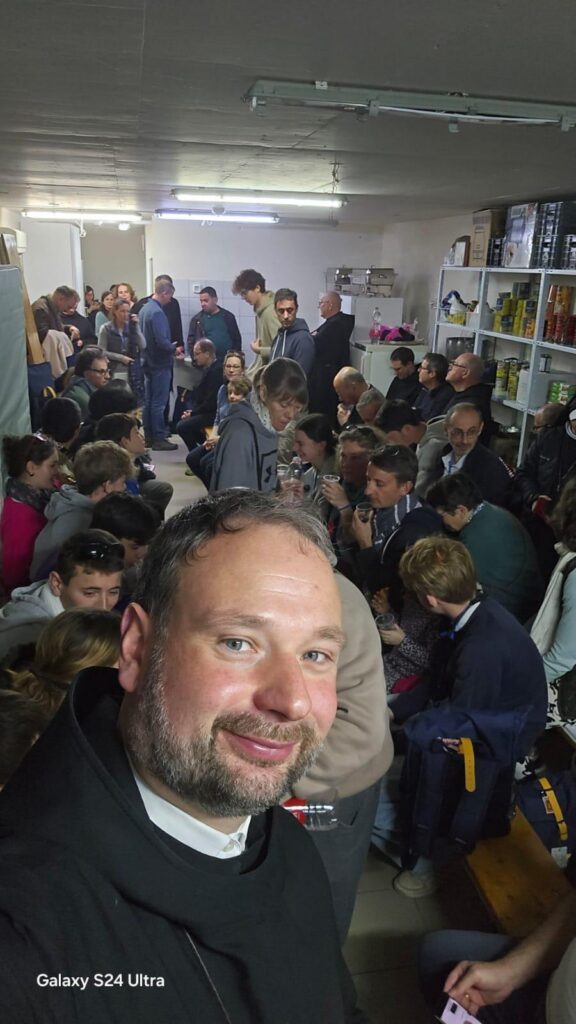
Father Schnabel said he and the pilgrims at Tagbha were praying for all affected.
“We pray for the others … So let’s pray for the people in Iran. Let’s pray for the people in Israel. Let’s pray for the people in Palestine. Let’s pray for the people in the region who are facing this situation,” he said. “Let’s pray for the people who are have no shelter like we have, and for all who are not understanding what’s going on.”
Gina Christian is a multimedia reporter for OSV News. Follow her on X @GinaJesseReina. Paulina Guzik, international editor of OSV News, contributed to this report. Follow her on X @Guzik_Paulina.
Updated March 3, 2026, at all 11:22 a.m. EST.
